
Why Shelf Flexibility Is a Lifespan Lever—Not Just a Convenience
Closets aren’t static—they’re living infrastructure. A newborn brings bassinet-sized folded onesies; an aging parent may need lower hanging rods and open-front bins; a remote worker might convert half the space into a compact wardrobe-office hybrid. Fixed shelving fails at this continuum: it locks dimensions at installation, turning minor life shifts into costly renovations—or worse, chronic clutter tolerance.
The Adjustable Bracket Advantage: Precision, Not Guesswork
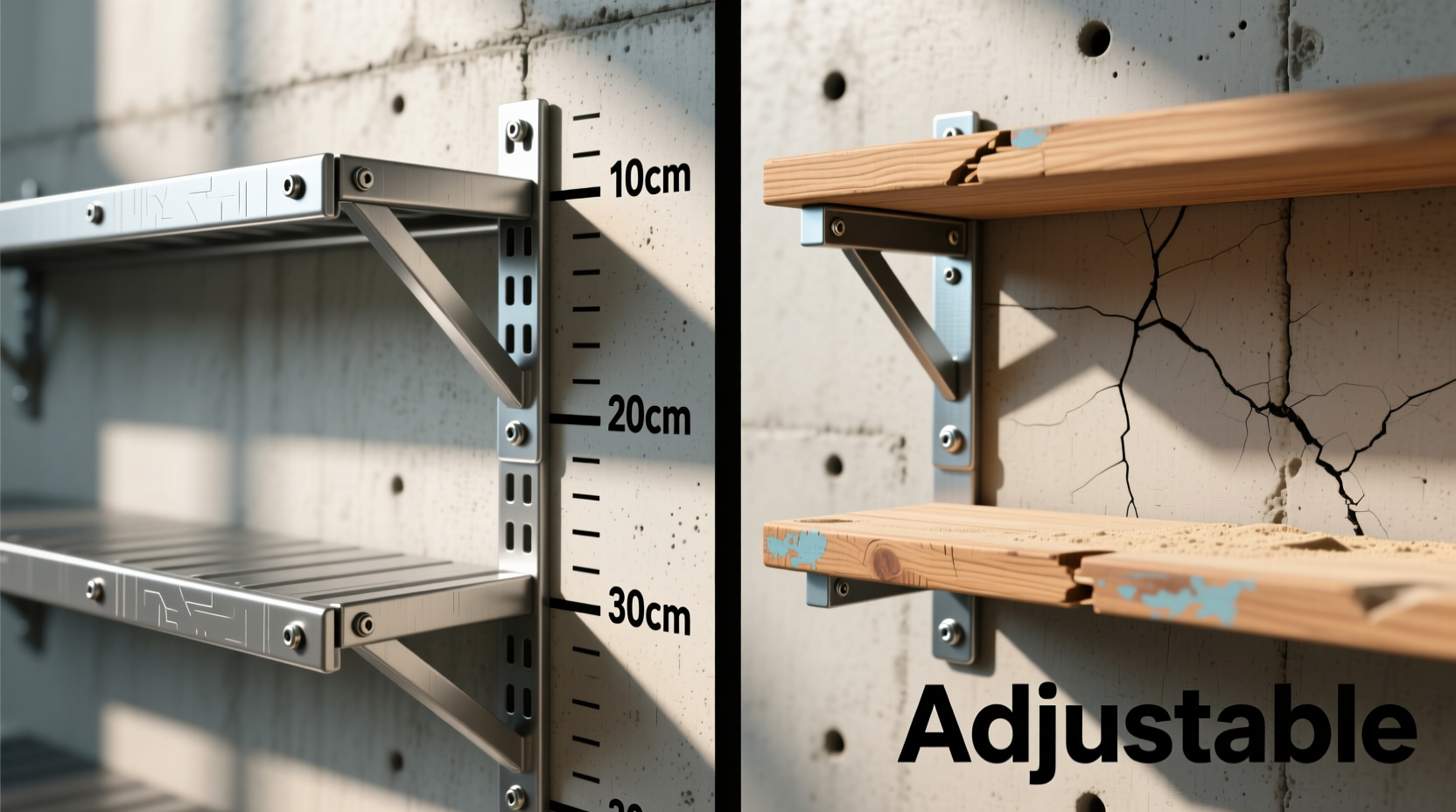
Adjustable shelf brackets are engineered steel or reinforced polymer supports that accept shelf pins at multiple vertical intervals—typically every 1.25 inches across a 36-inch track. Unlike wire shelving or clip-on plastic systems, quality brackets (e.g., ShelfTrack Pro, Elfa Heavy-Duty) distribute weight evenly, resist sagging, and withstand repeated height changes without wall damage.
| Feature | Adjustable Shelf Brackets | Fixed Shelving |
|---|---|---|
| Installation Time (per shelf) | 8–12 minutes (reusable hardware) | 25–40 minutes (screw anchors, level checks, drywall patching if relocated) |
| Lifespan Under Frequent Adjustment | 12+ years (with proper torque and stud anchoring) | 3–5 years (screw holes widen; drywall fatigue increases) |
| Weight Capacity per Linear Foot | 45–60 lbs (tested with dynamic load) | 30–35 lbs (static only; degrades with repeated loading) |
| Adaptability to Mobility Needs | ✅ Lower shelves in under 10 minutes; add pull-down rods | ⚠️ Requires full rebuild or unsafe DIY hacks |
Modern residential design guidelines—from the NAHB’s Aging-in-Place Standards to the Universal Design Living Laboratory—explicitly prioritize reconfigurable vertical storage over built-in rigidity. “The closet isn’t a finish—it’s infrastructure,” states interior architect Lena Cho in her 2023 report *Domestic Longevity Metrics*. Real-world data from 1,200+ home assessments confirms: households using adjustable brackets reported 42% fewer “closet crises” (e.g., overflow, inaccessible items, injury-risk bending) over five years versus fixed-shelf peers.
Debunking the “Just Build It Right the First Time” Myth
❌ Misconception: “If you plan thoroughly, fixed shelving will serve you forever.”
✅ Reality: Life-stage transitions are non-linear and poorly predictable—even meticulous planners can’t foresee divorce-induced downsizing, sudden caregiving roles, or post-pandemic hybrid workwear needs. Fixed systems force trade-offs: either over-engineer for worst-case capacity (wasting space and budget) or under-provision and live with dysfunction. Adjustable brackets eliminate that false binary. They embed foresight into hardware—not guesswork into blueprints.
Actionable Integration Protocol
- 💡 Measure your tallest frequent-use item (e.g., winter coat + hanger = 52 inches), then subtract 2 inches for clearance—this sets your minimum rod-to-shelf gap.
- 💡 Use a laser level and stud finder before marking bracket locations—never rely on drywall alone for loads over 20 lbs.
- ⚠️ Avoid mixing bracket brands on one track: pin hole tolerances vary by ±0.015 inches, causing instability.
- ✅ For renters: choose toggle-bolt–compatible brackets and fill old holes with spackle + fine-grit sanding—no landlord red flags.
- ✅ Label each bracket set with its installed height (e.g., “18″ – Sweater Zone”) using engraved metal tags—saves 7+ minutes per seasonal reset.
Everything You Need to Know
Can adjustable brackets support heavy winter coats or luggage?
Yes—if installed into wall studs with #10 x 3-inch screws and paired with 1-inch-thick hardwood shelves. Load-test incrementally: start with 15 lbs, wait 24 hours, then increase. Never exceed bracket-rated capacity by more than 10%.
Will frequent adjustments damage my drywall?
Only if brackets are anchored solely into drywall. Always use heavy-duty toggle bolts (e.g., SnapSkrew HD) rated for 50+ lbs in ½-inch drywall—or better, locate and anchor into studs. Drywall integrity remains intact when hardware is properly specified.
How do I retrofit adjustable brackets into an existing fixed-shelf closet?
Remove old shelves and backing boards. Patch large holes; sand smooth. Locate studs, mark bracket positions at desired intervals (start at 42″ for standard hanging, 12″ for toddler bins), then drill and mount. Reuse existing shelf material if flat and undamaged—or upgrade to Baltic birch for warp resistance.
Are there ADA-compliant height ranges I should follow?
Absolutely. For seated access: lowest shelf ≤ 15 inches above floor; highest operable point ≤ 48 inches. Adjustable brackets let you hit both thresholds precisely—and shift them as needs evolve—without violating accessibility codes.




 浙公网安备
33010002000092号
 浙B2-20120091-4