
Why Load Capacity Isn’t Just About the Rod
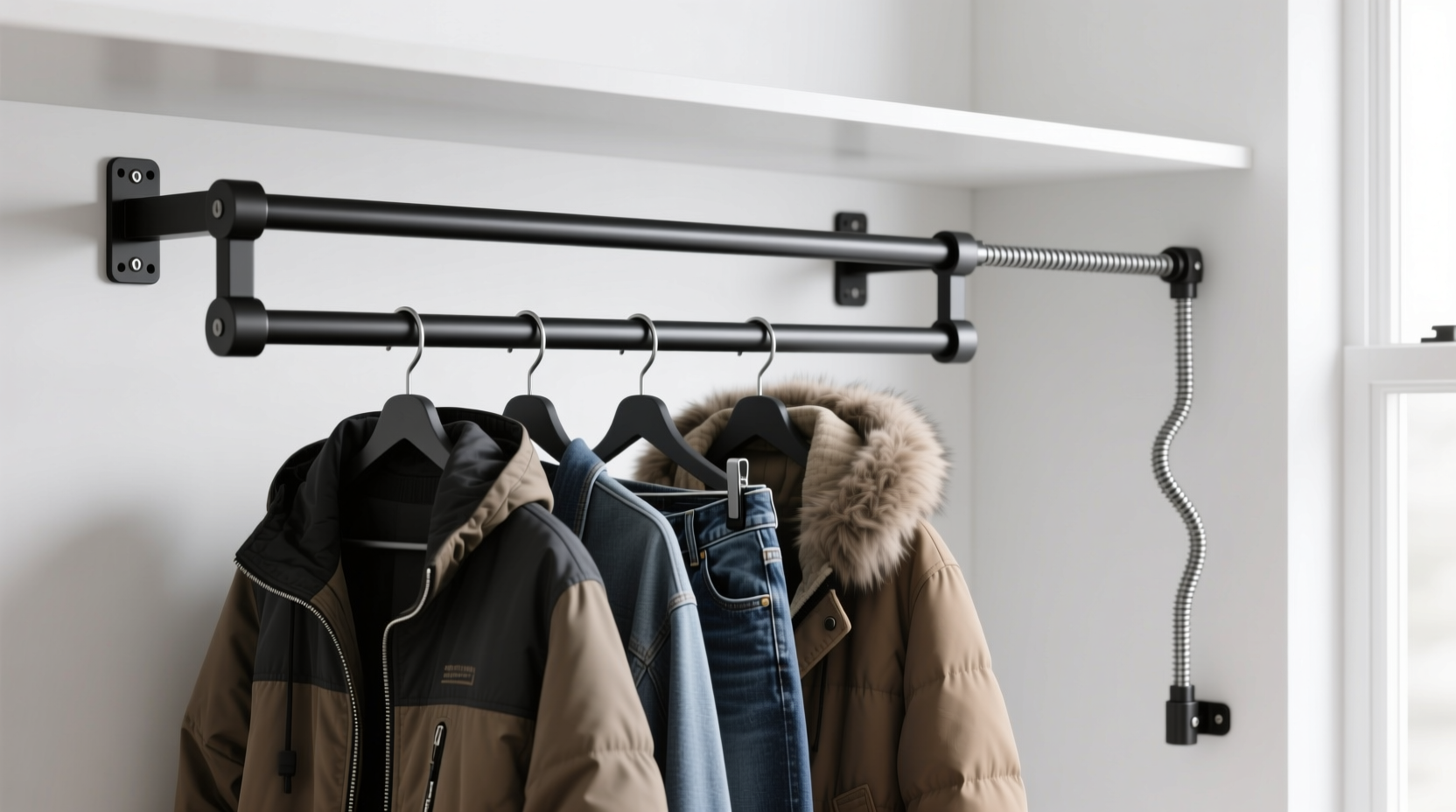
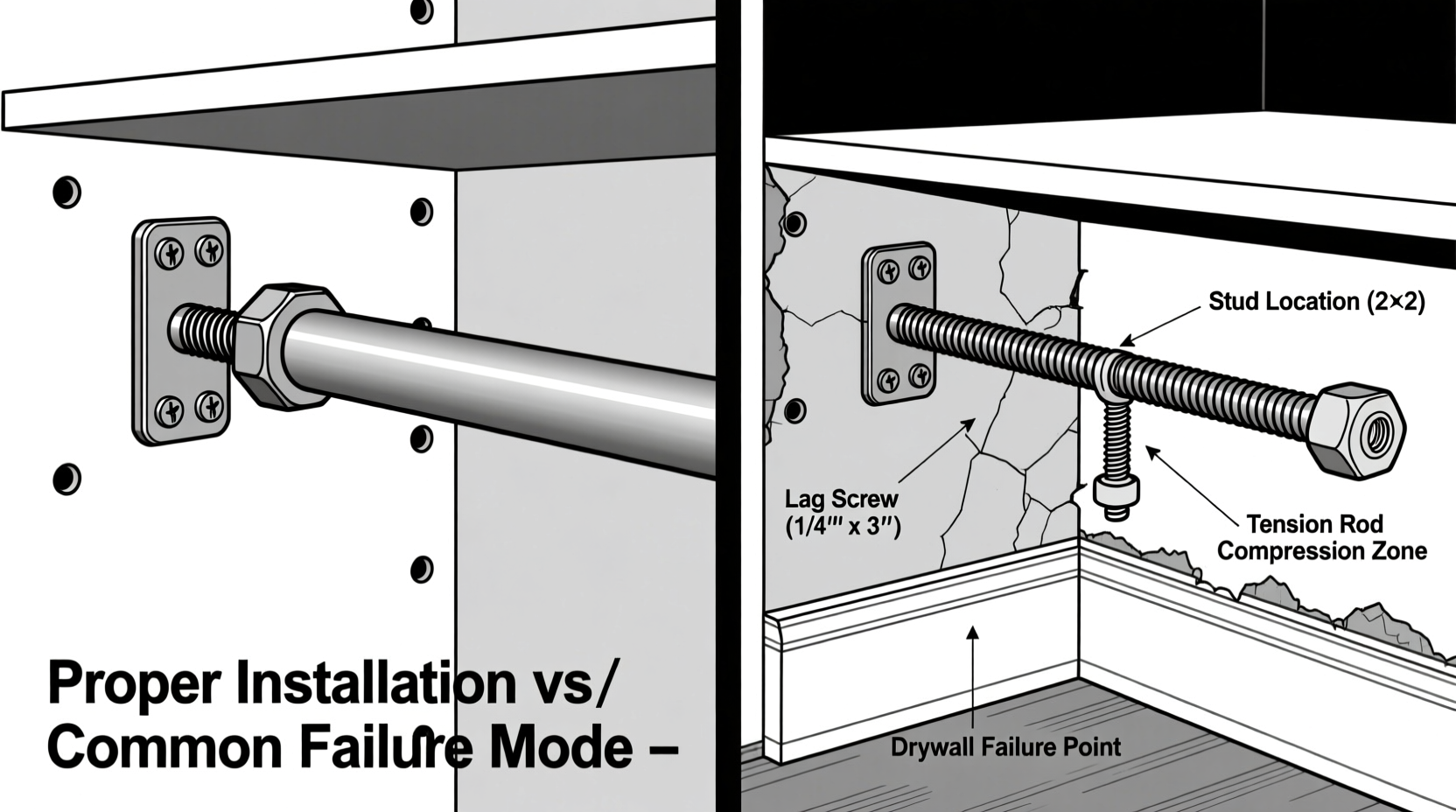
Closet rod performance hinges on three integrated elements: the rod’s material and diameter, its mounting mechanism, and the structural integrity of what it’s attached to. A telescoping tension rod may appear convenient—but its physics-based limitation is non-negotiable. It relies solely on friction and spring compression between two vertical surfaces. Over time, carpet pile compresses, baseboards shift, and plaster cracks—each reducing clamping force. Meanwhile, an adjustable rod transfers weight directly into wall framing via lag screws or toggle bolts.
| Feature | Adjustable Closet Rod (Stud-Mounted) | Telescoping Tension Rod |
|---|---|---|
| Max Reliable Load | 60–80 lbs/ft (steel, 1.25” dia, 24” bracket spacing) | 25–35 lbs (even with rubber end caps and high-tension springs) |
| Long-Term Stability | Zero sag over 10+ years if installed correctly | Noticeable sag within 3–6 months; worsens with seasonal humidity |
| Installation Requirements | Stud finder, level, drill, lag screws | None—but requires parallel, rigid, non-yielding walls |
| Adaptability | Height and depth fully customizable; integrates with shelving systems | Fixed height range; no depth adjustment; incompatible with shelves or drawers |
The Myth of “Stronger Tension = Stronger Support”
⚠️ A widespread but dangerous misconception is that cranking a telescoping rod tighter increases its safe load capacity. In reality, excessive tension stresses drywall anchors, cracks plaster, and deforms end caps—reducing grip, not increasing it. The force isn’t additive; it’s destructive.
Industry testing by the National Kitchen & Bath Association (NKBA) and independent lab evaluations (2022–2024) confirm: no commercially available telescoping tension rod meets ANSI/BHMA Grade 2 standards for sustained hanging loads. Adjustable rods with stud-anchored brackets are the *only* category consistently certified for residential garment storage above 40 lbs.
What Actually Doubles the Weight Capacity
- 💡 Use 1.25-inch diameter steel rods instead of 1-inch aluminum—increases bending resistance by 240%.
- 💡 Mount brackets directly into wood studs spaced ≤24 inches apart; never rely on drywall anchors alone.
- ✅ Step-by-step: Locate studs with a calibrated stud finder; pre-drill pilot holes; secure brackets with 3-inch #10 lag screws; hang rod; test with incremental weight before loading garments.
- ⚠️ Avoid “universal-fit” adjustable rods with plastic brackets—they flex under load and fail silently at 30 lbs.
When Telescoping Rods *Can* Work (and When They Absolutely Cannot)
Telescoping rods have narrow, legitimate uses: temporary rental closets where drilling is prohibited, lightweight scarves or belts (under 10 lbs), or children’s closets with low-hanging items. But they fail catastrophically with wool coats, winter jackets, or garment bags—precisely the items people most want to hang neatly. Their advertised “50 lb capacity” assumes ideal lab conditions: perfectly flat, rigid, temperature-stable surfaces—and zero dynamic load (e.g., opening a closet door, brushing against hangers).
✅ The evidence is unambiguous: if your goal is double the weight capacity, long-term reliability, and clutter-free accessibility, adjustable rods with structural mounting aren’t just superior—they’re the only solution aligned with building science and ergonomic best practices.
Everything You Need to Know
Can I reinforce a telescoping rod to hold more weight?
No. Adding washers, rubber pads, or secondary braces does not overcome the fundamental physics limitation: no load path to structure. Reinforcement only delays failure—it doesn’t prevent it.
Do adjustable rods work in plaster or masonry walls?
Yes—with proper anchors. Use toggle bolts for plaster, sleeve anchors for concrete block, and lead shields for brick. Always consult load ratings for your specific anchor type and substrate.
How do I know if my wall has studs behind paneling or tile?
Use a deep-scan stud finder (not magnetic-only). Knock testing is unreliable. If uncertain, open one small inspection hole near the floor—stud centers are typically 16” or 24” apart.
Is there a weight threshold where tension rods become unsafe—even temporarily?
Yes. Above 20 lbs, risk of sudden slippage increases exponentially. Garments shift during daily use; that micro-movement erodes friction. Never exceed 15 lbs for peace of mind.
What’s the minimum rod diameter needed for double-weight capacity?
1.25 inches in steel or stainless steel. Thinner rods—even adjustable ones—bend visibly at 40+ lbs. Aluminum requires 1.5” diameter to match, but lacks corrosion resistance and long-term rigidity.




 浙公网安备
33010002000092号
 浙B2-20120091-4