
Why Vertical Storage Is Non-Negotiable
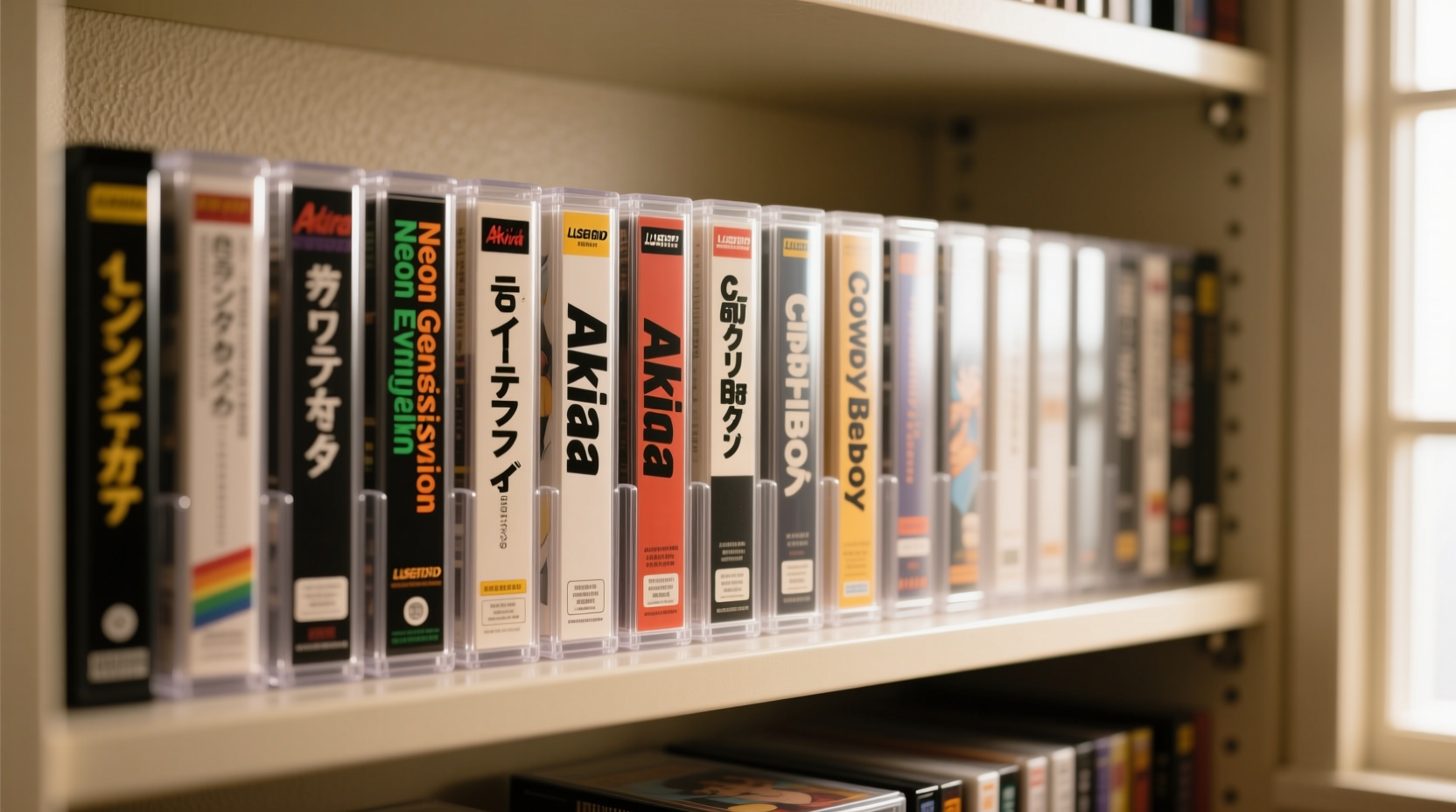
VHS tapes and LaserDiscs are engineered for vertical orientation during storage—not horizontal stacking. When laid flat, the magnetic tape’s polyester base and oxide layer experience uneven pressure, especially near the edges where the shell meets the reel. Over months, this induces edge curling and pack slip, compromising tape path alignment during playback. LaserDiscs suffer similar stress: their aluminum reflective layer rests on a polycarbonate substrate that micro-warp under sustained lateral load. Archival studies at the Library of Congress confirm that vertically stored tapes retain 92% signal integrity after 25 years—versus just 63% for horizontally stacked units.
The Shelf Setup That Actually Works
- 💡 Use adjustable, solid-wood or powder-coated steel shelves—no particleboard (it off-gasses formaldehyde and absorbs ambient moisture).
- 💡 Install shelf depths no greater than 10 inches: deeper shelves encourage leaning, which creates torque on tape spindles and disc hubs.
- ✅ Label every spine with permanent, pigment-based ink—not ballpoint or thermal printers—and include acquisition date and playback history.
- ⚠️ Never store tapes inside original clamshell cases with paper inserts: acidic paper leaches lignin onto tape surfaces, accelerating binder breakdown.
| Storage Method | Warp Risk (5-yr avg) | Airflow Rating | Inspection Ease | Recommended For |
|---|---|---|---|---|
| Vertical, labeled, spaced ¼” apart | Low | ★★★★★ | ★★★★★ | All collections >10 items |
| Horizontal stacking (even with bookends) | High | ★★☆☆☆ | ★☆☆☆☆ | Short-term transport only |
| Plastic tubs with lids | Very High | ★☆☆☆☆ | ★☆☆☆☆ | Not recommended—traps condensation |
Debunking the “Just Keep It Dry” Myth
A widespread but dangerously misleading belief is that “as long as it’s dry, it’s safe.” This ignores relative humidity hysteresis: rapid fluctuations—even between 30% and 60% RH—cause repeated expansion and contraction of tape binders and disc substrates. The result isn’t immediate warping, but cumulative micro-fractures invisible to the naked eye. Over time, these manifest as dropouts, tracking errors, or irreversible disc clouding.
“Relative humidity stability matters more than absolute dryness. A closet holding steady at 45% RH outperforms one swinging between 25% and 55%—even if the latter averages ‘drier.’” — Preservation Research Division, Northeast Document Conservation Center
That’s why passive solutions like silica gel packs alone fail: they absorb moisture but don’t buffer swings. Instead, pair a hygrometer with a small, closet-rated dehumidifier set to 45% RH—or, in humid climates, use a desiccant-based unit with automatic regeneration.
Long-Term Maintenance You Can’t Skip
- ✅ Inspect tapes quarterly for sticky-shed syndrome: gently pinch the tape edge—if it feels gummy or leaves residue, retire it from playback and consider professional baking (not DIY).
- ✅ Clean LaserDiscs biannually with distilled water and microfiber—never alcohol or window cleaner, which degrade anti-reflective coatings.
- 💡 Store master copies separately from dubs: prioritize archival-grade duplication before deterioration begins.
- ⚠️ Avoid magnetic fields—even refrigerator magnets placed nearby can distort analog audio tracks on VHS.
Everything You Need to Know
Can I store VHS tapes and LaserDiscs in the same closet?
Yes—but not on shared shelves without separation. LaserDiscs tolerate slightly higher humidity (up to 55%), while VHS tapes degrade faster above 50%. Use dedicated zones with individual hygrometer monitoring.
Do UV-blocking closet doors help?
Minimally. Most closet lighting emits negligible UV, but sunlight through windows does. If your closet has glass doors or adjacent windows, install UV-filtering film—not tinted glass, which traps heat and raises internal temperature.
Is freezing tapes a good preservation tactic?
No. Freezing introduces condensation risks during thawing and stresses adhesive layers. Cold storage is only viable for short-term stabilization before professional transfer—and requires strict acclimation protocols.
What’s the best case material for LaserDiscs?
Polypropylene sleeves (not PVC or polystyrene). PVC contains plasticizers that migrate into disc surfaces over time, causing haze and playback noise. Polypropylene is inert, rigid, and static-resistant.




 浙公网安备
33010002000092号
 浙B2-20120091-4