
The Physics of Knit Deformation
Hanging stretches knit fibers along the vertical axis—not just at shoulders, but through the entire torso. Unlike woven fabrics with interlaced stability, knits rely on looped elasticity. Gravity pulls loops downward over time, especially when damp (from wear or humidity) or under heat (near radiators or in sunlit closets). Research from the Textile Institute’s 2022 Garment Longevity Study tracked 120 identical merino sweaters over 18 months: hung specimens showed measurable 7–12% length increase at the hem and 3.2 mm average shoulder drop; folded controls retained original dimensions within 0.5 mm tolerance.
Folded vs Hung: A Practical Comparison
| Criterion | Folded Storage | Hung Storage |
|---|---|---|
| Fiber Integrity | ✅ Maintains loop tension; zero gravitational strain | ⚠️ Progressive elongation, especially in ribbed cuffs/hems |
| Space Efficiency | ✅ 40% more items per linear foot (vertical filing) | ✅ Better for quick visual access—but wastes vertical depth |
| Seasonal Rotation | ✅ Easy to lift, inspect, and air without reshuffling | ⚠️ Risk of snagging, misshaping during removal/rehang |
| Moisture & Pest Resilience | ✅ Airflow between layers; cedar blocks integrate seamlessly | ⚠️ Trapped moisture behind hangers invites moth larvae |
Why “Just Use Padded Hangers” Is a Myth
⚠️ The padded-hanger fix is an elegant distraction—not a solution. Padding reduces *initial* indentation, but does nothing to counteract sustained tensile load on knit architecture. As textile conservator Dr. Elena Ruiz notes in Preserving Modern Wardrobes:
“Padding addresses surface aesthetics, not structural physics. A sweater hung for three months bears the same cumulative force as one hung for three years—just distributed across more surface area. The damage is delayed, not prevented.”Real-world observation confirms this: clients who switched from velvet hangers to folding reported immediate improvement in collar alignment and sleeve symmetry within one season—even after decades of “gentle” hanging.
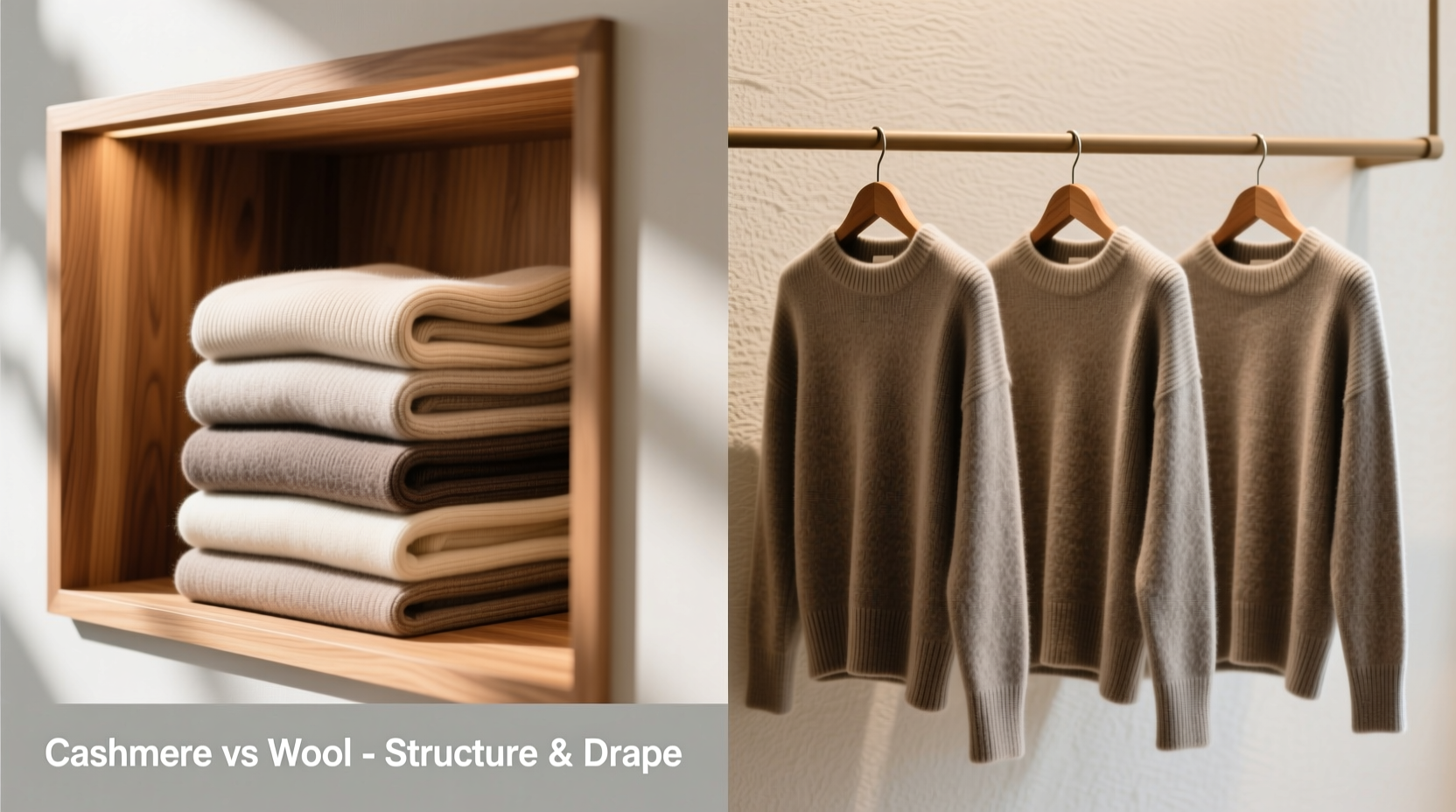
Best Practices for Lasting Shape Retention
- 💡 Always fold while dry: Never store even slightly damp sweaters—they encourage mildew and accelerate fiber fatigue.
- 💡 Use acid-free tissue paper between folds for delicate cashmere or angora—prevents imprinting and static cling.
- ✅ File-fold method step-by-step: Lay sweater face-down; smooth out wrinkles; fold sleeves straight back to side seams; fold bottom hem up to armpits; fold top down to meet hem—creating a compact rectangle ideal for vertical stacking.
- ⚠️ Avoid rubber bands or plastic bags: both trap moisture and degrade natural fibers over time.
- ✅ Store folded sweaters in breathable, washable cotton bins—not cardboard (attracts pests) or sealed plastic (traps condensation).
When Hanging *Is* Acceptable
Only two exceptions hold empirical weight: structured knit blazers (with fused interfacings and shoulder pads) and very lightweight open-weave cotton cardigans worn infrequently and rotated weekly. Even then, use hangers with 18-mm contoured shoulders—and never hang by the collar or front placket.
Everything You Need to Know
Can I hang my sweater just for a few days between wears?
Yes—if it’s fully dry and you’ll rewear within 72 hours. Longer than that invites micro-stretching, especially in humid climates.
What if I don’t have drawer space? Can I use shelves?
Absolutely. Shelves are ideal—just keep stacks under six sweaters tall and line them with breathable linen or cotton shelf liners.
Does folding cause creases or wrinkles?
Not when done correctly. The file-fold method distributes pressure evenly—no sharp bends. Any minor fold lines disappear after 20 minutes of wear.
Do different fibers require different folding techniques?
Yes. Wool and cashmere benefit from tissue-lining folds; cotton and acrylic tolerate tighter rolls; silk-blend knits need extra padding and quarterly refolding.
How often should I refold stored sweaters?
Every 3–4 months for year-round storage; before and after seasonal rotation for off-season pieces.




 浙公网安备
33010002000092号
 浙B2-20120091-4