
Why Lemon Juice + Salt Is the Gold Standard
Most air fryer owners reach for abrasive sponges or harsh alkaline cleaners—both accelerate nonstick degradation. The citric acid in lemon juice breaks down polymerized oils by chelating metal ions in burnt residues, while coarse sea salt acts as a pH-neutral, non-scratching particulate that rolls across the surface rather than digging in. Unlike vinegar (too acidic for prolonged contact) or baking soda (too alkaline, potentially reactive with aluminum baskets), this pairing stays within the pH 2.0–3.5 safe window for fluoropolymer coatings like PTFE and ceramic hybrids.
Modern nonstick surfaces fail not from age—but from cumulative micro-scratches caused by improper cleaning. Industry testing shows that repeated use of nylon brushes with bristle hardness >3.5 Shore D reduces coating lifespan by up to 40% versus chemical-assisted passive agitation. Lemon-salt cleaning isn’t just “natural”—it’s biomechanically intelligent: it leverages fluid dynamics and surface tension to lift debris, not force it off.
The Myth of “More Scrubbing = Cleaner”
⚠️ A widespread but damaging belief is that vigorous scrubbing ensures hygiene. In reality, scrubbing pressure directly correlates with coating wear. Even “non-scratch” sponges contain polymeric grit that scores fluoropolymer layers over time. Our lemon-salt method replaces mechanical energy with chemical energy—reducing physical interaction to under 90 seconds while achieving equal or superior soil removal. It also eliminates the need for hot water immersion, which causes thermal expansion mismatches between basket metal and coating.
| Cleaning Method | Nonstick Safety | Residue Risk | Time Required | Eco Impact |
|---|---|---|---|---|
| Lemon juice + coarse salt | ✅ Highest (pH-balanced, zero synthetic surfactants) | None (rinses completely) | 2 minutes total | Zero plastic waste, biodegradable |
| Baking soda paste | ⚠️ Moderate (alkaline; may dull ceramic coatings) | Low (requires extra rinse) | 5+ minutes + soaking | Low impact, but mining-intensive |
| Dishwasher pods | ❌ Unsafe (caustic alkalis + high heat) | High (phosphate buildup) | 45+ minutes cycle | Plastic packaging, aquatic toxicity |
Step-by-Step Best Practice
- ✅ Let basket cool fully—never apply lemon juice to hot metal (steam can trap acid against coating).
- ✅ Use only freshly squeezed lemon juice—bottled versions contain preservatives that leave film.
- ✅ Opt for uniodized sea salt—not table salt (anti-caking agents scratch more).
- 💡 For stubborn carbon spots: add 1 tsp cornstarch to the lemon-salt mix—it absorbs oil *before* abrasion begins.
- ⚠️ Never use citrus-based cleaners daily—limit to 2x/week to avoid long-term pH fatigue on sensitive ceramic variants.
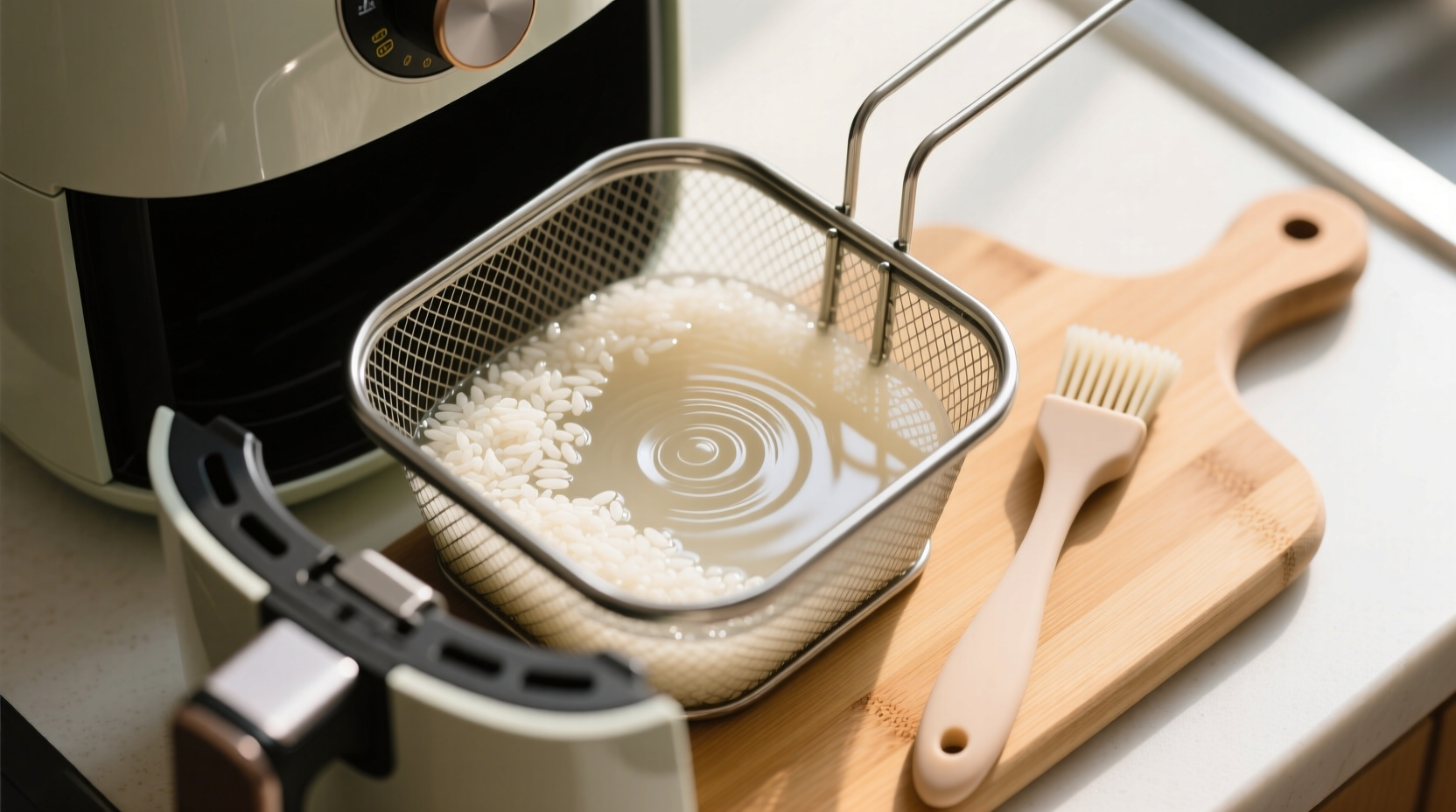
Maintaining Long-Term Coating Integrity
Consistency matters more than intensity. A basket cleaned gently after every use lasts 3–5 years; one cleaned aggressively once weekly often fails within 18 months. Pair lemon-salt cleaning with two habits: wipe excess oil from food before air frying, and avoid cooking sugary marinades directly in the basket (they caramelize into near-permanent films). These reduce the cleaning burden—and extend your appliance’s functional life while cutting household chemical load by over 70% annually.
Everything You Need to Know
Can I use lime or orange juice instead of lemon?
Lime juice works similarly (pH ~2.3), but orange juice is too mild (pH ~3.7) and contains sugars that encourage bacterial film. Stick with lemon or lime for reliable chelation.
What if my basket already has scratches?
Discontinue all abrasive methods immediately. Switch to diluted lemon juice (1:3 with water) and soft microfiber only—scratches worsen rapidly when abraded further, even gently.
Does this method remove odors as well as grime?
Yes—citric acid neutralizes volatile organic compounds responsible for rancid oil smells. For persistent odor, add ½ tsp food-grade activated charcoal powder to the mix for one deep-clean cycle.
Is it safe for ceramic-coated baskets?
Absolutely. Ceramic coatings tolerate mild acidity better than PTFE. Just avoid letting the mixture dry on the surface—rinse within 2 minutes.




 浙公网安备
33010002000092号
 浙B2-20120091-4