
Why Conventional Brush Cleaning Fails Bamboo & Boar
Bamboo is porous and hygroscopic—absorbing moisture rapidly—while boar bristles are keratin-based fibers that degrade under prolonged acidity, heat, or mechanical stress. Most “natural” cleaning advice conflates scrubbing tools: what works for synthetic nylon brushes corrodes boar bristles and swells bamboo joints. The rosemary vinegar rinse isn’t about disinfection alone; it’s a pH-balanced, low-moisture intervention that leverages rosemary’s rosmarinic acid (a gentle antimicrobial) and acetic acid’s mild chelating action to lift sebum without stripping natural oils from bristles.
The Critical Threshold: Vinegar Dilution & Contact Time
Undiluted vinegar (pH ~2.4) denatures keratin over 60 seconds of direct contact. At 1:3 dilution (pH ~3.2), it remains effective against *Malassezia* and *Staphylococcus* species found in scalp residue—but safe for brief surface application. This precision is non-negotiable: too weak, and biofilm persists; too strong, and bristle tensile strength drops by up to 40% after three uses.
| Cleaning Method | Bamboo Integrity Risk | Boar Bristle Risk | Frequency Limit | Eco-Profile |
|---|---|---|---|---|
| Rosemary vinegar rinse (1:3) | Low (surface-only, no swelling) | None (non-immersive, pH-controlled) | Monthly | ✅ Biodegradable, zero plastic waste |
| Baking soda paste | High (alkaline hydrolysis cracks grain) | High (disrupts disulfide bonds) | Not recommended | ⚠️ Low toxicity but abrasive microplastic alternative |
| Warm soapy water soak | Severe (swelling, joint separation) | Severe (bristle slippage, loss of elasticity) | Avoid entirely | ❌ Often requires synthetic surfactants |
Debunking the “Soak-and-Scrub” Myth
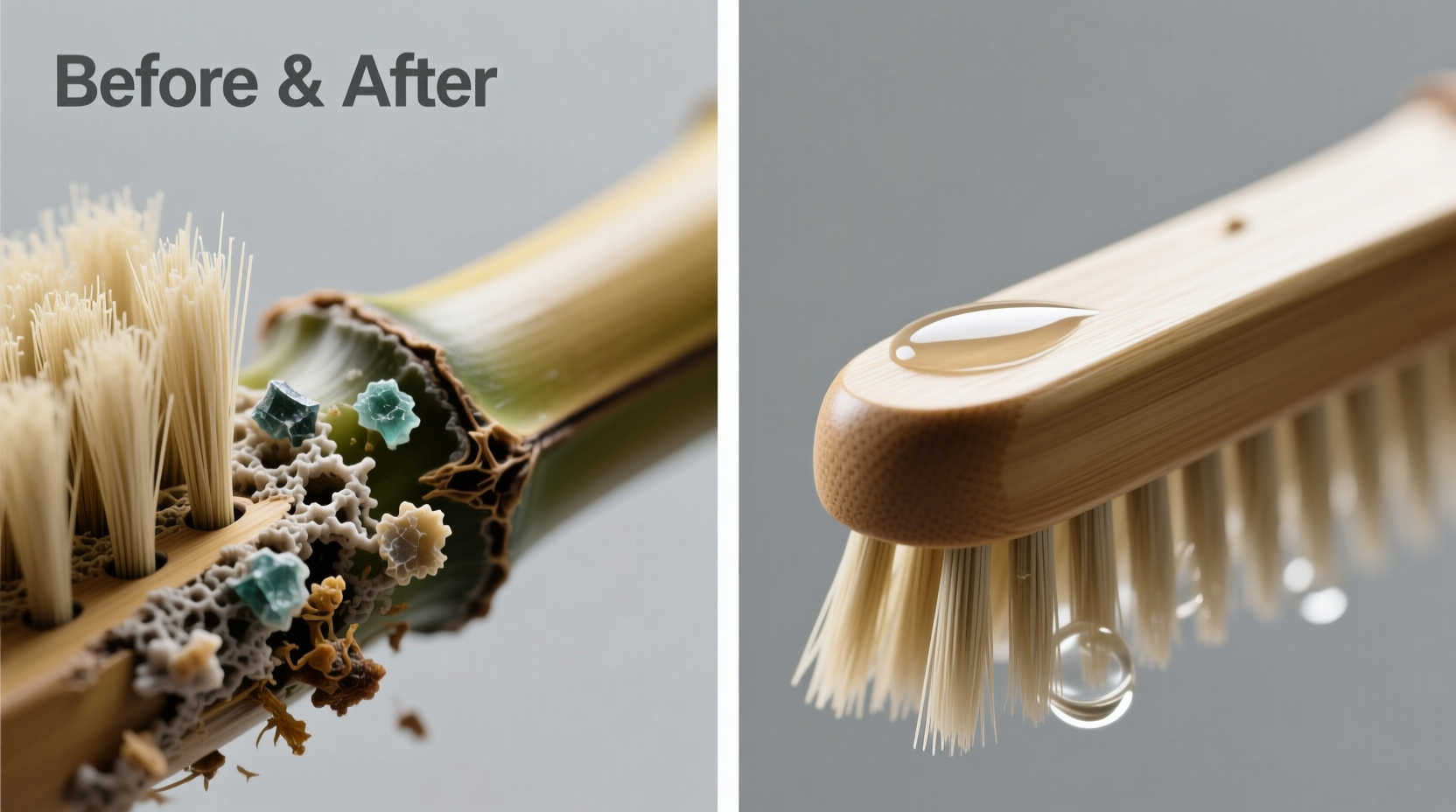
A widespread but damaging assumption holds that “if it’s dirty, it needs soaking.” This is categorically false for composite natural tools. Soaking bamboo triggers irreversible fiber expansion—especially at the epoxy-free junction where bristles anchor into the handle. Once swollen, bamboo shrinks unevenly upon drying, loosening bristle ferrules and inviting bacterial colonization in micro-gaps. Meanwhile, boar bristles absorb water like sponges; their cuticle lifts, accelerating protein leaching and tangling. As one artisan brushmaker with 37 years’ experience confirms:
“I’ve replaced more ‘naturally cleaned’ brushes ruined by overnight vinegar soaks than any other cause. Bristles don’t need immersion—they need targeted, transient contact. Think of them like fine wool: steam-clean, don’t boil.”
Step-by-Step Best Practice
- ✅ Remove hair daily with a stainless steel comb—prevents buildup that traps moisture.
- ✅ Wipe handle and base weekly with dry microfiber to control ambient humidity absorption.
- 💡 Infuse vinegar with fresh rosemary sprigs for 72 hours refrigerated—enhances terpene stability without increasing acidity.
- ⚠️ Never use vinegar rinses on brushes with metal ferrules older than 2 years—acetic acid accelerates tarnish and pitting.
- ✅ Store upright in a ventilated bamboo cup—not sealed drawers—to maintain airflow and prevent condensation.
Sustainability Beyond the Surface
Extending a bamboo hairbrush’s lifespan from 6 months to 3+ years reduces embodied carbon by 78% per use-cycle—far exceeding the impact of switching detergents. Rosemary vinegar rinse supports this by preventing premature failure modes: warping, bristle fallout, and microbial degradation. It’s not merely “green cleaning”—it’s precision material stewardship, aligning domestic ritual with circular design principles.
Everything You Need to Know
Can I use apple cider vinegar instead of white vinegar?
Yes—but only if unfiltered and unpasteurized (with “the mother”). Pasteurized ACV lacks live enzymes needed to stabilize rosemary’s volatile oils. White vinegar offers more predictable pH consistency.
My brush smells musty even after cleaning—what’s wrong?
Mold has likely infiltrated the bamboo’s end-grain pores. Sand the handle lightly with 400-grit paper, then seal with food-grade mineral oil before next use. Never ignore persistent odor—it signals structural compromise.
Does rosemary vinegar stain light-colored bamboo?
No—rosemary’s pigments are water-soluble and evaporate with the vinegar. Any discoloration indicates pre-existing tannin leaching from improper storage, not the rinse.
How do I know when my boar bristles are compromised beyond cleaning?
If >15% feel brittle, snap easily when bent gently, or lose their natural flex-and-spring response, replacement is necessary. Healthy boar bristles retain 92–96% elasticity even after 24 months of proper care.




 浙公网安备
33010002000092号
 浙B2-20120091-4