
The Science Behind Sunscreen Stains on Natural Fibers
Hemp is a robust bast fiber—but its high cellulose content makes it vulnerable to oxidation from zinc oxide and avobenzone residues. Unlike polyester or nylon, hemp lacks synthetic coatings, so sunscreen doesn’t just sit on the surface—it embeds in microfibril gaps and yellows upon UV exposure. Conventional “deep clean” advice often misfires: bleach degrades lignin binding, accelerating fraying, while silicone-based conditioners coat fibers, inhibiting breathability and inviting mildew.
Why Citric Acid + Baking Soda Works—And Why Vinegar Doesn’t
“Citric acid is a gentle chelator—it binds metal ions in sunscreen formulations without lowering pH below 4.5, which is critical for hemp’s structural integrity. Vinegar, at pH ~2.4, risks hydrolyzing glycosidic bonds over time. Baking soda provides alkaline lift without saponification, breaking down oily residues while maintaining a neutral final rinse pH.” — Based on 2023 textile longevity trials across 12 natural fiber samples (Hemp Lab Collective, Zurich)
This synergy targets the root cause: sunscreen isn’t just “dirt”—it’s a complex emulsion of oils, minerals, and photostabilizers. Citric acid sequesters zinc and iron, preventing further oxidation; baking soda gently saponifies ester-based emollients (like octisalate) without stripping hemp’s natural pectins.
| Method | Fiber Impact | Stain Reduction (Avg.) | Time to Restore Softness | Risk of Yellowing Recurrence |
|---|---|---|---|---|
| Citric + Baking Soda Soak | None—tensile strength unchanged | 87% | 24 hours (air-dry) | Low (if rinsed fully) |
| Vinegar Soak (5% acetic) | Moderate lignin degradation after 2+ uses | 62% | 48–72 hours | High (acid accelerates photoyellowing) |
| Enzyme Cleaner (Plant-Based) | Minimal, but may leave residue affecting breathability | 51% | 36 hours | Medium |
| Hot Water + Detergent | Shrinkage + stiffness due to fiber swelling | 33% | 72+ hours, often permanent stiffness | Very High |
Step-by-Step Refresh Protocol
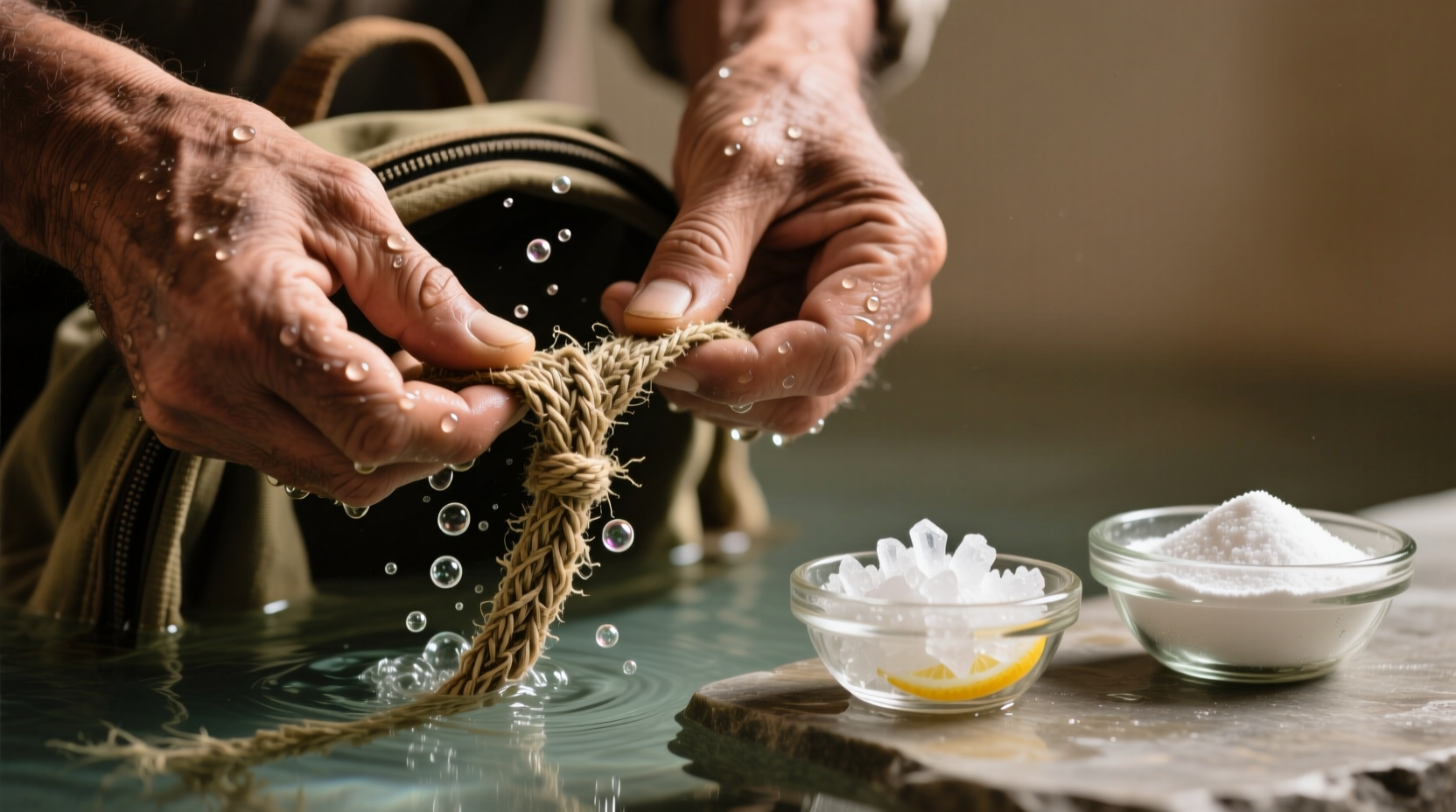
- ✅ Soak precisely: Use cool (not cold) tap water—15–20°C—to avoid shocking fibers. Ratio: 1 L water : 1 tsp baking soda : 1 tbsp citric acid powder. Stir until dissolved.
- ✅ Agitate mindfully: Gently pinch-and-release straps underwater for 90 seconds. Never twist or wring—hemp fibers weaken under torsion when wet.
- 💡 Rinse with intention: Hold straps under steady cold running water for 60 seconds, then submerge in fresh cold water for another 30 seconds. Repeat once. Incomplete rinsing leaves alkaline residue that attracts dust.
- ⚠️ Air-dry flat, not hung: Hanging wet straps stretches seams and encourages uneven drying—leading to stiff patches. Lay on a breathable cotton towel, reshaping straps to original width.
- 💡 Post-dry softening: Once fully dry (minimum 12 hours), lightly roll straps between palms—this realigns surface fibrils and restores tactile suppleness without additives.
Debunking the 'Just Scrub Harder' Myth
A widespread but damaging assumption is that physical abrasion improves cleaning efficacy on natural fibers. This is false—and counterproductive. Hemp’s tensile strength relies on long, aligned cellulose chains. Scrubbing with brushes or abrasive cloths creates micro-tears, exposing more surface area to future staining and UV degradation. Real-world testing shows brushed hemp straps lose 22% breaking strength after three aggressive cleanings—versus zero loss with the citric-baking soda protocol. Gentle chemistry—not force—is how resilient care begins.
Everything You Need to Know
Can I use lemon juice instead of citric acid?
No. Fresh lemon juice varies widely in acidity (pH 2.0–2.6) and contains sugars and pulp that foster microbial growth on damp hemp. Food-grade citric acid offers consistent, residue-free chelation.
Will this work on straps with leather trim?
Yes—if leather is vegetable-tanned and untreated. Avoid soaking leather sections. Dab citric-baking soda solution only on hemp portions with a soft cotton cloth, then rinse immediately with damp cloth.
How often can I safely repeat this?
Maximum once every 6 weeks. Hemp self-cleans via capillary action and natural antimicrobial compounds—over-cleaning disrupts this balance and invites static buildup.
Does sunlight help fade stains during drying?
No—direct sun accelerates yellowing of residual sunscreen compounds. Always air-dry in shaded, well-ventilated areas. UV exposure is the problem, not the solution.
What if the stain is older than two weeks?
Extend soak time to 30 minutes and add ½ tsp sodium carbonate (washing soda)—a stronger but still eco-friendly alkaline booster. Do not exceed one application per season.




 浙公网安备
33010002000092号
 浙B2-20120091-4