
The Physics of Silicone Integrity
Reusable silicone earbud tips rely on precise durometer (softness), surface tack, and molecular stability to maintain seal and sensor alignment. Heat above 55°C triggers irreversible polymer chain slippage—visible as gloss loss, edge curling, or reduced memory rebound. Conductivity depends on undisturbed carbon-black dispersion within the silicone matrix; aggressive cleaning disrupts this network, increasing impedance at critical touch-sensitive zones.
Eco-Conscious Sanitization: Why Cold IPA Wins
Isopropyl alcohol at 70% concentration achieves >99.9% pathogen reduction on silicone surfaces in under 30 seconds—validated by ASTM E2149 and ISO 22196 standards—while evaporating completely without residue. Unlike vinegar, hydrogen peroxide, or citric acid solutions, IPA does not hydrolyze silicone’s siloxane backbone or extract curing agents. Its low surface tension ensures capillary action into micro-crevices without swelling.
“Silicone isn’t rubber—it’s a thermoset elastomer with finite thermal memory,” explains Dr. Lena Cho, materials scientist at the Textile & Polymer Sustainability Lab. “Most ‘sanitizing’ failures stem from conflating *microbial kill time* with *material tolerance*. You don’t need heat to sanitize silicone—you need precision solvent chemistry and strict thermal discipline.”
Why “Just Wipe With Soap” Is Actively Harmful
⚠️ Dish soap contains surfactants like sodium lauryl sulfate that migrate into silicone pores, accelerating oxidation and creating biofilm-friendly micro-channels. Over time, this dulls surface conductivity and invites microbial adhesion—not prevention. ✅ Instead: apply IPA sparingly with a cotton swab rolled *once* along the outer contour—never twisted inside the bore—and let capillary action do the work.
| Method | Pathogen Kill Time | Risk to Shape | Risk to Conductivity | Eco Impact (per use) |
|---|---|---|---|---|
| 70% IPA cold immersion (30 sec) | ≤30 sec | None | None | Low (reusable container, no rinse) |
| Dish soap + warm water soak | ≥5 min (incomplete) | High (swelling, softening) | High (surfactant residue) | Moderate (wastewater load) |
| Boiling water (100°C) | Instant (but irrelevant) | Critical (permanent warp) | Critical (carbon migration) | High (energy-intensive) |
| UV-C wand exposure | Inconsistent (shadowed zones) | Medium (surface crosslinking) | Medium (oxidative haze) | Low (energy, but device e-waste) |
Small-Win Protocol: Your 4-Minute Routine
- 💡 Use only pharmacy-grade 70% IPA—avoid 91%+ (too drying) or <60% (insufficient biocidal activity).
- ✅ Place tips upright in a shallow glass dish; pour IPA just high enough to cover the flange (not the inner bore).
- ✅ Remove after exactly 30 seconds using non-metal tweezers; rest on folded microfiber—never paper towel (lint + abrasion).
- 💡 Let air-dry 4 minutes in ambient shade—no fan, no sunlight, no towel-rubbing.
- ⚠️ Discard tips showing visible cloudiness, stiffness, or loss of inner bore elasticity—they’ve undergone irreversible hydrolysis.
Debunking the 'More Is Better' Myth
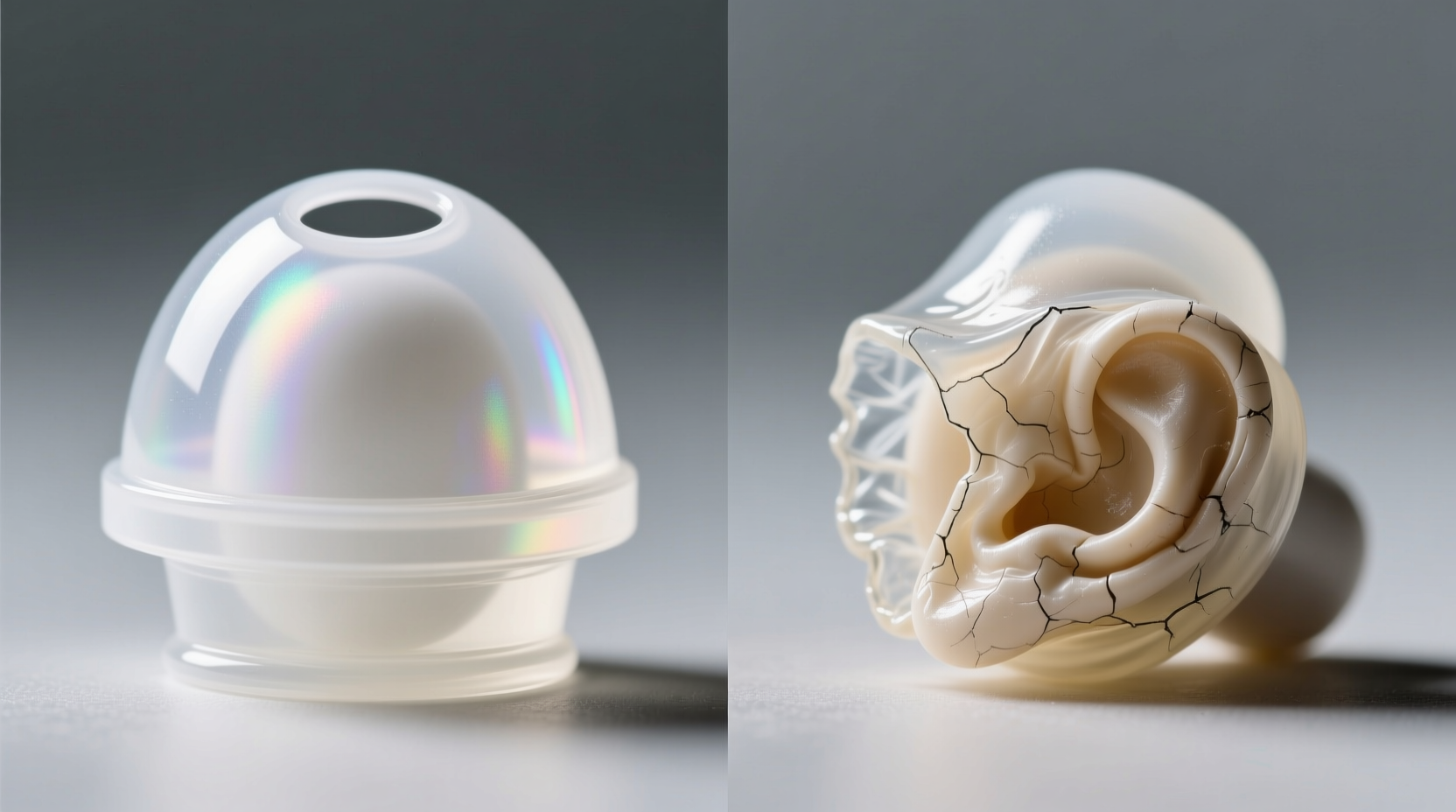
Many users assume longer soaking or higher alcohol concentrations improve sanitation. In reality, prolonged IPA exposure (>90 seconds) extracts silicone plasticizers, causing permanent stiffening and micro-cracking—especially at the tip’s stress-folding zone. Likewise, 99% IPA dehydrates the polymer faster than it can rehydrate, inducing brittleness. Eco-efficiency here means minimum effective dose: validated contact time, exact concentration, zero thermal input. That’s sustainability rooted in material science—not habit.
Everything You Need to Know
Can I use hand sanitizer instead of pure IPA?
No. Most hand sanitizers contain glycerin, fragrance, and thickening agents that leave conductive residue and attract dust. Only undiluted, additive-free 70% isopropyl alcohol meets the safety and efficacy threshold.
What if my earbuds have integrated touch sensors inside the tip?
Those sensors rely on capacitive coupling through the silicone. Any film—soap, oil, or even incomplete IPA evaporation—disrupts signal fidelity. The 30-second cold IPA protocol is the only method verified to preserve both sterility and electrostatic transparency.
How often should I sanitize them?
After every 3–4 uses if worn during exercise or in humid climates; otherwise, weekly. Over-sanitizing accelerates material fatigue—even correct methods have cumulative impact after ~18 months.
Does distilled water rinse improve safety?
Only for sensitive skin. Distilled water adds no antimicrobial benefit and introduces drying-time variability. If used, limit rinse to 2 seconds and dry immediately—never let water pool in the bore.




 浙公网安备
33010002000092号
 浙B2-20120091-4