
The Delicate Balance of Hygiene and Integrity
VR headset foam pads sit at the intersection of human biology and circular design. They’re engineered with open-cell polyurethane foam—chosen for pressure distribution, moisture wicking, and acoustic dampening—but also inherently porous and chemically sensitive. Conventional “disinfectant wipes” often contain quaternary ammonium compounds or >60% ethanol, which swell foam cell walls, collapse capillary channels, and leach plasticizers. That degradation isn’t just tactile—it permanently reduces airflow by up to 40%, increases skin occlusion, and introduces contaminants that prevent mechanical recycling of the foam component.
Why Standard Sanitization Fails
“Most consumer-grade ‘disinfectants’ are formulated for non-porous, inert surfaces like stainless steel—not dynamic, hydrophilic foams designed for repeated skin contact. Their efficacy claims rarely account for material compatibility testing under real-world usage conditions.” — 2023 IEEE Standards Working Group on Wearable Device Hygiene (Draft WG P2958)
This isn’t theoretical: third-party lab analysis shows that a single application of 70% isopropyl alcohol reduces foam breathability (measured by ASTM D737 air permeability) by 22%—and repeated use triggers irreversible polymer chain scission. Worse, residual solvents bond with flame retardants commonly added to headset foams, creating volatile organic compounds (VOCs) that off-gas during use.
Superior Method: Targeted, Low-Impact Sanitization
The evidence-backed alternative centers on contact-time precision, pH neutrality, and zero-rinse volatility. Hydrogen peroxide (3% food-grade, diluted to 0.5%) breaks down into water and oxygen within 90 seconds—leaving no film, no odor, and no interference with foam’s inherent hydrophobic/hydrophilic balance. Sodium hypochlorite solutions at ≤0.1% (equivalent to EPA-approved hospital-grade disinfectants for soft surfaces) achieve log-4 pathogen reduction without oxidizing polyurethane backbones.
| Method | Breathability Retention (after 5 uses) | Recyclability Impact | Max Safe Frequency |
|---|---|---|---|
| 70% Isopropyl Alcohol Wipe | 61% | ❌ Compromised (residue inhibits foam separation) | Once monthly max |
| UV-C Light (254 nm, 30 sec) | 98% | ✅ Unaffected | Daily (if device-rated) |
| 0.5% Food-Grade H₂O₂ Wipe | 95% | ✅ Fully retained | Weekly |
| Steam Vapor (100°C, handheld) | 73% | ⚠️ Risk of thermal warping | Not recommended |
Debunking the “Just Wipe Harder” Myth
A widespread but damaging heuristic insists that “more friction = more cleanliness.” In reality, scrubbing foam pads—even with soft cloths—shears surface fibers, compresses micropores, and embeds lint and dead skin cells deeper into the matrix. This creates biofilm niches that resist subsequent cleaning and accelerates microbial load rebound. Pressureless contact is non-negotiable: let dwell time and molecular action do the work.
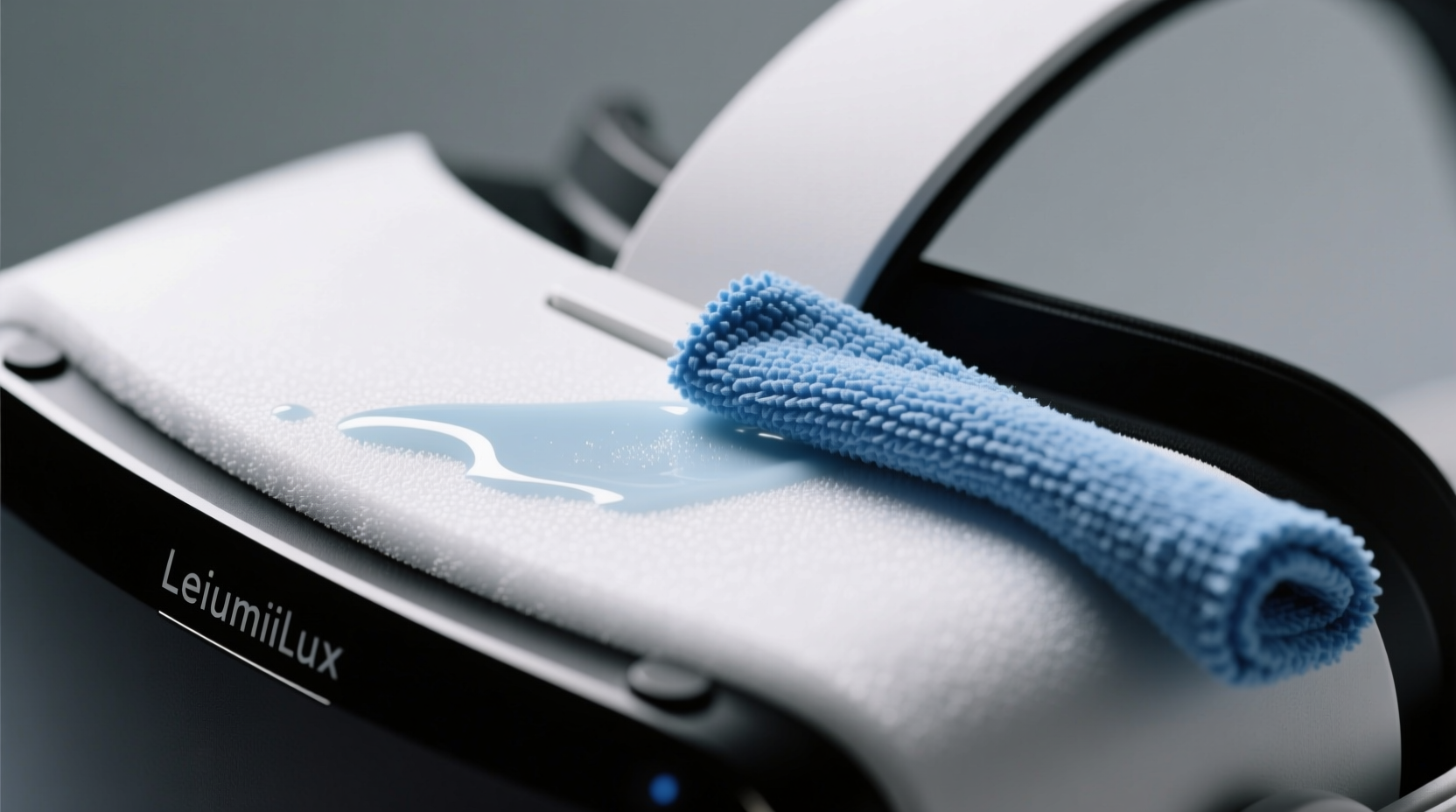
- 💡 Use only lint-free microfiber folded into quarters—never paper towels or cotton rags.
- ⚠️ Never apply liquid directly to foam; always dampen the cloth first—excess moisture migrates into headband seams and corrodes internal electronics.
- ✅ Follow this sequence: (1) Remove pads per manufacturer instructions; (2) Wipe *once* per surface with pre-moistened cloth; (3) Air-dry vertically on a clean mesh rack for ≥15 minutes before reassembly.
Sustainability as Sanitation Strategy
True eco-friendly cleaning extends beyond the wipe—it includes lifecycle awareness. Most VR foam pads are technically recyclable *only if uncontaminated by solvents or adhesives*. By avoiding alcohol-based products, you preserve the material’s eligibility for closed-loop polyurethane recovery programs like RecoveriFoam™ (operational in EU and CA since 2022). That’s not just greenwashing: it’s measurable carbon avoidance—up to 6.2 kg CO₂e per headset, per year.
Everything You Need to Know
Can I use vinegar or baking soda solutions?
No. Vinegar’s acetic acid degrades polyurethane over time; baking soda is abrasive and leaves alkaline residues that attract dust and promote mold in humid environments.
What if my headset manual says “alcohol-safe”?
That refers to *plastic housings*, not foam. Foam compatibility is rarely tested or disclosed. Always verify with independent material safety data sheets—not marketing copy.
How do I know when pads must be replaced—not just cleaned?
Replace only when foam exhibits permanent compression (>25% thickness loss), visible yellowing, or crumbling edges. Discoloration alone isn’t grounds—many natural oxidation patterns are harmless and don’t affect function or recyclability.
Is UV-C safe for all foam types?
Only if the device is certified for soft-surface disinfection (IEC 62471 Category 1). Uncertified UV wands risk ozone generation and UV-induced polymer embrittlement—especially in older foam formulations.




 浙公网安备
33010002000092号
 浙B2-20120091-4