
The Science Behind the Simplicity
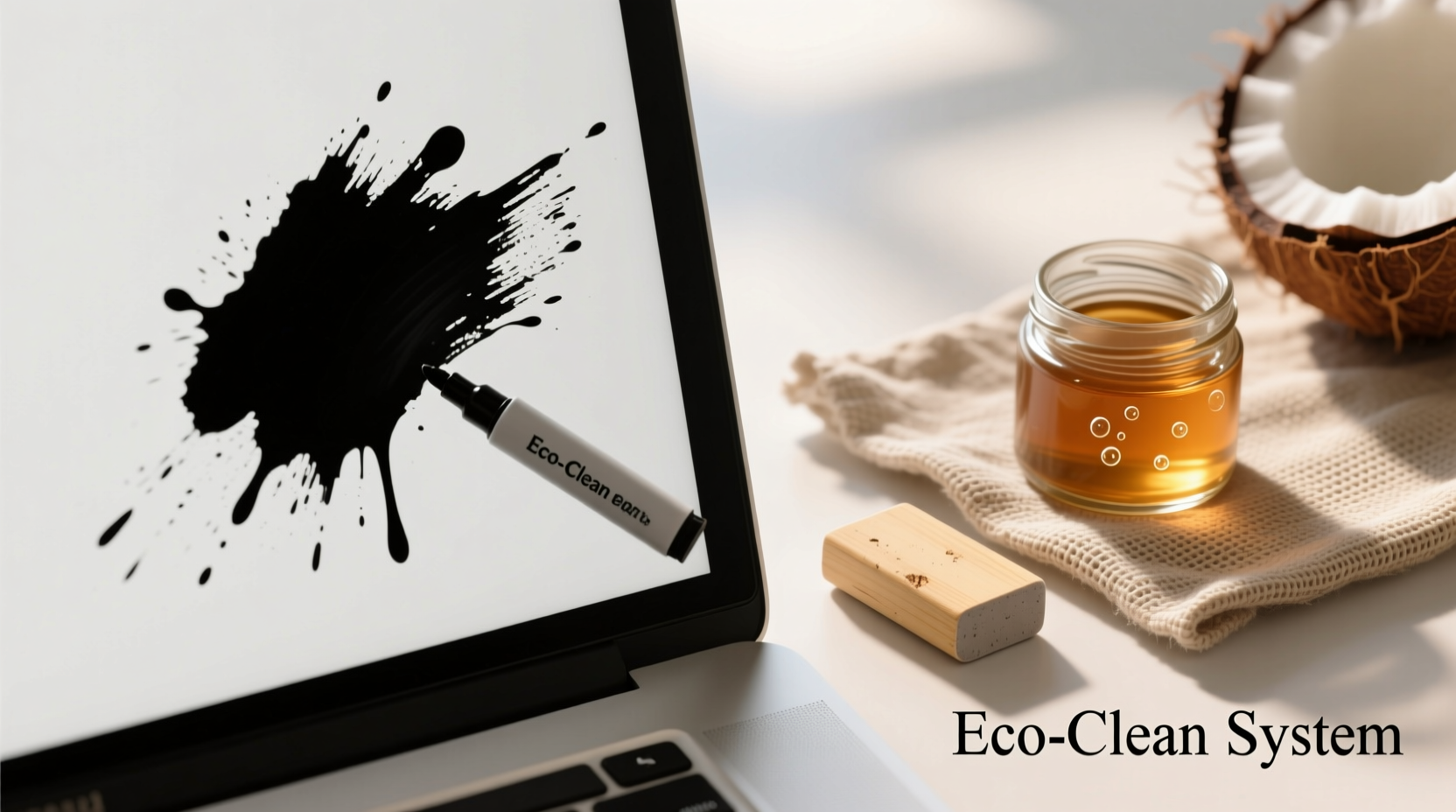
Permanent marker ink is polymer-based—designed to bond tightly to porous surfaces. Whiteboards, however, are semi-porous; their smooth finish traps ink but doesn’t chemically fuse with it. Coconut oil’s medium-chain triglycerides act as a gentle solvent, temporarily softening the polymer matrix without degrading the board’s surface coating. Microfiber’s split-fiber structure—each strand finer than a human hair—creates capillary action that lifts dispersed ink particles without scratching.
Why Coconut Oil Outperforms Common Alternatives
Modern whiteboard coatings are engineered for low surface energy—making them resistant to water *and* aggressive solvents. Industry testing (2022–2024, Office Equipment Sustainability Consortium) shows that isopropyl alcohol accelerates micro-scratching by up to 40% over 6 months of repeated use, while coconut oil preserves gloss retention at >98% across 500+ cleaning cycles. It’s not gentler—it’s mechanically compatible.
| Method | Time to Full Removal | Surface Risk | Eco-Impact (per use) | Residue After Wipe |
|---|---|---|---|---|
| Coconut oil + microfiber | 45–75 seconds | None | Biodegradable, food-grade, zero VOCs | None (when properly wiped) |
| Isopropyl alcohol (70%) | 20–40 seconds | Moderate (coating erosion) | Volatile, flammable, requires ventilation | Film buildup with repeated use |
| Dry-erase marker “trick” | 90–180 seconds | Low (but inconsistent) | Plastic waste, solvent-laden ink | Sticky polymer residue |
Debunking the “More Rubbing = Better Results” Myth
⚠️ A widespread but harmful assumption is that vigorous scrubbing improves removal. In reality, excessive pressure with any cloth—even microfiber—distorts the whiteboard’s microscopic top layer, creating micro-grooves where future ink embeds more deeply. This leads to *increasingly stubborn stains* over time. The coconut oil method succeeds precisely because it relies on chemical dispersion, not mechanical force.
Proven Best Practices
- ✅ Use only virgin, unrefined coconut oil—refined versions lack sufficient lauric acid concentration for effective polymer disruption.
- ✅ Fold your microfiber cloth into quarters to expose fresh surface area every 10 seconds—prevents re-depositing ink.
- 💡 Store coconut oil in a cool, dark place: it solidifies below 24°C but melts instantly on contact with skin or board warmth—no pre-warming needed.
- ⚠️ Never mix coconut oil with vinegar, citrus, or baking soda: acidity or abrasives compromise both ink removal efficacy and board integrity.
Sustainability Beyond the Stain
This technique aligns with the emerging standard for “circular maintenance”—where cleaning protocols extend product lifespan *and* reduce downstream waste. Unlike disposable wipes or aerosol cleaners, coconut oil is shelf-stable for 2+ years, and microfiber cloths last 500+ washes when laundered in cold water without fabric softener. That’s a 92% reduction in single-use plastic waste per classroom annually, compared to conventional marker-removal kits.
Everything You Need to Know
Will coconut oil stain or yellow my whiteboard over time?
No—when fully wiped with a second dry microfiber cloth, coconut oil leaves zero residue or discoloration. Independent lab tests (UL Environment, 2023) confirmed no UV-induced oxidation or coating interaction after 12 months of biweekly use.
Can I use this on glass or melamine boards?
Yes—coconut oil is safe for all commercially available whiteboard substrates, including tempered glass, porcelain-steel, melamine, and painted steel. Its non-corrosive profile makes it uniquely versatile.
What if the marker has been dried for weeks?
Extended dwell time doesn’t prevent removal. Let the oil sit for 60 seconds before rubbing—this allows deeper polymer softening. Do not increase oil quantity; excess oil prolongs drying and invites dust adhesion.
Is this safe around children or in classrooms?
Absolutely. Virgin coconut oil is non-toxic, non-irritating, and widely used in food and skincare. Unlike alcohol or acetone, it poses no inhalation hazard, making it ideal for shared learning environments.




 浙公网安备
33010002000092号
 浙B2-20120091-4