
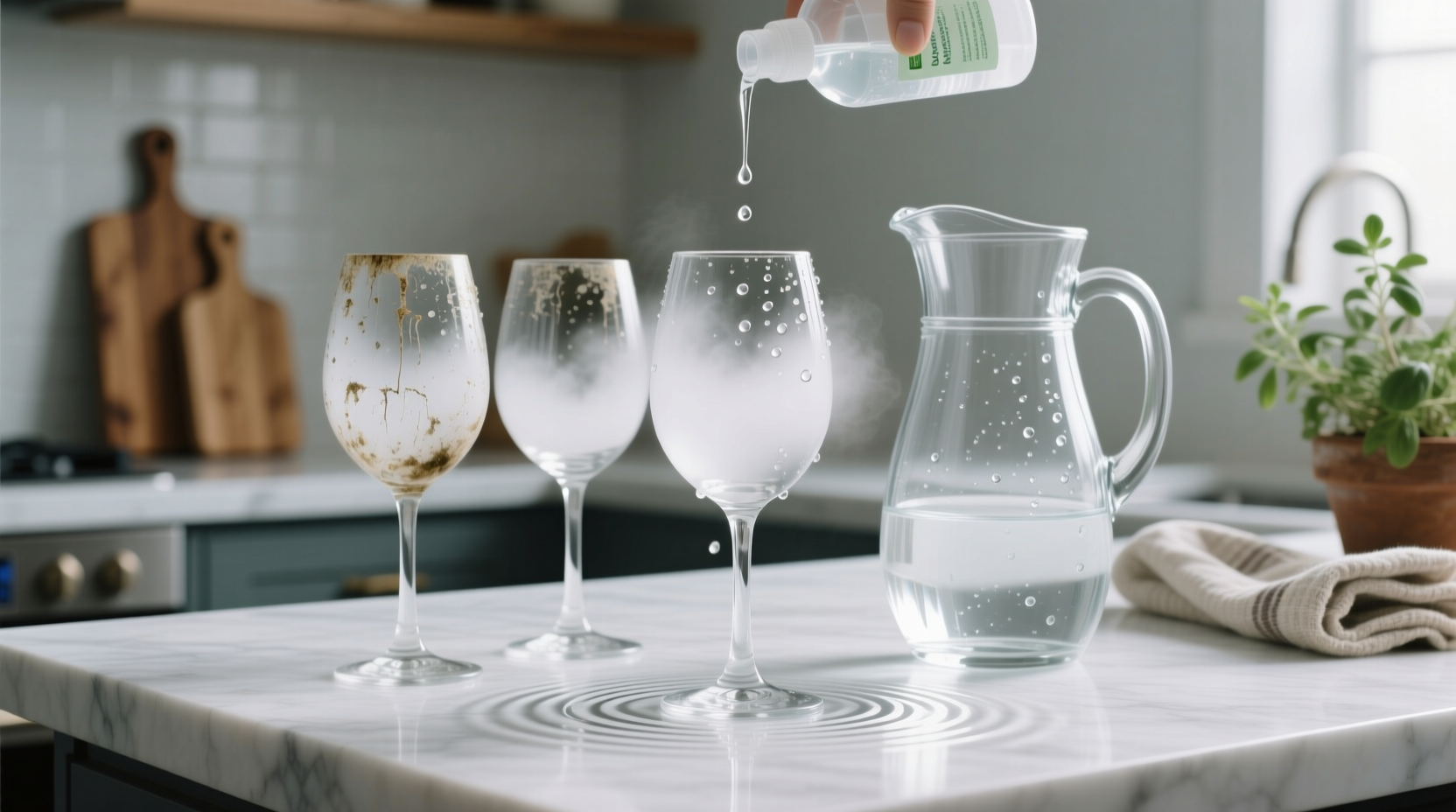
The Science Behind the Haze
That dull, milky film on wine glasses and tumblers isn’t soap scum or grease—it’s calcium carbonate and magnesium hydroxide precipitated from hard water during evaporation or high-heat drying. Unlike permanent etching (caused by excessive alkalinity + heat over time), this deposit is water-soluble in acid. Vinegar’s 5% acetic acid gently chelates these minerals without damaging silica-based glass. Commercial rinse aids work similarly—but rely on synthetic surfactants and petroleum-derived solvents that leave invisible films and contribute to wastewater toxicity.
Why Vinegar Works—And Why Other “Natural” Fixes Don’t
“The pH threshold for effective mineral dissolution in glassware is 3.0–4.5. White vinegar sits at pH 2.4–2.8—strong enough to react rapidly, yet mild enough to preserve glass integrity across hundreds of treatments. Lemon juice, though acidic, contains citric acid that oxidizes and leaves yellowish residues on clear glass. Baking soda is alkaline (pH ~9) and counterproductive: it binds with calcium to form even more stubborn scale.”
Three Proven Methods Compared
| Method | Time Required | Effectiveness on Heavy Buildup | Risk of Damage | Cost per Use |
|---|---|---|---|---|
| Vinegar soak + microfiber dry | 15–20 min active, 5 min dry | ✅ Excellent (even 6-month buildup) | ⚠️ None, if undiluted vinegar isn’t left >30 min | ≤ $0.03 |
| Lemon juice rub | 10 min per glass | ⚠️ Fair (streaks, discoloration) | ✅ Low, but UV-sensitive residue forms | $0.12 |
| Baking soda paste | 5 min scrub + rinse | ❌ Poor (abrasive, worsens haze) | ⚠️ High—micro-scratches refract light | $0.01 |
Avoid This Widespread Misconception
Many believe that “running glasses through an extra hot rinse cycle will ‘burn off’ the cloudiness.” This is dangerously false. Heat above 140°F accelerates mineral crystallization *into* the microscopic pores of glass—transforming reversible surface film into irreversible etching. Dishwasher manufacturers confirm that sustained temperatures above 155°F degrade glass clarity permanently. The fix isn’t more heat—it’s acidic dissolution followed by mechanical removal.
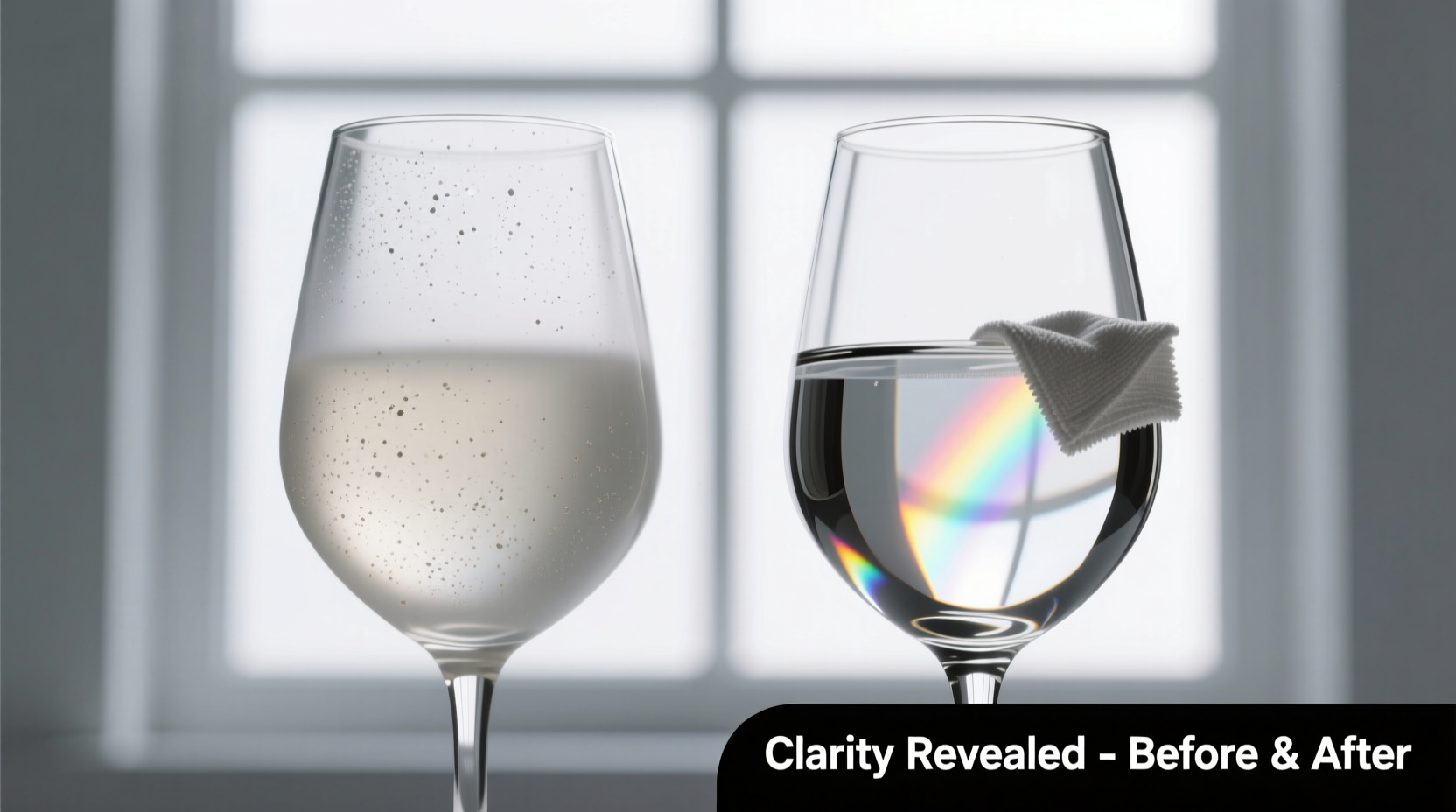
Step-by-Step Restoration Protocol
- ✅ Soak: Submerge cloudy glasses in warm water + 1 part white vinegar for exactly 15 minutes. No boiling. No overnight.
- ✅ Rinse: Use cold distilled or filtered water—not tap—to prevent redepositing minerals.
- ✅ Dry: Polish immediately with lint-free microfiber—never paper towels or cotton cloths that leave fibers or static-attracted dust.
- 💡 Prevention: Install a point-of-use faucet filter (carbon + ion-exchange) for hand-washing sinks. It reduces hardness by 70–90% and extends vinegar intervals to once monthly.
- ⚠️ Never: Place crystal or hand-blown glass in the dishwasher—even with vinegar. Thermal shock can cause microfractures.
Everything You Need to Know
Can I use apple cider vinegar instead of white vinegar?
No. Apple cider vinegar contains tannins and residual sugars that leave faint amber film and attract dust. Only distilled white vinegar guarantees optical clarity and residue-free results.
Why does my dishwasher still leave spots even when I use vinegar?
Because vinegar was likely added to the rinse aid compartment—where heat volatilizes acetic acid before contact with dishes. Always place vinegar in the bottom rack, away from heating elements, or use a dishwasher-safe vinegar pod designed for the wash cycle.
Will this method work on cloudy plastic drinkware?
No—plastic cloudiness is usually UV degradation or solvent stress crazing, not mineral deposits. Vinegar won’t restore it and may accelerate yellowing. Reserve this method strictly for glass, Pyrex, and borosilicate.
How often should I do this maintenance?
For households with >12° dH (German hardness units), perform a full soak every two weeks. With a faucet filter installed, extend to once per month. Monitor by holding glass up to sunlight—if rainbow halos appear around edges, mineral buildup has resumed.




 浙公网安备
33010002000092号
 浙B2-20120091-4