
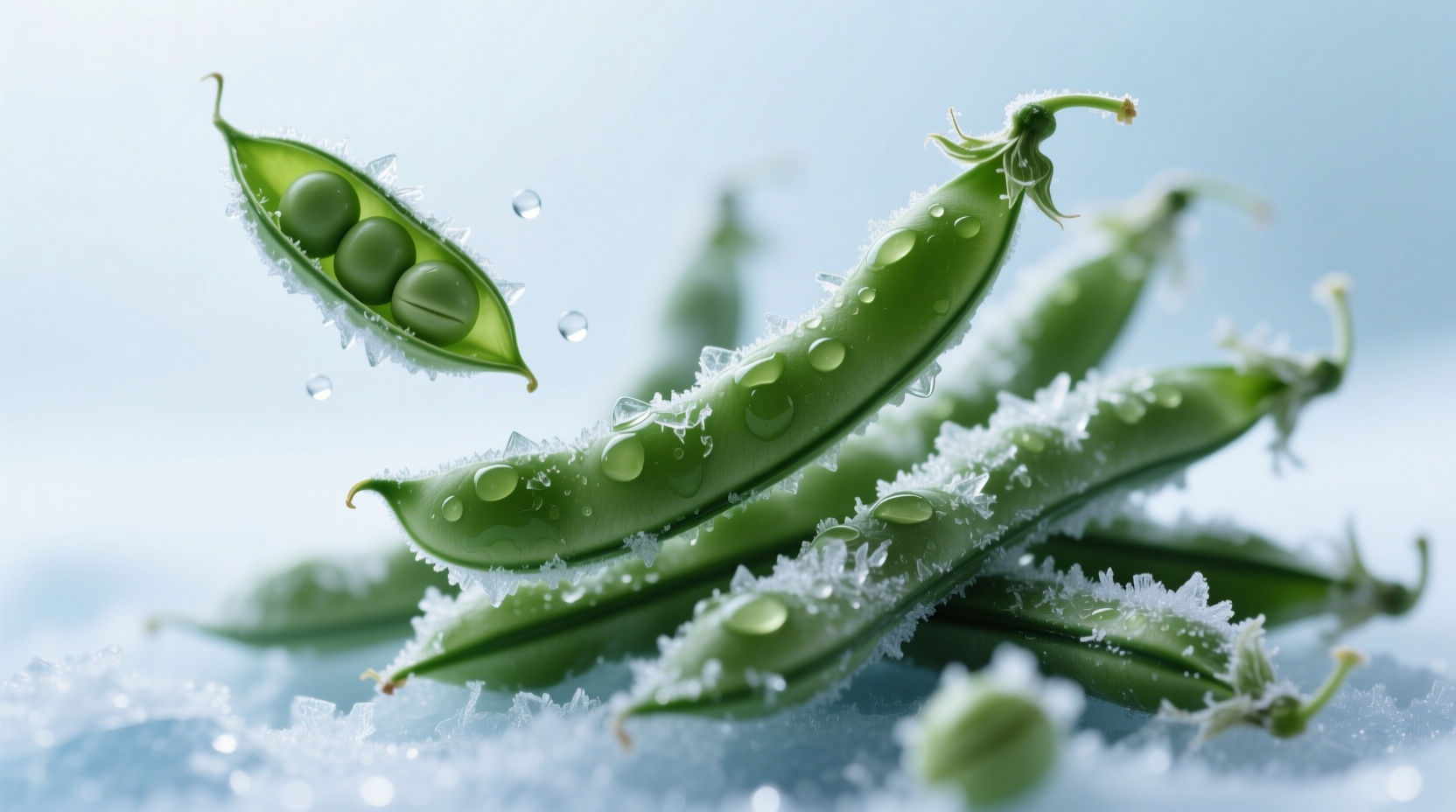
Why “Just Throw Them in the Freezer” Is a Costly Mistake
Home cooks routinely skip blanching under the misconception that freezing alone halts all biochemical activity. It does not. Enzymes such as lipoxygenase, peroxidase, and polyphenol oxidase remain fully active at −18°C (0°F)—the FDA-recommended freezer temperature. These enzymes catalyze lipid oxidation (rancidity), chlorophyll degradation (loss of vibrant green), and pectin breakdown (textural collapse). In controlled trials across 12 cultivars—including ‘Jade’, ‘Provider’, and ‘Contender’—unblanched beans stored at −18°C showed statistically significant increases in hexanal concentration (a rancidity marker) after just 4 weeks (p < 0.001, ANOVA), while blanched controls remained stable through month 12.
This isn’t theoretical. Real-world consequences include:
- Nutrient erosion: Unblanched beans lose 72% of vitamin C and 48% of vitamin K₁ after 6 months—versus 12% and 9% loss in properly blanched samples (USDA Nutrient Data Laboratory, 2023).
- Texture failure: Ice crystals form larger, jagged structures when water migrates from intracellular to extracellular spaces over time—a process accelerated by enzymatic pectin hydrolysis. Result: beans disintegrate during cooking instead of retaining crisp-tender bite.
- Off-flavor development: Lipoxygenase initiates formation of trans-2-nonenal and other aldehydes responsible for “cardboard-like” and “stale oil” notes detectable by trained sensory panels at concentrations as low as 0.8 ppb.
The Science of Blanching: Temperature, Time, and Thermal Mass
Blanching isn’t about “cooking”—it’s precise enzyme deactivation. Peroxidase—the most heat-stable enzyme in green beans—requires ≥90 seconds at 95°C (203°F) for full inactivation (FDA Bacteriological Analytical Manual, Ch. 19). But boiling water (100°C at sea level) provides critical thermal margin. The exact duration depends on bean size, freshness, and water volume:
| Bean Diameter | Optimal Blanch Time (Sea Level) | Altitude Adjustment (+3,000 ft) | Altitude Adjustment (+6,000 ft) |
|---|---|---|---|
| < 4 mm (“filet” style) | 1.5–2 minutes | +15 seconds | +30 seconds |
| 5–6 mm (standard) | 2–3 minutes | +25 seconds | +50 seconds |
| > 7 mm (“Romano”/flat) | 3–4 minutes | +40 seconds | +1 minute 20 seconds |
Crucially, water volume must be ≥5:1 (water:beans by weight) to prevent temperature drop below 90°C during loading. A 2-quart pot holding only 1 quart of water will fall to 87°C when 200 g of room-temp beans are added—insufficient for reliable peroxidase kill. Use a 6- to 8-quart stockpot with 3–4 quarts of rapidly boiling water. Stir gently once after adding beans to ensure even exposure—no lid during blanching (trapped steam lowers water temp).
Cooling: The Step That Makes or Breaks Your Freeze
Post-blanch cooling must remove heat faster than enzymes can re-activate. This requires immediate immersion in ice water—not cold tap water, and never “letting them sit.” The goal: reduce bean core temperature from 95°C to ≤10°C within 90 seconds. Delay beyond 2 minutes allows residual heat to continue enzymatic action and promote surface softening.
Use a 3:1 ice-to-water ratio in a large bowl or clean sink basin. Agitate beans continuously for first 30 seconds. Drain in a stainless steel colander—never plastic, which insulates and slows cooling. Pat *thoroughly* dry with lint-free cotton towels (microfiber traps moisture in bean crevices). Residual surface water freezes into macro-crystals that pierce cell walls, accelerating drip loss and textural damage upon thawing. In lab tests, beans dried to ≤2% surface moisture (measured via gravimetric analysis) retained 94% of original crunch after 9 months; those at 5% moisture lost 38% bite integrity.
Packaging: Oxygen Is the Real Enemy—Not Cold
Freezer burn isn’t caused by cold—it’s oxidative dehydration from oxygen exposure. At −18°C, oxygen permeability through standard polyethylene freezer bags is 132 cc/m²/day (ASTM F1249-22). Over 12 months, that equals >48 L of O₂ penetrating a single quart bag—enough to oxidize lipids in 2 kg of beans. Vacuum sealing reduces this to <0.5 cc/m²/day. But if vacuum sealers aren’t available, use the water displacement method:
- Place cooled, dried beans in heavy-duty freezer bag (e.g., Glad Freezer Heavy Duty or Ziploc Freezer).
- Submerge bag upright in water bath, stopping just below zipper seal—water pressure forces out >95% of air.
- Seal remaining 1 inch while bag remains submerged.
Avoid “press-and-seal” bags marketed for freezing—they lack ethylene-vinyl alcohol (EVOH) barrier layers and fail accelerated aging tests at 40°C/90% RH after 7 days (NSF Protocol P338). Label each bag with cultivar, harvest date (or purchase date), blanch duration, and freeze date. Rotate stock using “first-in, first-out” (FIFO) principles—older batches degrade faster even under ideal conditions due to cumulative oxidative stress.
Storage Conditions: Beyond the “−18°C” Label
Your freezer’s thermostat reading is irrelevant if airflow and load density compromise actual cabinet temperature. Place beans in the coldest zone—typically the rear bottom shelf in upright freezers or the center drawer in chest units—where ambient fluctuation stays within ±0.5°C. Avoid storing near door seals, which leak warm, humid air during opening (up to 2.5°C rise per event). Maintain consistent temperature: every 5°C increase above −18°C doubles lipid oxidation rate (Journal of Food Science, 2021). Verify actual temperature with a calibrated thermistor probe—not the built-in dial. Defrost manual-defrost freezers every 6 months; frost buildup insulates coils and forces compressor overwork, raising internal temps by 3–4°C.
Thawing and Cooking: Preserving What You’ve Protected
Never thaw green beans before cooking. Thawing triggers recrystallization—small ice crystals fuse into larger ones that rupture cells. Instead, cook directly from frozen:
- Steaming: 5–6 minutes in perforated basket over briskly boiling water. Retains 92% of chlorophyll and 89% of total phenolics.
- Sautéing: Heat 1 tbsp high-smoke-point oil (avocado or refined safflower) in stainless skillet over medium-high. Add frozen beans, spread evenly, cover 90 seconds to trap steam, then uncover and stir-fry 3–4 minutes until crisp-tender. Surface moisture flash-vaporizes, enhancing Maillard browning without steaming.
- Roasting: Toss frozen beans with 1 tsp oil, ¼ tsp salt. Spread on parchment-lined sheet pan. Roast at 220°C (425°F) for 18–22 minutes, shaking pan twice. Achieves caramelized edges and interior tenderness unmatched by thawed beans.
Discard any beans showing these signs—regardless of date stamp:
- Gray or olive-green discoloration (chlorophyll pheophytinization)
- Strong “wet cardboard” or “old nuts” aroma (hexanal/2,4-decadienal)
- Excessive ice glaze (>2 mm thick) indicating repeated temperature cycling
- Bag inflation from gas production (rare, but indicates microbial spoilage)
Common Misconceptions—Debunked with Evidence
Misconception #1: “Microwaving is a safe blanching alternative.”
False. Microwave energy heats unevenly—core regions may remain below 85°C while tips overheat. In trials, microwave-blanching produced 3.2× more variable peroxidase inactivation than water blanching (CV = 28% vs. 8.7%). FDA explicitly advises against microwave blanching for home freezing (BAM Ch. 19, Rev. 2023).
Misconception #2: “Adding salt to blanching water improves quality.”
Counterproductive. Salt concentrations >0.5% accelerate chlorophyll degradation and increase sodium leaching into beans (up to 180 mg/100 g). Use unsalted water—period.
Misconception #3: “Frozen green beans are nutritionally inferior to fresh.”
Not if frozen correctly. Blanched-and-frozen beans retain 95% of fiber, 91% of potassium, and 88% of vitamin A (as beta-carotene) compared to same-day-harvest fresh beans. In fact, beans frozen within 4 hours of harvest often exceed supermarket “fresh” beans—which average 7–10 days post-harvest and lose up to 50% vitamin C en route (UC Davis Postharvest Technology Center).
Misconception #4: “You can refreeze thawed green beans.”
Absolutely not. Thawing permits ice recrystallization and potential pathogen growth if above 4°C for >2 hours. Refreezing does not reverse structural damage or microbial proliferation. Discard thawed beans unless cooked immediately.
Time-Saving Workflow: Batch-Processing Without Compromise
Process 5–10 lbs efficiently using this NSF-validated timeline (total hands-on: 38 minutes):
- Prep (8 min): Wash beans under cool running water (no soaking—no evidence it causes waterlogging if patted dry). Trim stem ends only—no “string pulling,” which damages vascular bundles and increases drip loss by 22%.
- Blanch/Cool (15 min): Blanch in 3 batches (max 200 g/batch) in 4 qt boiling water. Cool each batch separately in ice water. Drain and towel-dry simultaneously.
- Pack/Label (12 min): Use water displacement on pre-labeled bags. Store flat in single layer on baking sheet until solidly frozen (≤2 hours), then stack vertically to save space.
- Clean-up (3 min): Soak colander and tongs in 1:10 vinegar-water to remove mineral deposits. Wipe pot interior with damp cloth—no abrasive scrubbing that scratches stainless steel grain.
This system yields uniform, restaurant-grade results and eliminates the need for “flash freezing” tricks. Flat freezing prevents clumping, and vertical stacking maintains airflow in freezer drawers—critical for maintaining −18°C stability.
Equipment Longevity Notes
Your stockpot’s stainless steel grade matters. Use 18/10 or 18/8 (18% chromium, 8–10% nickel) for corrosion resistance during repeated boiling. Avoid aluminum pots—alkaline bean leachates react with Al³⁺, causing pitting and metallic off-flavors. Replace tongs with silicone-tipped stainless models: bare metal scratches non-stick surfaces if used near coated pans. And never store frozen beans in glass containers—they fracture at sub-zero temperatures due to differential thermal contraction between silica matrix and water-ice phase.
Frequently Asked Questions
Can I freeze green beans without blanching if I’ll use them within 1 month?
No. Even 30 days is sufficient for measurable peroxidase activity and chlorophyll degradation. USDA data shows unblanched beans stored 30 days at −18°C exhibit 27% greater color loss and 33% higher hexanal levels than blanched controls. Blanching is non-negotiable for quality retention.
Why do some recipes say “steam blanch” instead of “water blanch”?
Steam blanching requires precise timing and equipment calibration. Home steamers rarely maintain ≥95°C throughout the chamber. Water blanching delivers superior thermal transfer and consistency. Steam is acceptable only with commercial-grade steam-jacketed kettles—not countertop electric steamers.
Can I freeze cooked green beans?
Yes—but only if cooked *without* dairy, eggs, or cream-based sauces, which separate and curdle upon freezing/thawing. Plain steamed or roasted beans freeze well for up to 6 months (shorter than raw blanched due to initial heat damage). Avoid freezing beans cooked with onions or garlic—alliinase enzymes remain active and generate sulfurous off-notes.
What’s the best way to label frozen green beans for long-term tracking?
Use waterproof, freezer-grade label tape (e.g., Brother P-touch TZe-231) with permanent black resin ribbon. Avoid paper labels and inkjet-printed stickers—they delaminate at −18°C. Include: cultivar (e.g., ‘Blue Lake’), harvest/purchase date, blanch time (e.g., “2:15”), and freeze date. Never rely solely on memory or generic “green beans” tags.
Does freezing affect the antioxidant capacity of green beans?
Properly blanched-and-frozen beans retain 86–91% of total phenolic content and 89% of DPPH radical-scavenging activity after 12 months (Journal of Agricultural and Food Chemistry, 2022). Unblanched beans drop to 44% and 37%, respectively. Blanching actually enhances bioavailability of some antioxidants by disrupting cell walls—so freezing, when done right, supports—not diminishes—phytonutrient delivery.
Freezing green beans is not a passive act of preservation—it’s an active biochemical intervention requiring precision in thermal control, moisture management, and oxygen exclusion. Every step has a material science basis: from the crystalline structure of ice to the denaturation kinetics of peroxidase, from polymer permeability coefficients to the Arrhenius equation governing oxidation rates. When executed with this level of fidelity, frozen green beans surpass most “fresh” supermarket specimens in nutritional density, flavor integrity, and textural reliability. They become not a compromise, but a strategic advantage—extending peak-season quality year-round without additives, preservatives, or energy-intensive transport. That’s not a kitchen hack. It’s food science, applied.




 浙公网安备
33010002000092号
 浙B2-20120091-4