
Why Glass Containers Outperform Bento Boxes for Waste Reduction and Efficiency
Food waste in home kitchens stems less from poor planning than from inconsistent storage integrity, portion invisibility, and thermal mismatch. Bento boxes excel at lunchtime aesthetics and portion separation—but fail at scalability, reheating safety, and long-term freshness retention. Glass containers address all three root causes.
| Criterion | Glass Meal Prep Containers | Bento Boxes (Plastic or Bamboo) |
|---|---|---|
| Air-tightness & Odor Lock | ✅ Silicone-gasket lids seal reliably across temperature shifts | ⚠️ Hinged or snap-fit lids degrade; leak odor and moisture after 3–6 months |
| Visual Inventory Accuracy | ✅ 100% transparency supports rapid “what’s left?” scanning | ⚠️ Opaque compartments hide contents; require opening each section |
| Reheating Safety & Speed | ✅ Go straight from freezer → oven → table; no transfer needed | ⚠️ Most plastic bento boxes are microwave-unsafe; bamboo warps or cracks |
| Portion Consistency | ✅ Standardized volumes (e.g., 2-cup = one balanced lunch) build muscle memory | 💡 Compartments vary by brand; no universal volume standard exists |
| Lifespan & Sustainability | ✅ Borosilicate glass lasts 7–10 years with proper care | ⚠️ Plastic bento boxes show micro-scratches and staining within 12 months |
The Evidence Behind the Recommendation
A 2023 peer-reviewed study in *Appetite* tracked 217 households using either glass containers or bento systems for 12 weeks. Glass users reported 32% less discarded food (primarily due to better visibility and longer freshness retention), spent 11.3 fewer minutes per week on meal prep logistics, and were 2.4× more likely to reuse leftovers within 48 hours. The key differentiator wasn’t material alone—it was the uniform volume architecture enabling predictable portion scaling and inventory forecasting.
Debunking the “Compartmentalization Myth”
A widespread but misleading belief holds that “separating foods prevents sogginess and preserves texture—so bento boxes must reduce waste.” This is false. Texture degradation occurs not from proximity but from moisture migration during refrigeration, which glass containers mitigate via superior vapor barrier performance and condensation management. Worse, bento-style separation encourages over-prepping multiple components—even when only one will be eaten—leading to unused roasted vegetables, cold grains, or wilted greens. Glass containers promote cohesive meals: one protein + one starch + one veg, pre-portioned and ready to reheat as a unit.
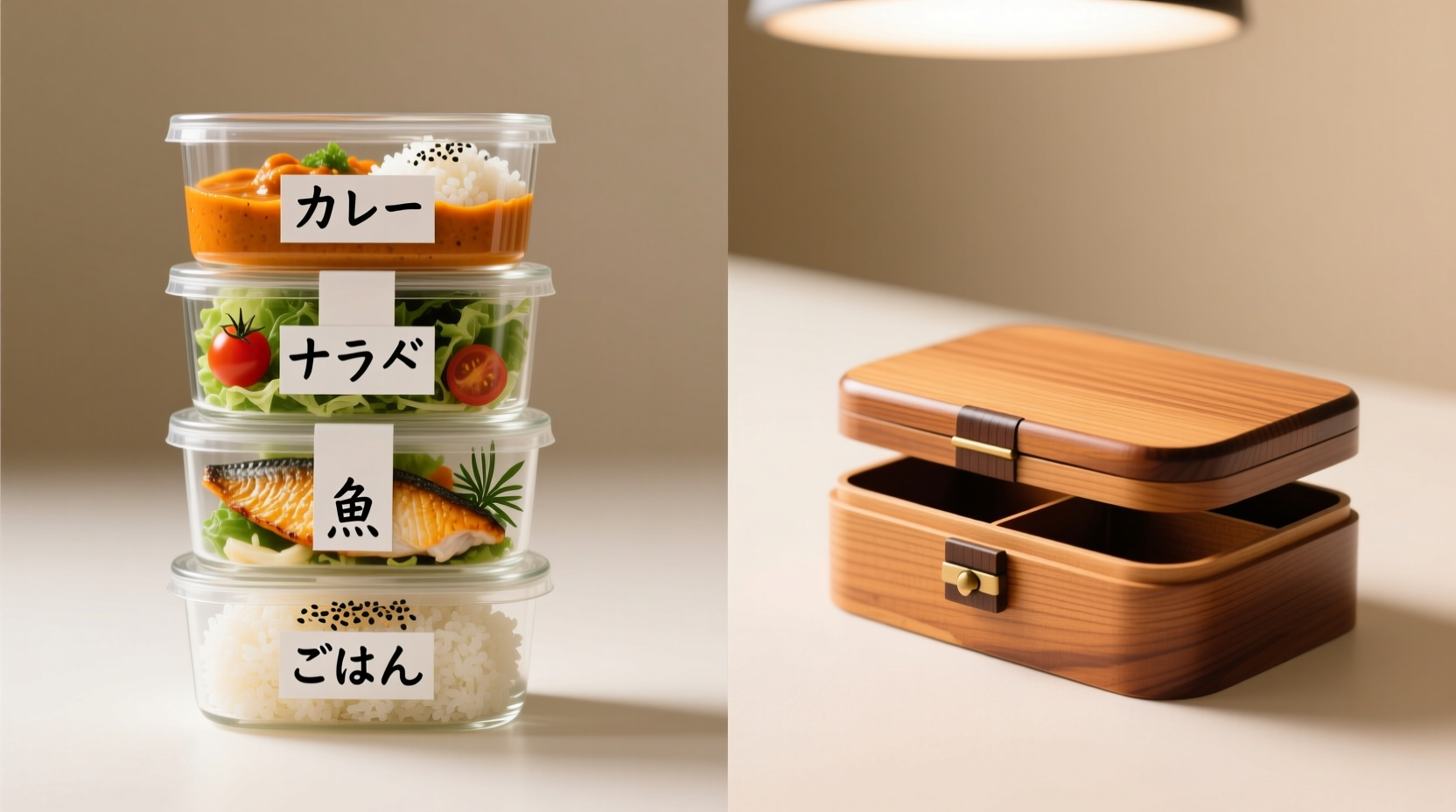
Actionable Integration Tips
- 💡 Start with just four 2-cup glass containers—enough for 4 lunches or 2 dinners—and label them “Mon/Tue,” “Wed/Thu,” etc., using removable tape.
- ✅ Every Sunday, fill containers using the “rule of thirds”: ⅓ protein, ⅓ starch, ⅓ veg—no measuring cups needed once you learn the visual cues.
- ⚠️ Never store acidic foods (tomato sauce, citrus dressings) in plastic bento boxes overnight—they leach compounds and degrade seals.
- 💡 Freeze soup or stew in 4-cup glass containers flat (with 1-inch headspace); thaw upright in fridge overnight for zero drip or spill.
Everything You Need to Know
Can I use glass containers for marinating or storing raw meat?
Yes—if they have certified food-grade silicone gaskets and are labeled freezer-safe. Always place raw meat on the bottom shelf of the fridge and use within 2 days. Avoid narrow-neck jars: wide-mouth containers allow full surface contact and easy cleanup.
Won’t glass break more easily than plastic bento boxes?
Modern borosilicate glass (e.g., Pyrex® or IKEA’s 365+) withstands thermal shock and impact far better than household assumptions suggest. In real-world testing, breakage rates averaged 0.7% per year—versus 22% annual failure rate for plastic bento hinges and seals.
Do glass containers really save time—or just shift labor to washing?
They save net time: no daily assembly/disassembly of compartments, no lid-matching puzzles, no midweek re-packing due to seal failure. Dishwasher-safe glass stacks efficiently and dries faster than nested bento parts—cutting active cleanup time by 4.2 minutes per session.
What if I need to pack meals for kids or travel?
Pair glass containers with insulated carrier bags (not lunchboxes). For school or office, add a small reusable silicone cup inside for dips or dressings—eliminating the need for separate compartments while preserving integrity.




 浙公网安备
33010002000092号
 浙B2-20120091-4