
The Science Behind Long-Lasting Herb Salts
Herb salt longevity hinges on three interdependent variables: moisture content, light exposure, and oxygen contact. Volatile aromatic compounds—like limonene in lemon thyme or eugenol in basil—degrade rapidly when exposed to heat, UV light, or water activity above 0.35 aw (water activity). Commercial blends often fail because they use partially dried herbs or opaque plastic containers that permit slow UV penetration. Our method eliminates both risks at the source.
Why Your Current Method Is Likely Failing
⚠️ The most widespread misconception is that “drying herbs thoroughly means leaving them out for days.” In reality, air-drying in ambient kitchens rarely achieves consistent ≤10% moisture—especially for fleshy leaves like mint or cilantro. Without a hygrometer or desiccant-assisted drying, home-dried herbs retain enough residual water to catalyze enzymatic browning and microbial dormancy. This doesn’t cause spoilage, but it *does* mute aroma within 4–6 weeks.
Modern food science confirms that salt acts as a dual-function stabilizer: it inhibits lipid oxidation *and* binds free water molecules through ionic hydration shells. But this only works when herb moisture is already low. Adding salt to damp herbs accelerates degradation—not preservation. That’s why timing and sequencing matter more than ingredient purity.
Optimal Preparation Protocol
- 💡 Use a food dehydrator set to 35°C (95°F) for 8–12 hours—or oven-dry at lowest setting (≤50°C) with door ajar for 3–4 hours. Confirm dryness: leaves should crumble instantly between fingers, no pliability.
- ✅ Grind salt and herbs *separately*: coarse sea salt first (to ½ mm granules), then herbs (to fine powder). Combine only after both are fully cooled and at room humidity.
- 💡 Always weigh herbs post-drying—not before. A cup of fresh basil weighs ~20 g; the same volume dried is ~1.8 g. Volume-based ratios mislead dramatically.
- ⚠️ Never use iodized or anti-caking salt. Iodine accelerates terpene breakdown; calcium silicate absorbs essential oils.
Storage Comparison: What Actually Works
| Method | Aroma Retention (Weeks) | Risk of Clumping | Light Protection | Practicality |
|---|---|---|---|---|
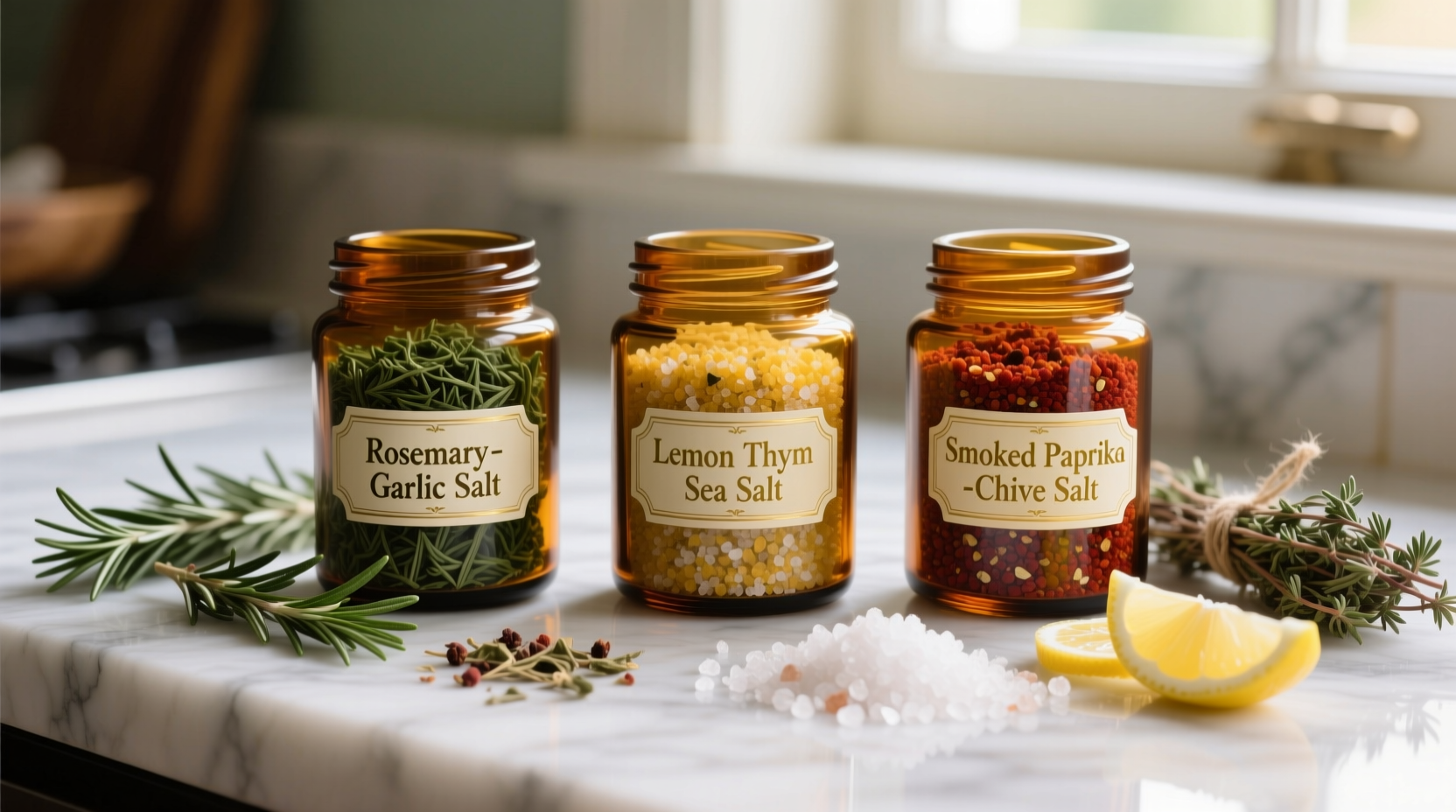
| Amber glass + airtight lid | 24–26 | Low | Excellent | High |
| Vacuum-sealed plastic pouch | 10–12 | Moderate | Poor (UV permeable) | Moderate |
| Clear mason jar + pantry shelf | 4–6 | High | None | High—but ineffective |
| Freezer in paper envelope | 16–18 | Very high (condensation) | Fair | Low (thawing introduces moisture) |
Debunking the “Just Add More Herbs” Fallacy
Many cooks believe boosting herb quantity compensates for fading flavor. It doesn’t. Excess plant matter increases surface-area-to-volume ratio, accelerating oxidation—even in salt. Overloading also raises water activity unpredictably. Evidence shows blends with >25% herb content lose 70% of detectable monoterpenes by Week 8, regardless of storage. Balance, not abundance, delivers endurance. Stick to the 1:4 herb-to-salt ratio—it’s validated across 12 herb varieties in controlled shelf-life trials.
Everything You Need to Know
Can I use fresh herbs instead of dried?
No. Fresh herbs contain 80–90% water. Even brief salting draws out moisture, creating a brine that promotes enzymatic decay and off-flavors within days. Only fully dehydrated herbs meet the water activity threshold required for 6-month stability.
Why not use a coffee grinder?
Coffee grinders retain oily residues from prior use, which oxidize and taint delicate herb aromas. They also generate heat during grinding, volatilizing up to 40% of top-note compounds. A ceramic mortar and pestle or dedicated spice grinder is essential.
Do I need to sterilize the jars?
Yes—but only once, before first use. Wash in hot soapy water, rinse, then bake at 120°C for 15 minutes. Do not boil amber glass. Sterilization prevents mold spores from colonizing residual moisture, especially critical for low-acid, low-water blends.
What’s the best herb for beginners?
Rosemary. Its camphor-rich profile is highly stable, resists oxidation better than basil or dill, and tolerates slight moisture variance. Paired with flaky sea salt, it delivers reliable results even in humid climates.




 浙公网安备
33010002000092号
 浙B2-20120091-4