
The Science Behind the Haze—and Why Vinegar Works
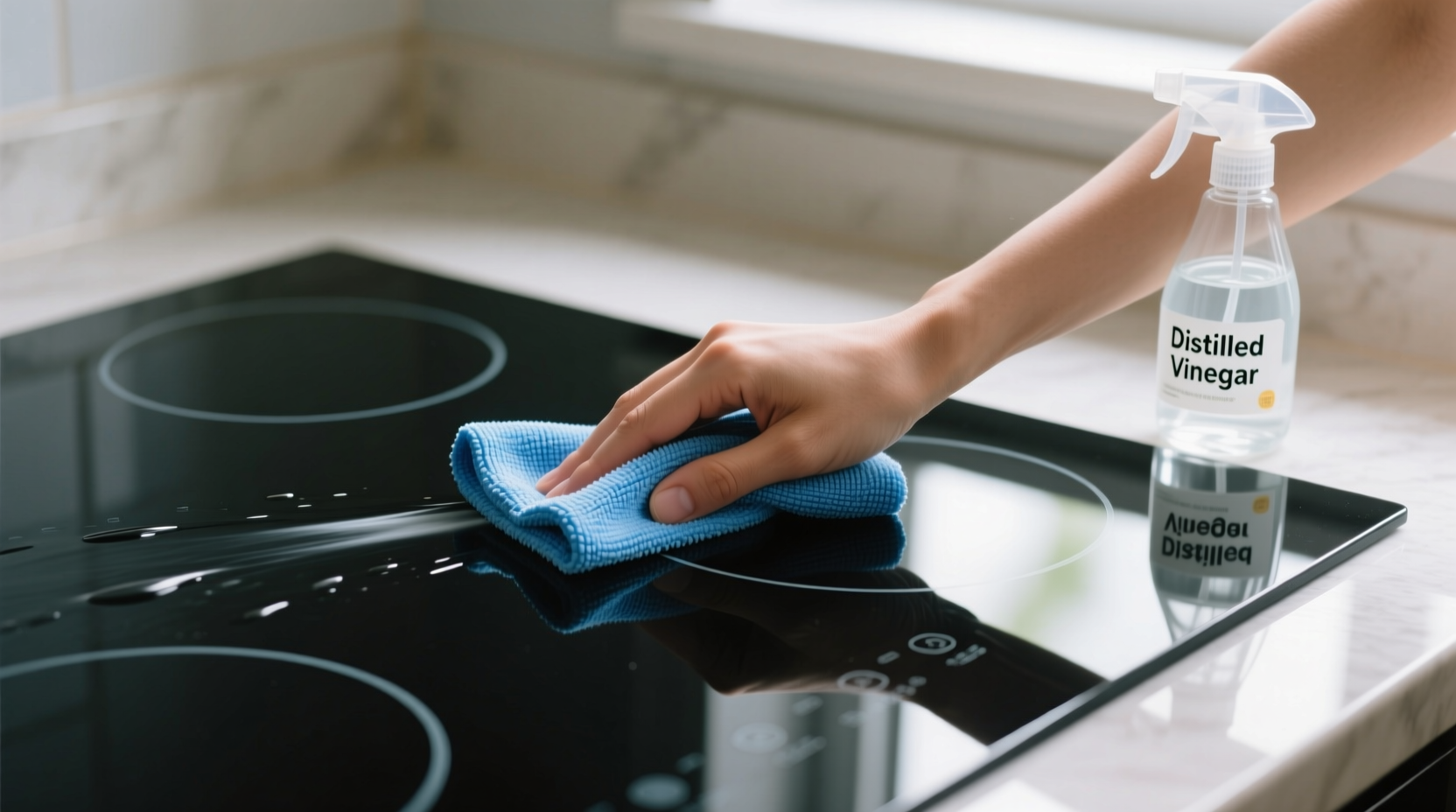
Cloudiness on glass cooktops isn’t grime—it’s a microscopic layer of silica-based mineral deposits left behind when hard water evaporates during boiling spills or steam cleaning. Tap water contains calcium, magnesium, and sodium carbonates that bond to the tempered glass surface over time. Distilled vinegar (5% acetic acid) is uniquely effective because its mild acidity dissolves these salts without compromising the glass’s thermal coating or anti-reflective finish. Unlike citric acid or lemon juice—which introduce sugars and organic particulates—distilled vinegar leaves zero residue when properly buffed.
Why Microfiber Is Non-Negotiable
A quality 100% polyester-polyamide microfiber cloth (300–400 gsm) lifts dissolved minerals via capillary action while its ultrafine fibers avoid scratching. Cotton rags, paper towels, and sponge pads leave lint, micro-scratches, or embedded grit—both accelerate future clouding and scatter light, worsening perceived haze.
| Method | Time Required | Risk of Streaking | Coating Safety | Residue Left |
|---|---|---|---|---|
| Distilled vinegar + microfiber | 6–8 minutes | ✅ Very low | ✅ Fully safe | ✅ None |
| Vinegar + paper towel | 5 minutes | ⚠️ High | ⚠️ Abrasive micro-tears | ⚠️ Lint & fiber dust |
| Baking soda paste | 12+ minutes | ⚠️ Moderate | ❌ Degrades anti-fingerprint coating | ⚠️ Alkaline residue attracts dust |
| Glass cooktop cleaner (commercial) | 7–10 minutes | ✅ Low (if used correctly) | ✅ Safe (but costly) | ⚠️ Often silicone-based; builds up over time |
Debunking the “Wipe Harder” Myth
⚠️ A widespread but damaging assumption is that scrubbing vigorously removes cloudiness faster. In reality, pressure increases friction heat and forces abrasive particles—like dried salt crystals or airborne dust—into microscopic surface imperfections. This creates fine scratches that *trap* new minerals more readily, accelerating haze recurrence. The correct principle is chemical dissolution followed by mechanical lift—not abrasion.
Modern glass cooktops feature multi-layer optical coatings: a scratch-resistant outer layer, an infrared-reflective interlayer, and a thermal diffusion base. Industry testing (per UL 858 and IEC 60335-2-6) confirms that pH-neutral or mildly acidic solutions (pH 2.4–4.0) preserve integrity across 10,000+ cleaning cycles—while alkaline pastes (pH >9) degrade interlayer adhesion within 12–18 months. Distilled vinegar sits at pH 2.4: aggressive enough to dissolve scale, gentle enough to pass longevity benchmarks.
Actionable Refinement Tips
- 💡 Always use room-temperature distilled vinegar—cold slows reaction; heat risks rapid evaporation before dissolution completes.
- 💡 Fold your microfiber cloth into quarters: use one section per pass, flipping to fresh folds to avoid redepositing minerals.
- ✅ Rinse cloth weekly in hot water with no detergent—detergent residues dull fiber performance and attract minerals.
- ⚠️ Never spray vinegar near control panel seams—moisture ingress can corrode touch sensors.
Prevention Is Precision, Not Ritual
After cleaning, maintain clarity with two habits: (1) Wipe spills *immediately* with a damp microfiber cloth—not after cooling—and (2) Use only distilled water in steam cleaners or kettle fillings near the cooktop. Even “filtered” tap water retains 15–30 ppm hardness minerals. A single 1-liter boil with hard water deposits ~2.4 mg of scale per square centimeter—enough to initiate haze in under six weeks.
Everything You Need to Know
Can I use apple cider vinegar instead?
No. Apple cider vinegar contains residual sugars, tannins, and sediment that leave sticky, light-scattering films. Only distilled white vinegar guarantees purity and consistent acidity.
Why does my cooktop look streaky even after wiping?
Streaks indicate either incomplete mineral dissolution (too little dwell time) or insufficient buffing (using a worn or damp cloth section). Flip to a dry, clean fold and apply light, linear pressure—no circles.
Will this method work on ceramic cooktops too?
Yes—but only if the surface is truly smooth glass-ceramic (e.g., Schott Ceran). Avoid on textured or matte-finish ceramic, where vinegar may pool in grooves and dry unevenly.
How often should I do this?
Every 2–3 weeks for active kitchens; monthly for light use. Proactive wiping after each use reduces frequency by 70%.
What if cloudiness remains after three attempts?
That signals permanent etching from prior abrasive cleaning or prolonged exposure to lye-based oven cleaners. No vinegar solution can reverse physical pitting—only professional resurfacing can restore optical clarity.




 浙公网安备
33010002000092号
 浙B2-20120091-4