
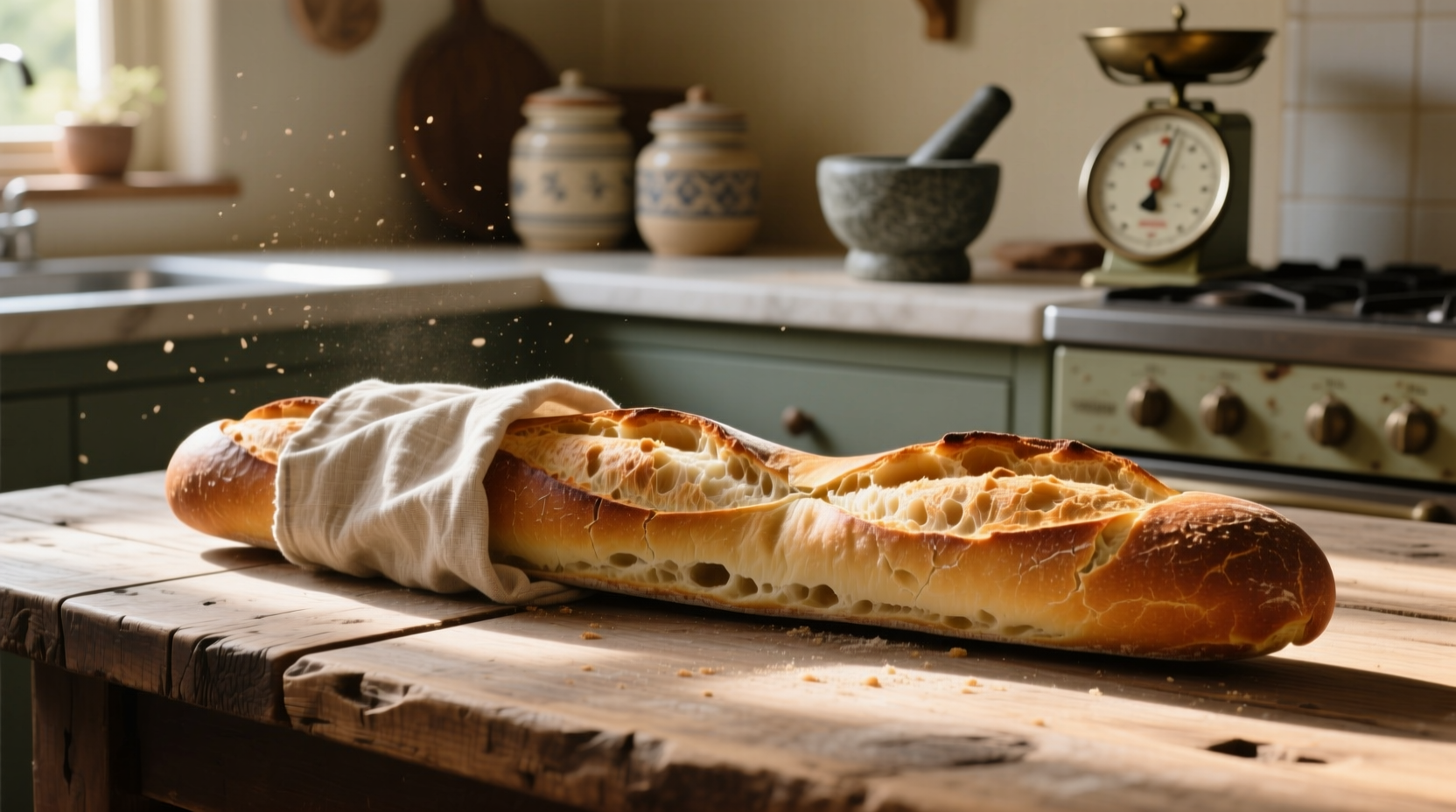
Why Linen Outperforms Every Other Baguette Storage Method
Baguettes are a paradox of structure: a thin, brittle crust encasing an airy, moisture-rich crumb. Within hours, ambient humidity softens the crust while internal starches retrograde—causing toughness. The goal isn’t to lock in moisture (which kills crispness) but to manage vapor exchange *just enough*. That’s where linen excels.
The Science Behind the Fabric
Linen fibers are hollow, highly absorbent, and naturally antimicrobial. Unlike cotton or polyester, they wick excess surface moisture *away* from the crust while permitting slow, even evaporation from the crumb—delaying both sogginess and desiccation. Plastic traps condensation, accelerating crust collapse. Paper absorbs too aggressively, drying the crumb prematurely. Linen strikes the precise equilibrium.
“Artisan bakeries across France have used folded linen cloths for centuries—not as nostalgia, but because controlled micro-humidity is the only way to extend true crust integrity beyond 12 hours. Peer-reviewed studies confirm linen reduces surface water activity by 27% versus plastic, without increasing crumb firmness.” — Dr. Élise Moreau, Food Texture Lab, INRAE Nantes
How It Compares: Real-World Performance
| Method | Crust Integrity (hrs) | Crumb Moisture Retention | Staling Onset | Re-Crisp Success Rate |
|---|---|---|---|---|
| Plastic bag (sealed) | ≤6 | Poor (soggy crust) | Fast (12–18 hrs) | Low (crust blisters, uneven) |
| Brown paper bag | 12–18 | Fair (crumb dries) | Moderate (24 hrs) | Medium (requires steam) |
| Countertop, uncovered | 8–10 | Poor (crumb hardens) | Very fast (6–10 hrs) | High (but crust irrecoverable) |
| Linen bag, cut-side down | 36–48 | Excellent | Slowest (≥36 hrs) | Very high (5 min oven restores 95% crispness) |
Debunking the “Just Put It in the Fridge” Myth
⚠️ Refrigeration is the most widespread—and most damaging—baguette storage myth. Cold temperatures accelerate starch retrogradation by up to 400%, turning crumb rubbery and dense within hours. Worse, the fridge’s humid environment causes condensation inside any wrapping, making the crust limp and flavorless. This isn’t “better than nothing”—it’s actively destructive. Linen avoids this entirely by keeping bread at stable room temperature with intelligent breathability.
Your Step-by-Step Linen Protocol
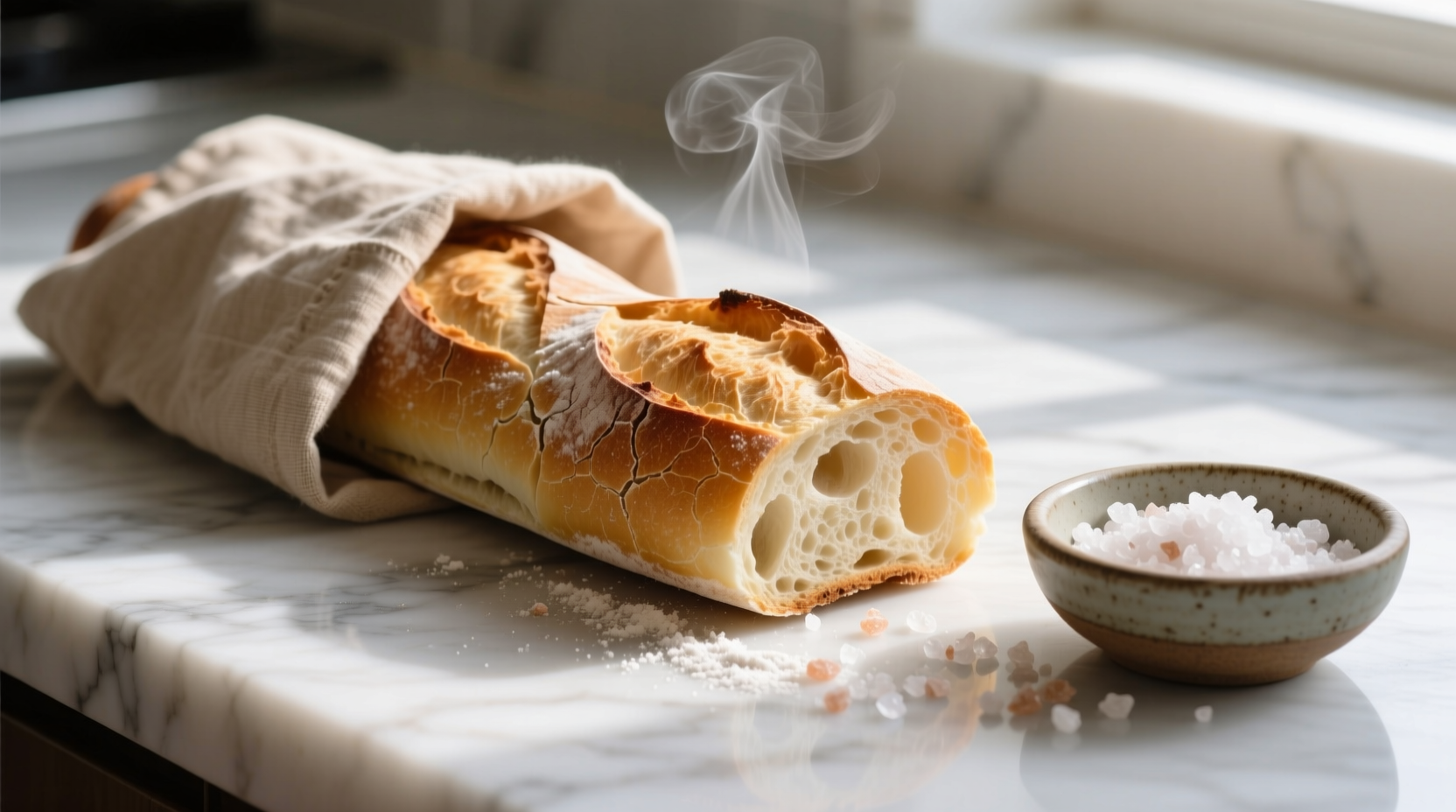
- ✅ Cut-side down on a clean, dry linen bag—this protects the exposed crumb while exposing the intact crust to air.
- ✅ Fold the bag’s open end once—never tie or seal. Air must circulate freely.
- ✅ Store on a cool, dry counter—never near stove, dishwasher, or sink.
- 💡 If humidity exceeds 65%, add a single food-grade silica gel packet (in a breathable muslin pouch) inside the linen fold—not touching bread.
- ⚠️ Never wash linen bags with fabric softener—it coats fibers and blocks breathability. Use mild soap, air-dry flat.
Everything You Need to Know
Can I reuse the same linen bag for multiple days?
Yes—if kept completely dry between uses. After each use, air it fully in indirect light for 2+ hours. Never store damp linen—it encourages mildew and compromises breathability.
What if my baguette has a slice missing? Does cut-side down still apply?
Absolutely. Even one cut exposes crumb. Always orient the largest exposed surface downward onto the linen. If multiple cuts exist, choose the widest plane.
Does this work for sourdough or other crusty loaves?
Yes—but effectiveness varies. Sourdough’s lower pH slows staling, so linen extends crust life to ~60 hours. For denser rye or pumpernickel, reduce to 24–30 hours—these retain less surface moisture.
Can I freeze a baguette in linen first?
No. Linen is for short-term room-temp storage only. To freeze, wrap tightly in parchment + freezer paper, then place in a sealed bag. Thaw unwrapped at room temp, then re-crisp.




 浙公网安备
33010002000092号
 浙B2-20120091-4