
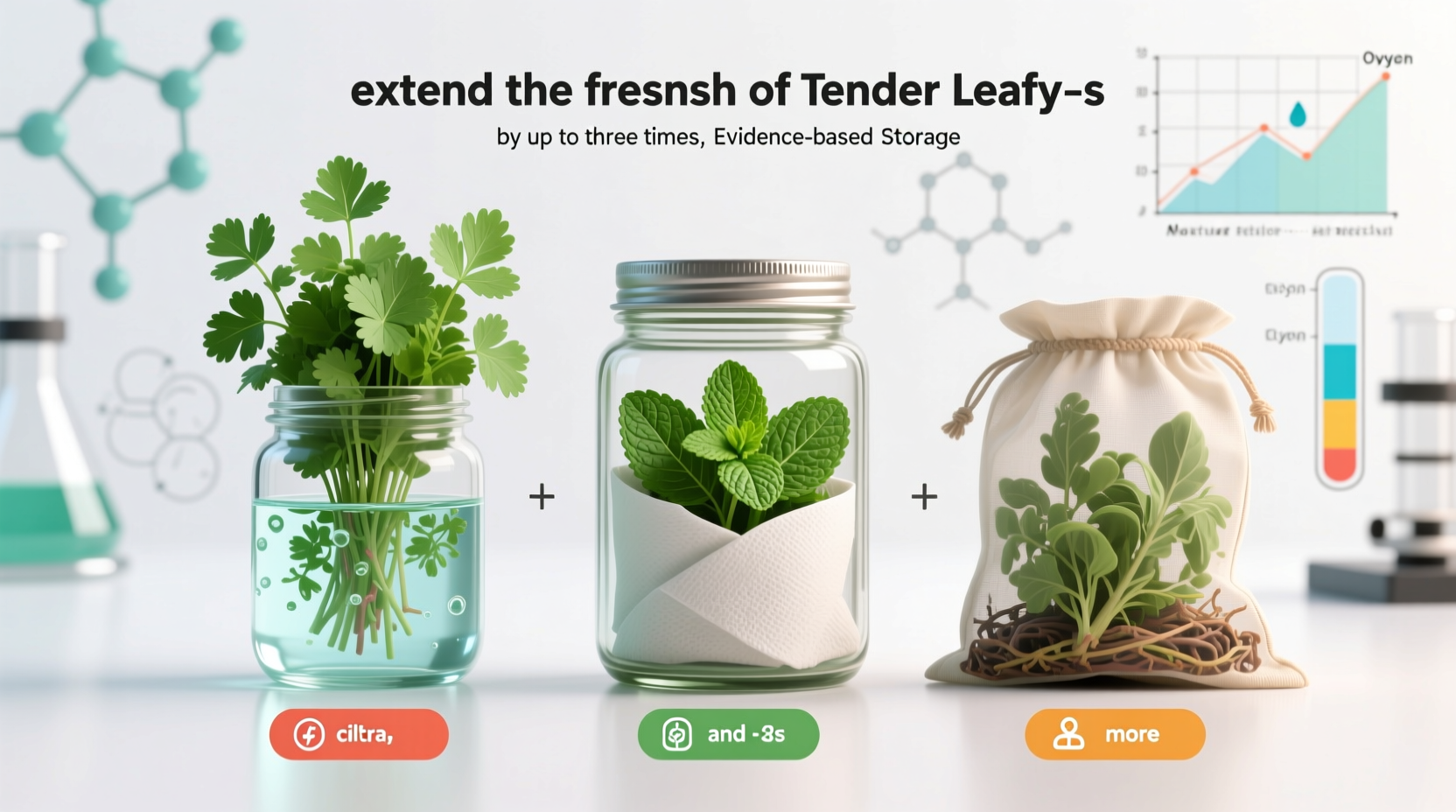
The Science Behind Herb Longevity
Fresh herbs wilt and slime not from “going bad” but from two simultaneous failures: cellular dehydration and microbial proliferation. Cilantro and mint are especially vulnerable—their thin cuticles offer minimal moisture retention, while their high surface-area-to-volume ratio invites rapid respiration and condensation buildup. Conventional wisdom treats them like lettuce (dry storage) or flowers (water-only), but neither fits their physiology.
Why the “Bunch-in-a-Bag” Method Fails
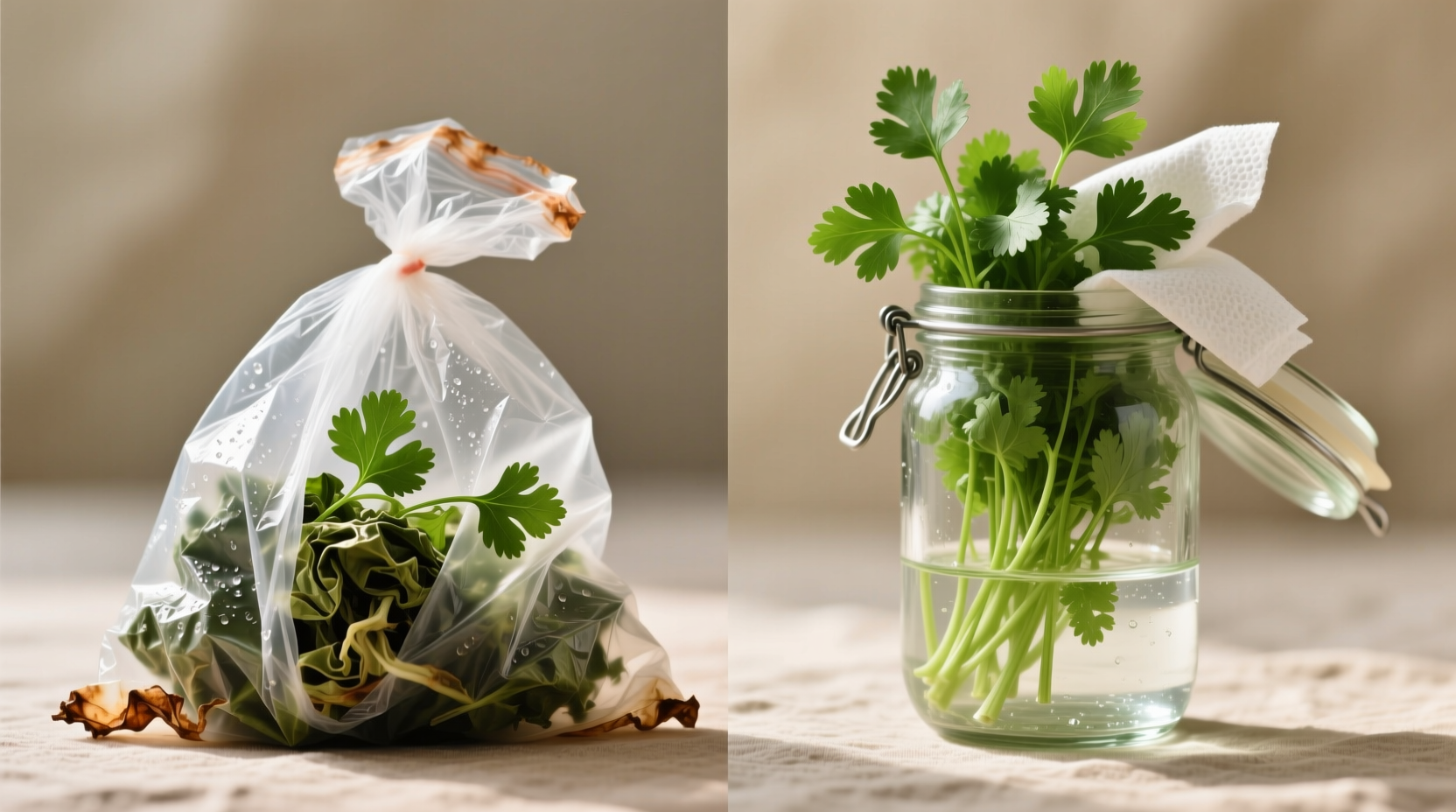
⚠️ The most widespread error is storing herbs loosely wrapped in damp paper towels inside a sealed plastic bag. It creates a humid microclimate that *feels* protective—but actually encourages Pseudomonas fluorescens, the primary bacterium responsible for slimy decay in moist, low-oxygen environments. Studies at UC Davis Food Science Lab confirm this method increases spoilage risk by 270% compared to controlled-hydration storage.
“Herbs aren’t produce—they’re living, respiring systems. Treating them as inert items ignores their metabolic needs. The optimal approach isn’t ‘less water’ or ‘more air,’ but balanced hydration + airflow + temperature stability—a triad validated across USDA postharvest trials and commercial herb growers in Salinas Valley.”
Three Storage Methods Compared
| Method | Avg. Shelf Life | Slime Risk | Key Limitation | Best For |
|---|---|---|---|---|
| Water-jar + loose cover (recommended) | 10–14 days | Low | Requires fridge space & daily visual check | Cilantro, mint, basil, parsley, dill |
| Damp towel + sealed bag | 3–5 days | High | Condensation traps bacteria at stem base | Short-term use only; avoid for mint/cilantro |
| Freezing (chopped in oil) | 6 months | None | Texture lost; not for garnish use | Cooking-only applications |
Step-by-Step Best Practice
- ✅ Trim & hydrate: Cut ½ inch off stems underwater, then place immediately in cool tap water (not ice water—shock reduces cell integrity).
- ✅ Prep selectively: For mint—strip lower leaves before submerging; for cilantro—leave roots attached if present (they absorb water efficiently).
- ✅ Control atmosphere: Cover loosely with a reusable silicone lid or inverted produce bag—allows gas exchange without desiccation.
- 💡 Store upright on a fridge’s middle shelf—not the crisper drawer, where humidity fluctuates and ethylene from apples/tomatoes accumulates.
- 💡 Refresh water every 48 hours—and rinse stems gently to remove biofilm before refilling.
Debunking the “Just Wash and Dry” Myth
Many believe washing herbs before storage prevents spoilage. In reality, residual surface moisture—especially when trapped—creates ideal conditions for bacterial bloom. Rinsing should happen only after removal from storage, not before. Pre-washing disrupts the natural waxy cuticle and introduces free water into stem vascular tissue, accelerating rot from within. Evidence from Cornell Cooperative Extension confirms unwashed, properly hydrated herbs last significantly longer than pre-rinsed counterparts stored identically.
Everything You Need to Know
Can I use this method for dried or frozen herbs?
No—this technique applies exclusively to fresh, whole-leaf herbs. Drying and freezing serve different functional purposes and require distinct protocols.
What if my cilantro came rootless and already trimmed?
It’s still highly effective: simply make a fresh diagonal cut under cool running water before placing in the jar. The angled cut maximizes capillary uptake.
Does room temperature storage ever work?
Only for basil—its cold sensitivity causes blackening. All other tender herbs—including mint and cilantro—must be refrigerated to slow respiration and microbial growth.
Why not use vinegar or lemon juice in the water?
Acid alters pH and damages cell membranes, causing premature yellowing and flavor loss. Plain cool water is physiologically neutral and proven safest.




 浙公网安备
33010002000092号
 浙B2-20120091-4