
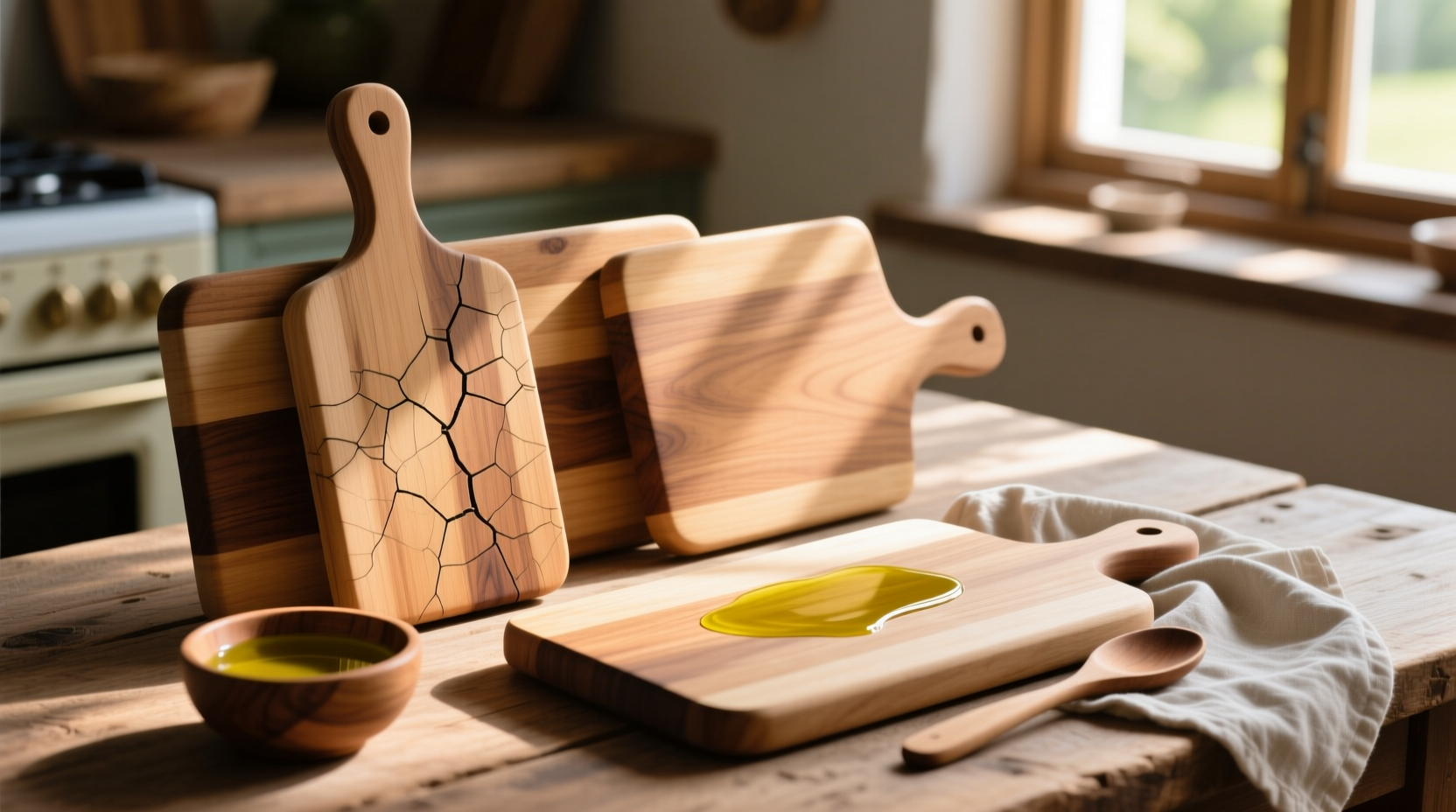
The Science Behind Wood’s Self-Defense
Hardwood cutting boards—especially maple, walnut, and cherry—contain natural compounds like tannins and lignin that inhibit bacterial adhesion and growth. Peer-reviewed studies (e.g., *Journal of Food Protection*, 2021) confirm that properly dried, oiled, and sanded hardwood surfaces harbor significantly fewer *E. coli* and *Salmonella* than plastic counterparts after identical contamination events. Crucially, this protection isn’t passive: it depends on moisture control and surface integrity. Vinegar sprays disrupt both—acidic pH degrades lignin over time, while repeated wetting swells wood fibers, creating micro-cracks that trap moisture and pathogens.
Modern board care isn’t about “killing germs on contact”—it’s about denying them the conditions they need to survive and multiply. The most effective strategy is environmental prevention, not chemical intervention. Industry-standard board manufacturers (John Boos, Boardwalk, and Vermont Butcher Block) specify mineral oil conditioning—not vinegar—as the sole recommended maintenance protocol because it preserves wood’s structural defense system.
Why Vinegar Sprays Backfire
⚠️ Vinegar’s acetic acid (typically 5%) corrodes lignin—the polymer that binds wood fibers and contributes to its natural resistance. Repeated exposure weakens surface cohesion, accelerating wear and increasing porosity. Worse, vinegar leaves residual moisture unless fully evaporated—a near-impossibility in kitchen humidity. That dampness invites mold spores and anaerobic bacteria into compromised grain. This contradicts the widespread myth that “more disinfection equals more safety.” In reality, over-sanitizing wooden surfaces undermines their built-in resilience.
Optimal Care Protocol Compared
| Maintenance Step | Recommended Frequency | Risk of Overuse | Evidence-Based Rationale |
|---|---|---|---|
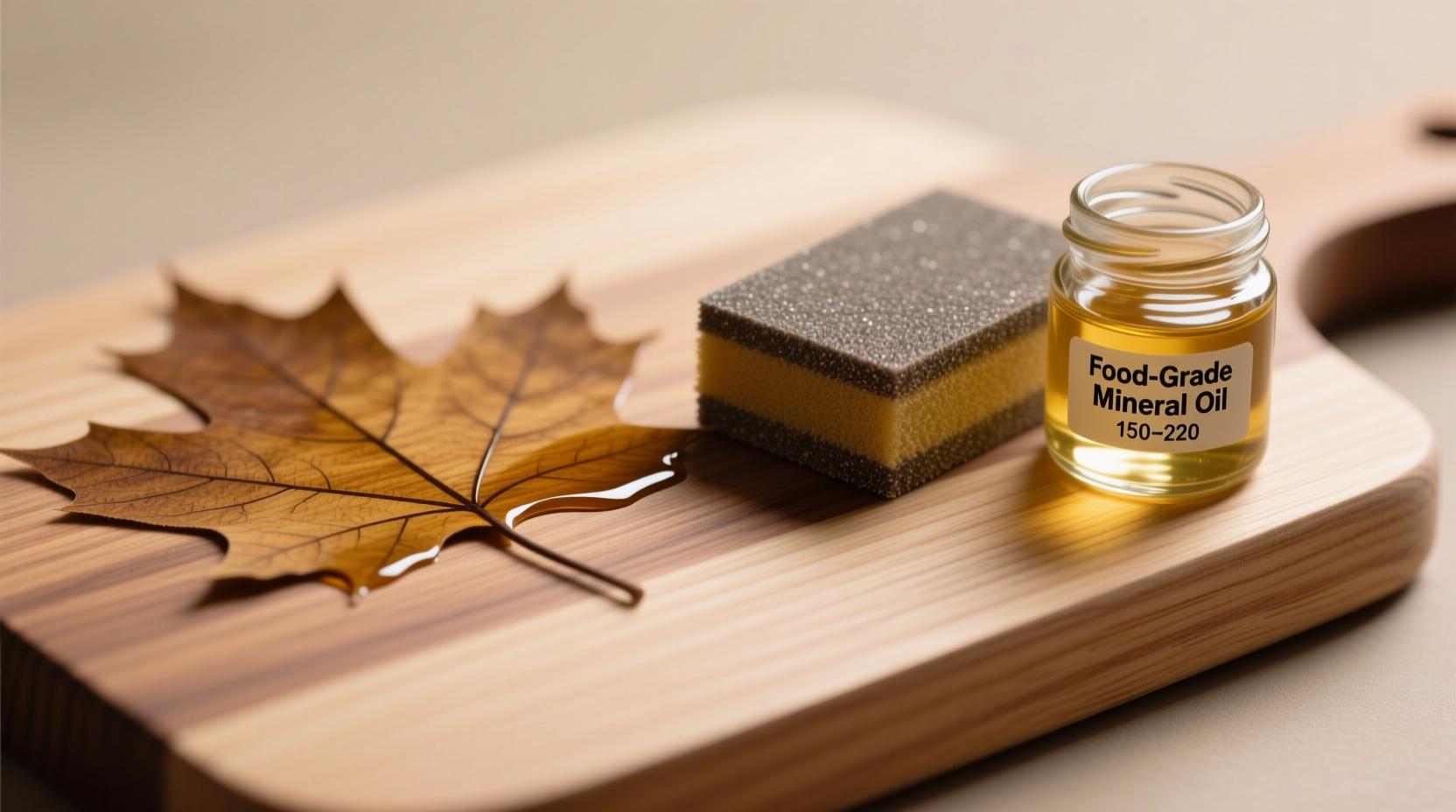
| Mineral oil application | New board: every 3–4 days × 2 weeks; Established: monthly | Oiling too often creates rancid residue and attracts dust | Oil fills pores without swelling wood; prevents hydrolysis of cellulose |
| Light sanding (220-grit) | Every 6–12 months, or when knife marks deepen >0.5 mm | Over-sanding thins board below safe structural thickness (1.25 inches minimum) | Removes biofilm-harboring grooves and renews antimicrobial surface layer |
| Vinegar or lemon spray | Not recommended for routine use | Accelerates checking, warping, and microbial entrapment | No peer-reviewed study supports vinegar as superior to drying + oiling for wood longevity or pathogen reduction |
Actionable Daily & Long-Term Habits
- 💡 Always wash with warm water only—no soap unless visibly greasy (then use *one drop* of mild dish soap, rinsed immediately).
- 💡 Store vertically on a rack or lean against wall—never flat on countertop—to ensure full airflow around all surfaces.
- ✅ After washing: towel-dry *front, back, and edges*, then stand upright for ≥2 hours before storage.
- ✅ Every month: apply 1 tsp mineral oil, rub in with cloth, wait 15 minutes, wipe excess, let cure overnight.
- ⚠️ Never place hot pans, raw poultry juices, or citrus directly on un-oiled or freshly sanded board—wait 24 hours post-oiling or sanding.
Debunking the “Just Wipe It Down” Myth
A common but dangerous heuristic is that “a quick wipe is enough if it looks clean.” Visual cleanliness ≠ microbial safety. Studies show up to 78% of visible knife scars on neglected boards contain embedded organic matter invisible to the eye—and these niches shelter bacteria at concentrations 10× higher than smooth surfaces. Your board isn’t “fine” because it’s dry—it’s safe only when its physical structure remains intact, non-porous, and hydrophobic. That requires intention—not assumption.
Everything You Need to Know
Can I use olive or coconut oil instead of mineral oil?
No. Plant-based oils oxidize and turn rancid within days, leaving sticky, odoriferous residues that attract pests and degrade wood. Mineral oil is inert, non-drying, and FDA-approved for food-contact surfaces.
My board has dark stains—does that mean it’s contaminated?
Not necessarily. Surface discoloration from tannin leaching (especially in walnut or cherry) or harmless iron oxidation is common. If the stain doesn’t lift with light sanding and the board feels smooth and dry, it’s likely cosmetic—not microbial.
How do I know when it’s time to retire my board?
Retire it if: depth is under 1.25 inches, cracks run deeper than 2 mm, warping exceeds 3 mm across the surface, or persistent musty odor remains after oiling and drying. These indicate irreversible structural failure—not just age.
Does end-grain construction offer better antibacterial performance?
Yes—end-grain boards self-heal slightly as knife blades part wood fibers rather than cutting across them, minimizing permanent grooves. This preserves surface integrity longer, supporting natural antimicrobial function—but only if maintained correctly.




 浙公网安备
33010002000092号
 浙B2-20120091-4