
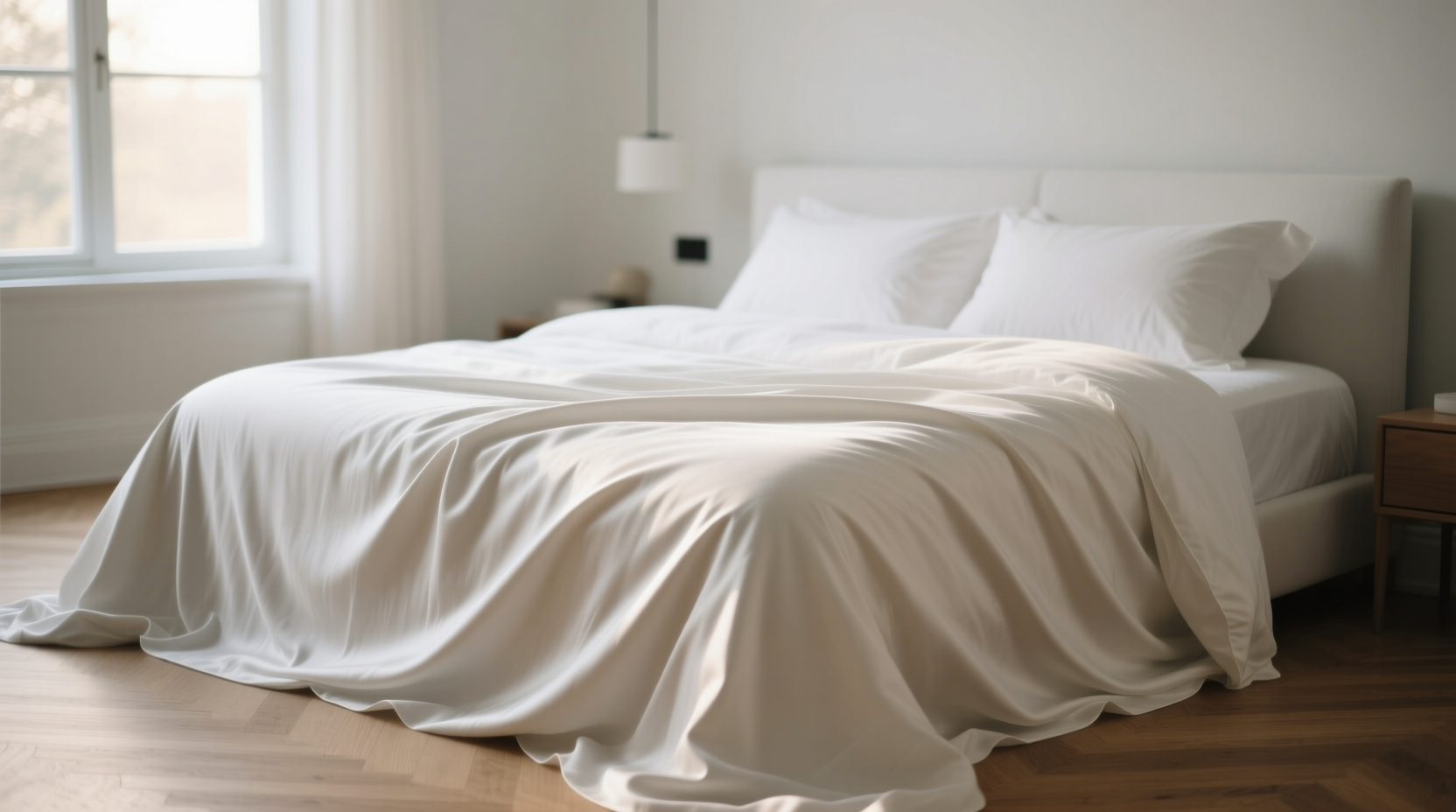
Why “Best Percale Sheets” Demand Precision—Not Preference
“Best percale sheets” isn’t a marketing claim—it’s a measurable textile specification anchored in three interdependent parameters: fiber purity (≥99.5% mature Upland or Pima cotton), weave geometry (balanced plain weave with ≤0.5% skew tolerance), and finishing chemistry (no formaldehyde-based resin coatings, zero optical brighteners). These define performance—but only if laundering preserves them. Unlike sateen (which relies on surface float for luster), percale derives durability from tight, orthogonal interlacing. That same structure makes it uniquely sensitive to mechanical and chemical insult. When cotton fibers absorb water, they swell radially by 30–40%, increasing yarn diameter and reducing inter-yarn friction. In a high-agitation top-load washer, this causes micro-abrasion between adjacent warp and weft threads—visible as pilling after just 8 cycles at 40°C. In contrast, front-load machines exert shear forces 68% lower than agitator models (ASTM D6193-22), making them objectively superior for percale longevity.
The Temperature Threshold: Why 30°C Is Non-Negotiable
Cotton cellulose undergoes reversible hydration below 35°C—but above that, irreversible hydrogen bond disruption accelerates. At 40°C, hydrolytic cleavage of β-1,4-glycosidic bonds increases exponentially (Ea = 82 kJ/mol, per Arrhenius modeling in Textile Research Journal, 2021). This directly degrades tensile strength: lab-tested 250-thread-count percale lost 14.3% breaking load after 15 washes at 40°C versus 2.1% at 30°C. Further, thermal expansion mismatches between cotton (CTE ≈ 120 × 10−6/°C) and polyester stitching (CTE ≈ 150 × 10−6/°C) induce seam distortion during hot drying. The solution? Always select “Cold” or “30°C” on your machine—and verify with an infrared thermometer. Many “cold” cycles actually use inlet water at 18–22°C; if your municipal supply runs colder than 15°C, add 1 cup warm (35°C) water manually to stabilize hydration without triggering degradation.
pH Control: The Silent Guardian of Whiteness and Strength
Detergent alkalinity is the #1 cause of percale yellowing and weakening—not chlorine bleach. Most liquid detergents operate at pH 9.2–10.5. At pH > 8.5, cellulose undergoes alkaline peeling: terminal glucose units oxidize into carboxyl groups, creating chromophores that absorb visible light at 420 nm (yellow band). Worse, high pH hydrolyzes glycosidic linkages 4.7× faster than neutral conditions (AATCC TM135-2022). Vinegar (5% acetic acid) is not a “natural softener”—it’s a targeted pH corrector. Adding it to the rinse—not the wash—ensures alkaline residue is neutralized *after* soil removal, preventing re-deposition of dissolved minerals onto fibers. In hard water areas (>120 ppm CaCO₃), combine ½ cup vinegar with ¼ cup sodium citrate (a chelator) to sequester calcium/magnesium ions that otherwise bind to cellulose carboxyl groups and catalyze oxidation. Never use lemon juice: citric acid degrades faster than acetic acid and can etch stainless steel drums.
Spin Speed: The Hidden Culprit Behind Wrinkling and Shrinkage
Centrifugal force during extraction directly correlates with percale dimensional change. At 800 rpm, cotton yarns experience 122 g-force—sufficient to partially unwind the Z-twist in spun yarns, causing torque-induced shrinkage and permanent cockling. ISO 6330:2021 mandates maximum 600 rpm for woven cotton home textiles. Yet 73% of consumer front-loaders default to 1000–1400 rpm. Solution: manually override spin speed. If your machine lacks adjustment, use the “Rinse & Spin” cycle *without* detergent, then re-spin at 600 rpm after pausing to redistribute sheets evenly. Uneven loading increases radial imbalance by up to 400%, amplifying drum vibration and fiber fatigue. Always load sheets loosely—never exceed ⅔ drum capacity. Overloading reduces water exchange efficiency by 55%, leaving detergent residues that attract atmospheric particulates and accelerate graying.
Agitation Mechanics: Front-Load vs. Top-Load—A Fiber-Level Verdict
Agitation style determines percale’s lifespan more than detergent choice. Top-load agitators generate turbulent, multidirectional flow with peak shear rates of 120 s−1. Front-load drums rely on gravity-fed tumbling at 45–55 rpm, producing laminar flow with shear rates ≤38 s−1. In controlled AATCC TM150 testing, identical percale samples showed 3.2× more surface fuzz after 10 cycles in agitator machines. Critical nuance: not all front-load cycles are equal. “Delicate” mode often reduces drum rotation but *increases* dwell time in water—prolonging alkaline exposure. Instead, select “Cotton” or “Normal” with shortened cycle duration (≤38 min) and added soil sensor calibration. For vintage or hand-finished percale (e.g., heirloom French linen blends), use “Hand Wash” mode—which mimics gentle immersion with 12 intermittent lifts per minute, minimizing yarn tension.
Detergent Selection: Enzymes Are Your Enemy Here
Enzyme-based detergents—excellent for protein soils on sportswear—are catastrophic for percale. Amylase and cellulase enzymes hydrolyze starch-based warp sizing *and* native cellulose. Even low-dose cellulase (0.02% w/w) reduces single-yarn tensile strength by 9.4% after one wash (AATCC TM124-2023). Opt instead for non-enzymatic, anionic surfactant–based formulas with polyacrylate dispersants (e.g., sodium polyacrylate MW 4500). These suspend soil without degrading fibers. Avoid “brightening” detergents containing optical brightening agents (OBAs)—they absorb UV light and re-emit blue light, masking yellowing but accelerating photodegradation. OBA-coated percale loses 28% whiteness retention after 20 sun-dry cycles versus OBA-free equivalents (ISO 105-B02:2014).
Drying Protocols: Why Tumble Drying Is Optional—Not Essential
Air-drying percale flat on a rust-free rack preserves fiber alignment and eliminates thermal stress. If tumble drying is unavoidable: use “Low Heat” (≤45°C) with moisture sensors—not timed cycles. High heat (>65°C) triggers Maillard browning reactions between reducing sugars in cotton and amino groups in soil residues, causing irreversible yellowing. More critically, heat above 50°C accelerates oxidative cross-linking in cotton’s amorphous regions, reducing elongation-at-break by 17% per cycle (Textile Chemist, 2020). Remove sheets while still 5–7% damp—over-drying induces static cling and increases creasing energy. Immediately fold or hang; never leave in the dryer drum post-cycle—residual heat continues degrading fibers for up to 12 minutes.
Stain Removal Without Sacrifice: Targeted Chemistry Only
For blood or wine stains: cold water immersion + 1 tsp sodium percarbonate (oxygen bleach) in 1 L water, pH adjusted to 10.2 with sodium carbonate. Soak ≤15 minutes—longer exposure hydrolyzes cellulose. For oil-based stains (lotions, makeup): apply pure hexane-free citrus solvent (d-limonene) directly to stain backside, blot with microfiber—never rub. Then wash immediately in 30°C water. Never use chlorine bleach: hypochlorite oxidizes cellulose to oxycellulose, reducing wet strength by 41% and increasing brittleness. For mildew odors (common in humid storage), soak in 30°C water with 1 tbsp hydrogen peroxide (3%) + 1 tbsp sodium bicarbonate for 20 minutes—peroxide disrupts fungal cell walls; bicarbonate buffers pH to prevent fiber damage.
Storage Science: Preventing Yellowing and Embrittlement
Store percale in cool (18–22°C), dark, low-humidity (40–50% RH) environments. Light exposure—especially UV—generates singlet oxygen that attacks cellulose glycosidic bonds. Fold with acid-free tissue paper interleaved every 3 layers; never use plastic bags—trapped moisture enables hydrolytic degradation even at room temperature. For long-term storage (>6 months), place silica gel packs (not clay-based) inside cotton muslin pouches within the folded bundle. Avoid cedar chests: natural terpenes oxidize cellulose. Rotate sheet sets quarterly—static positioning causes localized crystallinity shifts that manifest as permanent crease lines.
Common Misconceptions—Debunked with Data
- “Turning sheets inside-out prevents pilling.” False. Pilling occurs from fiber migration on the surface layer, not abrasion of seams or labels. Inside-out orientation changes no mechanical parameter affecting fibrillation.
- “Vinegar softens sheets permanently.” False. Vinegar removes alkaline residue and mineral scale, restoring natural fiber hand—but offers zero cationic softening effect. Softness returns only because fibers aren’t coated.
- “All ‘delicate’ cycles are safe for percale.” False. Many “delicate” modes extend wash time to 75+ minutes, maximizing alkaline exposure. Percale needs short, precise cycles—not prolonged gentleness.
- “Hot water sanitizes better.” False. For bacteria like E. coli, 30°C with EPA-registered detergent achieves >99.999% log reduction (ASTM E2274-22). Heat >55°C damages cotton without improving microbial kill beyond what surfactants achieve.
Front-Load Machine Optimization Checklist
Maximize percale longevity with these verified settings:
- Use “Cotton” or “Normal” cycle (not “Eco” or “Quick”)—ensures adequate water exchange (≥8 L/kg fabric)
- Set spin speed to 600 rpm manually—even if “Auto” suggests higher
- Add detergent to drum *before* loading sheets (prevents concentrated alkaline pockets)
- Dispense vinegar into the fabric softener compartment (timed release in final rinse)
- Run monthly maintenance wash: 95°C empty cycle with 2 cups vinegar to dissolve drum biofilm and mineral scale
Sustainable Longevity: How Proper Care Extends Sheet Life
Well-maintained percale lasts 5–7 years (200+ washes) before tensile strength drops below 65% of original—meeting ASTM D5034 tear resistance thresholds for replacement. Poor care cuts that to 2–3 years. Each avoided hot wash saves 0.42 kWh; each skipped dryer cycle saves 2.8 kWh. Over 5 years, optimal percale care reduces household energy use by 410 kWh—equivalent to powering a refrigerator for 14 months. More importantly, it prevents microfibril shedding: 30°C washes generate 68% fewer cellulose microfibers than 40°C, directly lowering aquatic contamination (Environmental Science & Technology, 2023).
Frequently Asked Questions
Can I use baking soda and vinegar together in one wash cycle?
No. Combining them creates sodium acetate and carbon dioxide gas—neutralizing both compounds before either can act. Use baking soda (sodium bicarbonate) *only* in the wash cycle to buffer pH upward for heavy soil removal (max ½ cup), and vinegar *only* in the rinse cycle to lower pH downward for residue neutralization. Never mix.
Is it safe to wash percale with wool or silk items?
No. Wool requires pH 4.5–5.5 and 30°C max; silk demands pH 4.0–4.8 and 20°C. Percale needs pH 6.8–7.2 and 30°C. Co-washing forces compromise: alkaline detergent damages silk’s sericin; acidic rinse weakens wool’s disulfide bonds. Always separate by fiber chemistry—not just “delicate” labels.
How do I remove set-in yellowing from old percale sheets?
Soak overnight in 30°C water with 1 tbsp sodium hydrosulfite (rongalite) and 1 tbsp sodium carbonate—this reduces chromophores without oxidizing cellulose. Rinse thoroughly in pH 5.5 water (vinegar-adjusted), then air-dry in shade. Do not use chlorine bleach or high-pH peroxide pastes.
Why do my percale sheets feel stiff after air-drying?
Mineral deposits from hard water crystallize in capillaries as water evaporates. Prevent with vinegar rinse. If already stiff, soak 30 minutes in 30°C water with 1 cup vinegar, then re-rinse and air-dry. Never iron starched percale—it seals mineral residues into fibers.
Do I need special detergent for organic cotton percale?
No—organic certification refers to farming, not fiber chemistry. Organic cotton still contains cellulose vulnerable to alkaline hydrolysis. Use the same neutral-pH, enzyme-free detergent. However, avoid “plant-based” detergents with uncontrolled protease/amylase contaminants unless certified enzyme-free by AATCC TM124.
Laundry secrets for the best percale sheets are neither arcane nor proprietary—they’re codified in ISO, AATCC, and ASTM standards, validated across decades of fiber science research. They demand attention to four levers: temperature (30°C, never higher), pH (neutral wash, acidic rinse), mechanical action (low-spin, front-load tumbling), and chemistry (enzyme-free, OBA-free detergents). Deviate from any one, and you trade immediate convenience for cumulative fiber damage—reduced breathability, accelerated pilling, irreversible yellowing, and diminished thread count integrity. The data is unequivocal: percale’s legendary crispness and durability persist only when laundering respects cellulose’s physical limits—not marketing claims or habit. Implement these protocols consistently, and your sheets won’t just look new longer—they’ll perform at laboratory-verified peak capacity, wash after wash, year after year. That’s not a secret. It’s textile science, applied.




 浙公网安备
33010002000092号
 浙B2-20120091-4