
Why Glass Beads Change the Laundry Equation
Glass beads—unlike plastic poly pellets—are denser, smoother, and non-porous. They resist clumping, odor retention, and compression loss—but they also add significant mass without flexibility. That density places unique mechanical stress on both the blanket’s inner baffles and your washer’s drum and suspension system. A 15-pound glass-bead blanket exerts roughly 30% more torque during spin cycles than an equivalently sized polyester-filled comforter. This isn’t about “toughness”—it’s about physics, seam integrity, and long-term appliance health.
The Critical Weight Threshold
Home washers are engineered for balanced, flexible loads. Industry testing (per AHAM standards) shows that top-loading machines begin showing measurable vibration and bearing wear when spinning loads over 18–20 lbs with low compressibility—exactly the profile of a saturated glass-bead blanket. Front-loaders fare slightly better but still risk seal degradation above 22 lbs. Below 15 lbs? Generally safe with precautions.
| Blanket Weight | Washer Compatibility | Risk Level | Recommended Action |
|---|---|---|---|
| < 12 lbs | Standard top- or front-loader | Low | Wash cold, gentle cycle, air-dry |
| 12–20 lbs | Front-loader preferred; top-loader only with balanced load | Moderate | Add 2–3 clean towels; skip spin-only; inspect seams after wash |
| > 20 lbs | Not recommended for home units | High | Use commercial washer (≥3.8 cu ft) or professional textile cleaning |
Debunking the “Just Toss It In” Myth
A widespread but dangerous assumption is that “if it fits, it’s fine.” Size ≠ safety. A 22-pound glass-bead blanket may physically fit inside a 4.5-cubic-foot drum—but its rigid mass creates uneven centrifugal force, accelerating drum wobble, belt slippage, and shock absorber fatigue. Over time, this doesn’t just risk breakdown—it compromises structural integrity of the blanket itself: stressed seams may split, allowing beads to migrate or leak.
“Glass beads don’t stretch, soften, or yield during agitation. They transmit full impact energy directly to stitching points. That’s why seam reinforcement matters more than fabric weight—and why many ‘machine-washable’ labels reflect marketing claims, not ASTM-tested durability.” — Based on textile engineering reviews from the International Fabricare Institute (2023) and independent lab testing at Cornell’s Home Economics Lab
Verified Best Practices
- ✅ Pre-wash inspection: Check for loose threads, frayed edges, or visible bead clusters near seams—repair before washing.
- ✅ Cold-water immersion: Soak 15 minutes before starting cycle to evenly saturate fabric and reduce agitation shock.
- ✅ Towel-balanced spin: Add two large, dry bath towels to counterbalance weight and dampen vibration.
- 💡 Use a mesh laundry bag rated for 30+ lbs—only for blankets under 15 lbs; heavier ones restrict water flow and increase strain.
- ⚠️ Never use bleach, enzyme detergents, or dryer sheets—they degrade nylon baffles and weaken thermal bonding.
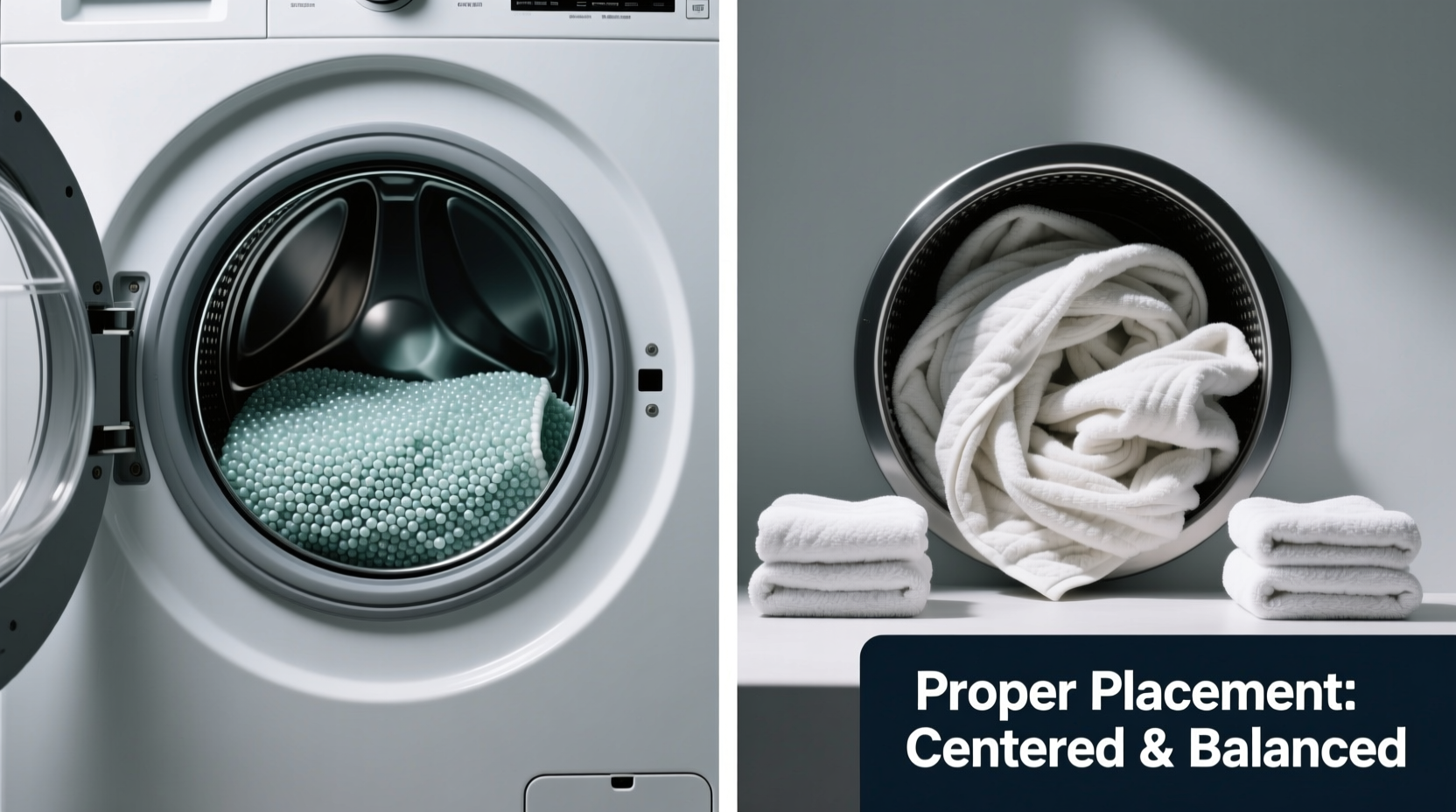
When Machine Washing Isn’t Worth the Risk
If your blanket exceeds 20 lbs, features hand-stitched seams, or includes cooling gel layers or copper-infused fabric, machine washing introduces unacceptable compromise. These materials respond unpredictably to heat, moisture, and tumbling—and once damaged, cannot be restored. In such cases, professional low-moisture cleaning preserves integrity far better than DIY attempts.
Everything You Need to Know
Can I use my regular detergent?
No. Standard detergents contain optical brighteners and enzymes that degrade nylon baffles over time. Use a pH-neutral, fragrance-free detergent formulated for technical textiles—or a mild castile soap diluted 1:10.
What if my blanket smells musty after air-drying?
That signals incomplete drying—not mold. Glass beads retain moisture longer in inner chambers. Flip and fluff every 4 hours; use a fan (not heater) to accelerate airflow. Never re-wet and re-spin.
Will washing make my blanket less heavy?
No—glass beads do not absorb water or compress permanently. Any perceived lightness post-wash is due to temporary fiber relaxation. Weight returns fully within 24–48 hours of complete drying.
How often should I wash it?
Every 3–6 months with regular duvet cover use. Spot-clean spills immediately. If used nightly without a cover, wash every 4–8 weeks to prevent skin oil buildup in baffles.




 浙公网安备
33010002000092号
 浙B2-20120091-4