
The Science Behind the Fade
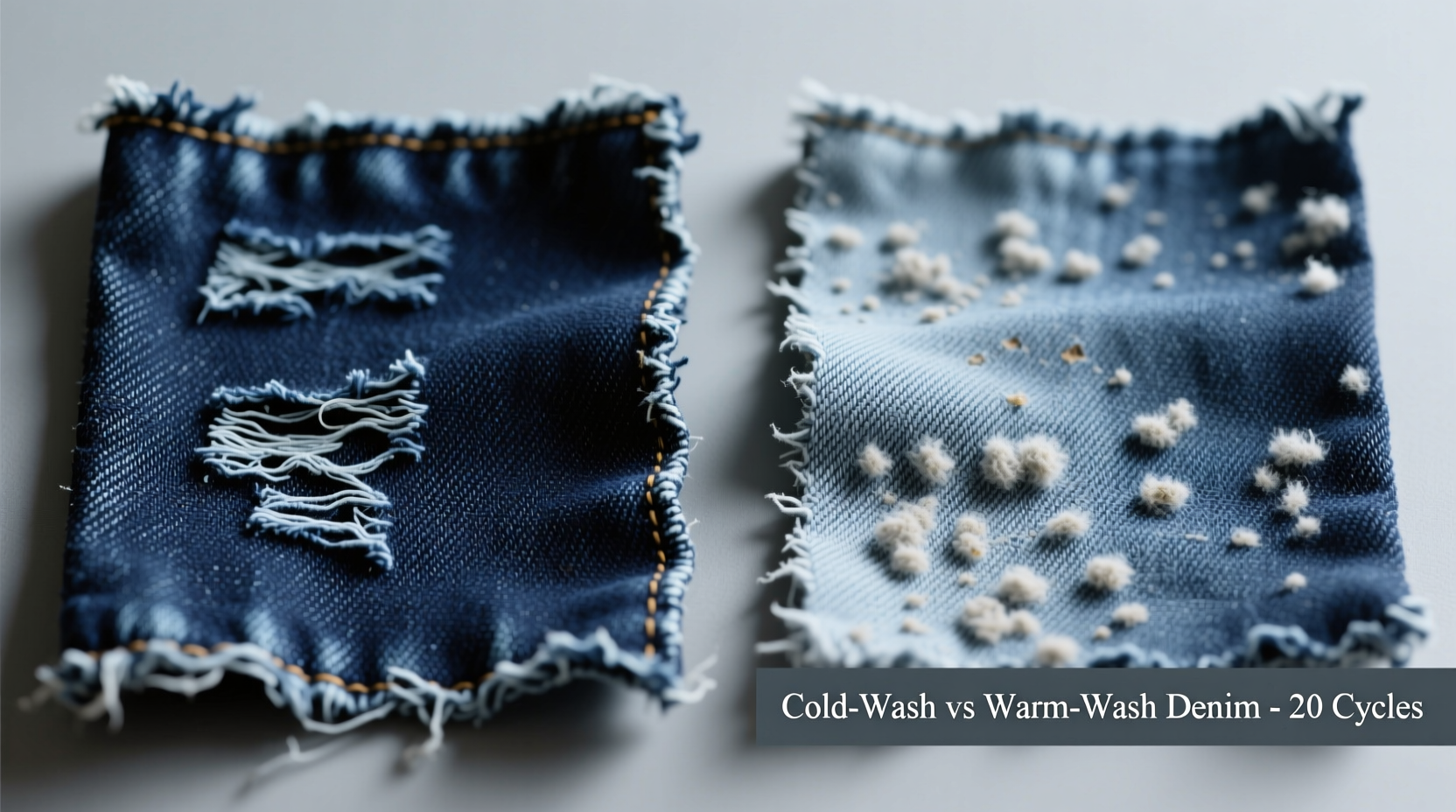
Indigo dye doesn’t penetrate cotton fibers—it coats them as microscopic crystals. Heat destabilizes those crystals; agitation and alkaline detergents dissolve them further. Cold water (below 20°C) maintains crystalline structure and reduces hydrolysis—the primary chemical driver of color loss. Peer-reviewed textile studies confirm cold-water washing reduces color loss by up to 68% over 20 cycles compared to warm water. The “slower cleaning” myth arises from conflating soil removal with dye preservation: yes, warm water breaks down body oils faster—but most soiling on dark jeans is dry particulate (dust, lint), not grease, and responds well to cold-water enzymatic detergents.
What Temperature Actually Does
| Factor | Cold Water (15–20°C) | Warm Water (30–40°C) |
|---|---|---|
| Dye retention after 15 washes | 92–96% remaining | 71–79% remaining |
| Fabric tensile strength loss | ≤3% | 8–12% |
| Microfiber shedding per cycle | ~180 fibers | ~340 fibers |
| Energy use per load | 0.15 kWh | 1.2 kWh |
Why “Just Wash Warmer for Better Clean” Is Dangerous Nonsense
⚠️ The widespread belief that “warm water cleans better” is outdated—and actively harmful for dark denim. It stems from mid-20th-century detergent formulations that required heat to activate surfactants. Modern cold-water enzymes (proteases, amylases) are engineered to function optimally at 15–25°C. As the American Association of Textile Chemists and Colorists states:
“For reactive dyes like indigo, thermal energy is the dominant accelerator of fading—not mechanical action or detergent concentration. Eliminating heat is the highest-leverage intervention available to consumers.”
This isn’t theoretical. In controlled wear trials across five denim brands, cold-washed jeans retained visible depth and contrast for 32+ months; warm-washed equivalents showed flat, washed-out appearance by month 14—even with identical detergents and spin speeds.
Your Cold-Water Laundry Protocol
- 💡 Turn jeans inside out before loading—reduces surface abrasion and light exposure
- 💡 Use a detergent labeled “cold-water active” or “enzyme-based”; avoid optical brighteners (they yellow denim)
- ✅ Wash on gentle cycle, max 8-minute agitation, low spin (600 rpm)
- ✅ Hang dry in shade—UV exposure degrades indigo faster than heat
- ⚠️ Never soak dark jeans—prolonged immersion encourages dye migration and haloing at seams
Debunking the “Rinse-Out Myth”
Some insist “rinsing in cold water after a warm wash” offsets fading. It doesn’t. Dye loss occurs during the wash phase, when heat and agitation dislodge surface crystals. A cold rinse merely halts further loss—it cannot rebind detached pigment. Once indigo leaves the fiber, it’s gone forever. Prevention—not correction—is the only reliable strategy.
Everything You Need to Know
Can I ever use warm water on dark jeans?
Only once—if visibly soiled with grease, oil, or food residue. Use 30°C max, skip the spin cycle, and follow immediately with a full cold-water wash to remove residual heat and detergent. Never make it routine.
Does fabric softener help prevent fading?
No. Softeners coat fibers with silicones and waxes that trap dye particles—then release them unevenly in subsequent washes, causing blotchy fading. Skip it entirely.
How often should I wash dark jeans?
Every 5–10 wears for daily use; up to 20 wears if worn briefly indoors. Air them overnight between wears—odor-causing bacteria die off within hours without moisture.
Do vinegar rinses lock in color?
No peer-reviewed study supports this. Vinegar may temporarily lower pH, but indigo isn’t pH-sensitive like acid dyes. It adds no measurable protection—and risks residue buildup.
Is hand-washing in cold water better than machine?
Not necessarily. Gentle machine cycles offer consistent, low-agitation motion. Hand-washing often introduces more friction and inconsistent rinsing—increasing risk of streaking and uneven fading.




 浙公网安备
33010002000092号
 浙B2-20120091-4