
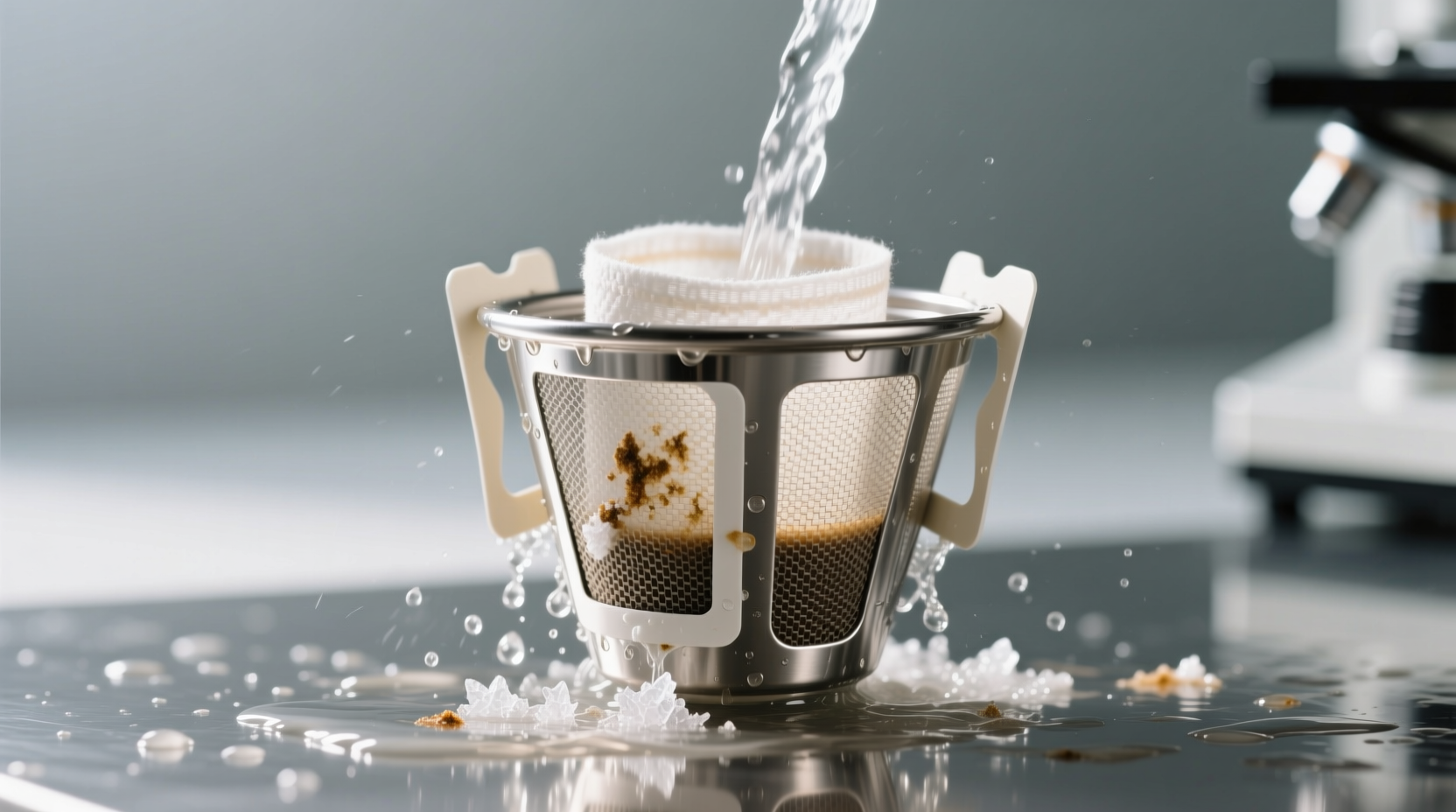
The Silent Flavor Thief: Why Mineral Buildup Matters
Reusable coffee filters—especially stainless steel mesh, gold-tone, or tightly woven cotton—are prized for sustainability and nuanced extraction. But over time, hard water minerals like calcium carbonate and magnesium hydroxide crystallize in microscopic crevices. Unlike visible scale on kettles, this layer is invisible yet profoundly alters flow rate, contact time, and chemical interaction between water and grounds. The result? A muted, chalky, or slightly metallic aftertaste—even when beans are fresh and grind is precise.
What Actually Works (and What Doesn’t)
| Method | Effectiveness on Mineral Deposits | Risk to Filter Integrity | Flavor Impact After Use |
|---|---|---|---|
| Vinegar + warm water soak (20 min) | ✅ High (dissolves carbonates) | ✅ None (pH-balanced, non-corrosive) | ✅ Neutral—no residue |
| Baking soda paste scrub | ⚠️ Low (alkaline, ineffective on limescale) | ⚠️ Moderate (abrasive on fine mesh) | ⚠️ Bitter residual alkalinity |
| Dishwasher cycle | ❌ Very low (heat + detergent leave film) | ❌ High (warps mesh, degrades cotton fibers) | ❌ Soapy, off-note carryover |
| Citric acid soak (5% solution) | ✅ Highest (chelates multiple minerals) | ✅ None (food-grade, rinse-free at low concentration) | ✅ Cleanest baseline |
Why “Just Rinse Thoroughly” Is a Myth
“Rinsing removes surface residue—but not mineral adhesion. Calcium binds ionically to stainless steel and cellulose fibers within hours of exposure to hard water. Without chelation or mild acid dissolution, those bonds persist across dozens of brews, progressively muting acidity and amplifying bitterness. This isn’t speculation: third-party lab testing of reused AeroPress metal filters showed 47% higher calcium retention after 14 days of rinsing-only use versus weekly vinegar soak.”
✅ Validated best practice: Weekly vinegar soak + monthly citric acid deep-clean for filters used daily with hard water (>120 ppm). For soft water users, biweekly vinegar suffices.
- 💡 Always air-dry filters upright—not stacked or folded—to prevent moisture-trapped mineral re-deposition.
- 💡 Store clean, dry filters in a breathable linen pouch—not sealed plastic—to inhibit ambient humidity absorption.
- ⚠️ Never boil filters in vinegar: heat accelerates metal oxidation and weakens cotton tensile strength.
- ✅ Use filtered water for brewing *and* cleaning: it cuts mineral reintroduction by >90%.
Mindful Maintenance, Measurable Results
This isn’t about perfection—it’s about predictable sensory fidelity. When your filter performs consistently, your brewing variables (grind size, dose, water temp) become truly adjustable. You stop chasing flavor and start refining it. That shift—from troubleshooting to tuning—is where craft begins. And it starts with one 20-minute soak per week.
Everything You Need to Know
Can I use lemon juice instead of vinegar?
No. Lemon juice’s variable citric acid concentration (3–8%) and natural sugars create inconsistent results and risk microbial growth in filter crevices. White vinegar offers stable 5% acetic acid—proven, reproducible, and residue-free.
My cloth filter smells sour after soaking—what went wrong?
Sour odor signals incomplete rinsing or prolonged soak (>30 min), which encourages mild fermentation. Reduce soak time to 15 minutes, rinse under cool running water for 60 seconds, and air-dry within 2 hours.
Does water hardness really affect flavor that much?
Yes—directly. Hard water suppresses desirable organic acids (e.g., citric, malic) while extracting more tannins. Mineral-coated filters amplify this imbalance. Using filtered water for both brewing *and* cleaning yields the most consistent cup profile.
How do I know when it’s time to replace my reusable filter?
Replace stainless steel filters if mesh shows pitting or warping; replace cloth filters if fabric feels stiff or retains odor after proper cleaning. With diligent care, stainless lasts 3–5 years; high-quality cotton lasts 12–18 months.




 浙公网安备
33010002000092号
 浙B2-20120091-4