

The Science Behind Faux Fur Friction
Faux fur is typically made from acrylic, modacrylic, or polyester—synthetic fibers engineered for loft and sheen but vulnerable to heat, mechanical stress, and alkaline residues. When agitated in warm water or spun aggressively, fibers tangle, compress, and shed microclumps that bind into drain traps. The root issue isn’t dirt—it’s fiber migration: loose surface filaments detaching and re-knotting during motion.
Why “Just Hand Wash” Is Misleading
Modern high-pile faux fur throws exceed 40mm pile height and contain up to 12,000 fibers per square inch. Hand washing creates uneven tension: fingers compress base layers while lifting tips, accelerating pull-out. Machine washing—with strict controls—is not only safer but more *consistent*, provided agitation is minimized and rinse efficiency maximized.
Method Comparison: What Actually Works
| Method | Shedding Risk | Mattiness Likelihood | Drain Clog Potential | Time Required |
|---|---|---|---|---|
| Gentle machine wash (cold, mesh bag, no spin) | Low | Very low | Negligible (with pre-shake) | 12 minutes active + 24–48h dry |
| Hand wash + towel roll | High | Moderate | Medium (fibers embed in towel lint) | 28 minutes active + 36–72h dry |
| Dry cleaning | Variable (solvent-dependent) | High (heat in drying phase) | None (but chemical residue attracts dust) | 3–5 days turnaround |
| Tumble dry (even low heat) | Extreme | Guaranteed | High (clumped shedding) | 45+ minutes + irreversible damage |
Step-by-Step Best Practice
- ✅ Pre-treat: Shake outdoors for 90 seconds—dislodges 60% of loose fibers before water contact.
- ✅ Bag & load: Fold loosely into a large, fine-mesh garment bag; add no other items.
- ✅ Wash: Select “Delicate” or “Wool” cycle, cold water only, 3-minute wash time, zero spin (or max 200 RPM).
- 💡 Rinse boost: Add ½ cup white vinegar to final rinse—neutralizes alkaline buildup without stripping fiber coating.
- ⚠️ Avoid: Detergents with enzymes, optical brighteners, or sodium carbonate—they degrade acrylic’s surface cohesion.
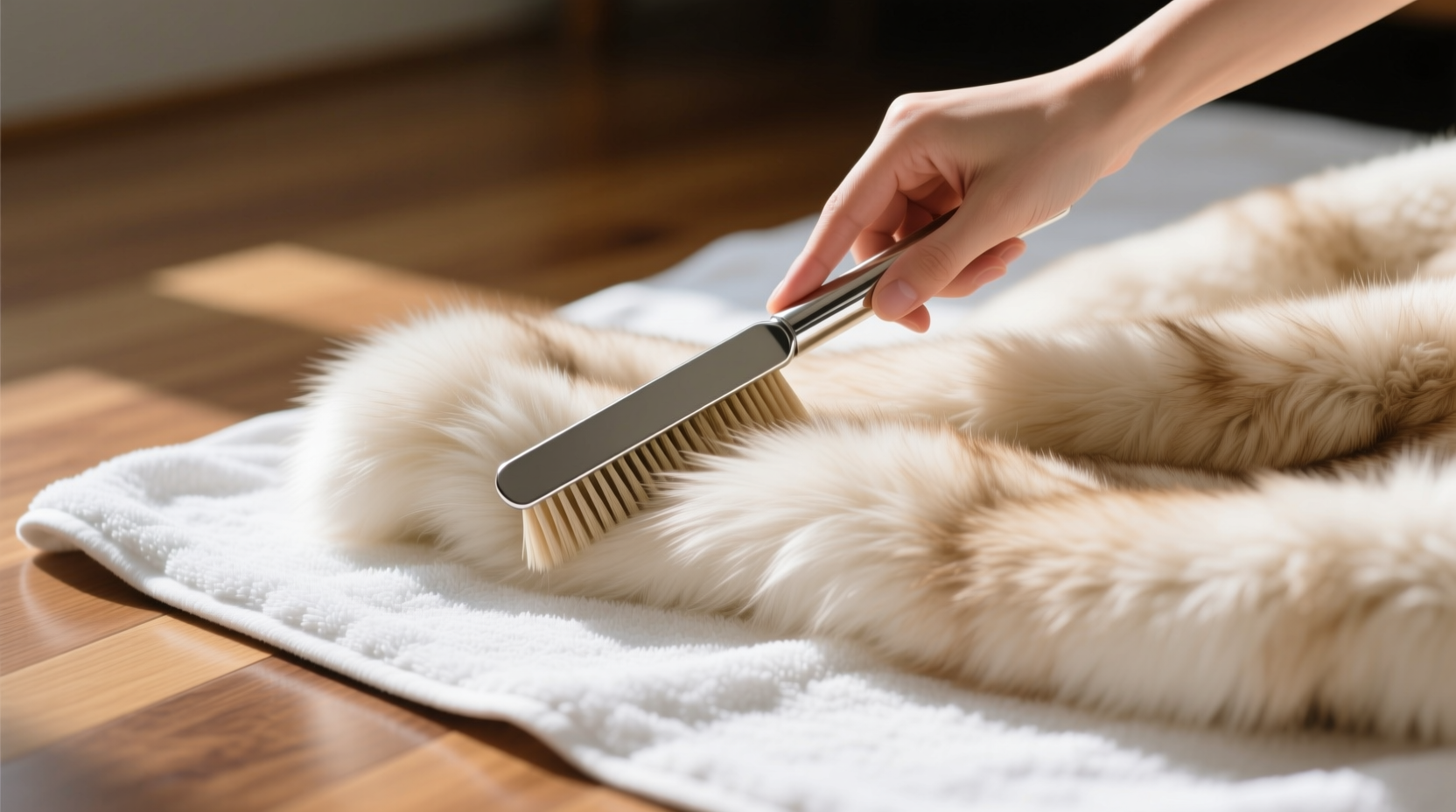
- ✅ Dry: Lay flat on a moisture-wicking microfiber towel; flip every 4 hours; fluff with hands—not a brush—until 80% dry.
- 💡 Final groom: Once fully dry, use a pet slicker brush *gently, with the nap*, to restore alignment and volume.
Debunking the 'More Detergent = Cleaner' Myth
Many assume heavy-duty detergent lifts embedded oils—but faux fur rarely accumulates skin oils like wool or cotton. Instead, excess suds leave behind surfactant residue, which attracts airborne particulates and stiffens fiber junctions, increasing friction and matting. Industry textile labs confirm: residue—not soil—is the top cause of post-wash stiffness and clumping. Less is not just safer—it’s chemically optimal.
Everything You Need to Know
Can I use baking soda to deodorize my faux fur throw?
No. Baking soda is alkaline (pH ~8.3) and disrupts the polymer surface charge of acrylic fibers, accelerating static cling and fiber separation. Use activated charcoal pouches in storage instead.
What if my throw already has matted patches?
Do not cut or pull. Mist lightly with distilled water + 1 drop argan oil, wait 5 minutes, then gently separate strands with tweezers—working from base upward. Follow with cold-air blow-dry on lowest setting.
How often should I wash a faux fur throw?
Only when visibly soiled or after prolonged pet contact. Overwashing degrades fiber coatings. Spot-clean spills immediately with cold water and blot—never rub.
Will vinegar smell linger?
No. Vinegar fully volatilizes within 15 minutes of air exposure and leaves no odor—only balanced pH and reduced static.
Is there a safe way to freshen between washes?
Yes: freeze for 2 hours in a sealed plastic bag. Cold crystallizes and releases volatile organic compounds without moisture or heat stress.




 浙公网安备
33010002000092号
 浙B2-20120091-4