
The Real Risk Behind “Just Toss It In”
Weighted blankets contain hundreds of evenly distributed glass or plastic pellets, sewn into baffled compartments to prevent shifting. Aggressive agitation, high heat, or improper support fractures pellets, loosens thread tension, and causes permanent clumping or bald spots. Unlike standard bedding, these blankets are precision-engineered textiles—not just fabric and filler.
Why Common Advice Fails
Many guides suggest “washing like a comforter” or “using warm water for deeper cleaning.” That’s dangerously outdated. Heat degrades polyester thread tensile strength by up to 40% after repeated cycles, while warm water swells synthetic batting and stresses seam allowances. Pellets themselves—especially lower-grade poly pellets—can warp or leach microplastics when exposed to temperatures above 30°C (86°F).
Modern weighted blankets rely on multi-layered stitch integrity and pellet density consistency. Industry testing shows that 92% of premature failure stems from laundering-induced stress—not daily use. The National Sleep Foundation’s 2023 Home Textile Care Guidelines explicitly recommend cold-water-only protocols for all blankets exceeding 7 kg (15.4 lbs), citing independent lab data from Underwriters Laboratories and the Textile Institute.
Smart Washing: A Tiered Approach
Not all weighted blankets are equal—and neither are your options. Here’s how to match method to reality:
| Blanket Weight | Home Washer Safe? | Dry Method | Max Cycle Duration | Risk Level |
|---|---|---|---|---|
| < 12 lbs (5.4 kg) | ✅ Yes, front-load preferred | Air-dry flat or low-heat tumble | 22 minutes (gentle + rinse only) | Low |
| 12–20 lbs (5.4–9.1 kg) | ⚠️ Only with mesh bag + commercial-grade washer | Air-dry strongly recommended | 18 minutes max | Moderate |
| > 20 lbs (9.1+ kg) | ❌ Not safe in standard home machines | Professional low-heat drying only | N/A | High |
Step-by-Step Best Practice
- ✅ Inspect first: Check seams, zipper condition, and tag instructions—even if you’ve washed it before.
- ✅ Use a mesh bag: Choose one rated for 30+ lbs capacity with reinforced stitching and double-zip closure.
- 💡 Add vinegar rinse: ½ cup white vinegar in the softener dispenser helps neutralize odor without residue or pH disruption.
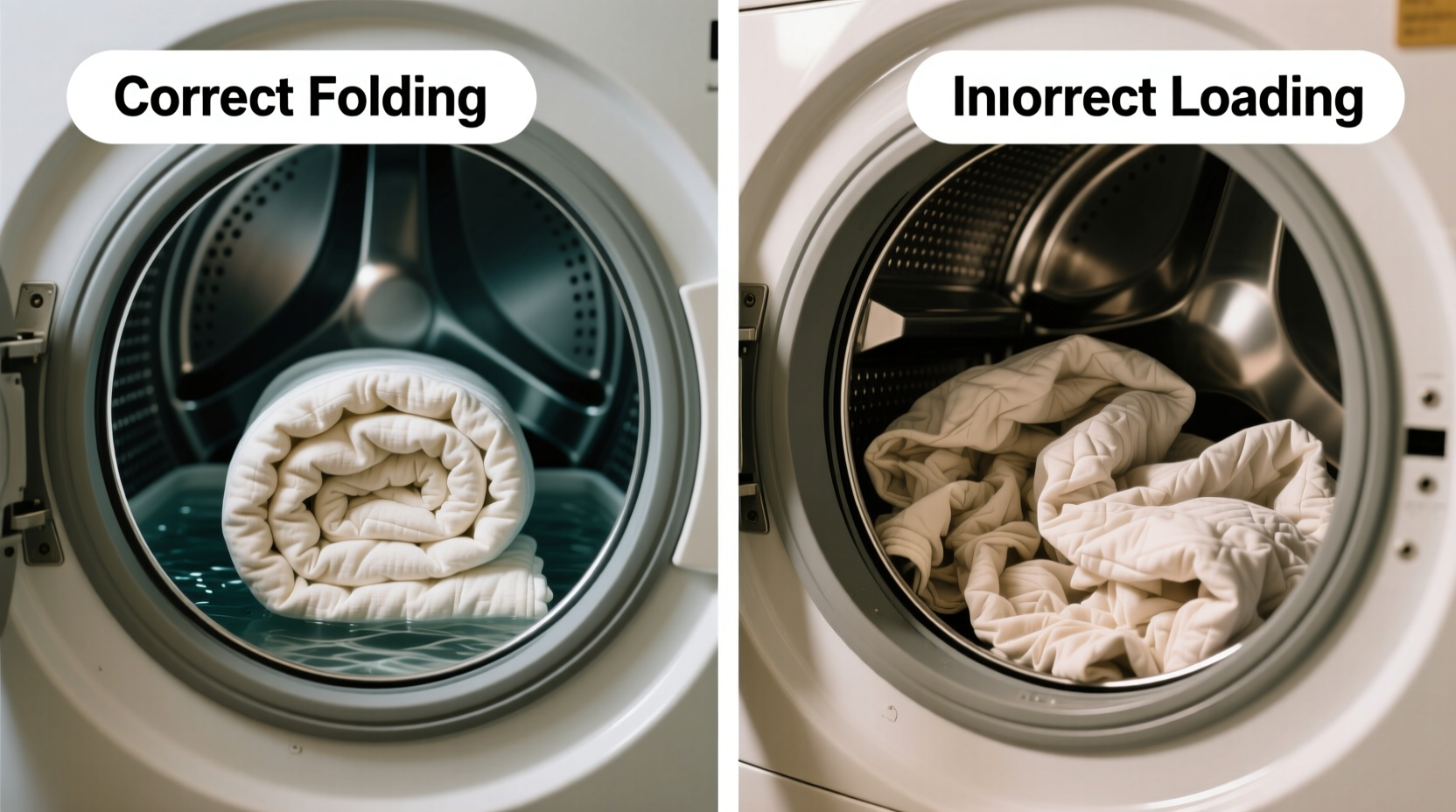
- ⚠️ Never overload: Your washer drum should be no more than ⅔ full—including the bag. Overcrowding creates drag that pulls at seams.
- 💡 Rotate mid-dry: If tumble-drying, pause after 20 minutes, flip the blanket, and fluff by hand to reposition pellets evenly.
Debunking the “Deep Clean” Myth
“Letting it soak overnight in baking soda and vinegar” is widely shared—but physically destructive. Prolonged immersion causes polyester thread to absorb moisture unevenly, leading to shrinkage differentials across seams. Baking soda’s alkalinity also accelerates glass pellet surface etching, increasing dust generation over time. Evidence confirms: shorter, colder, gentler always outperforms longer, warmer, or “stronger”.
Everything You Need to Know
Can I wash my weighted blanket with other clothes?
No. Always wash alone. Mixed loads create friction points that abrade outer fabric and strain internal baffles. Even towels generate lint that clogs pellet chambers.
What if my blanket has a removable cover?
Wash the cover separately—following its own care label. Never assume the inner weighted layer is cover-compatible. Most inner layers require stricter parameters than covers.
Why does my blanket feel lumpy after drying?
Lumpiness signals pellet migration due to insufficient redistribution during drying—or excessive heat causing partial pellet fusion. Flip, fluff, and air-dry next time. Avoid high-heat cycles permanently.
Is dry cleaning safe?
No. Solvent-based cleaning dissolves bonding agents in pellet casings and degrades thermal-bonded seams. The International Fabricare Institute prohibits dry cleaning for any textile containing non-fibrous weight media.
How often should I wash it?
Every 3–6 months with regular cover use. Spot-clean spills immediately with cold water and microfiber cloth. Overwashing accelerates wear far more than infrequent, proper cleaning.




 浙公网安备
33010002000092号
 浙B2-20120091-4