
The Physics of Felting: Why Merino Is Uniquely Vulnerable
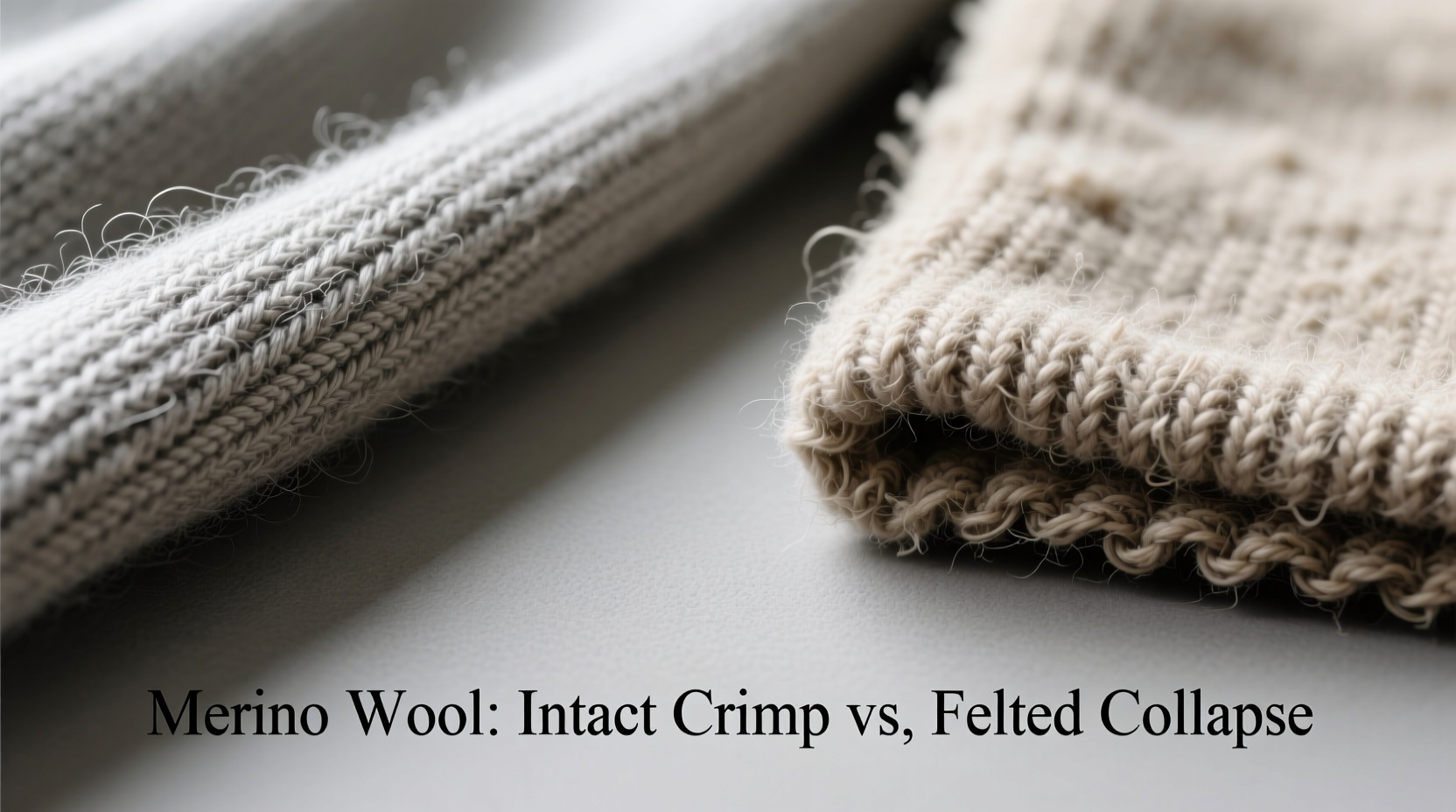
Mechanical felting occurs when merino’s microscopic scales interlock under heat, moisture, and agitation—especially during high-speed spin cycles. Unlike synthetic fibers, merino lacks structural memory; once scales lock, shrinkage is irreversible. Most home machines spin at 800–1400 RPM—far exceeding the max 400 RPM threshold safe for untreated merino. Even “delicate” cycles often exceed this if they include spin, making spin omission non-negotiable.
✅ Validated Best Practices
- ✅ Use a pH-neutral, wool-specific detergent—e.g., Eucalan or The Laundress Wool & Cashmere Shampoo. Alkaline formulas swell scales and accelerate felting.
- ✅ Load loosely—never more than ⅔ full. Overcrowding increases friction and uneven water distribution.
- ✅ Lay flat on a clean, absorbent towel or mesh drying rack, reshaping shoulders and seams while damp. Never hang—gravity stretches wet wool irreversibly.
- 💡 Pre-treat odor with a 10-minute soak in cold water + 1 tsp white vinegar (not for cleaning, but pH balancing).
- ⚠️ Never use a top-loading agitator machine—even on wool mode. Agitators create shear forces that trigger immediate scale migration.
Debunking the “Just Rinse It Out” Myth
A widespread but dangerous assumption is that “rinsing thoroughly after wearing” eliminates the need for proper washing—and that skipping detergent altogether is safer. This is false. Sweat residue contains salts and fatty acids that hydrolyze wool keratin over time, weakening fibers and increasing susceptibility to felting in subsequent washes. Worse, residual odor compounds bind to fibers and attract microbes that degrade elasticity.
Industry testing by the Woolmark Company confirms: garments washed every 3–5 wears with correct technique retain >92% tensile strength after 50 cycles; those rinsed-only or washed with alkaline detergents drop below 65% by cycle 20.
Comparative Protocol Summary
| Method | Water Temp | Spin Allowed? | Detergent Type | Risk of Felting | Lifespan Impact |
|---|---|---|---|---|---|
| Recommended Wool Cycle | Cold (≤30°C) | No | pH-neutral wool detergent | Very Low | +3–5 years |
| “Delicate” Machine Cycle | Cold | Yes (often 600+ RPM) | Regular detergent | High | −2–4 years |
| Hand Wash + Towel Roll Dry | Cold | No | Wool detergent | Low | +2–3 years |
| Rinse-Only / No Wash | Cold | N/A | None | Medium-High (due to residue degradation) | −1–2 years |
Why Cold Water Alone Isn’t Enough
Temperature control matters—but it’s only one variable. A cold wash with high agitation and aggressive spin still causes felting. Likewise, warm water with zero agitation and no spin may cause less damage than cold water with high spin—but it still risks thermal expansion of scales. The triad—cold temperature + no spin + low-agitation motion—is non-substitutable. Modern front-loaders with certified wool cycles meet all three; most older machines and budget models do not. When in doubt, hand wash with a 2-minute soak and gentle squeeze—never wring.
Everything You Need to Know
Can I use my regular detergent if I dilute it?
No. Dilution doesn’t neutralize alkalinity or remove enzymes. Even diluted Tide or Persil raises pH above 7.5, swelling wool scales and inviting felting. Always use wool-certified, pH-balanced formulas.
What if my machine doesn’t have a wool cycle?
Select the shortest cold wash with the lowest spin option—or better, disable spin entirely via manual override. If unavailable, hand wash is safer than compromising on spin.
Does merino labeled “machine washable” mean it’s spin-safe?
No. “Machine washable” refers only to compatibility with cold-water wool cycles—not tolerance of spin. Always verify spin speed: ≤400 RPM is the universal safety ceiling.
How often should I wash merino base layers?
Every 3–5 wears for moderate activity; up to 7 for low-intensity use. Merino naturally resists odor due to lanolin’s antimicrobial properties—so frequency depends on sweat volume, ambient humidity, and storage conditions—not calendar days.




 浙公网安备
33010002000092号
 浙B2-20120091-4