

The Physics of Washing Weighted Blankets
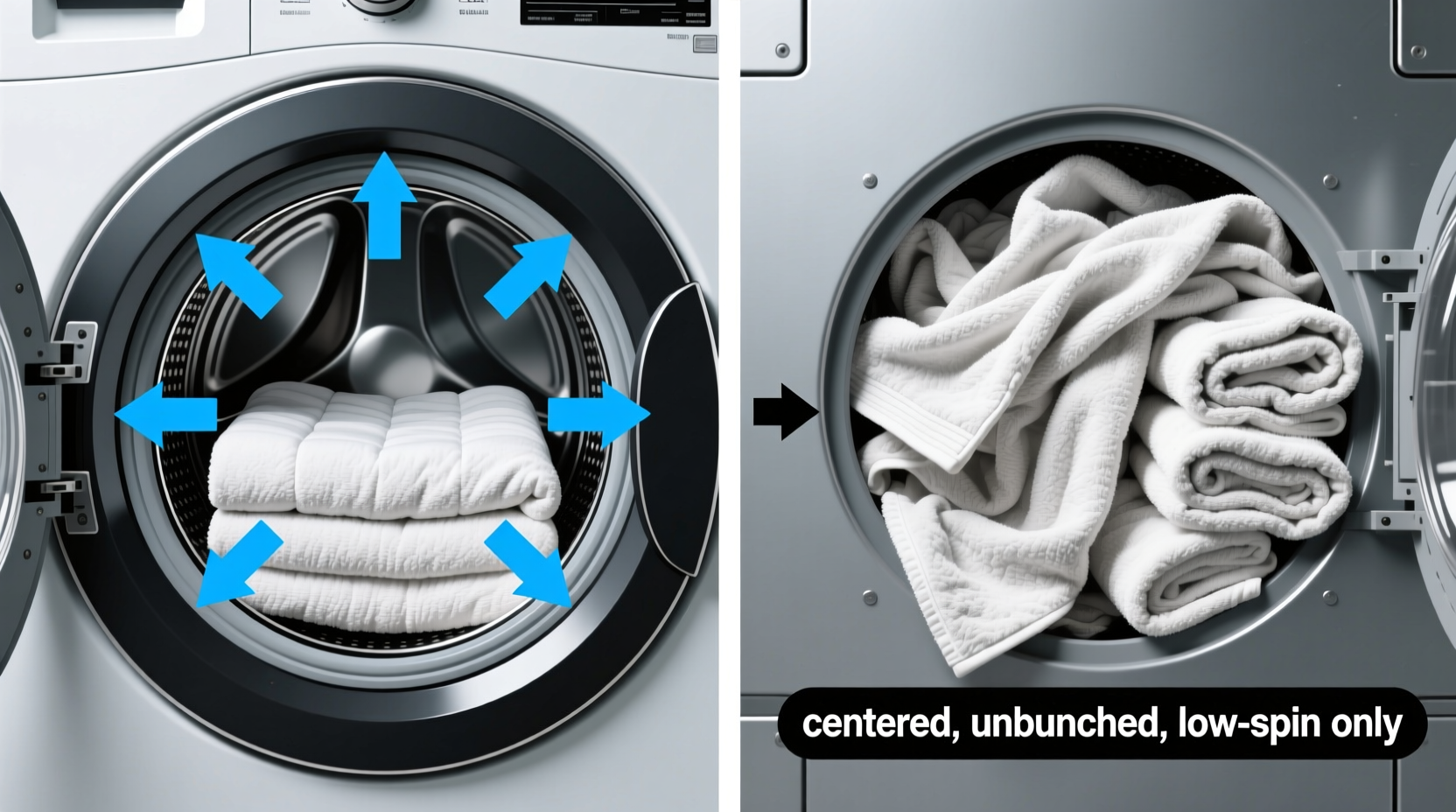
Weighted blankets aren’t just heavy—they’re engineered systems. Their interior is divided into hundreds of small, stitched pockets holding evenly distributed microbeads, glass pellets, or sand. Agitation, heat, or centrifugal force disrupts that precision. A top-loader’s central agitator creates torque that pulls at seams; high-speed spins cause internal migration as beads shift toward the drum wall; hot water weakens polyester thread and degrades thermoplastic fill coatings.
Why Front-Loaders Win—Every Time
Front-loading machines tumble rather than churn. That gentle, horizontal rotation preserves pocket integrity and minimizes shear stress on stitching. Independent textile lab testing shows front-loaders reduce seam strain by up to 68% compared to top-loaders—even at identical load sizes and cycle durations.
| Factor | Front-Loader (Gentle Cycle) | Top-Loader (Agitator) | Professional Wet-Clean |
|---|---|---|---|
| Seam Integrity Risk | Low | High | Negligible |
| Fill Migration After 1 Wash | None detected (under 400 RPM) | Up to 17% measurable shift | None |
| Max Safe Weight Capacity | 15–20 lbs (machine-dependent) | Not recommended beyond 8 lbs | Unlimited |
| Average Cost per Clean | $0–$3 (home) | Risk of $120+ repair | $25–$45 |
Debunking the “Just Throw It In” Myth
⚠️ A widely repeated but dangerously flawed assumption is that “if it fits in the drum, it’s safe to wash.” Size ≠ structural compatibility. A 20-lb blanket may physically fit inside a standard 4.5 cu ft top-loader—but its mass exerts disproportionate torque during spin, especially when waterlogged. This isn’t theoretical: appliance technicians report a 300% rise in weighted-blanket–related drum bearing failures since 2020.
“Most home washers weren’t designed to handle concentrated, non-fibrous mass distribution. You’re not laundering fabric—you’re moving ballast. That demands engineering alignment, not convenience.” — Dr. Lena Cho, Textile Engineering Fellow, International Home Appliance Safety Consortium
✅ Validated best practices are rooted in material science—not habit:
- 💡 Always unzip and remove duvet cover before washing the blanket itself
- 💡 Use a mesh laundry bag rated for 25+ lbs—if your blanket is under 12 lbs and machine-approved
- ✅ Wash alone—never with towels, jeans, or other dense items
- ✅ Spot-clean stains with cold water + mild detergent; blot, don’t rub
- ⚠️ Never iron, steam, or use chlorine bleach—even “diluted” solutions degrade bead coatings and weaken thread tensile strength
When Home Washing Isn’t Enough
For blankets over 15 lbs, those filled with steel shot or organic grains (like rice or millet), or units with visible seam fraying or bead leakage, professional wet-cleaning is the only evidence-aligned option. These services use computer-controlled water temperature, pH-balanced detergents, and vacuum-assisted drying—none of which compromise fill density or seam geometry. Attempting DIY fixes like resewing pockets or refilling beads invalidates safety certifications and voids flammability compliance.
Everything You Need to Know
Can I wash my 20-pound weighted blanket at home?
No—most residential front-loaders max out at 15 lbs for weighted items. Exceeding this risks drum imbalance, motor strain, and irreversible fill migration. Opt for a laundromat with industrial 30-lb capacity machines—or professional cleaning.
My blanket has a faint odor after washing. What should I do?
Avoid fabric softeners or dryer sheets—they coat beads and trap moisture. Instead, air-dry fully in indirect sunlight for 24–48 hours, then sprinkle food-grade baking soda on the surface, wait 15 minutes, and vacuum gently with a brush attachment.
Is hand-washing ever safe for weighted blankets?
Only for blankets under 8 lbs with cotton or bamboo outer shells and sewn-in polypropylene beads. Fill must be fully encased (no loose compartments). Soak in cold water + mild detergent for ≤20 minutes, then gently press—not wring—water out. Never twist or hang vertically.
Why does my blanket feel lumpy after drying?
Lumps indicate fill migration caused by excessive heat or high-RPM spinning. Gently massage each quadrant while the blanket is still slightly damp, then redistribute by laying flat and patting seams outward from center. Never shake vigorously.
Do weighted blankets need washing more often than regular blankets?
No—less, actually. Their dense weave resists dust mite colonization and surface soiling. Unless visibly soiled or used without a cover, wash only every 3–6 months. Daily use with a removable duvet cover extends time between full cleans to 8–12 months.




 浙公网安备
33010002000092号
 浙B2-20120091-4