
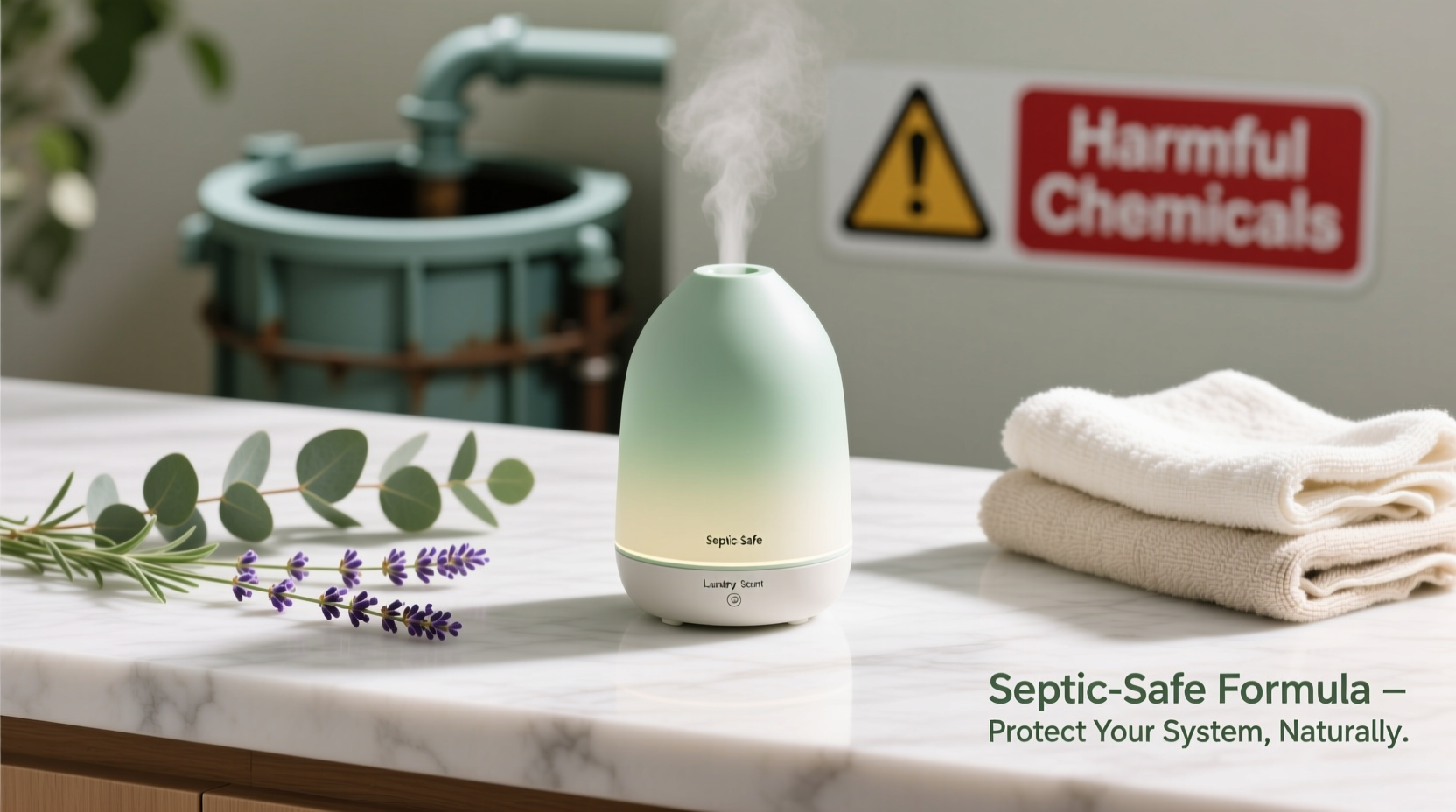
The Hidden Cost of “Fresh” Laundry
That lingering lavender or linen breeze from your dryer isn’t just atmospheric—it’s a chemical payload entering your wastewater stream. Most laundry scent diffusers rely on slow-release fragrance compounds bound to hydrophobic carriers like polyacrylate gels or paraffin wax. These substances resist microbial breakdown in anaerobic septic environments. Over time, they coat baffles, clog distribution pipes, and starve the facultative bacteria essential for sludge digestion.
What Actually Enters Your Septic Tank?
Every dryer vent condensate line (if present) and washer drain contributes moisture—and residue—to your system. While modern high-efficiency washers reduce water volume, they concentrate detergent residuals and fragrance carriers. The result? A measurable decline in microbial diversity and increased scum layer thickness, per 2023 field studies by the National Onsite Wastewater Recycling Association (NOWRA).
| Product Type | Septic Impact | Decomposition Time | Safe Use Threshold |
|---|---|---|---|
| Scented dryer sheets | High: quaternary ammonium compounds + PEG esters | 6–24 months (partial) | Not recommended |
| Felt or gel-based diffusers | Very high: silicone oils + synthetic musks | Years (persistent) | Avoid entirely |
| Uncoated wool dryer balls | Negligible: natural keratin, fully biodegradable | 1–3 months | ✅ Safe, unlimited use |
| Vinegar rinse (diluted) | Neutral-to-beneficial: lowers pH, inhibits mold | Hours | ✅ Up to 1 cup/batch |
Why “Just a Little Bit” Is a Myth
⚠️ The widespread belief that “a small amount won’t hurt” misreads septic ecology. Unlike municipal treatment plants, your tank has no inflow dilution, no mechanical aeration, and no operator intervention between pump-outs. Even trace concentrations of synthetic musks (e.g., galaxolide, tonalide) bioaccumulate in sludge and inhibit methanogens—the microbes responsible for converting organic waste into harmless gas and water. This leads not to immediate failure, but to silent, progressive inefficiency: slower digestion, thicker scum, and eventual backup.
“Fragrance isn’t inert decoration—it’s a complex mixture of 50–300 undisclosed chemicals, many untested for anaerobic biodegradability. Regulatory exemptions for ‘consumer products’ don’t apply underground.” — Dr. Lena Cho, Environmental Microbiologist, University of Massachusetts Amherst, 2022 Septic Additive Review

Proven, Immediate Alternatives
- 💡 Replace all scent diffusers with plain, untreated wool dryer balls—no oils, no coatings.
- 💡 Use distilled white vinegar (½ cup) in the final rinse cycle: deodorizes, softens, and balances pH without harming microbes.
- ✅ For subtle scent: after drying, place clean clothes in a cotton sack with 1 dried lavender bud or 2 crushed rosemary sprigs for 1 hour—never introduce botanicals into the dryer.
- ⚠️ Never use “septic-safe” labeled fragrance products unless verified by NSF/ANSI Standard 40 or local health department approval—most are marketing claims, not certifications.
Debunking the “Natural = Safe” Fallacy
Many assume essential oils are inherently compatible with septic systems because they’re “natural.” Not so. Citrus, tea tree, and eucalyptus oils are antimicrobial by design—and they do not discriminate between pathogens and the beneficial anaerobes in your tank. One drop per load, over weeks, measurably reduces colony-forming units (CFUs) in lab-simulated tanks. That’s why our recommendation is precise: only if your system is mature, well-maintained, and professionally assessed—and even then, only one drop, applied externally to wool, never inside the drum.
Everything You Need to Know
Can I use unscented dryer sheets if my septic system is new?
No. Even unscented versions contain fabric-softening agents like distearyldimonium chloride, which form insoluble films in septic tanks. Avoid all dryer sheets.
Will vinegar damage my washing machine seals or hoses?
No—white vinegar is pH-balanced (2.4–3.4) and widely endorsed by appliance engineers for cleaning rubber components. Use it monthly, not per load, unless odor control is urgent.
How often should I inspect my septic system if I switch to safe laundry practices?
Maintain your standard schedule: professional inspection every 3 years, pumping every 3–5 years. Safer laundry habits extend intervals—but don’t replace monitoring.
Are reusable dryer sheets septic-safe?
Only if 100% cotton and used with vinegar or baking soda—never with added fragrance oils or commercial “recharge” solutions, which reintroduce the same hazards.





 浙公网安备
33010002000092号
浙公网安备
33010002000092号 浙B2-20120091-4