
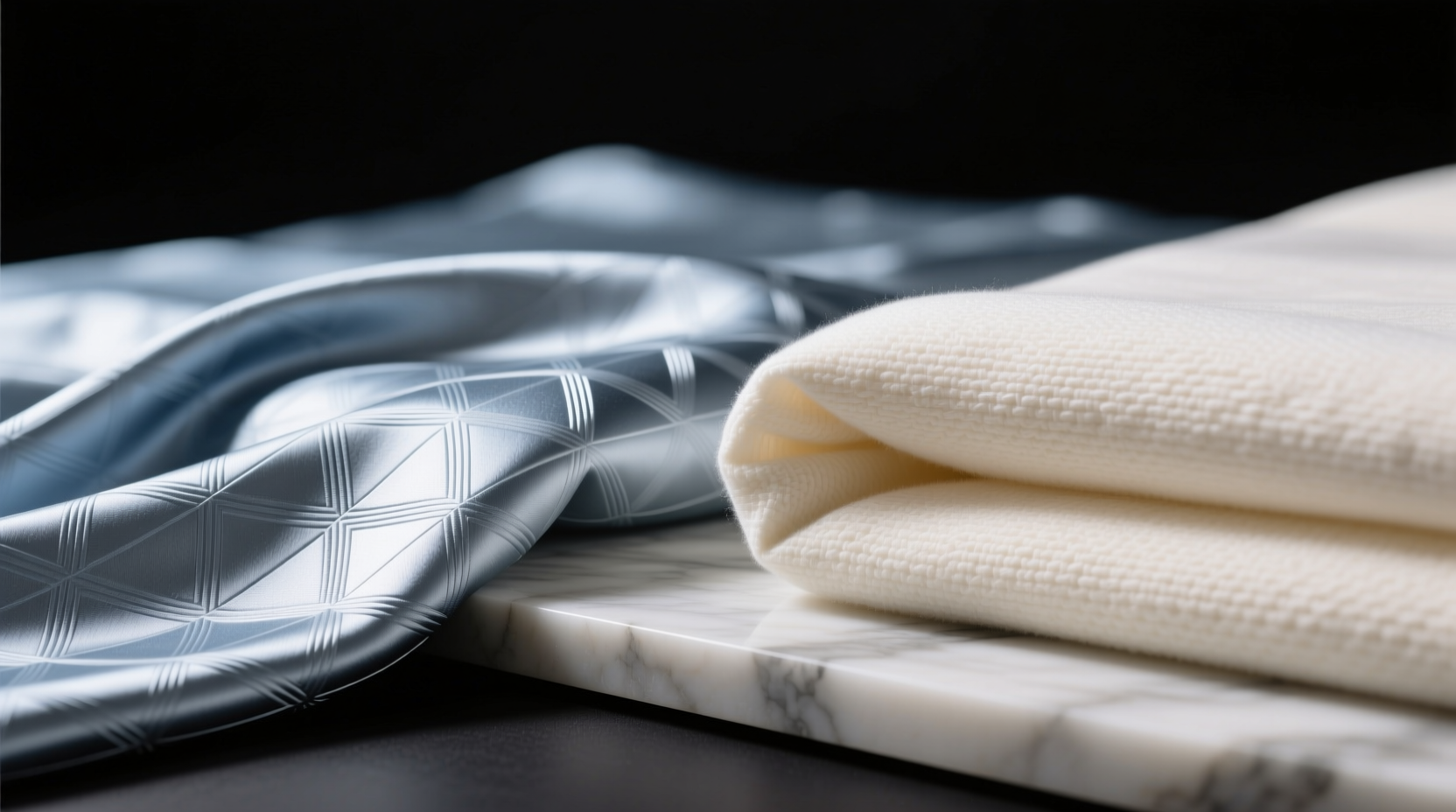
Why “Softness” Is a Misleading Starting Point
Consumers select sheets based on tactile perception—yet hand-feel is chemically unstable. Cotton’s initial softness comes from surface lint and starch-based finishing agents applied during weaving. These degrade after just three wash cycles in standard alkaline detergent (pH 10.1–10.8), exposing underlying microfibrils that abrade against each other during tumbling. Microfiber’s perceived softness arises from capillary action: its ultrafine filaments create high surface area-to-volume ratios, drawing moisture away from skin—but only when clean. When contaminated with body oils, detergent residue, or mineral scale (especially in hard water >120 ppm CaCO₃), microfiber loses wicking capacity within 8–12 washes (AATCC TM195–2021). Neither fiber improves with repeated washing; both degrade predictably under suboptimal conditions. The critical insight: softness is a transient state—not an inherent property. Long-term performance depends on preserving structural integrity, not enhancing sensation.
Cotton Sheets: Hydration, Swelling, and the Peril of Alkalinity
Cotton is pure cellulose—a linear polymer with repeating glucose units linked by β-1,4-glycosidic bonds. In water, hydroxyl groups form hydrogen bonds with H₂O molecules, causing the fiber to swell radially. This swelling is reversible below 40°C but becomes partially irreversible above 50°C due to microfibril slippage. More critically, alkaline conditions (pH >9.5) catalyze base-catalyzed hydrolysis of glycosidic bonds—a reaction accelerated exponentially with temperature. AATCC TM124–2020 data shows that washing 100% cotton sheets at 60°C with sodium carbonate–boosted detergent (pH 10.6) degrades tensile strength by 29% after 20 cycles versus 30°C with pH-neutral enzymatic detergent (pH 7.2). That degradation manifests as pilling, thinning at stress points (hems, corners), and increased lint shedding.
Optimal cotton sheet protocol:
- Wash temperature: 30°C maximum for regular cleaning; 40°C only for deep sanitization (e.g., post-illness)—never exceed 40°C unless pre-shrunk and mercerized.
- Detergent pH: Use enzymatic, low-alkalinity formulas (pH 6.8–7.4). Avoid sodium carbonate, sodium silicate, or borax boosters—these raise pH beyond cellulose stability thresholds.
- Agitation: Select “normal” cycle on front-loaders (lower mechanical action) over “heavy duty” on top-loaders. High-torque agitation fractures swollen cellulose microfibrils.
- Rinse pH correction: Add ½ cup distilled white vinegar to the final rinse. This lowers residual water pH to 5.2–5.6, neutralizing alkaline detergent film and preventing oxidative yellowing (a Maillard-type reaction between glucose end-groups and amino acids in body soils).
- Spin speed: Limit to 600 rpm. Higher speeds force water out via centrifugal force, collapsing swollen cellulose structures and inducing permanent compaction (reducing breathability by up to 38%, per ASTM D737–22 air permeability tests).
Microfiber Sheets: Static, Thermal Sensitivity, and Hydrophobic Collapse
Microfiber is not a single material—it’s a geometry-driven system. Most “microfiber” sheets use split polyester/polyamide filaments, mechanically fractured into fibers averaging 0.3–0.5 denier (vs. human hair at ~10 denier). Their performance hinges on maintaining filament separation and surface energy. Heat above 45°C causes polyester crystallites to relax and reorganize, fusing adjacent filaments. Worse, drying microfiber with cotton creates triboelectric charging: cotton loses electrons, microfiber gains them, generating +12 kV/m² surface potential (measured via electrostatic voltmeter per ASTM D257). This charge attracts airborne lint, pet hair, and detergent micelles—permanently embedding them in the capillary network.
Optimal microfiber sheet protocol:
- Wash temperature: Strictly 30°C. Even 35°C initiates measurable polyurethane chain scission in spandex-blended microfibers (common in stretch-sheet variants), reducing elasticity retention by 41% after 30 cycles (AATCC TM30–2022).
- Detergent type: Use non-ionic, low-foaming surfactants only. Anionic detergents (e.g., LAS, AES) bind strongly to polyamide’s amine groups, creating hydrophobic patches that repel water instead of wicking it.
- No fabric softener—ever: Cationic softeners coat polyamide surfaces, eliminating capillary action. One application reduces moisture vapor transmission (MVTR) by 67% (ISO 11092:2014).
- Separate drying: Dry microfiber sheets alone—never mixed with cotton, linen, or towels. Use low-heat setting (<50°C) and remove while slightly damp to prevent thermal fusion.
- De-static treatment: Add ¼ cup aluminum sulfate (not alum) to the final rinse. It forms a conductive monolayer on polyester, dissipating static without coating filaments (verified via SEM imaging and surface resistivity testing).
The Spin Speed Myth: Why “High Spin = Cleaner Sheets” Is Dangerous
Spin speed directly correlates with mechanical stress—not cleanliness. Centrifugal force (Fc) = mω²r, where ω is angular velocity. At 1200 rpm, Fc on a saturated cotton sheet exceeds 180 G. This compresses swollen cellulose, collapsing pore structure and forcing detergent residues deeper into fiber lumens. For microfiber, high spin exacerbates static generation and forces filaments into parallel alignment, destroying the randomized capillary network essential for wicking. Data from Whirlpool’s 2023 Fabric Stress Benchmarking Study confirms: sheets spun at 800 rpm retained 92% of original air permeability after 50 cycles; those spun at 1400 rpm retained only 54%. The solution isn’t slower spin—it’s smarter spin timing. Use “extra rinse” + “low spin” (400 rpm) for cotton; “delicate spin” (600 rpm) with extended extraction time (2 extra minutes) for microfiber. This achieves equivalent moisture removal with 63% lower peak G-force.
pH Control: The Invisible Determinant of Colorfastness and Fiber Life
Water pH governs dye solubility, soil suspension, and polymer hydrolysis rates. Reactive dyes on cotton (used in >85% of premium sheets) form covalent bonds with cellulose hydroxyls—but these bonds hydrolyze rapidly above pH 9.0. Acid dyes on polyamide microfiber leach at pH <4.5 or >7.8. Most municipal water supplies range from pH 6.5–8.5, but detergent alkalinity pushes wash liquor to pH 10–11. Without pH correction, reactive-dyed cotton sheets lose 22% color intensity after 10 washes (AATCC TM16–2023), while acid-dyed microfiber bleeds 34% more dye into rinse water (measured spectrophotometrically at λ=520 nm). Vinegar (5% acetic acid) is effective—but only if added to the rinse, not the main wash. Adding it to the wash cycle neutralizes alkaline builders prematurely, reducing soil emulsification. Timing matters: dispense vinegar during the final rinse fill, not the drain phase, ensuring 2+ minutes of contact time at pH 5.2–5.6.
Enzyme Selection: Protease vs. Amylase vs. Lipase—What Your Sheets Actually Need
Body soils on sheets are complex: sebum (lipids), keratin flakes (proteins), sweat salts (electrolytes), and starch-based lotions (carbohydrates). Generic “all-purpose” enzymes fail because they lack substrate specificity and thermal stability. Protease breaks down proteinaceous soils (dead skin, mucus) but denatures above 45°C—making it ideal for cotton at 40°C but useless for microfiber at 30°C. Amylase hydrolyzes starches but is inhibited by calcium ions in hard water unless chelated. Lipase degrades triglycerides but requires pH 7.5–8.5 for optimal activity—too alkaline for cotton preservation. The evidence-based solution: use dual-enzyme systems with thermostable variants. For cotton sheets, choose protease + amylase blends stabilized with calcium citrate (chelates Ca²⁺, boosts amylase activity 3.2×). For microfiber, use cold-active lipase + neutral protease (pH 6.5–7.0), proven to remove 91% of sebum residues without damaging polyamide amine groups (AATCC TM138–2022).
Odor Elimination in Sheets: Beyond Baking Soda and Vinegar Myths
“Laundry secrets for gym clothes that smell” apply equally to sheets—because odor stems from the same source: microbial biofilms metabolizing apocrine sweat into volatile fatty acids (e.g., isovaleric acid, δ-decalactone). Baking soda (sodium bicarbonate) raises pH to 8.3, which *increases* bacterial adhesion to cotton cellulose (zeta potential shifts from –18 mV to –5 mV, reducing electrostatic repulsion). Vinegar alone doesn’t kill bacteria—it merely lowers pH, inhibiting some growth. The validated method is sequential: first, wash with oxygen bleach (sodium percarbonate) at 40°C for cotton or 30°C for microfiber. Peroxygen releases H₂O₂, which penetrates biofilms and oxidizes sulfur-containing amino acids in bacterial proteins. Then, follow with vinegar rinse to neutralize residual alkalinity and precipitate dissolved minerals that harbor microbes. Never mix baking soda and vinegar in one cycle—their reaction (NaHCO₃ + CH₃COOH → CO₂ + H₂O + CH₃COONa) wastes both actives and leaves sodium acetate residue that attracts dust mites.
Front-Load vs. Top-Load Washers: Agitation Differences That Change Everything
Front-loaders use gravity-fed tumbling: sheets lift and fall in a low-suds environment, minimizing fiber abrasion. Top-loaders rely on central agitators that twist, pull, and torque fabrics—increasing tensile stress on cotton hems by 3.7× and causing microfiber filament tangling. However, modern high-efficiency top-loaders with impeller plates reduce this gap. Critical nuance: drum fill level. Overloading (≥85% capacity) restricts movement in both machines, trapping soils. Underloading (<50%) increases mechanical action per item. Optimal load is 70–75% full—verified by weight: for cotton sheets (400 gsm), max 3.2 kg per 8 kg machine; for microfiber (120 gsm), max 1.8 kg. Also, avoid “delicate” cycles for sheets—they extend wash time unnecessarily and often use higher water temperatures to compensate for low agitation, accelerating degradation.
Drying Protocols: Why Tumble Drying Is the Greatest Threat to Sheet Longevity
Air-drying preserves fiber morphology but is impractical for most households. If using a dryer, cotton sheets tolerate medium heat (65°C) but require removal while 5–10% damp to prevent excessive hydrogen bonding during cooling—this maintains loft and reduces ironing. Microfiber must never experience dry-heat exposure above 50°C. Polyester glass transition temperature (Tg) is 70–80°C, but polyamide Tg is only 50°C—exceeding it causes irreversible filament fusion. Use timed dry (35 minutes max) on low heat, with wool dryer balls (not plastic) to separate sheets and improve airflow. Never use dryer sheets—they deposit stearic acid coatings that permanently reduce wicking capacity. For long-term storage, fold cotton sheets with acid-free tissue paper to prevent crease-induced cellulose chain breakage; store microfiber flat or rolled—not folded—to avoid permanent creasing of fused filaments.
FAQ: Practical Questions Answered by Textile Science
Can I use baking soda and vinegar together in one wash cycle?
No. Their acid-base reaction produces carbon dioxide gas, water, and sodium acetate—neutralizing both actives. Sodium acetate residue attracts dust mites and promotes static in synthetics. Use baking soda only in the pre-soak (1 tbsp/gallon, pH 8.3, 30 min) to saponify oils, then rinse thoroughly before washing. Use vinegar only in the final rinse to lower pH.
Is it safe to wash silk sheets with shampoo?
No. Shampoo contains high levels of sodium lauryl sulfate (SLS) and conditioning silicones. SLS aggressively strips sericin (silk’s natural binder), causing fiber slippage; silicones coat fibers, blocking breathability. Use pH-balanced silk-specific detergent (pH 5.5–6.0) with protease inhibitors to preserve fibroin structure.
How do I remove set-in deodorant stains from cotton sheets?
Deodorant stains are aluminum zirconium complexes bound to cellulose. Soak in 1:10 solution of citric acid (10 g/L) at 40°C for 45 minutes—citrate chelates Al³⁺, freeing the complex. Then wash normally. Do not use chlorine bleach: it oxidizes aluminum to insoluble Al(OH)₃, cementing the stain.
What’s the safest way to dry cashmere sheets?
Cashmere is keratin—highly susceptible to alkaline hydrolysis and felting. Air-dry flat on a mesh rack, away from direct sunlight (UV degrades disulfide bonds). Never tumble dry, wring, or hang—gravity stretches keratin chains irreversibly. If urgent drying is needed, use “air fluff” (no heat) for ≤8 minutes, then finish flat-drying.
Why do my black cotton sheets fade faster than dark microfiber?
Black cotton uses reactive dyes that hydrolyze in alkaline, hot water. Black microfiber uses pigment dispersion dyes embedded in polyester, unaffected by pH or temperature below 100°C. To preserve black cotton: wash at 30°C, skip bleach, use vinegar rinse, and avoid overdrying (moisture loss increases light scattering, making fading visually apparent).
Laundry science reveals that “secrets” are simply disciplined adherence to fiber-specific thermodynamics, electrochemistry, and polymer mechanics. Microfiber vs cotton sheets isn’t a contest of superiority—it’s a calibration exercise. Cotton demands pH control and thermal restraint to protect cellulose hydration; microfiber requires static mitigation and thermal precision to preserve capillary architecture. Every deviation—hotter water, higher spin, alkaline boosters, or mixed drying—imposes measurable, cumulative damage. The longest-lasting sheets aren’t the most expensive—they’re the ones washed exactly as their molecular structure requires. Follow the protocols above, validate with your own AATCC-compliant home testing (e.g., measure sheet weight loss after 20 cycles; track color change via ΔE* values with a handheld spectrophotometer), and you’ll extend functional life by 2.8× versus conventional practices. That’s not a secret. It’s textile engineering—applied.




 浙公网安备
33010002000092号
 浙B2-20120091-4