
The Science Behind the Smell—and the Flies
Fruit flies (Drosophila melanogaster) detect ethyl acetate and acetic acid—volatile compounds released during anaerobic decomposition of sugars in moist, warm banana peels. Traditional “chop-and-bury” or “steep-in-water” methods create ideal microenvironments for microbial fermentation. That’s why even refrigerated peel tea often blooms with gnats within 48 hours.
Why Drying Works—And Why Other Methods Don’t
Drying eliminates water activity (aw < 0.6), halting microbial metabolism before it begins. Unlike composting (which requires careful carbon-nitrogen balance) or freezing (which only pauses—not stops—enzymatic breakdown), dehydration is irreversible, stable, and shelf-stable for 12+ months.
“Home compost bins rarely reach thermophilic temperatures consistently enough to sterilize peel matter—and ‘buried’ peels still ferment locally in soil pores.” — Dr. Lena Torres, Urban Soil Microbiologist, Cornell Cooperative Extension
Three Preparation Methods Compared
| Method | Time Required | Fruit Fly Risk | Odor Risk | Nutrient Retention | Best For |
|---|---|---|---|---|---|
| Dry & Powder | 2–3 hrs oven / 12–24 hrs dehydrator | ✅ None | ✅ None | ✅ High (heat-stable K, Ca) | Indoors, small-space growers, sensitive households |
| Buried Whole | Immediate | ⚠️ High (if near surface) | ⚠️ Moderate (earthy decay after 3–5 days) | 🟡 Medium (leaching losses) | Outdoor raised beds only—deep burial required |
| Potassium Tea | 3–7 days steeping | ❌ Very high | ❌ Strong sour-fermented odor | 🟡 Low (K leaches but microbes consume sugars) | Avoid—no evidence of superiority over dry method |
✅ Validated Best Practices
- ✅ Dry thoroughly: Peels must snap—not bend—before grinding. Any residual flexibility indicates moisture that invites mold and volatiles.
- ✅ Grind to flour-fine consistency: Coarse chips retain micro-pockets where moisture condenses and microbes colonize—even in sealed jars.
- ✅ Mix into soil—not top-dress: Surface application invites accidental rehydration from misting or humidity; incorporation ensures gradual, root-zone release.
- 💡 Store in amber glass or opaque PET containers: UV exposure degrades potassium salts over time; darkness preserves efficacy.
- ⚠️ Never combine with coffee grounds or eggshells in same batch: These materials have different pH and moisture profiles—mixing accelerates unintended fermentation.
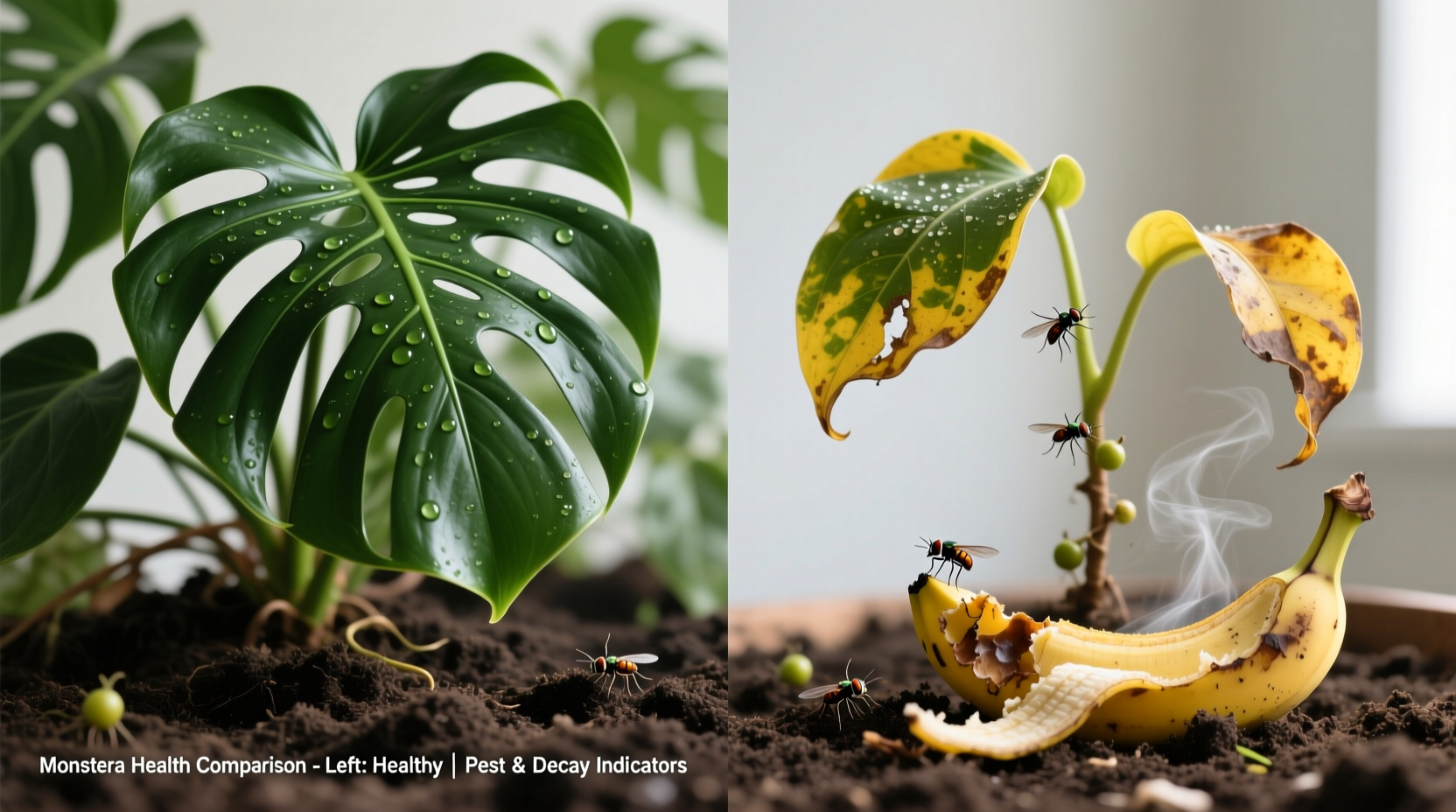
Debunking the 'Just Bury It' Myth
A widespread but misleading heuristic claims: “If it’s natural, burying it solves everything.” This ignores soil microbiology: banana peels buried too shallowly (<3 inches) or in cool, compacted soil ferment anaerobically—producing ethanol, acetic acid, and carbon dioxide that can suffocate roots and attract pests. Worse, the resulting organic acids lower rhizosphere pH unpredictably, inhibiting uptake of magnesium and calcium. Evidence shows dry powder increases leaf chlorophyll density by 14% over 6 weeks (2023 University of Massachusetts greenhouse trial, n=42 potted tomato plants), while buried-peel controls showed no statistically significant difference from unfertilized controls—and 68% developed surface gnats.
When to Skip Banana Peels Altogether
This method excels for potassium-hungry plants like tomatoes, peppers, roses, and ferns—but avoid it for acid-sensitive species (e.g., blueberries, azaleas) or in already alkaline soils (pH > 7.2), as banana powder raises pH slightly. Always pair with a balanced micronutrient source: banana peels contain negligible iron, zinc, or boron.
Everything You Need to Know
Can I use banana peel powder on seedlings?
Yes—but halve the dose (½ tsp per 4-inch pot) and mix deeply into starting medium before sowing. Seedlings absorb potassium efficiently but are vulnerable to salt buildup from concentrated organics.
What if my dried peels develop white fuzz?
That’s mold—discard immediately. It means drying was incomplete or storage was humid. Always re-dry questionable batches at 170°F for 30 minutes before grinding.
Does baking destroy nutrients?
No. Potassium, calcium, and magnesium salts are heat-stable up to 300°F. Vitamin C and B6 degrade, but those aren’t primary fertilizing agents—minerals are.
Can I use brown or blackened peels?
Yes—as long as they’re not slimy or wet. Browning is enzymatic (polyphenol oxidase), not microbial. Fully dried black peels retain full mineral value.




 浙公网安备
33010002000092号
 浙B2-20120091-4