
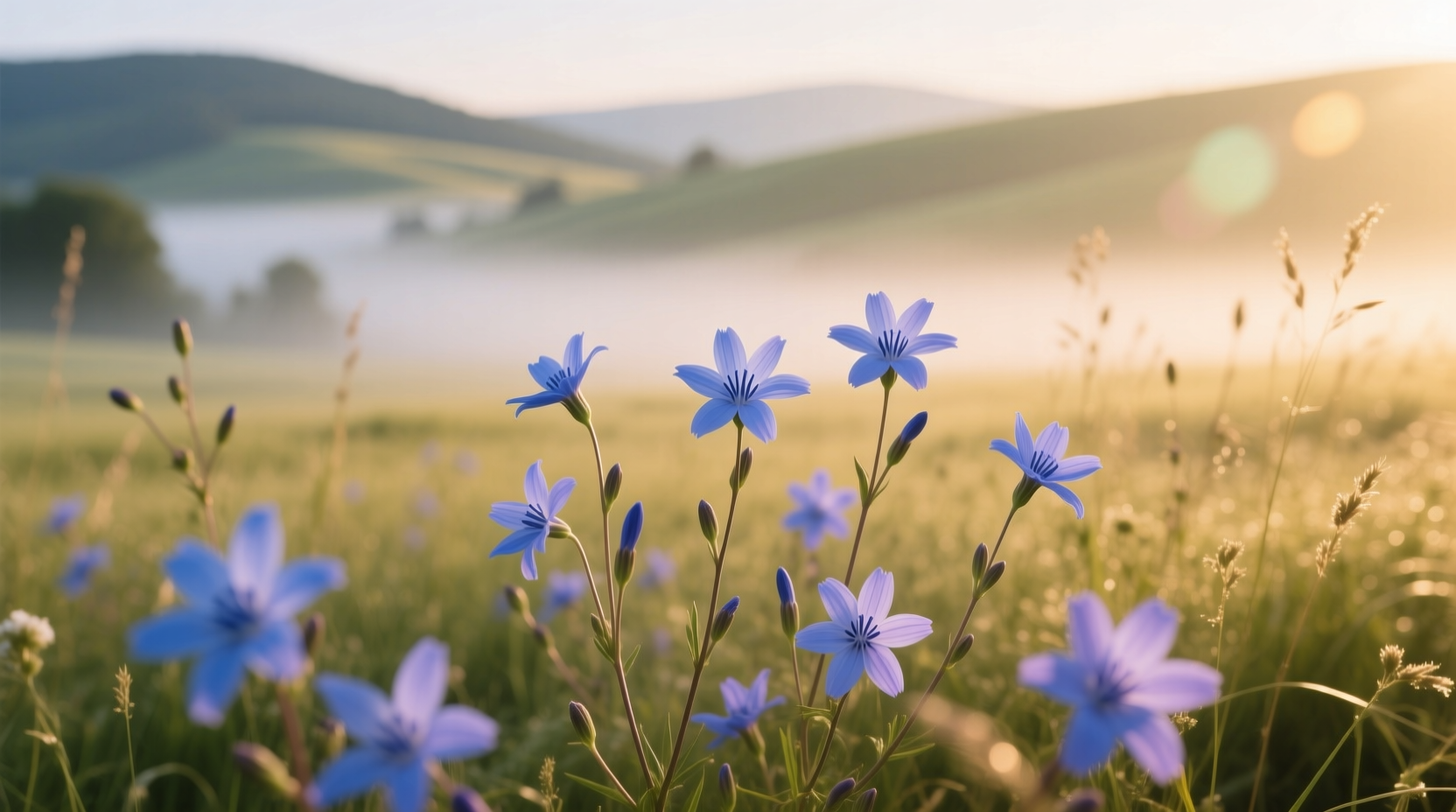
Why August Blue Blooms Are Rarer—and Why That Matters
It’s a widely repeated myth that “blue flowers don’t bloom in August.” In reality, the scarcity isn’t biological—it’s horticultural. Most classic blue bloomers—like hydrangeas, delphiniums, and bluebells—peak in late spring or early summer, then enter dormancy, set seed, or succumb to July heat stress. Their genetic programming responds to vernalization (cold exposure) and long days, not sustained high temperatures. August demands different traits: drought tolerance, resistance to fungal pathogens (e.g., powdery mildew) favored by humid nights, and photoperiod insensitivity—or even short-day responsiveness.
This distinction is critical for planning. If you’ve planted ‘Nikko Blue’ hydrangeas expecting August color, you’ll likely see only fading mopheads and stressed foliage. That’s not failure—it’s mismatched phenology. True August performers evolved under different selective pressures: many originate from Mediterranean climates (e.g., lavender), high-elevation steppes (e.g., Russian sage), or eastern North American prairies (e.g., blue mistflower). Their August flowering reflects adaptation—not anomaly.
Top 12 Blue August Flowers: Species-by-Species Breakdown
Below is a curated list of 12 blue-flowering plants verified to bloom consistently in August across USDA Hardiness Zones 4–9 (with notes for Zone 10 and cooler microclimates). Each entry includes hardiness range, mature size, sun/water needs, bloom duration, and one key cultural nuance that determines success.
- Russian Sage (Perovskia atriplicifolia)
Zones 4–9 • 3–5 ft tall × 3–4 ft wide • Full sun • Low water once established
Blooms: Mid-July through September; spikes of airy lavender-blue flowers.
Key nuance: Requires sharply drained soil—fails completely in heavy clay unless raised beds or gravel amendments are used. Prune hard in early spring (not fall) to prevent winter dieback and encourage branching. - Plumbago (Ceratostigma plumbaginoides)
Zones 5–9 (as perennial); Zone 4 with mulch • 1–2 ft tall × 3–4 ft wide • Full sun to part shade • Moderate water
Blooms: Late July to first frost; cobalt-blue, phlox-like clusters.
Key nuance: Dies back to ground in cold winters but regrows from crown. Avoid overwatering in fall—wet soil + cold = crown rot. Mulch only after soil cools in late November. - Blue Mistflower (Eupatorium coelestinum, syn. Eutrochium coelestinum)
Zones 4–10 • 2–4 ft tall × 2–3 ft wide • Full sun to part shade • Medium to moist soil
Blooms: Late July through October; fluffy, dome-shaped clusters of true sky-blue florets.
Key nuance: Spreads vigorously by rhizomes—ideal for naturalized areas or rain gardens, but contain with root barrier if planting near paving or delicate perennials. - Salvia ‘Indigo Spires’
Zones 7–10 (tender perennial); grown as annual elsewhere • 3–4 ft tall × 2–3 ft wide • Full sun • Moderate water
Blooms: June through frost; deep violet-blue spikes, especially vigorous in August.
Key nuance: Requires consistent moisture during heat waves—wilting for >6 hours causes irreversible flower bud abortion. Use drip irrigation or soaker hoses, not overhead sprinklers. - Agapanthus ‘Peter Pan’ (Dwarf Lily-of-the-Nile)
Zones 8–11 (container-grown in colder zones) • 12–18 in tall × 18–24 in wide • Full sun • Low to moderate water
Blooms: July–September; rounded umbels of intense blue or violet-blue flowers.
Key nuance: Needs 8–10 weeks of cool (40–50°F), dry dormancy to initiate buds. In warm-winter zones, simulate dormancy by withholding water and moving pots to unheated garages for 8 weeks before spring repotting. - Bluebeard (Caryopteris x clandonensis)
Zones 5–9 • 2–3 ft tall × 3–4 ft wide • Full sun • Low water once established
Blooms: Late July to frost; fragrant, fuzzy blue flowers on arching stems.
Key nuance: Prune in late winter to 6–8 inches above ground—never in fall. Late pruning invites winter stem dieback and reduces August flower count by up to 70%. - Scabiosa ‘Butterfly Blue’
Zones 3–10 (annual in colder zones) • 15–18 in tall × 12–15 in wide • Full sun • Moderate water
Blooms: June–October; pincushion-style blue-violet flowers with long stems.
Key nuance: Deadhead religiously—remove spent blooms down to the first set of leaves. Skipping deadheading shifts energy to seed production, halting new flower formation within 10 days. - Veronica ‘Royal Candles’
Zones 4–8 • 2–3 ft tall × 18–24 in wide • Full sun to part shade • Moderate water
Blooms: July–September; dense, upright spikes of rich violet-blue.
Key nuance: Susceptible to crown rot in poorly drained soils. Plant on slight mounds (2–3 in high) and avoid mulching directly against the crown. - Hydrangea paniculata ‘Blue Heaven’ (Panicle Hydrangea)
Zones 3–8 • 6–8 ft tall × 6–8 ft wide • Full sun to part shade • Moderate water
Blooms: July–October; conical panicles that open white, age to soft blue in acidic soils (pH <5.5).
Key nuance: True blue requires both low soil pH and available aluminum—apply aluminum sulfate at ½ tsp/gal every 2 weeks starting in May, only if soil test confirms pH ≤5.2 and aluminum is absent. - Lisianthus ‘Echo Blue’
Zones 8–10 (annual elsewhere) • 18–24 in tall × 12–18 in wide • Full sun • Moderate, even moisture
Blooms: July–September; rose-like, waxy blue-violet blooms ideal for cutting.
Key nuance: Seedlings require 10–12 weeks of cool (60–65°F) conditions before transplanting. Starting too warm yields leggy, non-flowering plants—use a fan-cooled greenhouse bench or shaded north-facing porch. - Baptisia ‘Indigo Scream’
Zones 3–9 • 3–4 ft tall × 4–5 ft wide • Full sun • Low to moderate water
Blooms: Late June–early August; pea-like indigo-blue flowers on sturdy woody stems.
Key nuance: Slow to establish—takes 2–3 years to reach full bloom potential. Do not divide or transplant after year one; roots resent disturbance. - Conoclinium coelestinum ‘Blue Fortune’ (Improved Blue Mistflower)
Zones 4–10 • 2–3 ft tall × 3–4 ft wide • Full sun to part shade • Medium to moist soil
Blooms: Late July–October; larger, longer-lasting flower heads than wild type.
Key nuance: More restrained spreader than wild mistflower—but still benefits from division every 3 years in early spring to maintain vigor and bloom density.
Timing Is Everything: When to Plant, Prune, and Feed for August Blue Blooms
Getting blue August flowers isn’t about luck—it’s about aligning human actions with plant developmental stages. Here’s the precise calendar for maximum impact:
- Planting window: Early spring (Zone 4–6) or late fall (Zone 7–10) for perennials. Avoid planting Russian sage or bluebeard in summer—they suffer transplant shock and rarely bloom until the following August. For annuals like lisianthus or scabiosa, start seeds indoors 10–12 weeks before last frost, then transplant only after soil reaches ≥60°F.
- Pruning schedule: Most August bloomers respond to spring pruning—not fall. Cut Russian sage, bluebeard, and salvias to 6–12 inches in early March (or when daffodils emerge). This triggers new growth that matures in time for August flowering. Pruning in autumn removes next season’s flower buds and invites disease.
- Fertilizing strategy: Avoid high-nitrogen feeds after June 15. Excess nitrogen fuels leafy growth at the expense of flowers. Instead, apply a low-nitrogen, high-potassium organic fertilizer (e.g., kelp meal or sulfate of potash) in early July to support bud development and stem strength. Never fertilize during heat waves (>90°F)—roots absorb poorly, increasing salt burn risk.
- Watering rhythm: Deep, infrequent watering is essential. Soak soil to 8–10 inches depth once weekly (twice weekly in containers or sandy soils), rather than shallow daily sprinkles. Use a screwdriver or soil probe to verify moisture depth—don’t rely on surface dryness. Morning watering reduces evaporation and fungal pressure.
Soil, Light, and Microclimate: The Unseen Drivers of August Blue
Two factors silently govern whether your blue August flowers thrive or fade: soil pH and localized light quality.
Soil pH matters—for some, not all. True pigment blue (anthocyanin + aluminum complex) appears only in acid soils (pH 5.0–5.5) for hydrangeas and certain agapanthus cultivars. But for Russian sage, plumbago, or mistflower? pH has zero effect on flower color—their blue is genetically fixed. Don’t waste time testing or amending soil for these unless drainage is poor. A $12 home pH test kit suffices; skip expensive lab analyses unless you’re troubleshooting persistent non-blooming.
Light quality trumps intensity. Many gardeners assume “full sun” means 6+ hours of direct noon sun. But for August bloomers, what matters more is cool-light exposure. Morning sun (6–11 a.m.) paired with afternoon dappled shade (from deciduous trees or lattice) extends bloom life by reducing petal scorch and slowing nectar evaporation. Plants like plumbago and scabiosa actually produce more flowers under this regime than in relentless southern exposure. Track sun patterns on your site using a free app like Sun Surveyor or by placing a piece of white paper where you plan to plant—observe shadow movement hourly.
Mistake to avoid: Assuming container-grown blue August flowers need identical care to in-ground ones. Pots heat up 20–30°F above ambient air in August. Use light-colored, double-walled pots; elevate them on feet for airflow; and group containers to create mutual shade. Water containers daily in heat—check twice daily when temps exceed 95°F.
Common Failures—and How to Fix Them
When blue August flowers underperform, it’s rarely due to genetics. More often, it’s one of five correctable errors:
- Over-mulching: Piling mulch 4+ inches deep against stems traps moisture, inviting crown rot in plumbago, veronica, and baptisia. Apply only 2–3 inches, keeping mulch 3 inches away from crowns.
- Ignoring heat units: Plants like agapanthus require ≥2,500 growing degree days (GDD base 50°F) to bloom. In cooler coastal zones (e.g., Portland, OR), August may not deliver enough GDD—choose earlier-blooming alternatives like ‘Blue Ice’ salvia instead.
- Poor air circulation: Crowded planting invites powdery mildew on veronica and scabiosa. Space plants at 80% of mature width—e.g., space ‘Royal Candles’ 20 inches apart, not 12.
- Using synthetic insecticides: Broad-spectrum sprays kill beneficial wasps and hoverflies that pollinate blue mistflower and baptisia. Instead, use targeted horticultural oil for aphids or hand-remove beetles in early morning.
- Assuming “blue” means uniform hue: Lighting, temperature, and even humidity shift perceived blue. A ‘Butterfly Blue’ scabiosa looks violet in morning light, steel-blue at noon, and lavender in fog. Embrace this variability—it’s nature, not deficiency.
Extending the Blue: Companion Planting & Design Strategies
To make August blue feel abundant—not isolated—integrate strategic companions:
- Textural contrast: Pair feathery Russian sage with bold-leaved hostas (‘Sum and Substance’) or ornamental grasses (‘Karl Foerster’ feather reed grass). The blue recedes visually, making foliage pop while enhancing perceived saturation.
- Sequential bloomers: Interplant blue mistflower with goldenrod (Solidago rugosa ‘Fireworks’) and purple coneflower (Echinacea purpurea). As blue peaks in mid-August, gold and purple rise—creating layered, pollinator-rich color without gaps.
- Structural anchors: Use evergreen yews or boxwood hedges as neutral backdrops. Their dark green holds blue in sharp relief, preventing visual “float” in mixed borders.
- Container layering: In pots, place trailing plumbago at edges, upright salvia in center, and silver-leaved dusty miller (Senecio cineraria) as filler. Silver reflects blue light, intensifying perceived color.
Frequently Asked Questions
Can I grow blue August flowers in shade?
Yes—but options narrow significantly. Plumbago tolerates part shade (4–6 hours of sun, preferably morning), and ‘Blue Fortune’ mistflower performs well in dappled light under open-canopy trees. Avoid full shade: no true blue August bloomers thrive there. If your site receives <4 hours of direct sun, prioritize foliage interest (e.g., blue hosta ‘Halcyon’) over flowers.
Why do my blue flowers fade to purple or pink in August?
This signals shifting soil pH or temperature. Hydrangeas and some agapanthus turn pink when soil pH rises above 6.0 or aluminum becomes unavailable. Test soil pH and, if needed, apply elemental sulfur (1/4 cup per sq ft) in early July. For non-hydrangeas, fading often results from intense UV exposure—add a 30% shade cloth during peak afternoon sun.
Are any blue August flowers deer-resistant?
Yes: Russian sage, bluebeard, and baptisia are rarely browsed due to aromatic oils or alkaloid content. Plumbago and mistflower experience occasional nibbling but recover quickly. Avoid planting scabiosa or lisianthus in high-deer-pressure areas unless protected.
How do I keep blue August flowers blooming into September?
Deadhead regularly (except mistflower, which self-seeds prolifically), provide consistent moisture during dry spells, and avoid high-nitrogen fertilizers after July 1. For salvias and veronicas, shear plants back by one-third in mid-August—this stimulates a flush of new growth and secondary blooms.
Can I propagate blue August flowers from cuttings?
Absolutely—and it’s highly effective. Take 4–6 inch softwood cuttings from Russian sage, bluebeard, or plumbago in early July. Remove lower leaves, dip in rooting hormone, and insert into moist perlite-vermiculite mix. Keep under high humidity (plastic dome) and indirect light. Roots form in 3–4 weeks. Avoid propagating baptisia or agapanthus from cuttings—they require division or seed.
Blue August flowers are neither rare nor elusive—they’re the logical outcome of informed selection, seasonally precise care, and respect for each plant’s ecological story. When you choose Russian sage for its steppe resilience, plumbago for its Mediterranean drought memory, or mistflower for its prairie adaptability, you’re not just gardening. You’re participating in a centuries-old dialogue between plant and place—one that rewards attention with vivid, dependable blue, right when the garden needs it most.
Observe your site’s microclimate. Test your soil—not just pH, but texture and drainage. Match bloom timing to your region’s heat accumulation, not the calendar alone. And remember: the deepest blues appear not in isolation, but in conversation—with light, with companion plants, and with the quiet intelligence of well-chosen perennials. Your August garden doesn’t have to be a palette of browns and yellows. With these 12 proven performers and their precise cultural keys, reliable blue is not aspirational. It’s actionable. It’s August.




 浙公网安备
33010002000092号
 浙B2-20120091-4