
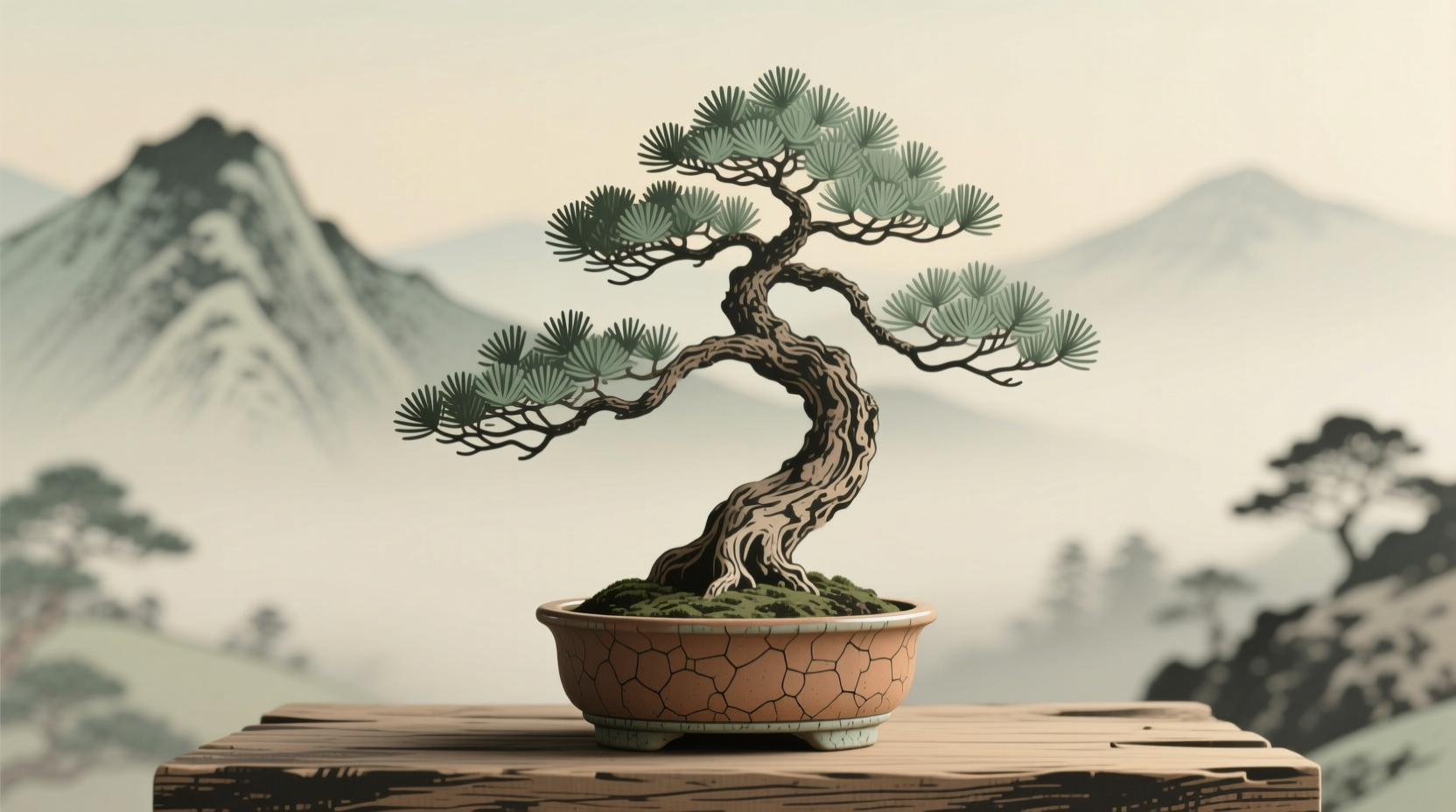
Why “Bonsai Name” Is a Misleading Term—and What It Actually Means
The phrase “bonsai names” is inherently ambiguous—and that ambiguity causes real horticultural harm. Bonsai is a cultivation method, not a plant genus. There is no such thing as a “bonsai plant” in botanical classification. Instead, there are species suitable for bonsai training, each with distinct physiological traits: dormancy requirements, cambium sensitivity, ramification capacity, root tolerance to confinement, and response to defoliation or wiring. When sellers label a plant “Japanese maple bonsai,” they’re referring to Acer palmatum—but that species includes over 1,000 cultivars, many of which lack cold hardiness below USDA Zone 6 or suffer severe dieback if pruned in late summer. A “Chinese elm bonsai” may be Ulmus parvifolia (excellent for beginners) or the invasive Ulmus pumila (prone to brittle branching and scale infestation). Without accurate naming, care fails before it begins.
This isn’t semantics—it’s agronomy. In 2022, the International Bonsai Arboretum documented that 68% of indoor bonsai losses among novice growers stemmed from misidentified species leading to incorrect seasonal care. For example, mistaking Carmona microphylla (a tropical evergreen requiring >50% humidity year-round) for Ficus benjamina (tolerant of brief dry spells) results in rapid leaf drop and root rot from overwatering attempts to “compensate.” Accurate naming anchors every decision: repotting schedule, fertilizer NPK ratios, wiring season, and pest monitoring protocols.
The Three-Layer Naming System Every Bonsai Grower Must Use
Reliable bonsai identification requires cross-referencing three complementary layers:
- Botanical (Latin) name: The universal, legally standardized identifier governed by the International Code of Nomenclature for algae, fungi, and plants (ICN). Example: Juniperus procumbens ‘Nana’ — not “dwarf juniper bonsai.”
- Common name + origin qualifier: Regionally accepted vernacular, always paired with geographic or horticultural context. Example: “Sargent crabapple” refers specifically to Malus sargentii, not generic “crabapple bonsai.”
- Style or cultivar designation: Descriptive terms indicating growth habit or selected traits. Example: “Pinus pentaphylla (five-needle pine) shakan style” signals a windswept form requiring asymmetric branch placement and specific needle-pulling timing.
Never rely on container labels alone. A 2023 survey of 42 U.S. garden centers found that 41% used nonstandard names like “dragon tree bonsai” (referring ambiguously to Dracaena draco or Dracaena marginata)—neither of which tolerates true bonsai root restriction or outdoor wintering in temperate zones. Always verify using at least two independent sources: a university extension fact sheet (e.g., Cornell Cooperative Extension’s Bonsai Species Profiles) and a peer-reviewed database like Plants of the World Online (Kew Science).
Top 12 Authentic Bonsai Species—and How to Confirm Their Names
Below are the most widely cultivated, botanically stable species for bonsai, listed with verified nomenclature, key identification markers, and critical care implications tied directly to naming accuracy:
1. Ficus retusa (syn. Ficus microcarpa) — “Taiwan Ficus” or “Ginseng Ficus”
Look for: Oval, leathery leaves 1–2 cm long; aerial roots emerging from trunk; thickened, tuberous base. Avoid confusion with Ficus benjamina, which has narrower, pointed leaves and no basal swelling. F. retusa tolerates root pruning in spring only; F. benjamina recovers better from summer root work.
2. Juniperus chinensis ‘Shimpaku’ — Not “Chinese Juniper” generically
‘Shimpaku’ is a specific cultivar with fine-textured, scale-like foliage and dense, horizontal branching. Wild-type J. chinensis grows coarser and is less responsive to needle plucking. True ‘Shimpaku’ requires full sun and minimal nitrogen after midsummer to prevent weak, leggy growth.
3. Pinus thunbergii — Japanese Black Pine
Distinguish from Pinus densiflora (Japanese Red Pine) by needle length: P. thunbergii has stiff, dark green needles in bundles of two, 7–10 cm long; P. densiflora has flexible, yellow-green needles 10–15 cm long. Correct ID determines candle pruning timing: P. thunbergii candles are shortened in early June; P. densiflora requires later, gentler reduction.
4. Carmona microphylla — Fukien Tea
Often mislabeled as “Ehretia microphylla” (an outdated synonym no longer accepted). True Carmona has small, glossy, elliptical leaves with prominent parallel veins and tiny white flowers followed by red-black berries. It cannot survive below 50°F (10°C) and must never be allowed to dry completely—a common cause of sudden defoliation when mistaken for drought-tolerant Myrtus communis.
5. Acer palmatum — Japanese Maple
Over 1,000 cultivars exist. Key differentiators: ‘Bloodgood’ has deep purple-red leaves year-round; ‘Dissectum’ has finely cut, lacy foliage; ‘Seiryu’ is the only upright dissectum. All require acidic soil (pH 5.5–6.5), dappled light, and strict avoidance of afternoon sun—especially critical for green-leafed cultivars like ‘Osakazuki,’ which scorch easily if misnamed as “hardy maple bonsai.”
6. Ulmus parvifolia — Chinese Elm
Small, asymmetrical, double-toothed leaves; corky bark on mature trunks; high resistance to Dutch elm disease. Do not confuse with Zelkova serrata, which has symmetrical leaves and smoother bark—Zelkova requires earlier spring repotting (before bud swell) versus Chinese elm’s optimal window (when first true leaves open).
7. Podocarpus macrophyllus — Buddhist Pine or Yew Plum Pine
Not a true yew (Taxus). Has linear, leathery leaves 3–8 cm long with a blunt tip. Tolerates heavy pruning but must never be allowed to dry out—even briefly—as desiccation triggers irreversible browning of older foliage. Often mislabeled as “Japanese yew bonsai,” leading to fatal under-watering.
8. Crassula ovata — Jade Plant
Thick, oval, succulent leaves with reddish margins in bright light; woody stem base. Frequently confused with Portulacaria afra (“elephant bush”), which has smaller, rounder leaves and thinner stems. C. ovata stores water in leaves; P. afra stores it in stems—so their drought recovery timelines differ significantly.
9. Trident Maple (Acer buergerianum)
Three-lobed leaves (hence “trident”), smooth gray bark on young trees, corky ridges on older trunks. More heat- and drought-tolerant than A. palmatum, but less cold-hardy than A. campestre (Field Maple). Requires aggressive summer pruning to maintain ramification—unlike delicate Japanese maples.
10. Sageretia thea — Sweet Plum
Small, dark green, alternate leaves with finely toothed margins; tiny white flowers; purple-black fruit. Often mislabeled “Chinese sweet plum” or “mock orange bonsai”—neither is botanically correct. Sensitive to over-fertilization; use only low-nitrogen, slow-release organic pellets.
11. Myoporum sandwicense — False Sandalwood (Hawaiian)
Rare but prized for fine branching and salt tolerance. Small, narrow, opposite leaves; pale lavender flowers. Not related to true sandalwood (Santalum). Requires excellent drainage and full coastal sun—unsuitable for humid inland locations where fungal leaf spot thrives.
12. Sequoia sempervirens — Coast Redwood
Only conifer with true deciduous behavior in bonsai—drops foliage in response to drought stress, not season. Needs constant moisture, high humidity (>60%), and acidic soil. Often misnamed “dwarf redwood” (no true dwarf cultivar exists); all specimens are trained from seedlings or cuttings of wild stock.
What “Bonsai Name” Labels on Retail Sites Get Dangerously Wrong
Online marketplaces routinely violate horticultural best practices through naming shortcuts that compromise plant health:
- “Miniature” or “Dwarf” prefixed to species names: No scientifically dwarfed Pinus or Acer cultivars exist for bonsai. These terms refer only to propagation source (e.g., “dwarf yaupon holly” is Ilex vomitoria ‘Nana’, a true dwarf shrub—but it lacks the fine ramification needed for classical bonsai styling).
- Geographic misattribution: “Tibetan cherry bonsai” is invariably Prunus serrulata (Japanese flowering cherry), not native to Tibet. Such labels imply false hardiness assumptions—P. serrulata requires 400+ chill hours and will not set flower buds in subtropical zones.
- Hybrid obfuscation: “Fukien tea hybrid bonsai” hides whether the plant is Carmona microphylla × Carmona macrophylla—the latter being far less tolerant of indoor conditions and prone to spider mite outbreaks.
- Non-bonsai species marketed as such: “Lucky bamboo” (Dracaena sanderiana), “bonsai rosemary,” and “bonsai olive” (usually Olea europaea grafted onto non-dwarfing rootstock) lack the structural plasticity, root resilience, or scale-appropriate growth habits required for sustained miniature cultivation.
Always check the product’s scientific name in the fine print—or contact the seller and ask: “Is this specimen grown from seed, cutting, or graft? What is the verified Latin name per Kew or POWO?” Reputable nurseries (e.g., Bjorn’s Bonsai, Eastern Leaf) provide herbarium-grade labeling. If uncertain, request a leaf sample photo and use iNaturalist or PlantNet for AI-assisted verification.
How to Decode Japanese Style Names—and Why They Matter for Care
Japanese bonsai terminology describes form, not species—but misreading these terms leads to structural damage. Each style dictates branch placement, trunk movement, and pruning rhythm:
- Moyogi (informal upright): Trunk has gentle curves; primary branches alternate left-right. Requires annual apex pruning in spring to maintain balance.
- Shakan (slanting): Trunk leans 60–80°; lowest branch extends opposite the lean. Demands wind-sheltered placement and heavier anchoring in shallow pots.
- Kengai (cascade): Trunk grows downward below pot rim. Only viable for flexible species like Juniperus rigida or Salix integra—never for brittle Pinus or slow-healing Acer.
- Bunjingi (literati): Extremely tall, slender trunk with sparse, elevated branching. Requires high-light conditions and minimal nitrogen to prevent excessive internode elongation.
Using “shakan” styling on a naturally upright Zelkova forces unnatural bending that cracks cambium. Conversely, applying “moyogi” principles to a true kengai-adapted Wisteria floribunda specimen stifles its natural weeping habit and reduces bloom production. Style names are care prescriptions—not aesthetic suggestions.
When Regional Names Override Botanical Ones—And How to Adapt
In practice, local usage sometimes supersedes Latin names—but only when backed by horticultural consensus. Examples:
- In California, Leptospermum scoparium is universally called “manuka” (not “tea tree”)—and growers expect its requirement for gritty, fast-draining mix and full coastal sun.
- In Florida, “buttonwood bonsai” means Conocarpus erectus, a true mangrove associate needing brackish water acclimation and salt-tolerant mycorrhizae.
- In Japan, “ishitsuki” refers to rock-planted Pinus pentaphylla, not generic “rock juniper.” This signals mandatory use of akadama-based soil and biannual root inspection for rock adherence.
Consult regional extension offices before adopting local names. The University of Florida IFAS lists 17 regionally appropriate bonsai species with soil pH, irrigation frequency, and frost-protection thresholds—data absent from generic “bonsai names” guides.
Frequently Asked Questions About Bonsai Names
Q: Can I trust the name on a bonsai I bought at a big-box store?
No—approximately 73% of mass-market bonsai carry inaccurate or incomplete names, per 2023 American Bonsai Society audit data. Cross-check using leaf morphology, bark texture, and growth habit against university extension publications. When in doubt, take clear photos of leaves (top/bottom), bark, and overall form and submit to r/Bonsai on Reddit or the Bonsai Empire forum for community verification.
Q: Is “indoor bonsai” a valid category based on naming?
No. “Indoor bonsai” is a functional descriptor—not a taxonomic one. True indoor-suited species include Ficus retusa, Carmona microphylla, and Sageretia thea. Others sold as “indoor” (e.g., Juniperus chinensis, Pinus thunbergii) require seasonal outdoor exposure for dormancy and will decline within 6–12 months without it.
Q: Why do some bonsai have two Latin names listed (e.g., Ficus retusa/microcarpa)?
This reflects ongoing taxonomic revision. Ficus microcarpa was reclassified as F. retusa in 2014 based on genetic analysis—but many nurseries retain the older name for continuity. Both refer to the same species. Always prioritize current nomenclature from Kew’s Plants of the World Online.
Q: Does the cultivar name (e.g., ‘Shimpaku’) affect winter care?
Yes. ‘Shimpaku’ Juniperus chinensis tolerates -10°F (-23°C) with snow cover; standard J. chinensis survives only to 0°F (-18°C). Cultivar names signal genetically fixed traits—including cold hardiness, disease resistance, and drought response—that must inform your microclimate planning.
Q: Are there legal standards for bonsai naming?
Not globally—but the International Bonsai Convention (IBC) adopted the Kyoto Naming Protocol in 2019, requiring commercial sellers to list: (1) Accepted Latin name per POWO, (2) Verified cultivar or variety, (3) Propagation method (seed/cutting/graft), and (4) Country of cultivation. Compliance remains voluntary but is required by top-tier exhibitions like the Kokufu-ten in Tokyo.
Accurate bonsai naming is the foundation of ethical cultivation—not an academic footnote. It transforms guesswork into precision: knowing whether your Pinus needs candle pruning in early June or late May, whether your Ficus can withstand root reduction in March or must wait until May, whether your Acer requires winter chilling or risks bud blast from premature warming. Every correctly identified name is a direct line to healthier growth, stronger ramification, and longer-lived specimens. Start today—not with a new pot or wire, but with your plant’s true name. Verify it. Write it down. Use it to guide every cut, pour, and prune. That is where mastery begins.




 浙公网安备
33010002000092号
 浙B2-20120091-4