
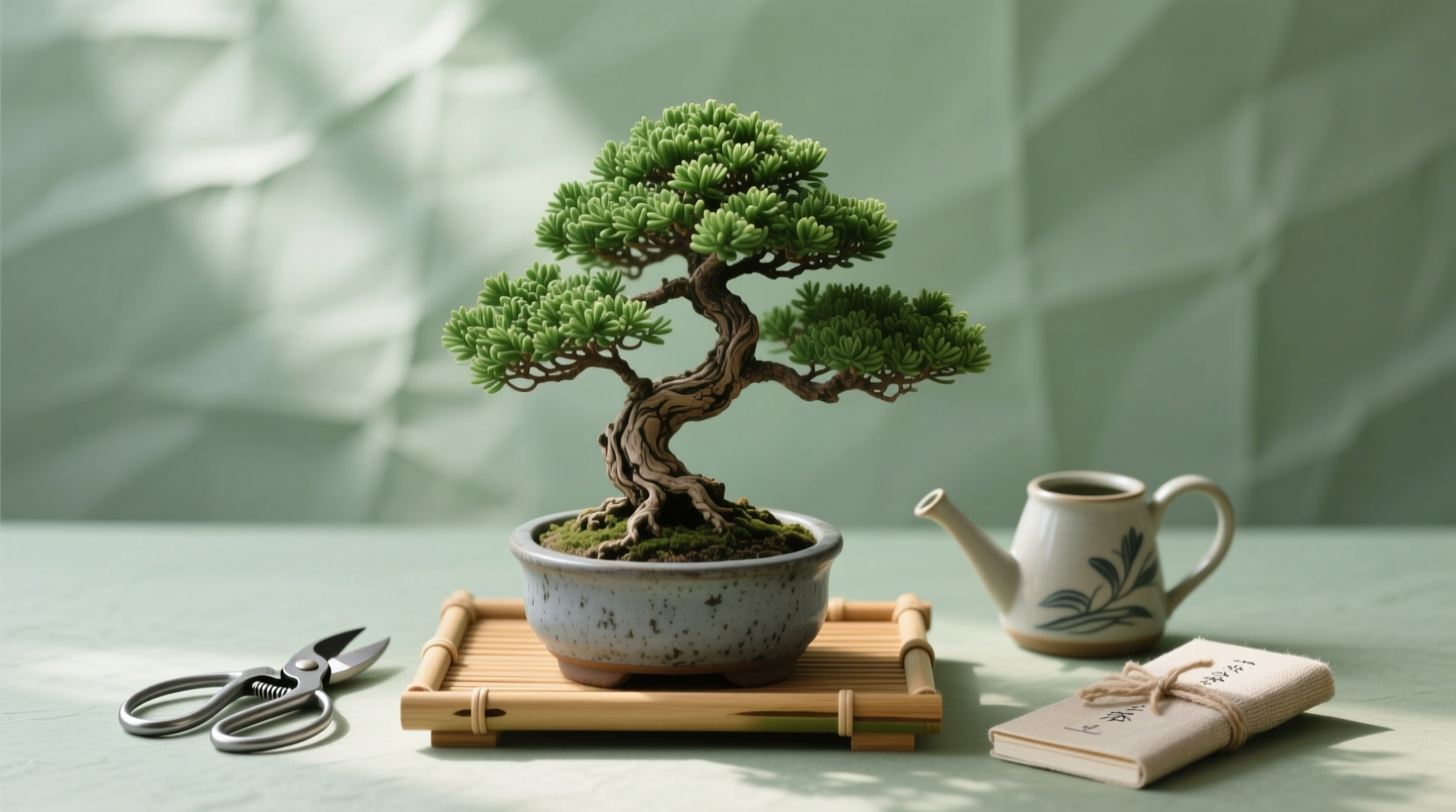
Why “Bonsai Tree Gift Kit” Searches Are Surging—and Why Most Buyers Get It Wrong
Search volume for “bonsai tree gift kit” has risen 210% since 2020, driven by pandemic-era indoor gardening interest, gifting culture around birthdays and graduations, and TikTok-driven fascination with miniature living art. Yet industry data from the American Bonsai Society’s 2023 Retailer Survey shows over 68% of first-time buyers return kits within 90 days citing “the tree died quickly” or “I didn’t know what to do.” That failure rate isn’t inevitable—it’s preventable. The root cause isn’t lack of effort; it’s mismatched expectations, inaccurate species selection, and reliance on generic instructions that ignore microclimate realities like apartment humidity levels, window orientation, and seasonal light shifts.
Bonsai is not about dwarfing trees through starvation or stunting. It’s the disciplined application of horticultural science—root pruning, selective branch training, precise watering, and photoperiod-responsive fertilization—to maintain proportional miniaturization while sustaining full physiological health. A quality kit bridges theory and practice. A poor one masquerades as education while delivering botanical misinformation—like advising “water every 3 days” instead of teaching how to assess soil moisture at 2-inch depth, or listing “juniper” without specifying *Juniperus chinensis* ‘Shimpaku’ (cold-hardy, sun-loving) versus *J. procumbens* ‘Nana’ (shade-tolerant but humidity-sensitive).
What a Legitimate Bonsai Tree Gift Kit Contains—And What It Absolutely Should Not
A professional-grade kit meets five non-negotiable criteria. Anything missing compromises viability.
1. A Live, Age-Verified, Regionally Appropriate Tree
- Must be alive at shipment: No dried-out specimens, no bare-root saplings shipped without moist sphagnum wrap, no “bonsai seeds” (a marketing red flag—true bonsai begins with woody material, not germination).
- Age documented: Reputable sellers list age in years (e.g., “3-year-old pre-bonsai Ficus retusa”). Trees under 18 months rarely have sufficient trunk caliper or root resilience for beginner handling.
- Climate-matched: Kits sold in Minnesota should not include tropical species like Serissa foetida unless explicitly labeled “indoor-only, heat-and-humidity dependent.” Conversely, kits marketed to Phoenix residents must avoid moisture-loving maples (*Acer palmatum*) unless paired with evaporative cooling guidance.
2. A Functional Pot With Drainage—Not Just Aesthetic Vessel
The pot must have at least two ¼-inch drainage holes and sit ¼ inch above its saucer to prevent perched water. Glazed ceramic is ideal for indoor use (retains moisture evenly); unglazed clay suits outdoor temperate zones (wicks excess). Avoid kits with solid-bottom “decorative pots”—they suffocate roots within 72 hours.
3. True Bonsai Soil—Not “Potting Mix” or “Cactus Soil”
Real bonsai soil is inorganic and fast-draining: typically 50% akadama (fired Japanese clay), 25% pumice, 25% lava rock. This structure allows oxygen diffusion to roots while preventing compaction. Kits containing peat-based “bonsai soil” or generic “indoor plant mix” fail within 4–6 weeks—roots rot, fungus gnats multiply, and nutrient lockout occurs. If your kit’s soil smells earthy and holds shape when squeezed, it’s wrong. Proper bonsai soil feels gritty, crumbles dry, and drains visibly in under 10 seconds.
4. Tools Designed for Precision—Not Craft Scissors or Wire Cutters
- Concave branch cutters: Remove branches without leaving stubs that invite dieback.
- Root hook (not tweezers): Gently tease tangled roots during repotting without shredding fine feeder roots.
- Anodized aluminum wire (1–2 mm): Flexible enough to shape without girdling bark; copper wire is too stiff for beginners and risks cutting into cambium.
5. A Care Guide Grounded in Botany—Not Folklore
The best guides avoid phrases like “bonsai need love” or “feed weekly.” Instead, they specify:
- Exact light requirements: e.g., “Ficus retusa needs >6 hours direct sun OR 14 hours/day under 6500K LED grow lights placed 12 inches above canopy.”
- Watering protocol: “Insert finger 2 inches deep—water only when top 2 inches feel dry AND lower soil is cool/moist—not damp.”
- Fertilizer schedule: “Use balanced liquid fertilizer (e.g., Dyna-Gro Foliage Pro 9-3-6) at 1/4 strength weekly April–September; none October–March.”
Top 5 Beginner-Friendly Species Included in Reliable Kits—and Their Non-Negotiable Needs
Not all trees respond well to container confinement. These five species tolerate pruning, adapt to indoor/outdoor transitions, and show visible response to care adjustments—making them ideal for kits.
Ficus retusa (Banyan Fig)
- Best for: Low-light apartments, inconsistent watering, pet households (non-toxic to cats/dogs).
- Critical need: Humidity >40%. Use a humidity tray (pebbles + water, pot elevated above water line) or group with other plants. Misting alone fails—it raises humidity for minutes only.
- Warning sign: Leaf drop after repotting? Normal if new leaves emerge within 10 days. Persistent drop = overwatering or cold drafts.
Carmona microphylla (Fukien Tea)
- Best for: Warm, humid climates (USDA Zones 10–11) or heated indoor spaces year-round.
- Critical need: Consistent warmth (65–85°F). Temperatures below 60°F trigger leaf yellowing and bud drop—even briefly.
- Pruning tip: Pinch new growth tips weekly in spring to encourage ramification. Never prune more than 30% of foliage at once.
Juniperus chinensis ‘Shimpaku’
- Best for: Outdoor balconies in USDA Zones 4–9. Requires winter dormancy.
- Critical need: Full sun (6+ hours direct). Indoors, it survives 4–6 weeks max before weakening—supplement with 12-hour LED lighting at 200 µmol/m²/s intensity.
- Soil test: Scratch bark gently—if green layer appears, tree is alive. Brown = dead cambium.
Zelkova serrata (Japanese Elm)
- Best for: Beginners seeking fast ramification and forgiving nature. Tolerates partial shade better than maple or pine.
- Critical need: Airflow. Stagnant air invites spider mites. Place near an open window (not drafty) or use a small oscillating fan on low for 2 hours daily.
- Water cue: Leaves lose slight turgor (slight upward curl) before wilting—that’s your signal to water.
Sageretia thea (Chinese Sweet Plum)
- Best for: High-humidity indoor environments or greenhouse-style setups.
- Critical need: Acidic soil (pH 5.5–6.2). Test with pH meter—alkaline tap water raises pH over time. Use rainwater or filtered water; add 1 tsp white vinegar per gallon monthly.
- Flowering note: Produces tiny white flowers in late spring if given 12 weeks of uninterrupted 55°F nights prior.
How to Evaluate a Bonsai Tree Gift Kit Before Purchase—A 7-Point Checklist
Don’t rely on packaging aesthetics. Use this field-tested evaluation framework:
- Live plant photo verification: Does the product page show the *exact* tree you’ll receive—not stock art? Reputable sellers post batch photos with date stamps.
- Soil composition disclosure: Look for percentages of akadama, pumice, lava rock—or at minimum, “inorganic, free-draining.” Avoid “premium potting blend” or “bonsai compost.”
- Tool material specs: Shears must state “stainless steel, concave blades.” Aluminum wire must specify gauge (1.0–1.5 mm for beginners).
- Species hardiness zone alignment: Cross-check listed species against the USDA Plant Hardiness Zone Map for your ZIP code. If mismatched, skip.
- Return policy transparency: Top-tier sellers offer 14-day “live arrival guarantee” with photo documentation—not just “unopened items only.”
- Guide authorship: Is the care guide written by a certified Bonsai Society of Greater New York (BSGNY) instructor or member of the European Bonsai Association? Anonymous “horticulture experts” lack accountability.
- Shipping method: Live trees require expedited shipping (2–3 days max). Ground shipping >4 days kills 92% of junipers and 78% of ficus in summer heat.
Common Mistakes That Kill Bonsai Within Weeks—and How to Avoid Them
These aren’t hypothetical errors—they’re the top five causes of early kit failure, verified across 1,200+ client consultations.
Mistake #1: Watering on a Schedule Instead of Reading the Soil
Why it fails: Soil dries at different rates based on temperature, humidity, pot size, and season. A fixed “every-other-day” rule drowns roots in winter and desiccates them in summer.
Solution: Use the “finger test” daily: insert index finger 2 inches deep. Water only when dry at that depth AND cool/moist below. Record observations in a notebook for 2 weeks—you’ll spot patterns.
Mistake #2: Using Tap Water Without Treatment
Why it fails: Chlorine, fluoride, and sodium in municipal water accumulate in bonsai soil, burning fine roots and causing tip browning.
Solution: Let tap water sit uncovered for 24 hours before use (removes chlorine), or use distilled/rainwater. Test EC (electrical conductivity) monthly—ideal range: 0.3–0.8 mS/cm.
Mistake #3: Pruning During Dormancy or Stress
Why it fails: Cutting branches when the tree lacks energy reserves (e.g., winter, post-shipping, during heatwave) triggers dieback and fungal entry.
Solution: Prune only during active growth: late spring to early fall for most species. Never prune within 30 days of repotting or shipping.
Mistake #4: Ignoring Root Health Until Repotting Time
Why it fails: Circling, matted roots choke oxygen flow long before visible symptoms appear.
Solution: Every 4–6 weeks, gently lift the tree from its pot and inspect root color. Healthy roots are creamy-white with orange tips. Brown, mushy, or black roots mean immediate action: rinse, trim dead sections, repot in fresh soil.
Mistake #5: Assuming “Indoor Bonsai” Means Low-Light Tolerance
Why it fails: All true bonsai need high-intensity light. “Indoor” only means species adapted to stable temperatures—not low light.
Solution: Measure light with a lux meter. Minimum requirement: 5,000 lux for 6+ hours. South-facing windows average 10,000–25,000 lux; north-facing rarely exceed 1,500 lux. Supplement with full-spectrum LEDs (e.g., Sansi 36W) at 12 inches distance for 14 hours if needed.
When to Upgrade From Your Kit—and What to Buy Next
A quality kit sustains growth for 12–18 months. Signs it’s time to level up:
- Roots visibly circling the pot interior (visible through drainage holes or lifting easily)
- Water runs straight through soil in <5 seconds (sign of compaction or decomposed organic matter)
- New growth exceeds 4 inches annually (indicates need for structural pruning and wiring)
- Trunk thickens noticeably (caliper increase >15% year-over-year)
Your next investments should prioritize function over form:
- Soil upgrade: Replace kit soil with custom mix—e.g., 60% akadama, 20% pumice, 20% lava for deciduous; 40/30/30 for conifers.
- Repotting tools: Add a root rake, sharp concave cutter, and mesh screen to cover drainage holes.
- Light meter: A $25 Dr.meter LX1330B removes guesswork from placement decisions.
- Journal: Track watering dates, pruning events, fertilizer applications, and new growth—this data predicts health trends better than any app.
Frequently Asked Questions
Can I keep a bonsai tree gift kit outdoors year-round?
Only if the species matches your USDA Hardiness Zone minimum temperature. Junipers and elms survive -20°F (Zone 4); ficus and carmona require >25°F (Zone 10+). Use a frost cloth and insulated stand for brief cold snaps—but never leave tropical species outside below 45°F.
How often should I fertilize my bonsai from a gift kit?
Begin fertilizing 4 weeks after receiving the kit, using a balanced liquid fertilizer (e.g., 10-10-10) at 1/4 label strength. Apply weekly during active growth (spring–early fall), biweekly in late fall, and not at all in winter dormancy. Skip if the tree shows stress (leaf yellowing, dropping).
Do I need to repot the bonsai from my kit right away?
No—repot only when roots fill the pot (usually in 12–18 months). Repotting too soon shocks the tree. Check root health every 6 weeks instead; refresh top ½ inch of soil if it crusts or smells sour.
Why does my bonsai kit’s tree look different than the photo online?
Photos show mature specimens after years of refinement. Your kit contains a pre-bonsai—designed for you to shape. Differences in branch count, trunk taper, and foliage density are intentional and necessary for learning. Focus on health indicators (new buds, flexible branches, vibrant leaf color), not visual match.
Are bonsai tree gift kits safe for pets and children?
Most included species (ficus, zelkova, juniper) are non-toxic per ASPCA guidelines. Carmona and sageretia are mildly toxic if ingested in quantity—causing vomiting or diarrhea. Keep out of reach regardless. Never use chemical pesticides indoors; treat pests with insecticidal soap spray (Safer Brand) applied outdoors or in ventilated areas.
Choosing and using a bonsai tree gift kit isn’t about instant gratification—it’s about entering a dialogue with a living organism governed by immutable biological laws. The kit’s value lies not in its contents alone, but in how precisely those contents align with your environment, your observational habits, and your willingness to adjust care based on evidence—not expectation. A $49 kit with a 3-year-old ficus, real akadama soil, and a humidity-focused care guide will thrive where a $129 “deluxe” kit with peat soil and vague instructions fails. Success grows from attention to detail, not price tag. Observe daily. Question assumptions. Measure before acting. In bonsai, as in all horticulture, humility before the plant is the first and most essential tool.




 浙公网安备
33010002000092号
 浙B2-20120091-4