
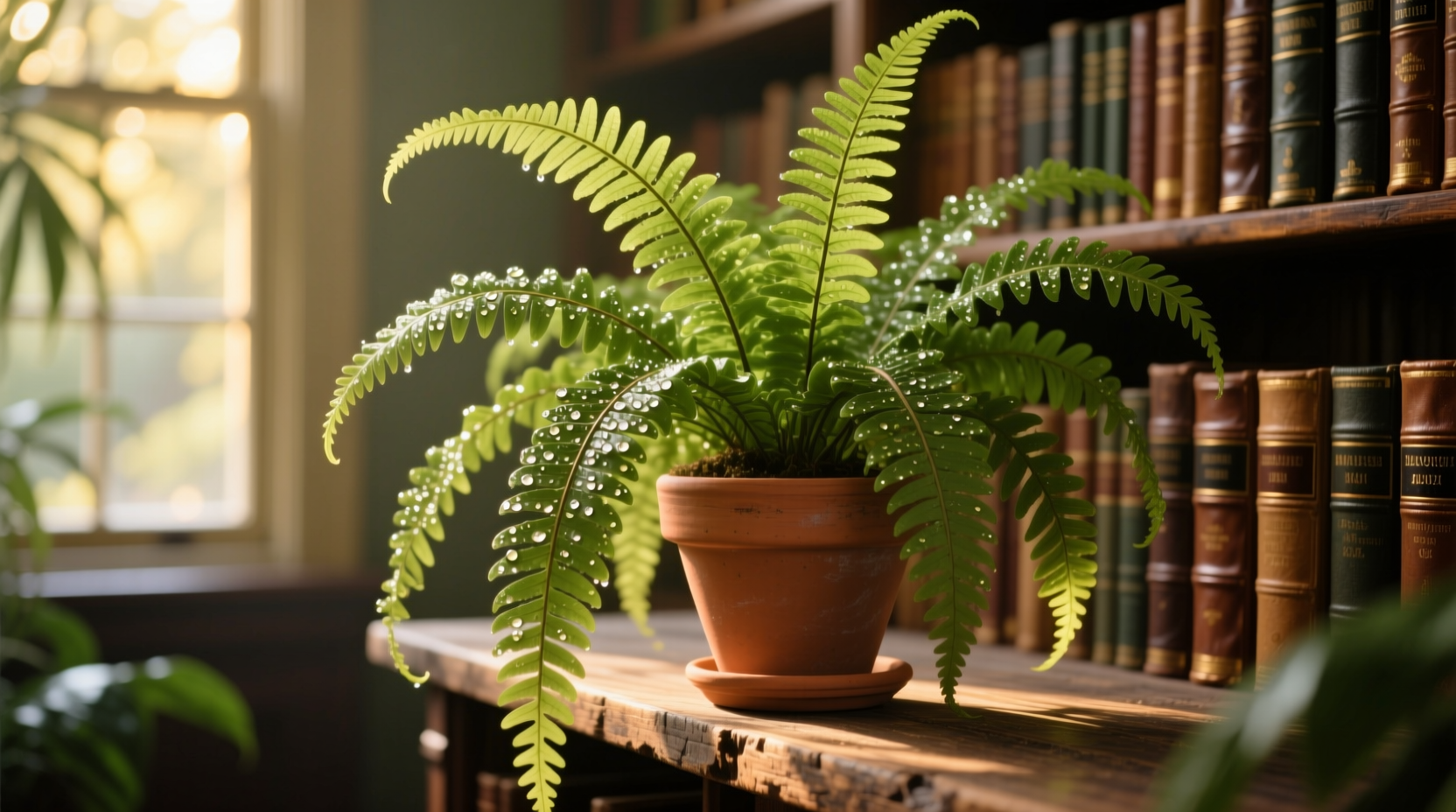
Why the Boston Fern Is a Benchmark for Indoor Plant Literacy
More than just a graceful houseplant, the Boston fern is a living diagnostic tool. Its finely divided fronds and shallow, fibrous root system make it acutely sensitive to environmental shifts—especially moisture fluctuations and air quality. That sensitivity isn’t a flaw; it’s feedback. When leaf tips brown, fronds yellow, or lower fronds drop prematurely, it’s not “failing”—it’s signaling precisely where your care routine diverges from its native understory habitat in tropical forests of Florida, Central America, and the West Indies. Unlike succulents that forgive weeks of neglect or ZZ plants that thrive on indifference, the Boston fern demands attentive observation—not rigid scheduling. This makes it ideal for gardeners ready to move beyond “set-and-forget” into responsive, ecology-informed plant stewardship.
Light Requirements: Bright Indirect Is Non-Negotiable
Boston ferns evolved beneath forest canopies—receiving dappled, filtered sunlight all day. Replicate that indoors using these guidelines:
- Avoid direct sun entirely: Even 15 minutes of unfiltered southern or western afternoon sun will scorch frond tips, bleach chlorophyll, and trigger irreversible crisping. East-facing windows are optimal; north-facing work well if supplemented with a full-spectrum LED grow light (12–14 hours/day at 2,000–3,000 lux).
- Rotate weekly: Ferns naturally orient growth toward light. Rotate the pot 90° every 7 days to ensure even development and prevent lopsided, leaning foliage.
- Watch for stress cues: Pale green or yellowish new growth indicates insufficient light; dark green but sparse, leggy fronds suggest low light intensity combined with excess nitrogen. True “bright indirect” means you can comfortably read newsprint near the plant without glare or shadow.
Outdoors in USDA Zones 9–11, hang Boston ferns under covered patios, beneath shade cloth (50% density), or beneath mature trees with open canopies (e.g., redbud, dogwood, or Japanese maple). Never place directly on hot concrete or asphalt surfaces—the radiant heat alone can desiccate fronds within hours.
Watering: The Most Misunderstood Step—And the #1 Cause of Failure
Overwatering kills more Boston ferns than underwatering—but paradoxically, underwatering causes more visible damage first. Here’s why: the plant’s rhizomes store minimal water and lack drought-adapted tissue. When soil dries past 70% volume moisture content, frond cells collapse irreversibly at the tips. Yet if you then flood the pot, oxygen-starved roots rot within 48 hours, halting all water uptake. The solution? Consistent, calibrated hydration.
Use the finger-knuckle test daily during spring–summer, every other day in fall–winter:
- Insert your index finger vertically into the soil up to the second knuckle (about 1.5 inches deep).
- If soil feels cool and slightly damp—like a拧 wrung-out sponge—wait.
- If it feels dry, crumbly, or warm—water immediately.
- When watering, apply room-temperature, filtered or rainwater slowly until water runs freely from drainage holes. Discard excess from the saucer within 15 minutes.
Never rely on weight, surface cracks, or “once-a-week” calendars. A 10-inch hanging basket in 85°F/60% humidity may need water every 1.5 days; the same plant in 65°F/35% humidity indoors may go 4 days. Use a $12 digital moisture meter (calibrated to 1–10 scale) for objective readings: aim for 4–6 year-round.
Humidity: Not Optional—It’s Physiological Necessity
Boston ferns absorb significant water vapor directly through stomata on frond undersides. Below 40% relative humidity, transpiration outpaces uptake, triggering tip browning—even if soil is perfectly moist. This is why misting alone fails: droplets evaporate in under 90 seconds in typical indoor air, providing negligible sustained benefit.
Effective, scalable humidity strategies include:
- Double-potting with pebbles and water: Place the nursery pot on a tray filled with 1 inch of rinsed pebbles and water. Ensure the pot base sits above water level. Refill daily. Increases localized humidity by 15–25%.
- Grouping with compatible plants: Cluster Boston ferns with calatheas, peace lilies, and fittonias. Transpiration from multiple plants creates a microclimate—measurable increases of 10–20% RH within a 3-foot radius.
- Using a cool-mist humidifier: Position 3–4 feet away, set to maintain 55–65% RH. Avoid ultrasonic models that disperse mineral dust unless using distilled water. Clean tanks every 3 days to prevent bacterial biofilm.
- Installing a terrarium-style cloche (for tabletop specimens): Use a clear glass dome or inverted large glass jar—lift for 2 hours daily to prevent fungal buildup.
Never place near heating vents, air conditioners, fireplaces, or dehumidifiers. These devices reduce RH by 25–50% within seconds—guaranteeing chronic stress.
Soil & Potting: Structure Matters More Than Fertility
Boston ferns require rapid drainage and abundant air space around roots. Standard “potting mix” retains too much water and compacts quickly. Instead, use this custom blend:
- 40% coarse orchid bark (¼–½ inch chunks)
- 30% sphagnum peat moss or coconut coir (pre-soaked and squeezed)
- 20% perlite (not vermiculite—too water-retentive)
- 10% horticultural charcoal (for microbial balance and odor control)
Repot only when roots visibly circle the pot’s interior or lift the plant upward (typically every 2–3 years in spring). Choose a container only 1–2 inches wider in diameter than the current one—never double-pot size. Plastic or glazed ceramic is preferred: unglazed terra cotta wicks moisture too aggressively. Always use pots with drainage holes—no exceptions.
During repotting, gently loosen outer roots but do not wash or prune healthy rhizomes. Trim only blackened, mushy, or brittle sections with sterilized scissors. Set the crown (where fronds emerge) at the same depth as before—burying it invites rot; raising it exposes roots.
Fertilizing: Less Is Objectively Better
Boston ferns are light feeders. Excess nitrogen burns tender fiddleheads and promotes weak, floppy growth prone to breakage. Use only a balanced, water-soluble fertilizer diluted to **¼ strength** (e.g., 10-10-10 or 20-20-20 at 0.25 tsp per gallon) applied every 4 weeks during active growth (April–September). Skip entirely October–March.
Organic alternatives include compost tea (steeped 24 hours, strained, diluted 1:10) or fish emulsion (½ strength, monthly). Never use granular slow-release spikes—they concentrate salts at root zones and cause osmotic shock.
Signs of over-fertilization: white crust on soil surface, sudden tip burn despite stable humidity, or stunted new fronds with thickened, dark green bases.
Pruning & Grooming: Precision, Not Aggression
Prune only to remove damaged, dead, or excessively long fronds—never to “shape” the plant. Use sharp, sterilized bypass pruners (not scissors) to cut fronds flush with the crown. Never pull fronds; tearing damages rhizomes and invites infection.
Timing matters: prune in early spring (March–April) as new fiddleheads begin unfurling. This redirects energy to fresh growth and improves air circulation. Remove no more than 20% of total fronds in one session. Yellowed lower fronds are natural senescence—leave them until fully brown, then snip cleanly.
For leggy, sparse specimens: cut all fronds back to 2 inches above the crown in late March. Within 4–6 weeks, vigorous new growth emerges—if humidity, light, and moisture are optimized.
Pest Management: Prevention Over Reaction
Boston ferns rarely suffer severe infestations—but spider mites, scale, and mealybugs exploit dry conditions. Prevention is 95% of success:
- Wipe fronds biweekly with a soft, damp microfiber cloth to remove dust and disrupt mite colonies.
- Inspect undersides weekly with a 10× magnifier—look for fine webbing (spider mites), cottony masses (mealybugs), or hard brown bumps (scale).
- Quarantine new plants for 21 days before introducing near established ferns.
If pests appear, treat immediately:
- Spider mites: Spray entire plant—including soil surface—with insecticidal soap (potassium salts of fatty acids), repeating every 5 days for three applications. Increase humidity to >60% simultaneously.
- Mealybugs: Dab each with 70% isopropyl alcohol on a cotton swab, then follow with neem oil spray (1 tsp neem oil + ½ tsp mild liquid soap + 1 quart water).
- Scale: Scrape off with fingernail or toothpick, then apply horticultural oil (dormant or summer rate) to remaining stems.
Avoid systemic pesticides—they accumulate in fern tissues and impair photosynthesis. Never use “hot pepper” or garlic sprays; they clog stomata and worsen dehydration.
Winter Care: Slowing Down Without Shutting Down
From November to February, Boston ferns enter physiological dormancy—not death. Growth slows, water needs drop 40–60%, and metabolism reduces. Key adjustments:
- Reduce watering frequency by half—but do not let soil dry completely. Check moisture twice weekly.
- Maintain humidity at ≥45% (use humidifier or pebble trays; avoid misting).
- Keep temperatures between 60–70°F (15–21°C). Avoid cold windowsills (<55°F) and drafty entries.
- Suspend all fertilization.
- Relocate away from forced-air heating vents—even 3 feet distance prevents leaf desiccation.
Do not move dormant ferns to darker closets or basements. Low light + cool temps + dry air = guaranteed decline. A bright, cool bathroom with natural light often outperforms a dim living room.
Propagation: Simple Division, Not Spores
Unlike many ferns, Boston ferns rarely produce viable spores indoors. Reliable propagation occurs only via division—best done in early spring:
- Water plant thoroughly 12 hours prior.
- Gently remove from pot and shake off loose soil.
- Identify natural separation points where rhizomes fork. Using sterilized knife, cut sections containing at least 3–4 healthy fronds and visible white root buds.
- Plant divisions immediately in pre-moistened custom soil mix.
- Enclose each in a clear plastic bag with 3–4 small ventilation holes. Place in bright indirect light. Remove bag after 10–14 days when new fiddleheads emerge.
Discard any section lacking firm, white root buds—even if fronds look green. Those will not regenerate.
Common Misconceptions Debunked
Misconception #1: “Misting daily solves humidity.”
Reality: Misting raises RH for ≤90 seconds. It does not replace consistent ambient humidity and encourages foliar fungal disease if done at night or in stagnant air.
Misconception #2: “Boston ferns need acidic soil.”
Reality: They tolerate pH 5.0–7.0. Soil acidity matters far less than structure and drainage. Peat-based mixes are popular because they’re porous—not because ferns “need” acidity.
Misconception #3: “They clean indoor air.”
Reality: While all plants exchange gases, NASA’s 1989 study used sealed chambers with 10+ plants per square foot—conditions impossible in homes. No peer-reviewed evidence supports air purification claims for single houseplants.
Misconception #4: “Brown tips mean overwatering.”
Reality: Brown tips almost always indicate low humidity or inconsistent watering—not excess water. Check RH first, then moisture depth.
Troubleshooting Quick Reference Table
| Symptom | Most Likely Cause | Immediate Action |
|---|---|---|
| Brown, crispy leaf tips | Low humidity (<45%) or erratic watering | Install humidifier; implement finger-knuckle test; stop misting |
| Yellowing lower fronds | Natural aging OR overwatering OR cold stress | Check root health; verify temps >55°F; adjust watering schedule |
| Stunted, pale new growth | Insufficient light OR nutrient deficiency | Move closer to east window; apply ¼-strength fertilizer once |
| Foul odor + mushy crown | Root rot from chronic overwatering | Remove plant, trim rotted tissue, repot in fresh dry mix, withhold water 7 days |
| Webbing on frond undersides | Spider mite infestation | Isolate; spray with insecticidal soap x3 at 5-day intervals |
Frequently Asked Questions
Can I grow a Boston fern outdoors year-round?
Only in USDA Hardiness Zones 9b–11, where winter lows stay above 25°F (−4°C). In Zone 9a, provide frost cloth protection below 30°F. Elsewhere, bring indoors before first frost—acclimatize over 7 days by moving to shadier outdoor spots daily.
Why do my Boston fern’s fronds turn yellow and drop suddenly?
Sudden yellow-drop signals acute stress: cold draft (below 55°F), exposure to ethylene gas (from ripening fruit or car exhaust), or severe underwatering followed by flooding. Check recent environmental changes first—then inspect roots.
Is tap water safe for Boston ferns?
Chlorine dissipates if tap water sits uncovered for 24 hours—but fluoride and dissolved solids remain and accumulate in soil, causing tip burn. Use rainwater, distilled water, or filtered water (reverse osmosis or activated carbon) whenever possible.
How do I revive a severely neglected Boston fern?
Trim all brown or yellow fronds. Soak pot in lukewarm water for 30 minutes, then drain fully. Repot in fresh custom mix if soil is compacted or salty. Place in bright indirect light, maintain 55–65% RH, and water only when top 1.5 inches feels dry. New growth typically appears in 3–5 weeks.
Are Boston ferns toxic to pets or children?
No. Nephrolepis exaltata is non-toxic to cats, dogs, and humans per ASPCA and University of Illinois Veterinary Medicine databases. However, ingesting large quantities may cause mild gastrointestinal upset—so discourage chewing.
Caring for a Boston fern is less about mastering techniques and more about cultivating attunement—learning to read its subtle language of texture, color, and posture. When fronds gleam with dew-like turgor, when new fiddleheads unfurl tightly and symmetrically, when humidity condenses faintly on nearby windows—that’s when you know the environment is aligned. It asks for consistency, not perfection. And in return, it offers decades of quiet, resilient grace—a living archive of attentive stewardship. With the framework above, you’re not just sustaining a plant. You’re practicing a form of ecological literacy—one frond at a time.




 浙公网安备
33010002000092号
 浙B2-20120091-4