
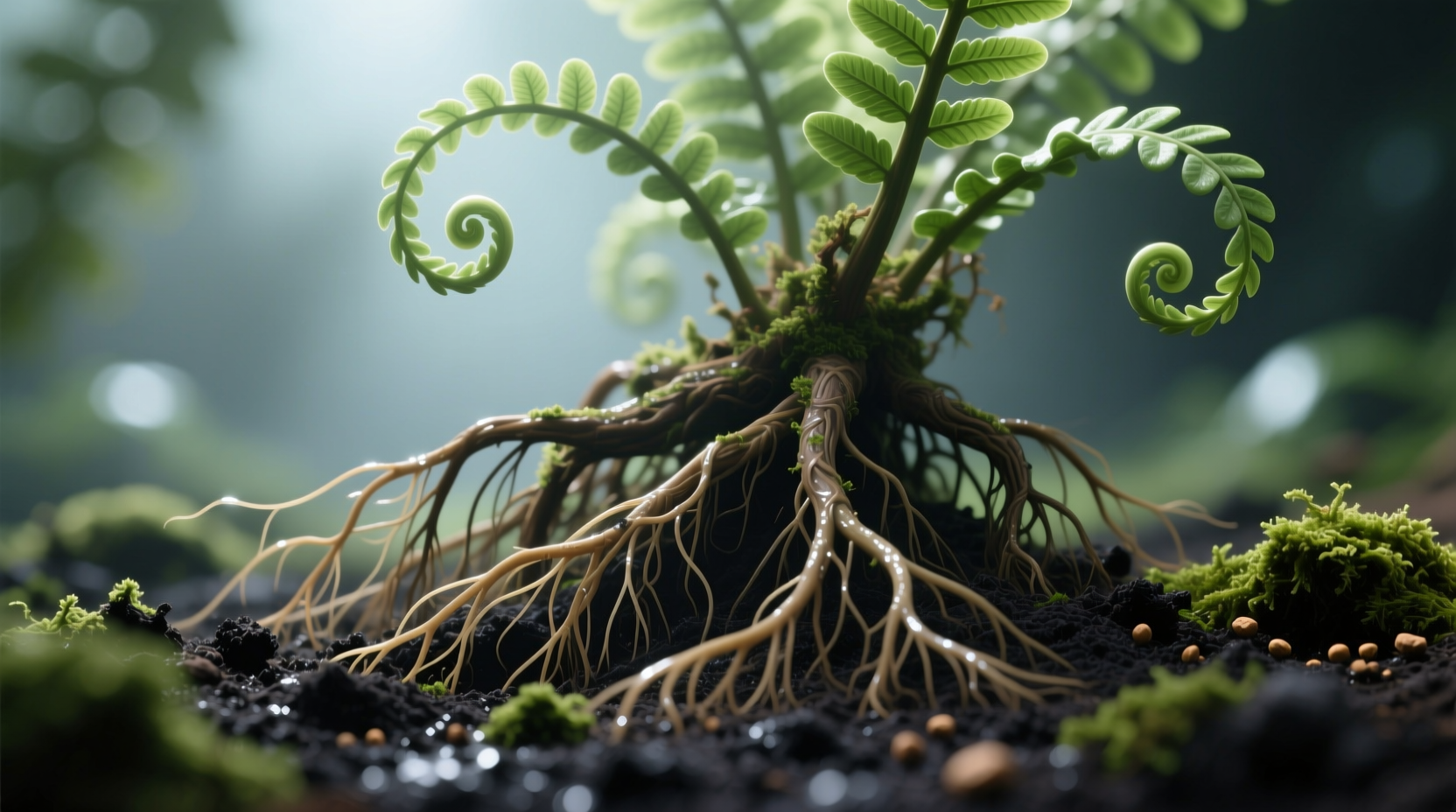
Why Boston Fern Roots Are Unique—and Why That Matters
Boston ferns evolved as epiphytic or lithophytic understory plants in humid subtropical forests—from Florida to Central America and the Caribbean. Their root system reflects that origin: shallow, dense, and highly absorptive—not anchoring or storage-oriented. Unlike tomato or rose roots that penetrate deeply for stability and drought resilience, Boston fern roots function primarily as moisture sponges and nutrient conduits. They lack thickened cortical tissue or extensive lignification; instead, they’re composed of fine, hair-like feeder roots bundled around slender, wiry primary roots. This structure enables rapid uptake of dissolved minerals from frequent, light rainfall—but also makes them acutely vulnerable to oxygen deprivation.
This biological reality explains why “well-draining soil” isn’t optional—it’s non-negotiable. Standard potting mix (even “all-purpose”) holds too much water for too long, collapsing pore space and starving roots of O2. Likewise, ceramic or glazed pots without drainage holes are incompatible with Boston fern physiology. A single 48-hour period of saturated soil can trigger anaerobic respiration in root cells, producing ethanol and organic acids that damage cell membranes within hours. That damage manifests above ground in 5–10 days as chlorosis at frond tips, reduced fiddlehead emergence, or brittle, papery pinnae.
Importantly, Boston ferns do *not* develop true rhizomes or tubers. What many mistake for “rhizomes” are actually adventitious root crowns—swollen, knobby sections where new roots emerge from the base of old stolons. These crowns should feel springy and resilient, never mushy or desiccated. Their presence confirms active growth; their absence suggests chronic under-watering or chilling injury below 50°F (10°C).
How to Safely Expose and Inspect Boston Fern Roots
Never yank or shake a Boston fern from its pot. Its delicate root matrix tears easily, severing critical feeder roots and triggering transplant shock. Instead, follow this gentle, low-stress protocol:
- Water lightly 6–8 hours beforehand—moist (not soggy) soil releases more cleanly from container walls.
- Tip the pot sideways, supporting the crown with one hand while tapping the bottom and sides firmly but evenly with your palm.
- Slide the root ball out intact. If resistance persists, run a thin, flexible spatula or butter knife between soil and pot edge—never force it.
- Place the root ball on a clean, white paper towel or tray—light background makes discoloration and texture changes easier to spot.
- Use a soft-bristled brush (like a makeup or watercolor brush) to gently remove excess soil from outer layers—do *not* rinse with water, which further stresses roots and obscures visual cues.
Now examine systematically:
- Color: Healthy roots are ivory, pale tan, or faintly pinkish near growing tips. Gray, olive-green, or brown-black indicates decay. Uniform yellow may signal nutrient imbalance (often excess nitrogen), not rot.
- Texture: Press gently with fingertip. Firm, slightly rubbery = viable. Mushy, stringy, or crumbling = dead or dying. Hollow stems extending from roots suggest advanced rot.
- Smell: Earthy or neutral = good. Sour, fermented, or sulfurous odor = anaerobic breakdown—immediate action required.
- Growth pattern: Look for white, pointed root tips—signs of active elongation. Absence of tips—even in moist soil—indicates metabolic arrest.
Remember: Some older, thicker roots naturally darken with age (like tree bark). Focus assessment on the *outer 1/4 inch* of the root mass and the density of fine, hair-like feeders. A healthy specimen will have hundreds of these—visible as a fuzzy halo around the main root cluster.
Root Rot in Boston Ferns: Causes, Early Warnings, and Recovery Steps
Root rot is the #1 killer of indoor Boston ferns—and it’s nearly always preventable. It begins not with visible mold or slime, but with subtle biochemical shifts in the rhizosphere. When soil remains >70% water-filled for >24 consecutive hours, beneficial aerobic bacteria (e.g., Bacillus subtilis) decline, while opportunistic fungi (Fusarium, Pythium) and oomycetes proliferate. These pathogens secrete enzymes that dissolve root cell walls, allowing invasion.
Early warning signs—before foliage suffers:
- Soil surface develops a faint, iridescent film or whitish crust (saprophytic fungi feeding on leached organics).
- Plant feels unusually lightweight for its size—even when soil appears damp.
- New fiddleheads emerge tightly furled and fail to unfurl fully after 5–7 days.
- Soil stays cool to the touch 48+ hours after watering (evaporative cooling halts when pores fill with water).
If you confirm root rot, act decisively—but don’t panic. Up to 40% root loss is recoverable if crown tissue remains intact:
- Remove all affected roots using sterilized, sharp scissors—cut back to firm, light-colored tissue. Disinfect tools between cuts with 70% isopropyl alcohol.
- Rinse crown gently under lukewarm running water to remove spores and debris—avoid soaking.
- Apply a copper-based fungicide paste (e.g., Bonide Copper Fungicide Dust) to cut surfaces—copper ions disrupt pathogen enzyme systems.
- Repot into fresh, sterile, aerated medium (see next section) in a pot 1–2 inches smaller than original—excess volume invites re-saturation.
- Withhold water for 5–7 days, then resume with 1/3 the usual volume—only when top 1/2 inch of soil is dry to finger depth.
Do *not*: Use hydrogen peroxide drenches (damages beneficial microbes and root hairs), prune fronds aggressively (reduces photosynthetic capacity needed for recovery), or place in direct sun (increases transpiration demand while roots heal).
The Ideal Root Environment: Soil, Pot, and Watering Science
Root health hinges on three interdependent factors: substrate porosity, container design, and irrigation timing. Each must align with Boston fern root biology.
Soil Composition: Beyond “Well-Draining”
Avoid generic “potting soil.” Instead, build a custom blend that maintains 45–55% air-filled porosity at field capacity:
- 40% coarse sphagnum peat moss (not fine dust)—holds moisture *without* compaction; pH 5.2–6.0 matches fern preference.
- 30% orchid bark (½-inch chunks)—creates permanent air channels; avoid pine bark, which leaches tannins.
- 20% perlite (medium grade)—adds weight and prevents floatation; skip vermiculite (holds too much water).
- 10% horticultural charcoal—adsorbs toxins and inhibits fungal growth.
Mix thoroughly and pre-moisten until evenly damp—like a wrung-out sponge—before filling the pot. Never compress; gently settle by tapping pot base on counter.
Pot Selection: Size, Material, and Drainage
Roots need oxygen—not real estate. Choose a pot only 1–2 inches wider than the current root ball’s diameter. For mature specimens (24+ inch spread), 10–12 inch diameter is optimal. Depth should equal width—shallow, wide pots mimic natural forest floor conditions better than tall, narrow ones.
Material matters:
- Terracotta: Best overall—porous walls wick away surface moisture and cool roots.
- Glazed ceramic: Acceptable *only* with ample drainage holes (minimum 3, ¼-inch diameter) and a raised pot feet system.
- Plastic: Use only with double-potting (plastic liner inside decorative cachepot) and strict monitoring—no standing water allowed.
- Avoid: Self-watering pots, glass containers, and unglazed concrete (leaches lime).
Watering Mechanics: Timing, Volume, and Delivery
Forget “water once a week.” Instead, use the soil moisture threshold method:
- Insert finger to second knuckle daily.
- Water *only* when top 1/2 inch feels dry, *and* the next 1 inch feels cool/moist—not wet.
- Apply water slowly at soil level (not foliage) until it flows freely from drainage holes—then stop.
- Discard runoff immediately—never let pot sit in saucer water beyond 15 minutes.
In winter (below 65°F / 18°C), reduce frequency by 30–50%. In summer with AC running, increase by 20%—but *never* compensate for low humidity with extra soil water.
When and How to Repot Boston Fern Roots
Repot every 2–3 years in early spring (March–April), coinciding with natural growth resurgence. Signs you’ve waited too long:
- Roots circling tightly inside pot wall (“girdling”).
- Soil pulls away from pot edges and cracks when dry.
- Water runs straight through without absorption.
- More than 1/3 of root mass is visible above soil line.
Step-by-step repotting:
- Prepare new pot and soil mix (as above).
- Remove fern, gently tease apart matted outer roots with fingers—do *not* use tools unless roots are fused.
- Trim any dark, brittle, or excessively long roots (max 15% total length).
- Position plant so crown sits ½ inch below pot rim—never bury the crown.
- Add soil, firming lightly with fingertips—no stomping or tapping.
- Water thoroughly, then place in bright, indirect light for 7 days before resuming normal care.
Never repot during active frond dieback, flowering (rare but possible), or temperatures below 55°F (13°C).
Common Misconceptions About Boston Fern Roots
Myth-busting is essential—many widely repeated “tips” actively harm root health:
- “Boston ferns like to be root-bound.” False. They tolerate mild crowding but suffer long-term from oxygen starvation and nutrient depletion. True root-bound plants show stunted growth—not lush, full foliage.
- “Misting roots helps hydration.” Misting foliage raises humidity but does *nothing* for roots. Wetting the crown invites crown rot—a fatal fungal infection distinct from root rot.
- “Coffee grounds improve soil for ferns.” Harmful. Coffee grounds acidify soil *too much*, encourage mold, and compact when wet—blocking oxygen flow.
- “If roots are white, the plant is healthy.” Incomplete. White roots indicate recent growth—but if they’re sparse, brittle, or lack tips, the plant is still compromised.
- “All ferns have identical root needs.” Incorrect. Maidenhair ferns (Adiantum) require even more aeration; rabbit’s foot ferns (Davallia fejeensis) store water in rhizomes and tolerate brief dryness.
Frequently Asked Questions
How often should I check my Boston fern roots?
Inspect roots annually during spring repotting. If foliage declines unexpectedly (yellowing, drooping, slow fiddlehead emergence), inspect immediately—don’t wait for scheduled repotting.
Can I propagate Boston ferns from roots?
No—Boston ferns do not propagate from root cuttings. Propagation occurs via division of the crown (with attached roots and fronds) or rarely, from spores. Never separate roots alone; they lack meristematic tissue to regenerate crowns.
Why do Boston fern roots grow above soil?
Two main causes: (1) Soil has eroded or shrunk due to overwatering and poor structure, exposing roots; (2) The plant is actively sending up new stolons to form satellite crowns—a sign of vigorous health in ideal conditions.
Is it safe to trim Boston fern roots during repotting?
Yes—if roots are circling, girdling, or damaged. Trim no more than 15–20% of total root mass, using sterilized tools. Always preserve the dense, fibrous outer layer and all visible white root tips.
What’s the best way to revive a Boston fern with mostly dead roots?
First, verify crown viability: scratch stem base—green tissue underneath means recovery is possible. Remove all rotted roots, treat crown with copper fungicide, repot in fresh, airy medium, and place in high-humidity, low-light conditions. Water sparingly until new roots appear (check weekly by gently lifting plant—resistance indicates new growth). Patience is critical: full recovery takes 8–12 weeks.
Boston fern roots thrive not through neglect or indulgence—but through precise environmental stewardship. Their shallow, moisture-hungry architecture demands consistency, not intuition. By understanding what healthy roots look, feel, and behave like—and recognizing the earliest physiological red flags—you transform from reactive caregiver to proactive cultivator. Every frond unfurling, every deep green hue, every resilient new fiddlehead is a direct reflection of root integrity. Tend the unseen, and the visible will flourish.
Observe closely. Act deliberately. Respect the biology—not the folklore. That’s how Boston ferns live decades, not just seasons.
For gardeners in USDA Zones 9–11, Boston ferns can be grown outdoors year-round in shaded, sheltered beds with amended, well-drained soil—just ensure winter mulch doesn’t smother crowns. Indoors, maintain temperatures between 60–75°F (16–24°C) and avoid drafts from heaters or AC vents, which desiccate roots faster than soil drying alone.
Finally, remember: No two Boston ferns respond identically to identical care. Track your plant’s unique rhythm—how quickly soil dries, how fronds react to humidity shifts, how root mass fills the pot over time. That observational practice, grounded in botanical fact, is the deepest root of all successful fern cultivation.




 浙公网安备
33010002000092号
 浙B2-20120091-4