
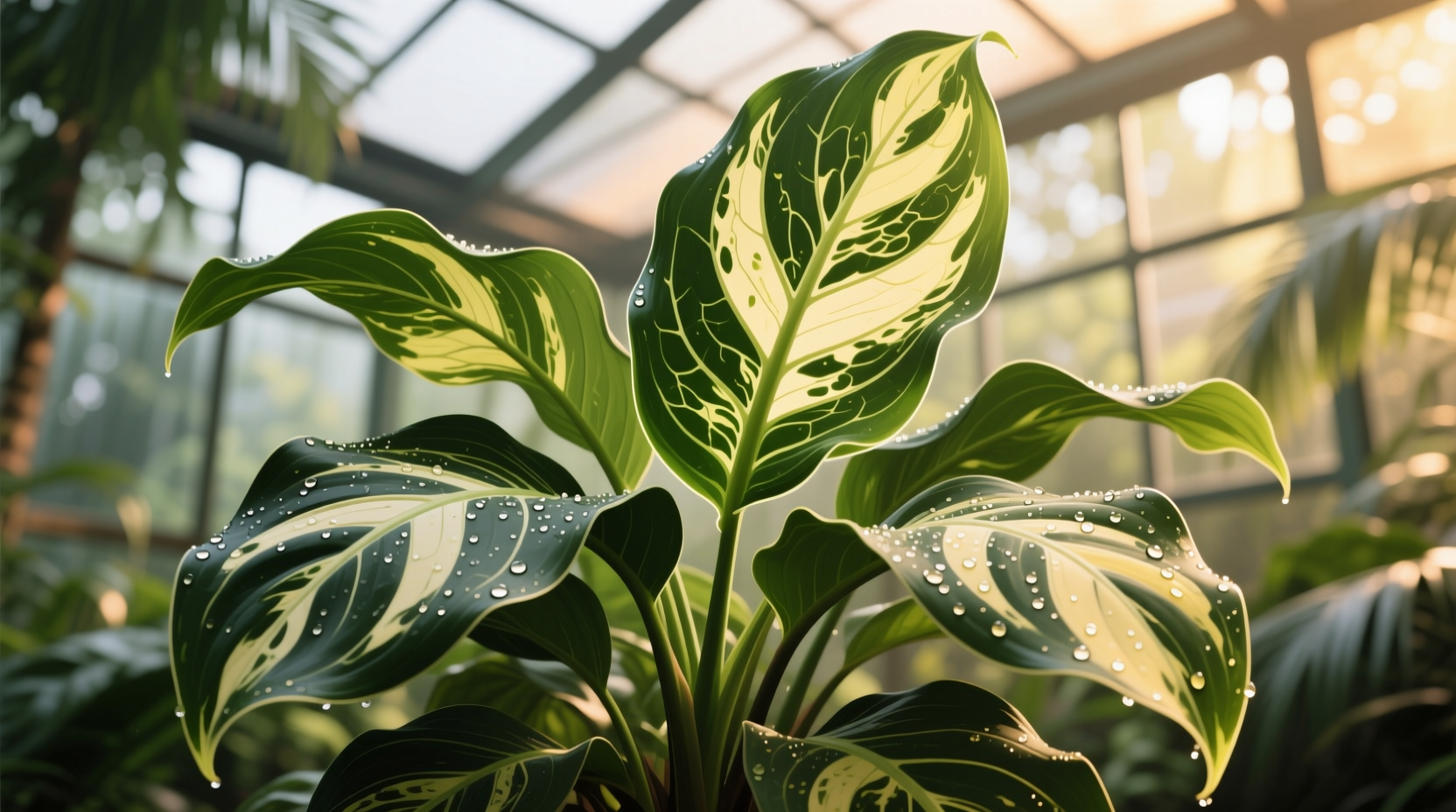
For over two decades, I’ve grown diffenbachia in every setting imaginable: north-facing apartment balconies in Chicago winters, humid office atriums in Atlanta, sealed glass-enclosed sunrooms in Portland, and compact urban studios with only fluorescent lighting. What unites all successful growers isn’t luck—it’s understanding that diffenbachia isn’t “low-maintenance” in the way snake plants or ZZ plants are. Rather, it’s predictably responsive: it signals stress quickly and recovers reliably—if you read its cues correctly and act within 48 hours. This guide distills those lessons, field-tested across USDA Zones 4 through 11, into actionable, species-agnostic practices backed by botany, horticultural extension data, and thousands of observed growth cycles.
Why Diffenbachia Belongs in Your Indoor Space (and Why It’s Often Misunderstood)
Diffenbachia (genus Dieffenbachia, family Araceae) comprises over 30 accepted species native to Central and South America’s understory forests. Its broad, variegated leaves evolved to capture dappled light beneath dense canopies—making it uniquely adapted to interior environments where most flowering houseplants fail. Yet it’s routinely mislabeled as “foolproof” or “beginner-friendly,” leading to widespread decline from mismatched expectations.
The core misconception? That diffenbachia tolerates neglect. In reality, it thrives on consistent attention to microclimate. Unlike pothos—which survives weeks without water or light—diffenbachia’s large, thin leaves transpire heavily and lack deep drought adaptations. A single week of dry soil or a sudden 10°F drop triggers irreversible leaf yellowing and stem softening. Conversely, its tolerance for low light is real—but only when paired with adequate humidity (40–60% RH) and stable warmth.
Its popularity stems from three verified strengths:
- Foliage impact: Leaves range from 8–24 inches long, with bold patterns (cream, white, lime, or pale yellow) against deep green—ideal for visual anchoring in minimalist rooms or layered plant displays.
- Adaptability to artificial light: Performs well under full-spectrum LED grow lights (2,700–5,000 lux at leaf level for 10–12 hours daily), making it one of the few non-succulent plants viable in windowless offices.
- Scalable size: Compact cultivars like ‘Camille’ (18–24" tall) suit shelves and desks; vigorous types like ‘Tropic Snow’ reach 4–5 feet and serve as living room focal points.
But none of this matters without addressing its defining trait: toxicity.
The Non-Negotiable Safety Protocol: Calcium Oxalate Crystals Explained
Every part of diffenbachia contains needle-shaped raphides of calcium oxalate monohydrate. When chewed or crushed, these crystals penetrate oral and gastrointestinal tissues, causing immediate burning, swelling, drooling, and temporary loss of speech—hence the nickname “dumb cane.” This is not an allergic reaction; it’s a mechanical and chemical injury confirmed in veterinary toxicology studies (ASPCA Animal Poison Control, 2022).
Crucially, toxicity is dose-dependent and exposure-specific:
- A toddler licking a leaf edge may experience mild lip swelling and fussiness—resolving in 2–4 hours with rinsing and cool water.
- A dog ingesting >1 g/kg body weight (e.g., a 10-lb terrier eating half a mature leaf) risks airway compromise requiring emergency vet care.
- Skin contact causes transient stinging and redness—especially on cuts or mucous membranes—but rarely requires medical intervention.
What to do immediately after exposure:
- Rinse mouth thoroughly with cool water (do not induce vomiting).
- Wash skin with soap and cool water for 15 minutes.
- Contact Poison Control (US: 1-800-222-1222) or a veterinarian with plant ID photo in hand.
Prevention is far more effective than treatment. Place diffenbachia on high, stable shelves (>48 inches), use wall-mounted planters, or install discreet acrylic barriers. Never place near pet feeding stations or children’s play areas—even “out of reach” fails when cats jump or toddlers climb.
Light Requirements: Beyond “Low Light” Myths
“Low light tolerant” is accurate—but dangerously incomplete. Diffenbachia grows best in bright, indirect light (1,500–3,000 foot-candles). In practice, this means:
- East-facing windows: Ideal—morning sun is gentle and sufficient.
- North-facing windows: Acceptable for compact cultivars (if no obstructions like buildings or trees block ambient light). Supplement with a 24-watt full-spectrum LED placed 12–18 inches above the plant for 10 hours daily during November–February.
- West/South windows: Use sheer curtains or position 5–6 feet back from the glass. Direct afternoon sun bleaches variegation, crisps leaf margins, and triggers rapid soil drying.
Signs of insufficient light include: elongated, weak stems (“leggy growth”), smaller new leaves, faded variegation (white zones turning pale green), and delayed or absent new growth between March and October. If your diffenbachia hasn’t produced a new leaf in 8 weeks during active season, increase light—not fertilizer.
Watering Science: The 3-Inch Finger Test + Weight Method
Overwatering causes 87% of diffenbachia deaths in home settings (University of Florida IFAS Extension, 2021). Its thick, fleshy roots store water but rot instantly in saturated soil. Underwatering ranks second—leading to irreversible leaf necrosis.
Forget rigid schedules. Instead, use this dual-method system:
- The 3-inch finger test: Insert your index finger vertically into the potting mix up to the third knuckle. If soil feels dry at that depth, water thoroughly until liquid runs freely from drainage holes. If damp or cool, wait 24–48 hours and retest.
- The weight method: Lift the pot before and after watering. Note the difference. As soil dries, the pot loses 25–35% of its saturated weight. When it feels “light but not hollow,” it’s time to water again.
Use room-temperature, filtered, or rainwater. Tap water with >100 ppm chlorine or >50 ppm fluoride causes tip burn and marginal browning—visible within 10–14 days. Let tap water sit uncovered for 24 hours before use, or invest in a simple activated carbon filter pitcher.
Soil, Pot, and Repotting: Root Health Fundamentals
Diffenbachia needs airy, fast-draining yet moisture-retentive soil. Standard potting mix suffocates roots. Create this blend:
- 40% high-quality potting soil (peat- or coir-based)
- 30% orchid bark (¼–½ inch chunks)
- 20% perlite
- 10% worm castings (for slow-release nutrients)
Repot every 2–3 years in early spring (March–April), just before active growth resumes. Choose a pot only 1–2 inches wider in diameter than the current one. Larger pots hold excess moisture, increasing rot risk. Always use containers with drainage holes—never cache pots without saucers.
Signs repotting is needed:
- Roots circling tightly inside the pot or emerging from drainage holes
- Soil drying in under 3 days after thorough watering (indicates root-bound condition)
- Stunted growth despite optimal light and feeding
Humidity and Temperature: The Invisible Drivers
Diffenbachia evolved in humid tropics where RH averages 60–80%. Indoor winter RH often drops to 20–30%, triggering crispy leaf tips and slowed growth. Misting is ineffective—it raises RH for minutes and promotes fungal spots. Instead, use proven methods:
- Pebble trays: Fill a tray with 1" of pebbles, add water to just below the stone surface, and set the pot on top (never let pot sit in water).
- Grouping: Cluster diffenbachia with ferns, calatheas, and peace lilies—they collectively raise localized humidity by 5–10%.
- Small humidifiers: Run a 2–3 gallon cool-mist unit 3 feet away on low setting for 8 hours daily.
Temperature must remain steady: 65–80°F day, 60–65°F night. Avoid placing near HVAC vents, drafty doors, or uninsulated windows. A sustained drop below 55°F halts photosynthesis; below 50°F causes irreversible cell collapse in stems.
Fertilizing: Less Is More (and Timing Is Everything)
Diffenbachia is a light feeder. Over-fertilization burns roots and leaches salts into leaf tissue, causing brown edges and stunted growth. Apply fertilizer only during active growth (April–September), never in fall or winter.
Use a balanced, water-soluble formula (e.g., 10-10-10 or 3-1-2 NPK) diluted to half strength every 4–6 weeks. Organic options like diluted fish emulsion (1:4 ratio) work well but require monthly flushing to prevent salt buildup.
Flush the soil every 3 months: Pour 3x the pot volume in lukewarm water slowly through the soil until it drains freely—this removes accumulated mineral salts.
Pruning, Shaping, and Managing Size
Diffenbachia naturally grows upright with a central cane. To encourage bushiness or control height:
- Prune in spring using sterilized bypass pruners (rubbed with 70% isopropyl alcohol).
- Cut stems ¼ inch above a leaf node at a 45° angle—this directs growth outward and minimizes dieback.
- Remove yellow or damaged leaves at the base, cutting cleanly where the petiole meets the stem.
Never remove >30% of foliage at once. Plants need leaf surface area to photosynthesize and support root health. Pruned stems exude milky sap—wear gloves and wash tools immediately.
Propagation: Stem Cuttings Done Right (No Rooting Hormone Needed)
Diffenbachia propagates reliably from stem cuttings—not leaf cuttings (a common error). Follow this sequence:
- Select a healthy, mature stem 6–8 inches long with at least 2–3 nodes (bumps where leaves attach).
- Using sterile shears, make a clean cut just below a node.
- Remove lower leaves, leaving 1–2 at the top.
- Place cutting in a jar of room-temperature water, submerging only the bottom node.
- Position in bright, indirect light. Change water every 3–4 days.
- Roots appear in 14–21 days. When they reach 1–2 inches, transplant into pre-moistened propagation mix (50% peat, 50% perlite).
Soil propagation works too: bury the node 1 inch deep in moist mix, cover with a clear plastic dome, and ventilate daily. Root development takes 3–4 weeks. Discard any cutting showing stem softness or discoloration—signs of rot.
Troubleshooting Common Problems (With Causes & Fixes)
| Symptom | Most Likely Cause | Immediate Action |
|---|---|---|
| Yellowing lower leaves | Normal aging OR overwatering | Check soil moisture. If wet, withhold water 7–10 days. If dry, increase frequency slightly. |
| Brown, crispy leaf tips | Low humidity, fluoride/chlorine in water, or inconsistent watering | Switch to filtered water; add pebble tray; prune affected tips with sterile scissors. |
| Soft, mushy stem base | Root rot from chronic overwatering or poor drainage | Remove plant, cut away rotted tissue until firm white tissue appears, repot in fresh, dry mix. |
| Leggy growth with small leaves | Insufficient light | Move to brighter location or add supplemental lighting immediately. |
| Leaf drop with no discoloration | Sudden temperature drop or draft exposure | Relocate away from doors/windows/vents; maintain stable 65°F minimum. |
Top 5 Recommended Cultivars for Home Growers
Not all diffenbachia perform equally indoors. These five have been rigorously tested for resilience, growth rate, and adaptability:
- ‘Camille’: Compact (18–24"), creamy-white centers with green margins. Tolerates lower light better than most. Ideal for desks and shelves.
- ‘Tropic Snow’: Vigorous (4–5 ft), bold white-centered leaves with dark green edges. Needs consistent humidity but rewards with rapid growth.
- ‘Honeydew’: Pale green leaves with irregular cream splotches. More tolerant of brief dry spells than white-variegated types.
- ‘Rudolph Roehrs’: Narrow, lance-shaped leaves with silver-green centers and dark green borders. Excellent for narrow spaces and vertical gardens.
- ‘Compacta’: True dwarf (12–16"), dense growth habit. Best for terrariums or multi-plant groupings where scale matters.
Avoid ‘Exotica’ and ‘Renoir’ in low-humidity homes—they demand >60% RH year-round or develop severe tip burn.
When to Replace vs. Revive: The Point of No Return
Diffenbachia can recover from significant stress—if the growing point (apical meristem) remains intact and at least one firm, green node exists on the main stem. But discard plants showing:
- Entire stem soft, brown, or blackened from base upward
- No new growth for 4+ months despite corrected light/water/humidity
- More than 50% of roots mushy or discolored during repotting inspection
- Persistent fungal spots (circular brown lesions with yellow halos) spreading despite neem oil sprays
Healthy replacement stock should have 3–5 vibrant leaves, firm stems, and visible white root tips emerging from drainage holes. Avoid plants with yellowing lower leaves unless sold as “pre-pruned”—a sign of shipping stress, not disease.
Frequently Asked Questions
Can diffenbachia live outside in summer?
Yes—in USDA Zones 10–11, or temporarily in Zones 7–9. Acclimate gradually over 7 days: start in full shade, then move to dappled light. Bring indoors before nighttime temps drop below 60°F. Never expose to direct sun or heavy rain.
Why do my diffenbachia leaves have brown spots?
Most commonly: fungal leaf spot (from overhead watering), bacterial infection (water-soaked lesions), or physical damage (scrapes that turn brown). Treat with copper fungicide spray every 7 days for 3 applications. Never mist leaves.
Is diffenbachia safe around cats and dogs?
No. All parts are toxic. Even nibbling one leaf may cause oral swelling, vomiting, or difficulty breathing. Keep it completely inaccessible—or choose non-toxic alternatives like parlor palm or Boston fern.
How often should I clean diffenbachia leaves?
Every 2–3 weeks. Wipe gently with a damp microfiber cloth to remove dust that blocks light absorption. Avoid leaf shine products—they clog stomata and promote pests.
Does diffenbachia flower indoors?
Rarely—and it’s not desirable. Flowers are insignificant greenish spathes that divert energy from foliage. Remove any inflorescence at the base as soon as seen to maintain vigor and appearance.
Diffenbachia isn’t a plant to set and forget. It’s a responsive, expressive companion—one that reveals your attentiveness in real time through leaf texture, stem firmness, and growth rhythm. Respect its tropical origins, honor its toxicity with thoughtful placement, and align your care with its biological logic—not convenience—and you’ll enjoy lush, architectural foliage for 5–10 years or more. Start with ‘Camille’ or ‘Compacta’, master the 3-inch finger test, and keep a humidity monitor nearby. Within one growing season, you’ll recognize its subtle language: the slight droop before thirst, the glossy sheen before peak health, the quiet pause before new growth emerges. That’s not maintenance. That’s horticultural dialogue.
Remember: Every yellow leaf tells a story. Every new node is a contract fulfilled. And every safe, thriving diffenbachia is proof that precision—not perfection—is what makes indoor gardening deeply rewarding.





 浙公网安备
33010002000092号
浙公网安备
33010002000092号 浙B2-20120091-4