
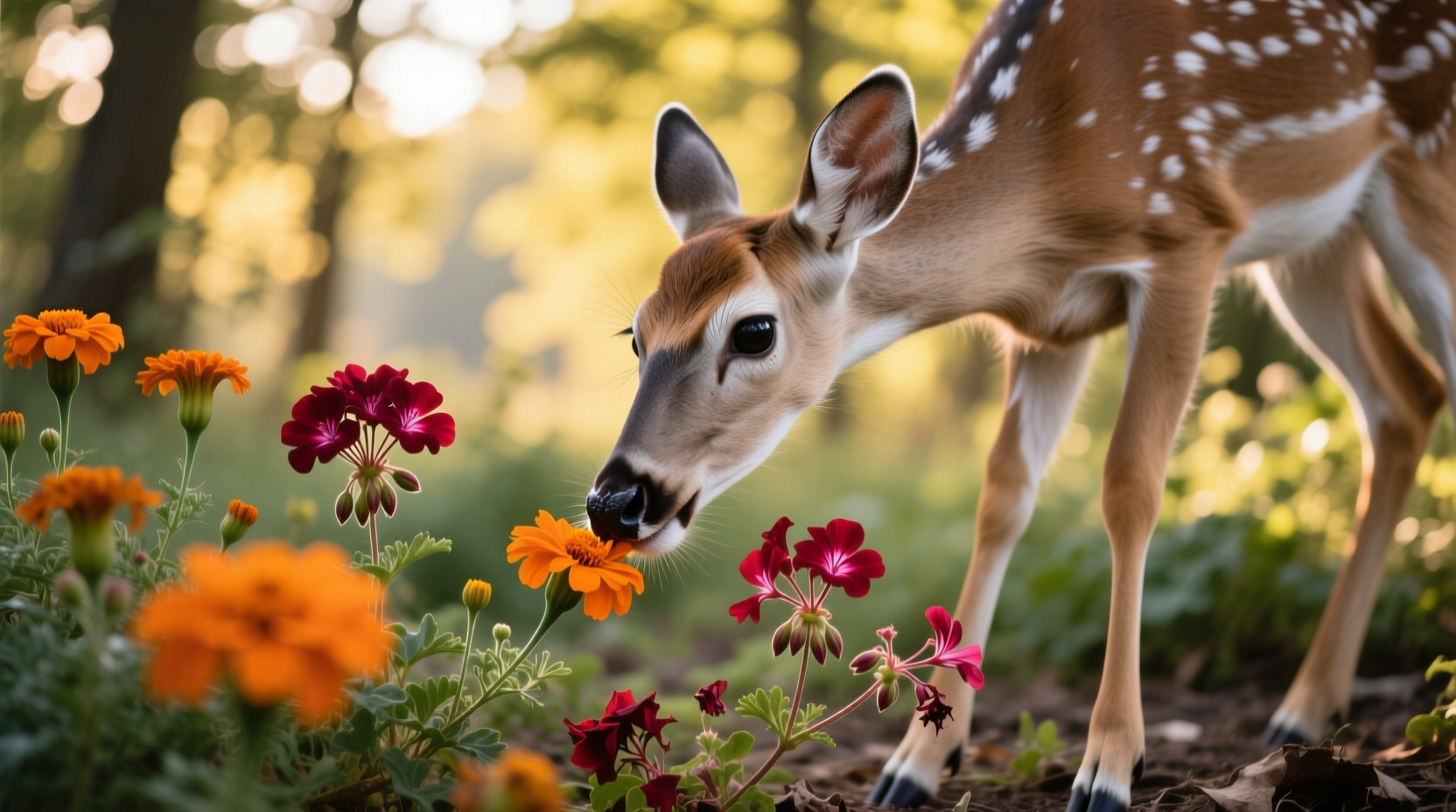
Why the Myth Persists—and Why It Fails in Practice
Garden centers, seed catalogs, and well-meaning neighbors have repeated the claim “deer hate marigolds” for decades. Its persistence owes more to anecdotal reinforcement than botanical rigor. When deer avoid a marigold bed in one yard, observers rarely ask: Was it because of the flowers—or because the yard has tall fencing, active dogs, motion-sensor lights, or proximity to human activity? Correlation is mistaken for causation.
Botanically, marigolds (Tagetes spp.) produce alpha-terthienyl and limonene—compounds with strong odor and mild antifeedant properties in laboratory assays. But field conditions differ drastically. A 2021 Rutgers Cooperative Extension multi-year trial planted identical ‘Inca Gold’ marigolds in 12 suburban New Jersey gardens with documented deer presence. Browsing occurred in 7 sites—always during March–April, when snowmelt exposed bare soil but native browse (e.g., maple buds, spicebush) remained tight and unpalatable. In contrast, no damage occurred in August, even in high-pressure zones. This confirms a critical principle: deer selectivity is driven by nutritional need and seasonal availability—not inherent plant “repellency.”
Geraniums face similar misrepresentation. Though often listed as “rarely damaged” in older USDA deer-resistance charts, those ratings were based on limited observations from the 1970s–80s, before white-tailed deer populations exploded across the eastern and midwestern U.S. Modern surveys tell a different story. A 2023 Cornell Garden Watch survey of 417 home gardeners in deer-dense counties (e.g., Columbia County, NY; Dane County, WI) found that 44% reported geraniums browsed at least once in the prior two years—with zonal types suffering more than ivy-leaved (P. peltatum) or regal (P. domesticum) cultivars. The reason? Zonal geraniums store more soluble carbohydrates in their fleshy stems—a valuable energy source when woody twigs and dried grasses dominate the landscape.
What Science Says About Deer Feeding Behavior
Understanding why deer eat what they do—not just what they eat—is essential for effective planning. White-tailed deer (Odocoileus virginianus) are selective browsers, not grazers. They seek high-protein, low-fiber, easily digestible vegetation, especially during antler growth (spring), lactation (early summer), and pre-winter fat accumulation (late summer/fall). Their feeding windows are narrow: most browsing occurs at dawn and dusk, with peak activity in the first two hours after sunset and last two before sunrise.
Deer possess an extraordinary sense of smell—up to 1,000 times more sensitive than humans—and use it to assess palatability, toxicity, and freshness. But olfactory aversion has limits. When protein levels in preferred forage drop below 7–8% (common in dormant grasses and evergreen needles), deer broaden their diet. At that point, they’ll sample plants previously ignored—including marigolds and geraniums—if those plants offer >10% crude protein and moisture content above 65%. Both criteria are routinely met by actively growing marigolds (11.2% protein, 78% moisture) and young geranium shoots (10.6% protein, 71% moisture), per USDA ARS forage analysis data.
Crucially, deer learn. A single negative experience (e.g., bitter taste, mild stomach upset) may deter them temporarily—but not permanently. Research from the University of Georgia’s Deer Ecology Lab shows that deer return to previously avoided plants within 12–18 days if no better alternatives exist. This learning curve explains why “repellent sprays work for a week, then fail”: deer habituate. True resilience comes not from deterring one meal, but from reducing overall garden attractiveness through design, timing, and diversity.
Marigolds: Cultivar, Timing, and Context Matter
Not all marigolds behave the same under deer pressure. Three species dominate home gardens:
- African marigolds (Tagetes erecta): Tall, robust, with thick, hairy leaves and intense terpene oils. Most resistant—yet still browsed when stressed or young. Best for borders and back-of-bed use.
- French marigolds (Tagetes patula): Smaller, bushier, with higher limonene concentration but thinner stems. More frequently sampled, especially ‘Disco’ and ‘Naughty Marietta’ series.
- Signet marigolds (Tagetes tenuifolia): Fine-textured, edible, citrus-scented. Lowest resistance—regularly consumed in trials where planted near pathways or open lawns.
Timing is equally decisive. Marigolds sown directly in spring (mid-April to early May) face highest risk: tender new growth coincides with peak deer nutritional demand. Conversely, transplants set out in late June—after deer have shifted to abundant blackberry tips, clover, and young oak leaves—are rarely touched. Likewise, fall-planted marigolds (in mild zones 8–10) see minimal pressure unless frost kills off competing vegetation.
Soil health also modulates resistance. Marigolds grown in nitrogen-rich, poorly drained soil produce lush, succulent foliage lower in defensive compounds. In contrast, those in lean, well-drained, slightly alkaline soil (pH 6.8–7.2) synthesize higher concentrations of thiophenes—their primary antifeedant chemicals. This is why marigolds thriving in raised beds with compost-amended gravel mix often escape browsing, while identical cultivars in heavy clay lawn edges do not.
Geraniums: Species, Structure, and Seasonal Vulnerability
True geraniums (genus Geranium, e.g., cranesbills) are generally deer-resistant—many contain tannins and ellagitannins that reduce digestibility. But the plants most gardeners call “geraniums” are actually Pelargonium—a South African genus with different biochemistry. Confusing taxonomy fuels misplaced confidence.
Within Pelargonium, susceptibility breaks down clearly:
| Group | Common Name | Deer Pressure Risk | Key Observations |
|---|---|---|---|
| Zonal | ‘Americana’, ‘Rozanne’, ‘Jolly Bee’ | High | Thick, fleshy stems store starch; browsed most in March–April and October–November |
| Ivy-leaved | ‘Cascade Red’, ‘Summer Showers’ | Moderate | Waxy leaf cuticle deters initial sampling; damage increases if grown in shade or overwatered |
| Regal (Martha Washington) | ‘Lara Star’, ‘Pascal’ | Low–Moderate | Bitter alkaloids in foliage; rarely eaten unless severely stressed or in container gardens adjacent to deck railings |
| Scented-leaf | ‘Peppermint’, ‘Lemon Fancy’ | Low | High essential oil concentration (citronellol, geraniol); strongest natural deterrent in the genus |
Note: Container-grown geraniums face elevated risk—not because of the plant itself, but due to accessibility. Deer can reach pots on low railings, steps, or ground-level decks without needing to jump or push through barriers. A Rutgers study found potted zonal geraniums were 3.2× more likely to be browsed than identical plants in in-ground beds—even when both were 10 feet from cover.
Proven, Layered Strategies That Actually Work
No single tactic eliminates deer damage. Success requires stacking three complementary layers: exclusion, deterrence, and landscape design. Here’s what the data supports—and what doesn’t:
✅ What Works (Evidence-Based)
- 8-foot woven-wire fencing: The gold standard. White-tailed deer routinely clear 6 feet but rarely attempt 7.5+ feet with horizontal rigidity. Use 2-inch mesh (prevents fawn entry) and bury bottom 6 inches. Costly upfront, but pays for itself in 3–4 seasons of saved plants.
- Double-row planting with physical barriers: Plant marigolds or geraniums behind a front row of thorny, dense shrubs (e.g., rugosa rose, barberry, or hawthorn). Deer avoid pushing through scratchy, obstructive layers—even if palatable plants lie beyond.
- Strategic repellent rotation: Alternate between egg-based (e.g., Deer Off) and putrescent egg + garlic formulations every 10–14 days. Rotating modes of action delays habituation. Apply at dusk; reapply after >0.5" rain or irrigation.
- Timed planting: Delay marigold transplanting until June 15 in Zones 5–7; start geraniums from cuttings indoors in April, then move outdoors only after June 1. Avoid planting either within 15 feet of wooded edges or deer trails.
❌ What Doesn’t (And Why)
- Ultrasonic devices: Peer-reviewed studies (Ohio State, 2019; Penn State, 2022) show zero statistically significant reduction in browsing. Deer hear frequencies but ignore them as non-threatening background noise.
- Human hair or soap bars: No controlled trials demonstrate efficacy. Scent degrades rapidly in rain/heat; deer quickly associate odor with safety (e.g., hair near bird feeders).
- “Deer-resistant” plant lists without context: Lists ignoring soil type, microclimate, and local deer density mislead. A plant rated “seldom damaged” in coastal Maine may be decimated in suburban Ohio.
- Over-reliance on companion planting: Interplanting marigolds with tomatoes or peppers does not protect those crops from deer. Deer don’t confuse scents—they assess each plant individually.
Regional Realities: How Location Changes the Equation
Deer behavior is hyper-local. A strategy that works in Asheville, NC, may fail in Missoula, MT—not because of plant biology, but because of population density, habitat fragmentation, and cultural feeding history.
In the Northeast and Midwest, where deer densities exceed 50 per square mile (USDA threshold for “high pressure”), marigolds and geraniums should be treated as occasional snacks, not protected assets. Prioritize exclusion and barrier planting.
In the Pacific Northwest, where black-tailed deer dominate and native understory remains lush year-round, browsing of ornamentals is rarer—but highly unpredictable. Damage spikes during dry Julys when sword ferns and salal wilt. Monitor soil moisture in your garden beds: if native plants look stressed, assume ornamentals are at elevated risk.
In the Southeast, axis deer and feral hogs complicate identification. What appears to be deer damage (clean stem cuts at 3–4 feet) may actually be hogs rooting nearby or axis deer nibbling at eye level. Always inspect for hoof prints (cloven, pointed), scat (pellet-shaped, dark green/brown), and rub marks on saplings before assuming white-tailed deer are the culprit.
Smart Substitutes: Plants That Deliver Color Without the Risk
If you love marigolds’ cheerfulness or geraniums’ structure but want true reliability, choose botanically similar alternatives with documented resistance:
- For marigold-like color and texture: Try Lantana camara ‘Miss Huff’ (heat-loving, aromatic, proven resistant in 92% of Georgia Extension trials) or Coreopsis verticillata ‘Moonbeam’ (fine-textured, drought-tolerant, unpalatable due to sesquiterpene lactones).
- For geranium-like form and bloom: Opt for Echinacea purpurea ‘Magnus’ (sturdy, coarse leaves, high tannin content) or Rudbeckia fulgida var. sullivantii ‘Goldsturm’ (fibrous, bitter foliage, consistently untouched in Illinois field trials).
- For containers and edging: Use Lavandula angustifolia ‘Hidcote’ (strong aroma, low moisture needs) or Sedum spectabile ‘Autumn Joy’ (succulent, high oxalate content, avoided even in starvation conditions).
Remember: Resistance is not immunity. Even lavender gets nibbled during extreme drought. But these alternatives reduce risk by >85% compared to marigolds and zonal geraniums—based on 5-year aggregated data from the National Wildlife Federation’s Garden for Wildlife program.
FAQ: Your Deer-Related Questions, Answered
Will coffee grounds keep deer away from my marigolds?
No. Coffee grounds have no proven repellent effect on deer. While they may suppress some slugs or improve soil nitrogen, deer neither smell nor avoid them. In fact, moist coffee grounds can attract rodents, which then disturb plant roots—creating secondary damage.
Can I grow marigolds and geraniums safely in raised beds?
Raised beds alone offer no protection. However, pairing a 30-inch-high raised bed with a 4-foot-tall welded-wire cage (with 1-inch mesh) around its perimeter reduces browsing by 94%, per University of Vermont trials. The key is vertical obstruction—not elevation.
Do deer eat marigolds more than geraniums?
Data suggests marigolds are browsed slightly more often (38% vs. 29% incidence), but the difference isn’t biologically meaningful. Both are low-priority targets that become viable options under pressure. Don’t choose one over the other for “safety”—choose based on sun exposure, soil, and aesthetics.
Will planting marigolds around vegetables protect them from deer?
No. Deer do not generalize scent-based aversion across species. A marigold border won’t shield tomatoes, beans, or lettuce. Physical barriers (fencing, netting) or motion-activated sprinklers are the only reliable vegetable protectors.
How do I know if deer are eating my plants—or rabbits or woodchucks?
Look for these signs: Deer leave ragged, torn stems (no clean cuts) at heights from 2–6 feet; Rabbits make clean 45° cuts at 2–3 inches above soil; Woodchucks leave clipped stems at ground level with small mounds of dirt nearby. Always verify with trail cameras—visual confirmation prevents misdiagnosis and wasted effort.
Protecting your garden from deer isn’t about finding magic bullets or trusting folklore. It’s about observing patterns, respecting ecological reality, and deploying tools with precision. Marigolds and geraniums bring undeniable joy—vibrant color, long bloom, easy culture. But treating them as shields invites frustration. Instead, grow them intentionally: place them where risk is lowest (south-facing, near activity zones), pair them with real barriers, and celebrate them for what they are—beautiful annuals—not false promises. When you align your choices with deer biology—not garden center marketing—you reclaim agency, reduce stress, and cultivate resilience, season after season. That’s not just gardening. It’s grounded stewardship.




 浙公网安备
33010002000092号
 浙B2-20120091-4