
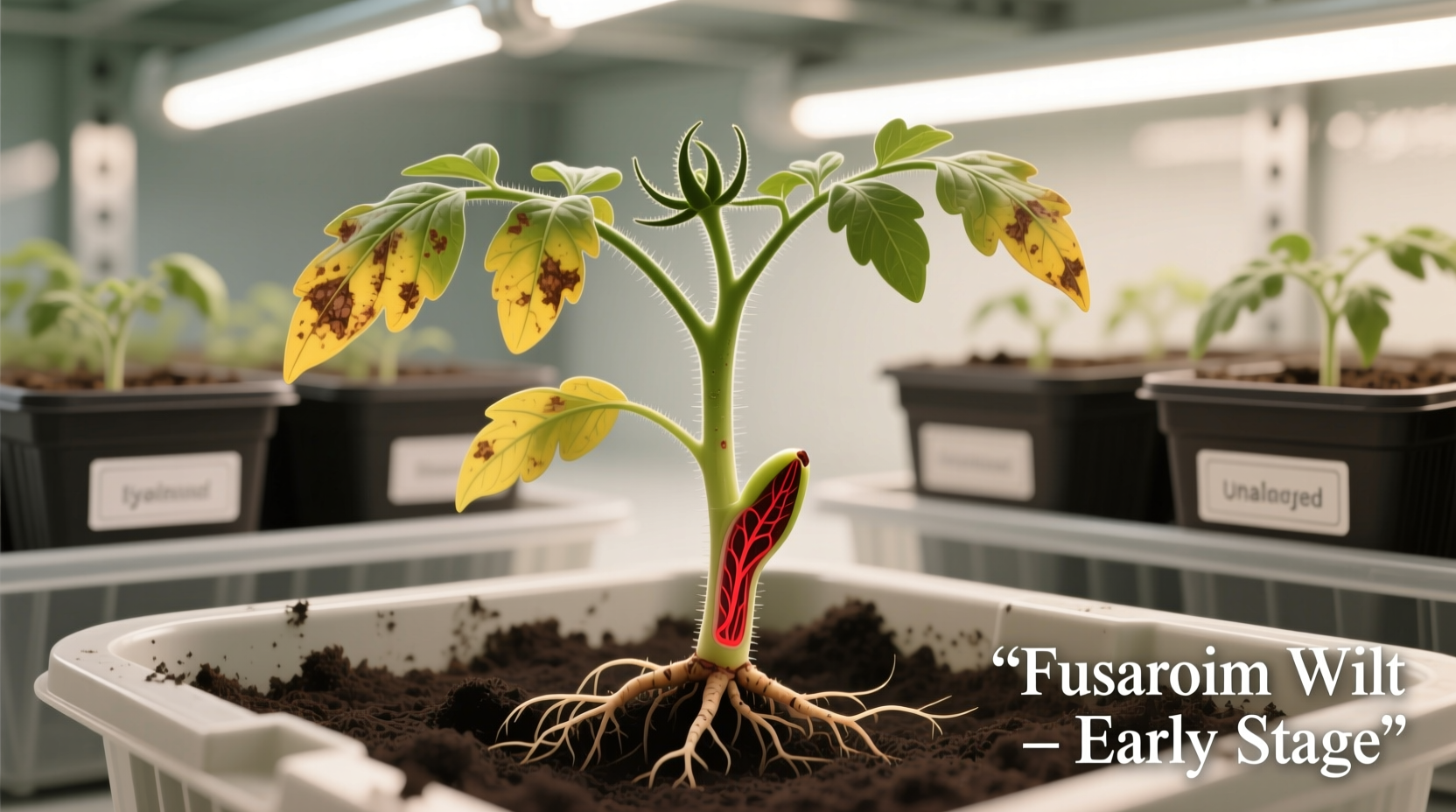
Why Early Detection Matters More Than Treatment
Fusarium oxysporum f. sp. lycopersici is a soil-borne fungus that colonizes xylem vessels, blocking water transport. Once established in a seedling, it cannot be cured—not by fungicides, neem oil, or “organic boosters.” Prevention hinges entirely on pre-transplant vigilance. Indoor seedlings are especially vulnerable because shared trays, recirculated humidity, and inconsistent watering create ideal microenvironments for pathogen spread. By the time wilting or stunting appears, vascular occlusion is advanced—and the pathogen has likely contaminated surrounding media.
Visual Diagnosis: What to Look For—and When
- 💡 Unilateral chlorosis: Yellowing begins on one side of a leaf or one branch—not symmetrical or systemic.
- 💡 Stunted internodes: Affected seedlings show shortened spacing between leaves, often with rigidity rather than droop.
- ⚠️ Misleading symptom: General yellowing or slow growth—commonly mistaken for nutrient deficiency or overwatering. Always cross-check with stem dissection.
- ✅ Vascular browning test: With sterile scalpel, make a clean cross-section 1 cm above the soil line. Pinkish-brown streaks in the vascular ring—not the pith or cortex—are pathognomonic.
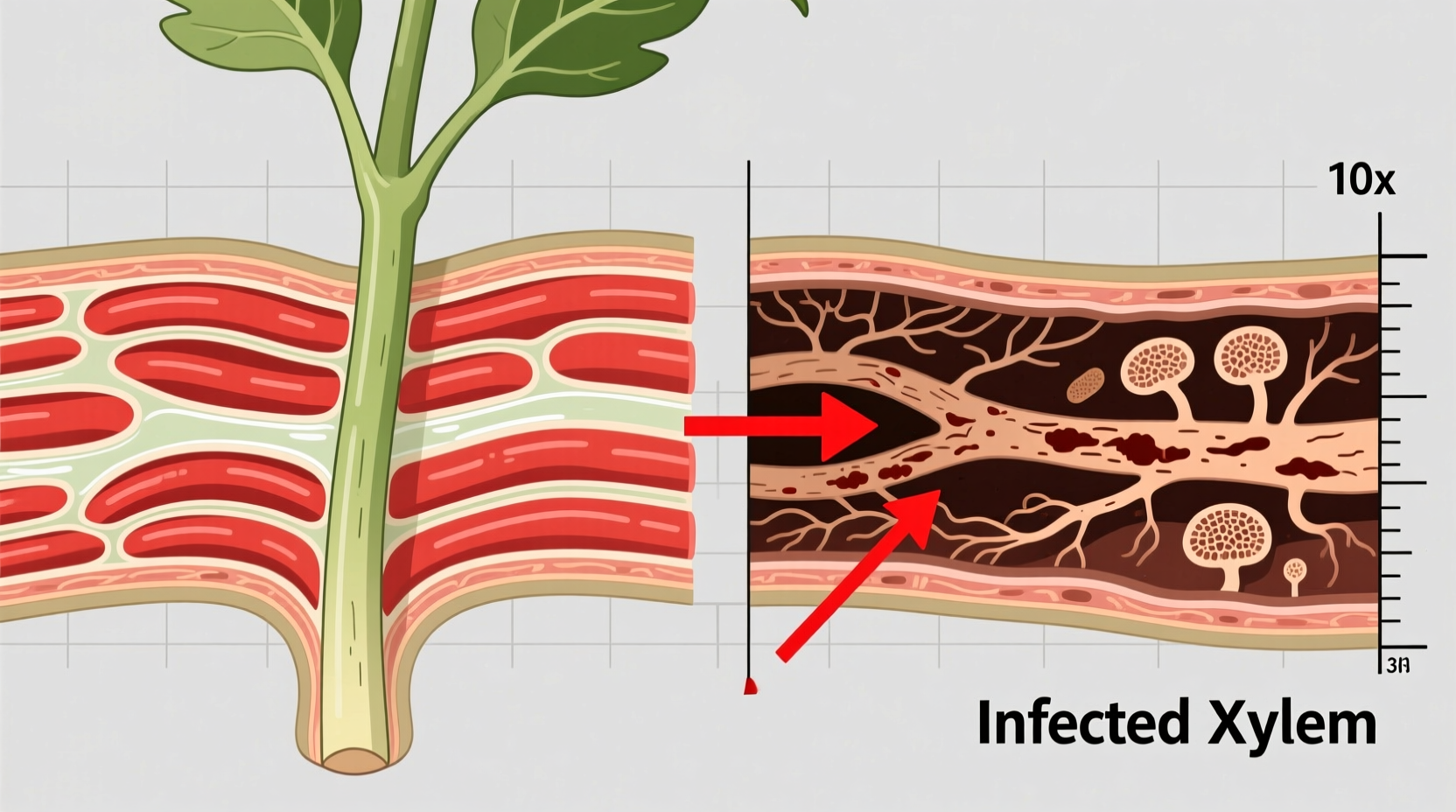
Comparative Diagnostic Reliability
| Indicator | Reliability | Time to Appearance | Risk of False Positive/Negative |
|---|---|---|---|
| Lower-leaf yellowing (unilateral) | Moderate | Day 18–22 | High false negatives if misread as nutrient stress |
| Vascular browning in stem cross-section | High (gold standard) | Day 20–26 | Low—if performed correctly with sterilized tool |
| Wilting under midday light | Low | Day 25+ | Very high—confused with drought stress or root rot |
The “Just Let Them Toughen Up” Myth—Debunked
“If seedlings look weak, they’ll adapt after transplanting”—this remains pervasive among home growers. But fusarium wilt isn’t weakness; it’s active vascular colonization. Transplanting infected seedlings doesn’t “toughen” them—it inoculates garden soil for up to 12 years, as Fusarium chlamydospores persist indefinitely in untreated earth. University of California Cooperative Extension trials show zero recovery in transplanted, vasculally infected seedlings—even under optimal field conditions. Culling before transplant isn’t failure. It’s precision stewardship.
Proven Protocol for Pre-Transplant Screening
- ✅ Day 17–19: Begin daily visual scan for unilateral yellowing or asymmetrical growth arrest.
- ✅ Day 21: Randomly sample 10% of seedlings—dissect stems at soil line using sterilized blade.
- ✅ Day 23: Re-scan remaining batch; discard any showing new chlorosis or rigidity.
- ✅ Day 24–25: Soak all reusable trays in 10% sodium hypochlorite for 30 minutes; air-dry fully before reuse.
Everything You Need to Know
Can I save a seedling if I catch early yellowing?
No. Fusarium is not reversible in living tissue. Even asymptomatic siblings in the same tray carry latent infection—quarantine and test them too.
Does sunlight exposure affect symptom visibility?
Yes. Examine seedlings under consistent, bright indirect light—avoid shadows or glare. Vascular browning is clearest when viewed against a white background with magnification (5x hand lens recommended).
Are heirloom tomatoes more susceptible than hybrids?
Yes—most heirlooms lack the F-1 and F-2 resistance genes bred into commercial hybrids. Always verify resistance ratings (F = fusarium resistant) when sourcing seeds.
Can I reuse potting mix after removing infected seedlings?
No. Fusarium survives in peat-based mixes. Discard all media from infected trays. Pasteurize reused containers—but never reuse suspect soil.




 浙公网安备
33010002000092号
 浙B2-20120091-4