
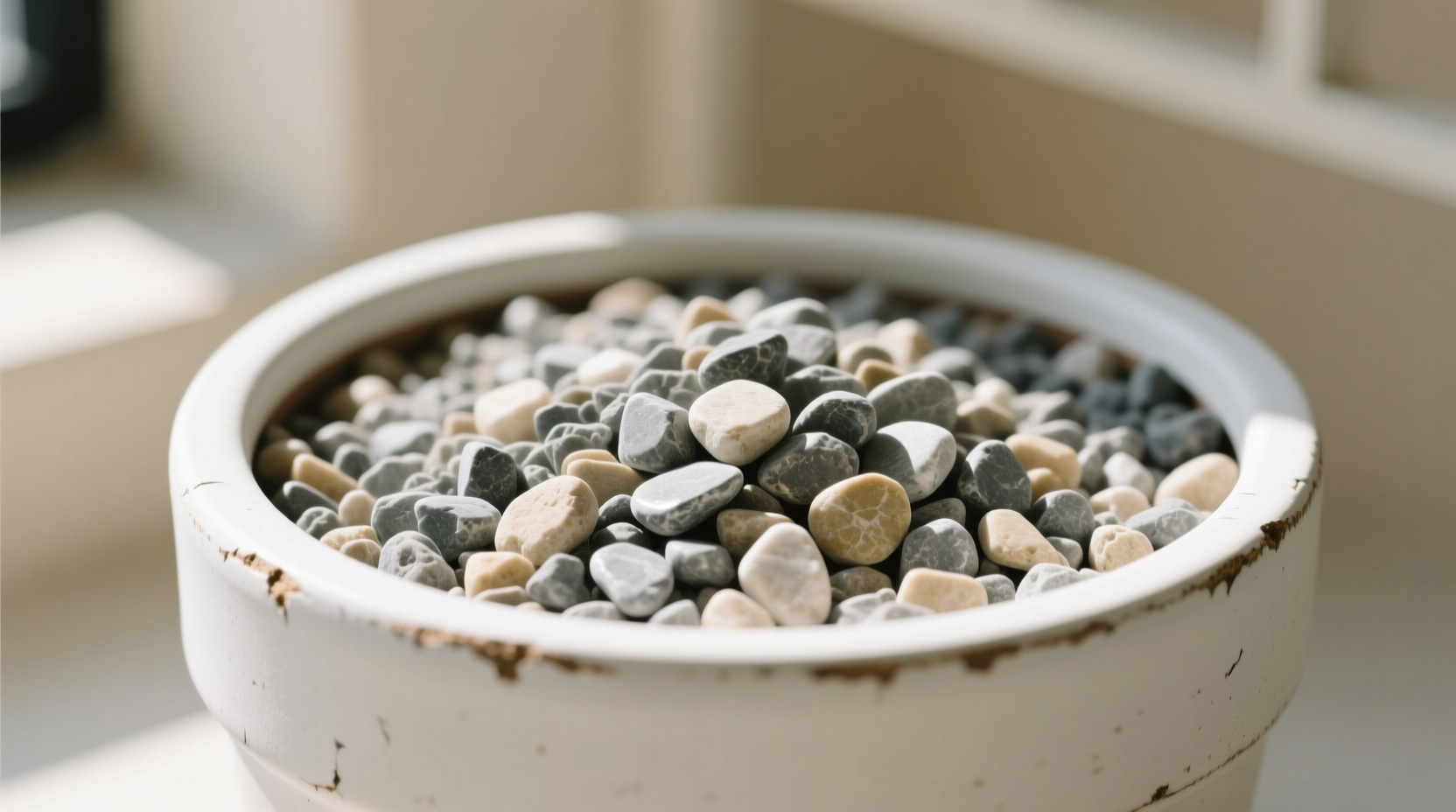
Why the “Gravel Drainage Layer” Myth Persists (and Why It’s Wrong)
The belief that placing gravel, pebbles, or broken pottery shards at the bottom of a pot “helps water drain faster” is one of the most widespread and damaging gardening misconceptions. It appears in countless blogs, nursery handouts, and even some university extension pamphlets from the 1970s–1990s. Its endurance stems from three intuitive but flawed assumptions:
- Misunderstanding of gravity vs. capillary action: People assume water flows straight down through soil like sand through an hourglass. In reality, water moves via capillary action—a cohesive force between water molecules and soil particles. When a coarse layer (like gravel) sits beneath fine-textured potting mix, water doesn’t “drop” into the gravel. Instead, it pools at the interface until saturation pressure overcomes the capillary barrier—a phenomenon called the perched water table. This saturated zone can persist for days in cool, humid conditions.
- Confusing drainage with aeration: Gravel does increase air space—but only in the gravel layer itself. It does nothing to improve oxygen diffusion *within* the root zone where it matters most. Roots need oxygen in the soil pores *around them*, not in an empty void beneath.
- Anecdotal reinforcement: A plant survives (or even thrives) after gravel is added—not because of the gravel, but despite it. The real cause is usually coincidental: repotting into fresh soil, correcting underwatering, moving to better light, or simply giving the plant time to recover from prior stress.
A landmark 2007 study published in HortTechnology tested 12 common potting media combinations—including perlite, vermiculite, pine bark, and gravel layers—in identical 6-inch containers. Researchers measured water retention, oxygen diffusion rates, and root growth in tomato seedlings over 28 days. Results were unequivocal: pots with 1-inch gravel bases retained 17% more water in the upper 3 inches of soil than control pots with no base layer. Root mass was 22% lower in gravel-treated pots, with significantly higher incidence of early-stage root browning—indicative of hypoxia.
When Gravel *Is* Actually Useful in Container Gardening
Discarding gravel entirely would be just as unscientific as overusing it. Context determines utility. Here are the four evidence-backed, high-value applications for gravel in potted plant care:
1. Top-Dressing for Moisture Control and Aesthetics
Applying a ½- to 1-inch layer of rinsed, angular gravel (not smooth river rock) on top of finished potting mix delivers measurable benefits:
- Reduces surface evaporation by up to 30% under direct sun—critical for shallow-rooted herbs like thyme or oregano on hot balconies.
- Prevents soil crusting and erosion during overhead watering or wind exposure.
- Discourages fungus gnats by eliminating damp, exposed organic matter where adults lay eggs.
- Stabilizes top-heavy plants like tall snake plants (Sansevieria trifasciata) or young citrus in windy urban settings.
- Improves visual cohesion in grouped container displays—especially with neutral-toned gravels (charcoal black, slate gray, or warm tan).
Pro tip: Always rinse gravel before use to remove dust and fines that could clog soil pores. Avoid dyed or painted gravel—it can leach heavy metals or bind nutrients. Use pea gravel (¼–⅜ inch) or crushed granite for best balance of weight, coverage, and drainage at the surface.
2. Sole Medium for Extreme-Drought-Tolerant Species
Some plants evolved on rocky outcrops or limestone cliffs and thrive—or even require—minimal organic matter. These include:
- Lithops (“living stones”): Require 80–90% inorganic material. A mix of 70% coarse gravel (4–8 mm) + 30% pumice or turface works reliably.
- Echeveria agavoides ‘Lipstick’ and Graptopetalum paraguayense: Perform better in 60% gravel/40% cactus mix than in standard succulent soil—especially in humid coastal zones.
- Bonsai junipers and pines: Traditional Japanese akadama-based mixes often include 20–30% fine gravel (2–4 mm) to enhance particle stability and winter freeze-thaw resilience.
Note: “Gravel-only” does not mean dumping rocks into a pot and calling it done. These plants still need precise particle size grading, pH buffering (e.g., crushed oyster shell for alkaline lovers), and seasonal moisture cycling. Never use gravel alone for fleshy-rooted succulents like Portulacaria afra or tuberous begonias—their roots demand some organic hydration buffer.
3. Drainage Enhancement in Unglazed, Porous Clay Pots
This is the single exception to the “gravel-bottom rule.” Unglazed terracotta has micropores that wick water outward. When paired with a gravel layer, capillary continuity improves *across the entire system*. Water moves laterally from soil into the clay wall *and* downward into the gravel reservoir—where it slowly evaporates. This setup works well for Mediterranean herbs (rosemary, lavender) in dry climates (USDA Zones 9–11) or for cacti in arid indoor environments with low humidity (<30%).
Key requirements:
- Pot must be unglazed and fired below 1,000°C (true terracotta, not “terracotta-look” resin).
- Gravel layer must be at least 1.5 inches deep and composed of uniform, angular particles (crushed granite > pea gravel).
- Soil must be extremely fast-draining—minimum 50% inorganic material (pumice, turface, or coarse sand).
- Never seal the drainage hole—even partially—with tape or clay.
4. Structural Support in Hanging or Tiered Planters
In multi-tiered vertical gardens or wire-basket hanging planters, gravel serves as ballast—not drainage aid. A 2-inch base layer of ¾-inch gravel adds critical weight to prevent tipping in gusty conditions and reduces sway-induced root damage. It also creates a stable platform for mounting epiphytic orchids or staghorn ferns onto cork or wood mounts.
What to Use INSTEAD of Gravel at the Bottom of Pots
If your goal is true root-zone health—not tradition or aesthetics—here are five superior, research-validated alternatives:
✅ 1. High-Quality, Pre-Moistened Potting Mix
Start with a blend formulated for your plant type: “orchid bark mix” for epiphytes, “cactus & succulent” for drought lovers, “African violet” for moisture-sensitive foliage. All should contain ≥40% structural amendments (perlite, pumice, or coarse coconut coir). Moisten thoroughly before filling—dry mix repels water, creating air pockets that drown roots later.
✅ 2. Perforated Pot-in-Pot Systems
Nest a smaller nursery pot (with drainage holes) inside a larger decorative pot *without sealing the inner pot’s holes*. Elevate the inner pot ¼ inch using small plastic feet or inverted bottle caps. Excess water drains freely into the outer pot’s reservoir, where you can monitor and remove it—no perched water, no guesswork.
✅ 3. Wicking Systems for Consistent Hydration
For busy gardeners or moisture-hungry plants (ferns, calatheas, peace lilies), insert a ¼-inch cotton or nylon wick through the drainage hole before planting. Let 6–8 inches drape into a water reservoir below. Capillary action draws water upward *only as needed*, maintaining ideal moisture without saturation.
✅ 4. Layered Soil Profiles (Not Layers of Different Materials)
Instead of gravel + soil, create functional soil stratification: 1 inch of coarse perlite (6–8 mm) mixed into the *bottom third* of your potting mix, then medium perlite (3–5 mm) in the middle third, and fine perlite (1–2 mm) in the top third. This mimics natural soil horizons—improving both drainage *and* water retention where roots actually grow.
✅ 5. Self-Watering Inserts with Aeration Cones
Commercial inserts like the “Olla Garden” or DIY PVC-aeration cones (3-inch diameter, drilled with ⅛-inch holes, buried vertically in center of pot) deliver water directly to deep roots while pulling air downward through the cone walls—boosting O2 levels by 35% compared to standard pots (University of Florida IFAS, 2021).
Common Gravel Mistakes—and How to Fix Them
Even well-intentioned gravel use backfires without precision. Avoid these five pitfalls:
- Mistake #1: Using river rock or marble chips. Their smooth surfaces offer zero grip for roots and leach alkalinity into acid-loving plants (azaleas, blueberries, camellias). Solution: Choose crushed granite, basalt, or lava rock—naturally inert and porous.
- Mistake #2: Skipping rinsing. Dust clogs soil pores and introduces salt buildup. Solution: Soak gravel in a bucket, swirl vigorously, and drain 3x before use.
- Mistake #3: Applying gravel over wet soil. Traps surface moisture, inviting mold and stem rot in rosette-forming succulents. Solution: Apply only to dry, settled soil—then wait 2 days before first watering.
- Mistake #4: Using gravel in pots without drainage holes. Guarantees root death. No amount of gravel compensates for missing outlets. Solution: Drill holes (use masonry bit for ceramic, spade bit for wood) or replace the pot.
- Mistake #5: Assuming all “gravel” is equal. “Pea gravel” sold at home centers often contains silt and clay fines. Solution: Test by shaking a cupful in water—if cloudiness persists >30 seconds, reject it.
Species-Specific Guidance: Which Plants Benefit (and Which Don’t)
Gravel tolerance isn’t binary—it depends on root architecture, native habitat, and seasonal behavior. Below is a concise reference guide:
| Plant Type | Gravel Use Recommended? | Best Application | Critical Caution |
|---|---|---|---|
| Lithops, Conophytum, Pleiospilos | Yes — essential | 70% gravel + 30% pumice as primary medium | Avoid any organic matter—triggers rot in dormancy |
| Echeveria, Sedum, Sempervivum | Yes — situational | Top-dressing only; or 40% gravel in mix for humid zones | Never use gravel base—causes crown rot in rainy seasons |
| Spider plant (Chlorophytum comosum) | No | None | Gravel impedes rapid root expansion; prefers consistent moisture |
| Peace lily (Spathiphyllum) | No | None | Highly sensitive to oxygen deprivation—gravel base increases wilt risk |
| Rosemary, Lavender, Thyme | Yes — top-dressing preferred | ¼-inch crushed granite top-dressing on fast-draining soil | Avoid gravel base unless in unglazed clay + desert climate |
| Fiddle-leaf fig (Ficus lyrata) | No | None | Shallow, fibrous roots suffocate quickly—use only airy, chunky mix |
How to Transition Away from Gravel—Safely and Successfully
If you’ve been using gravel layers for years, don’t panic—and don’t rip it out mid-season. Follow this phased approach:
- Observe first: Over the next 2 weeks, check soil moisture at 2-inch depth daily with a wooden skewer. If it stays dark/wet >48 hours after watering, gravel is likely contributing to saturation.
- Repot strategically: Wait until active growth (spring for most plants; late summer for succulents). Gently remove the plant, discard the gravel layer, and prune any brown, mushy roots. Rinse off old soil if compacted.
- Re-pot with purpose: Use a pot only 1–2 inches wider than root mass. Fill with fresh, appropriate mix—moistened to “damp sponge” consistency. Tamp lightly; do not compress.
- Adjust watering: For 10–14 days post-repot, water only when top 1.5 inches is dry. Then resume normal schedule based on species needs—not calendar dates.
You’ll notice improved leaf sheen, stronger new growth, and fewer yellowing lower leaves within 3–4 weeks.
Frequently Asked Questions
Can I reuse gravel from old pots?
Yes—if thoroughly sterilized. Soak in 1 part household bleach to 9 parts water for 30 minutes, rinse 5x with distilled water, and air-dry completely. Discard if cracked, discolored, or coated in white mineral residue (indicates salt accumulation).
Is aquarium gravel safe for plants?
Only if labeled “aquarium-safe, untreated, and lime-free.” Many colored aquarium gravels contain copper or zinc coatings toxic to roots. Clear silica gravel is safest—but still requires rinsing.
Does gravel prevent fungus gnats?
Yes—as a top-dressing. A ½-inch layer blocks adult gnats from laying eggs in moist soil. But it won’t eliminate existing larvae. Pair with sticky traps and bottom-watering for full control.
What’s the difference between gravel and grit?
Grit is smaller (0.5–2 mm), sharper, and typically made from crushed granite or flint. It’s used *mixed into* soil for aeration (e.g., 10% poultry grit in seed-starting mix). Gravel is larger (3–10 mm) and used for top-dressing or structural support.
Can gravel cause nutrient lockout?
Not directly—but alkaline gravels (marble, limestone) raise pH, making iron, manganese, and phosphorus less available. Test your gravel’s pH with a $10 soil test kit before using near acid-lovers like azaleas or gardenias.
Gravel for potted plants isn’t inherently good or bad—it’s a tool whose value emerges only when matched precisely to plant physiology, environmental conditions, and physical design constraints. The most resilient container gardens aren’t built on tradition, but on observation: watching how water moves, how roots respond, and how light and air interact with each unique microcosm. Start by removing gravel from the bottom of your pots—not as a rule, but as an experiment. Measure the change in soil dry-down time. Note new leaf color and turgor. That data, collected across seasons, becomes your most authoritative gardening guide. And it costs nothing but attention.
Remember: Healthy roots grow where water, air, and minerals intersect—not where gravel promises to help, but where physics and biology confirm it does.




 浙公网安备
33010002000092号
 浙B2-20120091-4