
Why Alcohol Works—and Why Most Gardeners Get It Wrong
Disinfection isn’t about sterilization—it’s about interrupting pathogen transmission at the point of contact. Pruning creates micro-wounds that invite infection, and contaminated tools move diseases faster than wind or insects. Yet many gardeners either skip disinfection entirely or rely on ineffective, damaging methods.
“The consensus among university extension horticulturists and certified arborists is unequivocal: 70% isopropyl alcohol is the gold standard for field tool disinfection—not because it’s strongest, but because its water content slows evaporation just enough to ensure sustained microbial contact time while remaining non-corrosive to hardened steel.”
The Critical Threshold: Why 70%, Not 91%
Higher-concentration alcohol (91% or 99%) evaporates too quickly to penetrate biofilms and denature proteins effectively. Worse, it draws moisture *out* of metal alloys, accelerating microscopic pitting and promoting rust where carbon steel meets moisture-trapped crevices. At 70%, the balance of solvent action and dwell time maximizes pathogen kill while preserving blade hardness and finish.
| Method | Contact Time Required | Risk to Blades | Pathogen Efficacy | Practicality Between Plants |
|---|---|---|---|---|
| 70% isopropyl alcohol (wipe) | 30–60 sec | None (when air-dried) | ✅ Excellent vs. bacteria, viruses, fungi | ✅ Ready in <90 sec |
| 91%+ isopropyl alcohol (soak) | 2+ min | ⚠️ High: accelerates corrosion & dulling | 🟡 Inconsistent due to rapid evaporation | ❌ Requires drying rack, timing discipline |
| Bleach solution (10% sodium hypochlorite) | 5 min | ⚠️ Severe: pits steel, degrades rubber grips | ✅ Good for viruses, poor for spores | ❌ Requires triple-rinsing & oiling after every use |
Debunking the “Rinse-and-Go” Myth
A widespread but dangerous assumption is that rinsing shears with water—or wiping with a damp cloth—“cleans enough.” This does not disinfect. It only removes visible sap or debris, while redistributing live pathogens across surfaces. Worse, residual moisture invites oxidation. True hygiene requires chemical intervention at validated concentrations—not dilution, not improvisation.
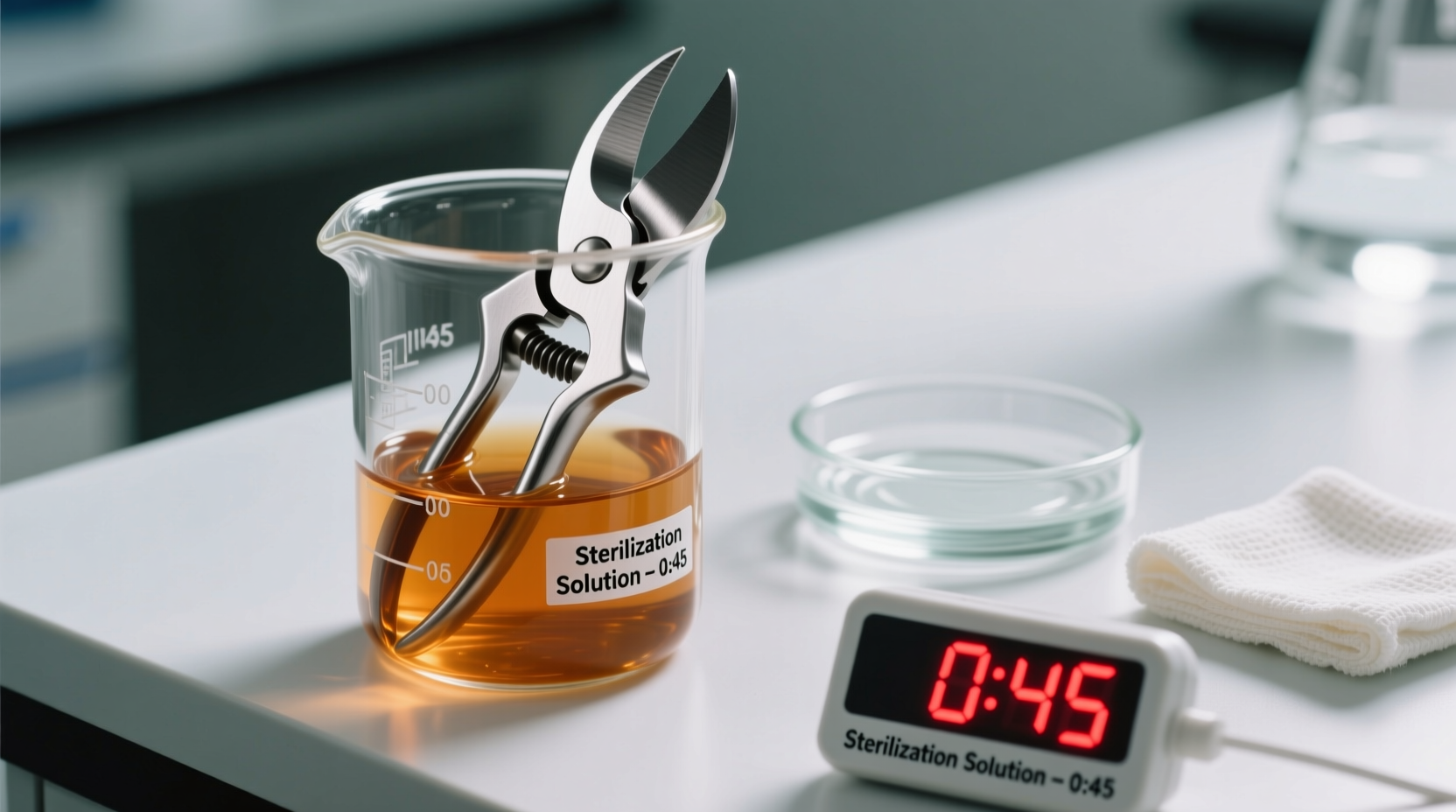
Your Step-by-Step Protocol
- ✅ Clean visible debris first with a stiff brush and soapy water—dry thoroughly before disinfection
- ✅ Fold a lint-free cloth (microfiber or cotton gauze) and saturate with 70% isopropyl alcohol—do not pool or drip
- ✅ Wipe entire metal surface: jaws, pivot screw, spring, and both sides of the cutting edge for exactly 30 seconds
- 💡 Store alcohol in a labeled, opaque spray bottle—refill weekly to avoid evaporation-induced concentration drift
- ⚠️ Never store alcohol-soaked tools in closed containers—trapped fumes degrade plastic handles and create fire risk
Maintenance Beyond Disinfection
Disinfection preserves plant health; maintenance preserves tool longevity. After each day’s use, apply one drop of lightweight mineral oil to the pivot point and lightly coat the blades. This prevents oxidation without interfering with alcohol’s next-cycle efficacy. Replace microfiber cloths weekly—reused cloths harbor dried pathogens and grit that scratch steel.
Everything You Need to Know
Can I use vodka or rubbing alcohol from the medicine cabinet?
Only if labeled 70% isopropyl alcohol. Most drugstore “rubbing alcohol” is 70%—but confirm the label. Vodka (typically 40% ethanol) lacks sufficient concentration and leaves sugar residues that attract microbes.
Do I need to disinfect between every single plant?
Yes—if pruning susceptible species (tomatoes, roses, citrus, succulents). For low-risk ornamentals like lavender or yarrow, disinfect every 3–5 cuts. When in doubt, disinfect: pathogen load multiplies exponentially with each cut.
What if my shears already show rust spots?
Gently scrub with baking soda paste and a soft toothbrush, rinse, dry fully, then disinfect as usual. Follow with a light oil coat. If pitting is deep, replace—the compromised metal harbors pathogens even after cleaning.
Does alcohol harm pruners’ non-metal parts?
No—70% isopropyl alcohol is safe for most plastics, rubber grips, and fiberglass composites. Avoid prolonged saturation of glued joints or painted finishes, but brief wiping poses no risk.




 浙公网安备
33010002000092号
 浙B2-20120091-4