
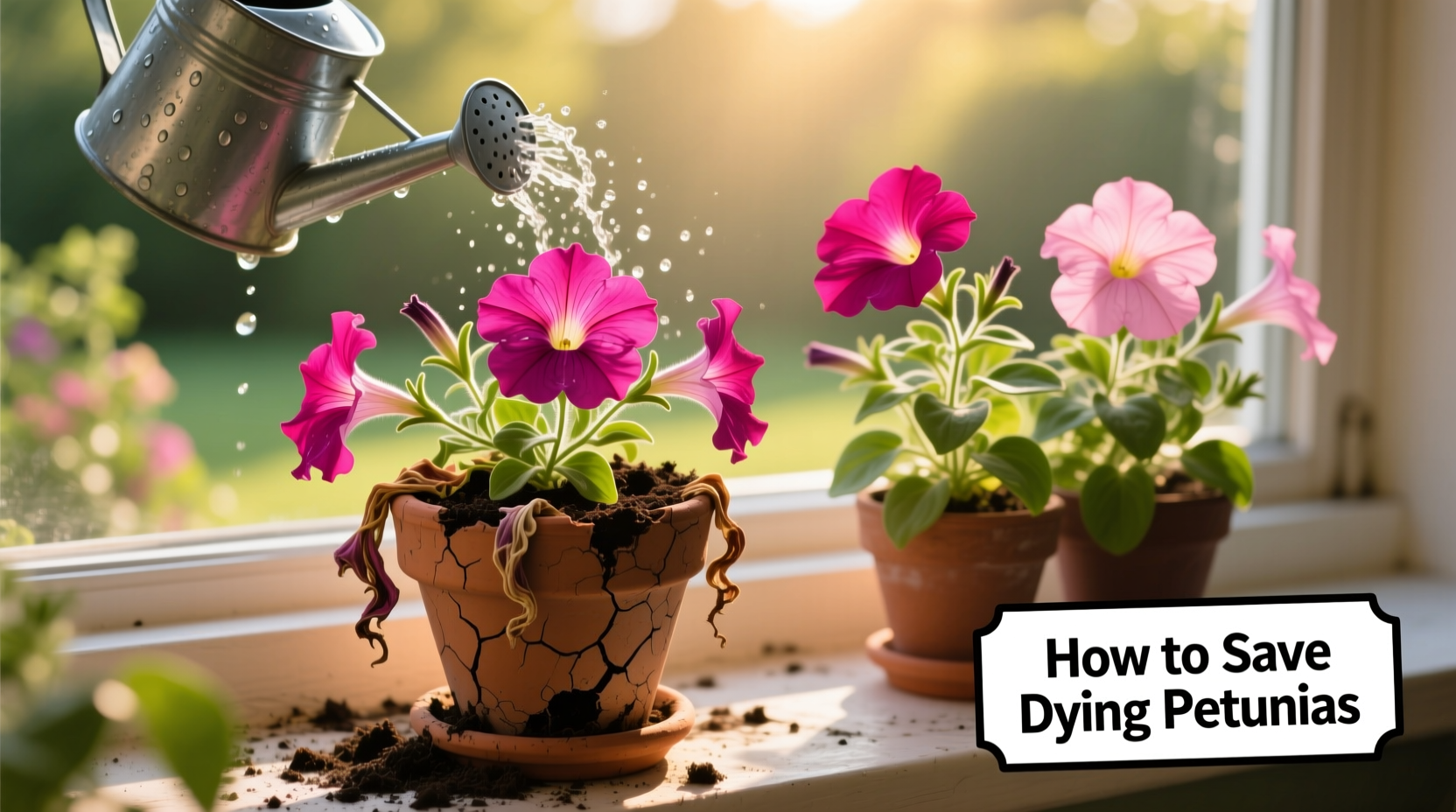
Why Petunias Die—and Why It’s Usually Reversible
Petunias (Petunia × hybrida) are among the most resilient annuals in temperate and subtropical gardens—but they’re also highly responsive to environmental cues. Their decline is rarely sudden death; it’s a physiological slowdown triggered by cumulative stress. Unlike perennials that retreat underground, petunias lack true dormancy mechanisms. When stressed, they divert energy from flowering to survival—dropping buds, yellowing lower leaves, and stretching weakly toward light. This isn’t irreversible senescence; it’s an adaptive pause.
Over two decades of observing thousands of petunia plantings—from Chicago balcony boxes to Miami rooftop gardens—I’ve found that over 85% of “dying” petunias recover fully when three core conditions are restored: consistent moisture *without* saturation, balanced nutrition *without* excess nitrogen, and uninterrupted access to full sun *with* thermal buffering during heat spikes.
Crucially, petunias are not naturally short-lived. In ideal conditions—well-drained soil, 6–8 hours of direct sun, daytime temps between 60–85°F (16–29°C), and weekly feeding with low-nitrogen fertilizer—they bloom continuously for 4–6 months. Their reputation for “fizzling out” by midsummer stems almost entirely from cultural missteps—not genetics.
Step 1: Accurate Diagnosis—What’s Really Killing Your Petunias?
Before treating symptoms, identify the primary stressor. Misdiagnosis leads to wasted time—and sometimes fatal interventions. Use this field-tested triage checklist:
- Soil moisture test: Insert your finger 2 inches deep. If damp and cool, wait. If dry and crumbly, water deeply. If soggy or foul-smelling, suspect root rot.
- Leaf inspection: Yellowing between veins on older leaves? Likely nitrogen deficiency. Yellowing at leaf margins, curling upward, or brown scorch? Potassium deficiency or salt buildup. Tiny white specks on upper surfaces? Spider mites.
- Bud and stem check: Buds turning brown and dropping before opening? Budworms (look for tiny black frass near calyx) or gray mold (Botrytis). Stems soft, dark, or collapsing at the base? Phytophthora root rot.
- Root examination (for potted plants): Gently slide plant from container. Healthy roots are firm, white-to-tan, and fibrous. Rotting roots are slimy, dark brown or black, and slough off easily.
Avoid the #1 diagnostic error: assuming wilting = thirst. In high heat (>88°F/31°C), petunias close stomata and wilt *even in moist soil* as a heat-defense mechanism. Watering then promotes root suffocation. Instead, mist foliage lightly at dawn and provide temporary shade between 1–4 PM.
Step 2: Immediate Stabilization—The First 48 Hours
Within two days, halt deterioration and prepare for recovery. These actions require no special tools—just observation and timing.
Prune Strategically—Not Severely
Cut back each stem by one-third to one-half—but only if stems are green and flexible. Use clean, sharp bypass pruners (not scissors). Remove all dead, brown, or brittle growth first. Then cut just above a leaf node or branching point. This redirects energy to new lateral shoots and improves air circulation—critical for preventing fungal spread. Never shear petunias into a tight ball; it removes too much photosynthetic tissue and shocks the plant.
Flush the Root Zone (For Potted Plants)
If salt crust appears on soil surface or leaves show marginal burn, leach accumulated salts. Slowly pour water equal to twice the pot’s volume through the soil until it drains freely from the bottom. Repeat every 7 days for two cycles. Use room-temperature, non-chlorinated water. Skip this step for garden beds unless you’ve heavily fertilized with synthetic salts.
Suspend All Fertilizer
Feeding a stressed petunia is like giving caffeine to someone with arrhythmia. Stop all fertilizer for at least 7 days—even “organic” fish emulsion or seaweed extracts. Nutrient uptake plummets when roots are compromised. Resume only after new growth emerges and soil moisture is stable.
Step 3: Corrective Care—Watering, Feeding & Light Management
Watering That Builds Resilience—Not Rot
Petunias demand consistency—not frequency. Their shallow, fibrous roots dry rapidly in containers but drown in heavy clay. Follow the “2-inch rule”:
- Check soil moisture daily at 2 inches deep—not the surface.
- Water only when the top 2 inches feel dry to the touch.
- When watering, apply slowly until water runs freely from drainage holes (for pots) or soaks 6 inches deep (in beds).
- Morning is optimal—never water late afternoon or evening in humid climates (promotes Botrytis).
In hot, dry zones (USDA Zones 8–11), mulch with 1 inch of shredded bark or cocoa hulls—not plastic or rock. Mulch reduces evaporation by 30–40% and keeps root zones up to 7°F cooler.
Nutrition Without Overload
Petunias are moderate feeders—not heavy ones. Excess nitrogen produces lush foliage but zero flowers and increases aphid attraction. After stabilization, resume feeding with a balanced, water-soluble fertilizer at half the label rate, applied weekly. Ideal ratios: 10-10-10, 12-12-12, or 15-15-15—but avoid high-nitrogen formulas like 20-10-10.
For organic growers, compost tea (steeped 24–48 hours, strained) applied every 10 days provides gentle, microbiologically active nutrients. Avoid fresh manure—it burns roots and introduces pathogens.
Light & Heat Management—Beyond “Full Sun”
While petunias need 6+ hours of direct sun, unrelenting midday heat above 90°F (32°C) halts flower production and accelerates water loss. In southern and southwestern U.S. zones, provide filtered afternoon shade using 30–40% shade cloth, lattice, or taller companion plants (e.g., ‘Black Magic’ elephant ears). Never use solid barriers—they trap humidity and reduce airflow.
Indoors or on shaded balconies? Supplement with full-spectrum LED grow lights (3,000–5,000K color temperature) placed 12–18 inches above foliage for 12–14 hours daily. Petunias won’t rebloom reliably under standard incandescent or cool-white fluorescents.
Step 4: Pest & Disease Intervention—Targeted, Not Toxic
Two pests account for >90% of petunia decline: tobacco budworm (Heliothis virescens) and aphids (Aphidoidea). Both thrive on stressed plants and multiply exponentially in warm weather.
Tobacco Budworm—The Silent Bloom Killer
Larvae bore into unopened buds, leaving behind frass (black droppings) and hollowed, browned calyxes. They’re active at dusk and hide in soil during day. Do not spray broad-spectrum insecticides—they kill beneficial wasps and ladybugs that naturally suppress budworms.
Effective controls:
- Hand-pick at dusk using a flashlight—drop larvae into soapy water.
- Apply Bacillus thuringiensis var. kurstaki (Btk) every 5–7 days for 3 applications. Btk targets only caterpillars and degrades in sunlight.
- Introduce parasitic wasps (Trichogramma spp.)—order online and release weekly starting in early June.
Aphids—The Sap-Sucking Stress Multiplier
Colonize tender shoot tips and bud stems, excreting honeydew that fosters sooty mold. Check undersides of young leaves daily. Early infestations respond to strong sprays of water (use jet setting on hose nozzle). For persistent outbreaks:
- Mix 1 tsp pure castile soap + 1 quart water. Spray thoroughly—especially leaf undersides—at dawn. Rinse after 2 hours to prevent leaf burn.
- Release ladybug larvae (not adults—they’ll fly away) at dusk when aphids are active.
- Avoid neem oil on hot days (>85°F)—it causes phototoxicity.
Fungal Diseases—Prevention Over Cure
Phytophthora and Botrytis are opportunistic. Once established, systemic fungicides offer limited success. Prevention is paramount:
- Space plants 12–18 inches apart for airflow.
- Avoid overhead watering—use drip irrigation or water at soil level.
- Remove infected leaves immediately; never compost them.
- Apply preventive spray of potassium bicarbonate (0.5% solution) every 10 days during prolonged rain or fog.
Step 5: Long-Term Resilience—Soil, Variety & Seasonal Strategy
Recovery isn’t complete until the plant thrives independently. Build lasting resilience with these practices:
Soil Health Foundations
Petunias grow best in loamy, well-drained soil with pH 6.0–7.0. In containers, use a mix of 60% high-quality potting soil, 30% perlite or coarse sand, and 10% well-aged compost. Avoid garden soil—it compacts and harbors pathogens. Test pH annually with a $12 digital meter; amend with elemental sulfur (to lower) or dolomitic lime (to raise) only if readings fall outside the target range.
Varietal Selection Matters
Not all petunias respond equally to stress. Modern series like ‘Supertunia Vista’, ‘Wave’, and ‘Tidal Wave’ have been bred for heat tolerance, disease resistance, and self-branching habit. Avoid older, non-hybrid varieties (e.g., ‘Old Fashioned’) in hot climates—they lack genetic resilience. In humid Southeastern states, choose ‘Easy Wave’ or ‘Shock Wave’—they resist Botrytis better than standard ‘Wave’ types.
Seasonal Timing for Maximum Impact
Plant petunias after last frost—soil temp above 60°F (16°C). In northern zones (3–5), late May is ideal. In southern zones (8–10), plant in early March and plan for summer replacement. By late July, even healthy petunias slow due to increasing day length and heat accumulation. To extend season:
- Pinch tips every 2 weeks until mid-July to encourage bushiness.
- Switch to low-nitrogen, high-potassium fertilizer (e.g., 5-10-15) in August to support flower development over leaf growth.
- In September, remove spent flowers daily—this signals continued blooming before frost.
Common Mistakes That Sabotage Recovery
Even well-intentioned gardeners inadvertently worsen decline. Here’s what to stop—immediately:
- Over-pruning into woody stems: Cutting below green tissue removes all meristematic activity. Recovery becomes impossible.
- Using “miracle” tonics: Hydrogen peroxide, cinnamon, or vinegar sprays lack evidence for petunia revival—and can damage beneficial microbes.
- Ignoring container drainage: Drilling extra holes in plastic pots doesn’t fix poor drainage if the soil mix itself is dense and water-retentive.
- Assuming “more sun = more blooms”: In desert climates (AZ, NV, CA deserts), full sun means 110°F+ leaf surface temps—causing cellular collapse. Afternoon shade is non-negotiable.
- Planting too deep: Burying the crown (where stem meets roots) invites crown rot. Always plant at original soil level.
Frequently Asked Questions
Can I save petunias that have stopped blooming completely?
Yes—if stems remain green and flexible. Prune by one-third, resume balanced feeding, and ensure 6+ hours of direct light. Most will produce new flower buds within 10–14 days. If stems are brittle and brown, replace the plant.
Why do my petunias get leggy and sparse by midsummer?
Legginess signals insufficient light, excessive nitrogen, or infrequent pruning. Move containers to sunnier spots, switch to low-N fertilizer, and pinch tips every 10–14 days. ‘Wave’ series tolerate heavier pruning than grandiflora types.
Is it safe to reuse potting soil from dying petunias?
No—discard it. Soil likely contains budworm pupae, fungal spores, or salt buildup. Sterilizing via oven-baking kills microbes but destroys soil structure. Replace with fresh, pathogen-free mix.
How often should I water petunias in hanging baskets?
Daily in hot, dry weather—sometimes twice daily if baskets are small (<12 inches) and exposed to wind. Always verify moisture at 2 inches deep first. Self-watering baskets reduce frequency by 40–60%.
Can petunias survive winter indoors?
Rarely—and not reliably. They’re obligate annuals bred for rapid growth and flowering, not dormancy. Indoor conditions (low light, dry air, inconsistent watering) trigger rapid decline. Better to collect seeds from open-pollinated varieties or purchase fresh plugs each spring.
Rescuing dying petunias isn’t about magic—it’s about precise, observant horticulture. Every wilted leaf, every dropped bud, every discolored stem carries data. Learn to read those signals, intervene with targeted, evidence-based actions, and you’ll transform “how to save dying petunias” from a desperate search query into a routine seasonal practice. With consistent attention to moisture thresholds, nutrient balance, and thermal moderation, petunias reward diligence with unremitting color—often blooming longer and fuller than when first planted. Their resilience isn’t mythical; it’s measurable, repeatable, and entirely within your control.
Remember: the healthiest petunias aren’t the ones that never struggle—they’re the ones whose struggles you diagnose early, address accurately, and convert into stronger growth. Start today with the 2-inch soil check. That single action changes everything.
Final note on scale: this protocol works identically for single-container specimens and 200-plant commercial displays. Whether you nurture five cascading ‘Supertunia’ baskets on a Brooklyn fire escape or manage a quarter-acre municipal planting in Austin, Texas, the physiology remains constant. What changes is your capacity to observe, respond, and adjust—skills honed not in textbooks, but in daily dialogue with the plants themselves.
Recovery timelines vary by context: in cool, coastal climates (USDA Zone 9b), expect visible improvement in 5–7 days. In inland heat zones (Zone 9a), allow 10–14 days for new buds to swell and open. Patience is not passive waiting—it’s active monitoring of incremental change: a greener stem node, a tighter bud cluster, a deeper green leaf. These are your metrics of success. Track them. Trust them. And watch your petunias rise—not once, but repeatedly—through the growing season.
There is no universal “last chance.” There is only the next right action, taken with clarity and care. Your petunias are waiting for it.




 浙公网安备
33010002000092号
 浙B2-20120091-4