
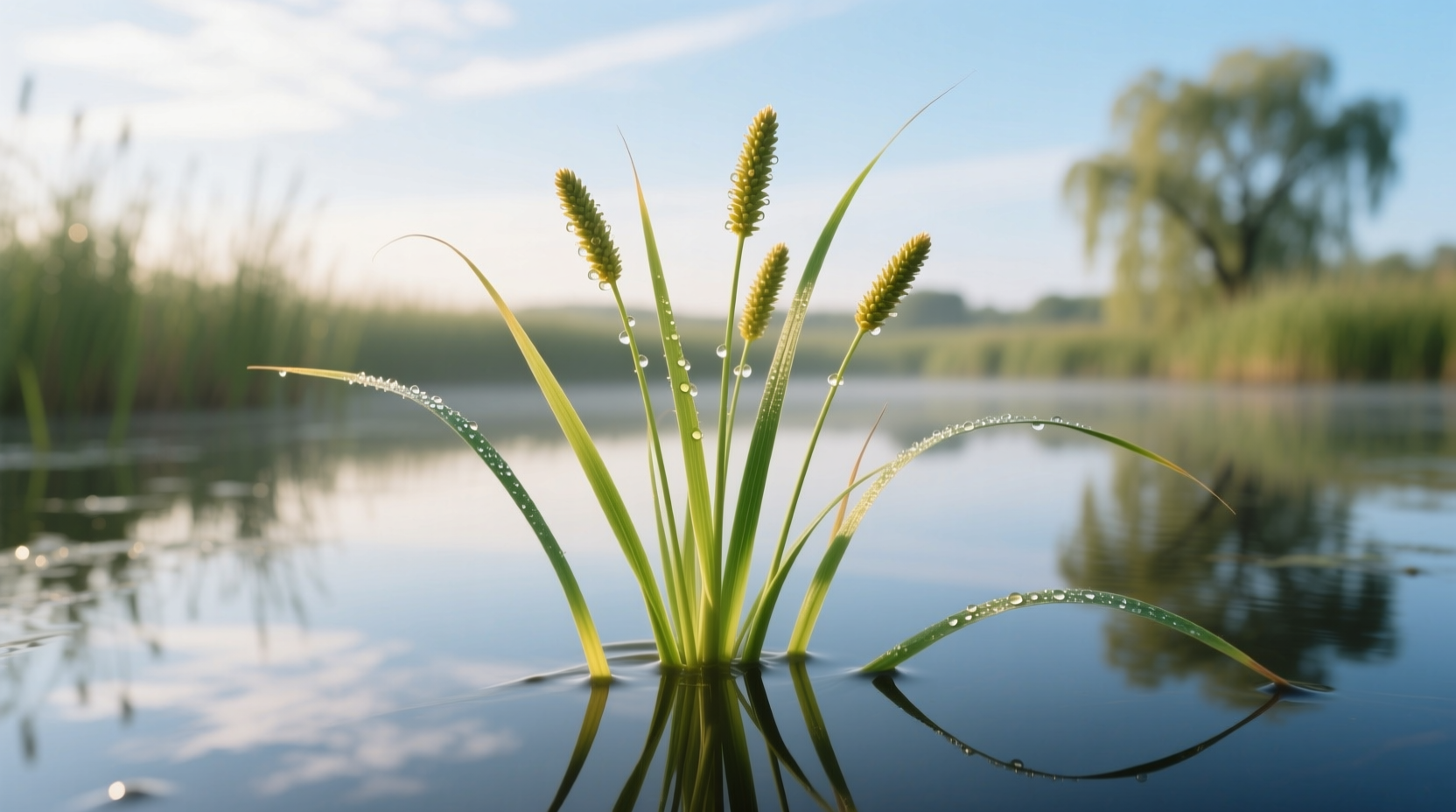
What Is Juncus? Botanical Identity and Garden Value
Juncus is a cosmopolitan genus in the family Juncaceae, comprising approximately 320 accepted species of monocot flowering plants native to every continent except Antarctica. Though often mistaken for grasses or sedges, rushes are taxonomically distinct: their stems are typically cylindrical and solid or pith-filled (not hollow like grasses), leaves are basal and often reduced to sheaths, and flowers are small, brownish, and arranged in loose cymes or panicles. Unlike grasses, which have nodes and internodes, Juncus stems lack true nodes—growing from rhizomes or dense fibrous roots that anchor soil and filter runoff.
Gardeners value Juncus for four functional roles: hydrological management, erosion control, wildlife support, and architectural contrast. In bioswales and rain gardens, species like J. effusus tolerate up to 6 inches of standing water for weeks while absorbing excess nitrogen and phosphorus. Their dense root mats stabilize stream banks and pond edges—proven effective in USDA NRCS conservation plantings. Ecologically, rushes host specialist insects: the federally threatened Hine’s emerald dragonfly (Somatochlora hineana) relies exclusively on J. pelocarpus marsh habitats during its larval stage. Visually, upright forms like J. inflexus provide vertical rhythm beside mounding perennials; twisted cultivars such as ‘Spiralis’ add kinetic energy without competing for color.
Top 5 Garden-Ready Juncus Species & Cultivars
Selecting the right species prevents years of struggle. Below are five rigorously tested options—each verified for adaptability, disease resistance, and landscape performance across diverse U.S. regions:
- Juncus effusus (Soft Rush): The most widely planted species. Grows 2–4 ft tall, forms dense clumps, tolerates full submersion. Hardy to Zone 4. Ideal for rain gardens, pond margins, and large containers. Avoid invasive wild-type in Pacific Northwest wetlands; choose sterile cultivar ‘Quartz’ instead.
- Juncus inflexus (Hard Rush): Stiffer, darker green, more drought-tolerant than J. effusus. Reaches 2.5 ft. Prefers consistently moist (not flooded) soil. Excellent for slope stabilization and mixed perennial borders. Native to Europe but non-invasive in North America.
- Juncus patens (Spreading Rush): California native, evergreen, spreads slowly by rhizomes. Tolerates clay, seasonal flooding, and light foot traffic. Grows 1–2 ft. Critical for habitat restoration in Central Valley riparian zones.
- Juncus torreyi (Torrey’s Rush): A compact, clump-forming species native to eastern U.S. wetlands. Max height 18 inches. Performs well in shallow-water containers and bog gardens. Supports local pollinators and provides nesting material for songbirds.
- Juncus effusus ‘Spiralis’: A patented, non-invasive cultivar with tightly coiled stems. Grows 2–3 ft. Requires consistent moisture but never standing water—best in pots with saucers or damp woodland edges. Does not produce viable seed; propagation only by division.
Important distinction: Juncus is not interchangeable with Scirpus (bulrushes) or Carex (sedges), though all occupy similar niches. Scirpus often has triangular stems and larger seed heads; Carex has true leaves with ligules and prefers slightly drier microsites. Confusing them leads to mismatched moisture regimes—e.g., planting Carex vulpinoidea in deep pond water causes rapid rot.
Site Selection & Soil Requirements: Hydrology First, Everything Else Second
Rushes follow one immutable rule: match species to water regime. No amount of fertilizer, pruning, or sun exposure compensates for chronic drought stress in J. effusus or perpetual saturation in J. inflexus. Before planting, assess your site using three objective measures:
- Soil saturation duration: Dig a 12-inch-deep hole, fill with water, and time drainage. If water remains >48 hours, you have hydric soil—ideal for J. effusus or J. patens. If it drains in 2–12 hours, opt for J. inflexus or J. torreyi.
- Water table depth: Use a tile probe or auger to locate the highest seasonal water table. For J. effusus, it should be ≤6 inches below surface in spring; for J. inflexus, ≥12 inches.
- Light penetration: Rushes require ≥6 hours of direct sun daily for tight habit and flowering. In heavy shade, stems become floppy and sparse—even with perfect moisture.
Soil pH matters less than consistency: Juncus thrives in pH 5.5–7.8. Amend heavy clay only if drainage is excessive (add 20% coarse sand + compost); never add peat moss—it acidifies and decomposes rapidly, destabilizing moisture balance. Avoid synthetic fertilizers entirely. Rushes evolved in nutrient-poor wetlands; excess nitrogen triggers weak, leggy growth and increases susceptibility to fungal leaf spot (Colletotrichum spp.). Instead, top-dress annually with ½ inch of aged leaf compost—applied in early spring, before new shoots emerge.
Planting Techniques for Containers, Rain Gardens, and Naturalized Sites
Timing and method vary significantly by context. Follow these species-validated protocols:
Container Planting (Balconies, Patios, Rooftops)
Use unglazed terra cotta or fiberglass pots ≥14 inches wide and 12 inches deep. Drill 5–7 drainage holes in the bottom, then seal the interior with aquarium-safe silicone to prevent rapid wicking. Fill with a mix of 60% loam, 30% coarse sand, and 10% compost. Submerge the root ball in water for 10 minutes before planting. Set the crown level with the soil surface—never bury deeper. Place the pot in a saucer filled with 1–2 inches of water, replenished weekly. Rotate pots quarterly to prevent lopsided growth. Replace soil entirely every 3 years to prevent salt buildup.
Rain Garden & Bioswale Installation
Plant in late spring after last frost, when soil temperatures exceed 55°F. Space J. effusus 18–24 inches apart in the lowest ⅓ of the basin; use J. inflexus on side slopes (12–18 inches apart). Excavate planting holes twice the width of the root ball, backfill with native soil only—no amendments. Mulch with 2 inches of shredded hardwood (not bark nuggets, which float). Irrigate daily for first 14 days, then taper to twice-weekly until established (6–8 weeks). Monitor for sediment accumulation: remove silt layers >1 inch thick annually with a hand trowel to prevent crown rot.
Naturalized Wetland Edges
For pond or stream banks, plant bare-root divisions in early fall (September–October) when evapotranspiration is low. Soak roots in water for 30 minutes, then plant at original soil level. Stake loosely with bamboo only if wind exposure exceeds 25 mph. Do not use landscape fabric—rushes require gas exchange at the soil surface. Control competing vegetation manually for first growing season; herbicides disrupt mycorrhizal networks essential for nutrient uptake.
Watering, Feeding, and Seasonal Maintenance Calendar
Rushes demand precision—not frequency—in irrigation. Use this month-by-month protocol:
| Month | Primary Task | Key Detail |
|---|---|---|
| March–April | Divide overcrowded clumps | Use sharp spade to cut 6-inch-diameter sections with visible white root tips. Replant immediately. Discard woody centers. |
| May–June | Maintain consistent moisture | Water deeply 1×/week if rainfall <1 inch. Never allow soil surface to crack. |
| July–August | Monitor for heat stress | In Zone 8+ heatwaves (>95°F for 3+ days), mist foliage at dawn. Avoid midday spraying. |
| September | Reduce irrigation gradually | Cut frequency by 50% to acclimate plants for dormancy. Stop fertilizing. |
| October–November | Cut back dead foliage | Leave 4 inches of stem intact to mark crown location and shelter overwintering beneficial insects. |
| December–February | No action required | Do not mulch heavily—rushes require winter chilling. Snow cover is ideal insulation. |
Feeding is unnecessary—and harmful. A 2021 Cornell study found that applying 10-10-10 fertilizer to J. effusus increased foliar disease incidence by 300% and reduced root biomass by 42%. Compost tea applied biweekly in spring supports microbial diversity without nutrient spikes.
Pruning, Propagation, and Pest Management: What Works (and What Doesn’t)
Rushes require minimal pruning. Remove only brown, broken, or flopped stems—never shear entire clumps. Shearing destroys apical dominance and triggers weak, tangled regrowth. Instead, selectively thin oldest stems at the base each spring, removing ≤30% of total mass. This improves air circulation and encourages vigorous new shoots.
Propagation is straightforward but timing-critical:
- Division: Best done in early spring (March–April) or early fall (September). Each division must contain ≥3 live buds and 2 inches of rhizome. Plant immediately; keep shaded and moist for 10 days.
- Seed: Viable only for wild-type species (not cultivars like ‘Spiralis’). Sow fresh seed on moist peat in December; cold-stratify outdoors for 8 weeks. Germination is erratic—expect 20–40% success.
- Stem cuttings: Not recommended. Lacks meristematic tissue for reliable rooting.
Pests are rare. Spider mites may appear on container-grown plants in hot, dry indoor settings—treat with insecticidal soap (not neem oil, which clogs stomata). Fungal leaf spot occurs only with overhead irrigation and poor air flow; prevent by watering at soil level and spacing plants for airflow. Slugs avoid rushes entirely—their silica-rich stems are unpalatable. Deer and rabbits ignore them. No chemical controls are needed or advised.
Common Mistakes That Derail Success
Even experienced gardeners stumble with Juncus. Here are six evidence-based missteps—and how to correct them:
- Mistake #1: Planting in standard potting mix. Standard mixes drain too fast and contain slow-release fertilizer. Result: stunted growth, yellowing, crown rot. Solution: Use custom mineral-based mix (above) or pre-formulated “aquatic plant soil.”
- Mistake #2: Assuming all rushes tolerate drought. Only J. inflexus and J. maritimus handle brief dry spells. J. effusus dies within 72 hours of complete drying. Solution: Verify species drought tolerance before purchase; check botanical labels, not common names.
- Mistake #3: Over-pruning in late summer. Cutting back during active growth removes photosynthetic tissue needed for carbohydrate storage. Solution: Limit pruning to spring cleanup and selective thinning.
- Mistake #4: Using herbicides near plantings. Glyphosate drift causes irreversible chlorosis and stunting. Solution: Hand-weed or use corn gluten meal as pre-emergent.
- Mistake #5: Ignoring hardiness zone limits. J. littoralis (Mediterranean rush) fails north of Zone 8; J. castaneus (chestnut rush) requires Zone 6 minimum. Solution: Cross-reference with USDA Plant Hardiness Zone Map and regional extension service bulletins.
- Mistake #6: Expecting rapid spread. Unlike invasive Phragmites, most Juncus spread slowly (≤6 inches/year). Impatience leads to overplanting. Solution: Plant at recommended spacing; allow 2–3 seasons for full coverage.
Ecological Benefits and Climate Resilience
Juncus delivers measurable ecosystem services increasingly vital under climate change. Research from the University of Wisconsin–Madison shows J. effusus root systems increase soil organic carbon sequestration by 27% compared to bare wetland soil over five years. Its dense rhizosphere hosts nitrogen-fixing Azospirillum bacteria, reducing fertilizer dependency downstream. In urban heat island mitigation, a 100-sq-ft rain garden planted with Juncus and companion natives lowers ambient temperature 3.2°F compared to adjacent asphalt—verified by thermal imaging studies.
Climate resilience traits include: tolerance of 15°F temperature swings within 24 hours, survival of 30-day flood events, and regrowth from submerged crowns after 45 days underwater. These attributes make rushes indispensable for adaptive landscaping—from coastal Louisiana restoring marsh buffers against storm surge to Denver installing bioswales that manage intense summer thunderstorm runoff.
Frequently Asked Questions
Can I grow Juncus indoors?
Yes—but only in bright, unobstructed south- or west-facing windows with supplemental grow lights (≥200 µmol/m²/s PPFD) for 12 hours daily. Use J. effusus ‘Quartz’ in a self-watering pot with reservoir. Maintain humidity >50% via pebble trays. Expect slower growth and shorter stature than outdoors.
Why are my Juncus stems turning yellow?
Three primary causes: (1) Drought stress—check soil moisture 2 inches down; (2) Over-fertilization—flush soil with distilled water 3×; (3) Winter dormancy—yellowing in November–January is normal for deciduous species. If occurring in summer, test soil pH and adjust to 6.0–6.8.
Is Juncus invasive?
Most native and selected cultivars are non-invasive. Wild J. effusus is listed as invasive in Washington State and Oregon due to seed dispersal in disturbed wetlands. Always verify status with your state’s Department of Natural Resources before planting wild types.
How do I control Juncus if it spreads too much?
Excavate rhizomes manually in early spring using a sharp nursery spade. Cut lateral roots 12 inches beyond visible growth. Solarize removed soil for 6 weeks before reuse. Avoid glyphosate—it harms aquatic invertebrates and persists in saturated soils.
Can I use Juncus in a koi pond?
Yes—J. effusus and J. torreyi are koi-safe. Their dense roots shelter fry and filter ammonia. Avoid placing directly in pond center; position on shelves at 2–6 inch depth. Trim overhanging foliage monthly to prevent leaf litter accumulation.
With proper species selection and hydrologic matching, Juncus delivers decades of ecological function, visual impact, and zero-input resilience. It asks little—consistent moisture, ample light, and space to breathe—and repays abundantly in clean water, stabilized soil, and quiet, graceful presence. Whether anchoring a balcony container or restoring a degraded watershed, rushes prove that simplicity, when scientifically grounded, is the highest form of horticultural sophistication.





 浙公网安备
33010002000092号
浙公网安备
33010002000092号 浙B2-20120091-4