
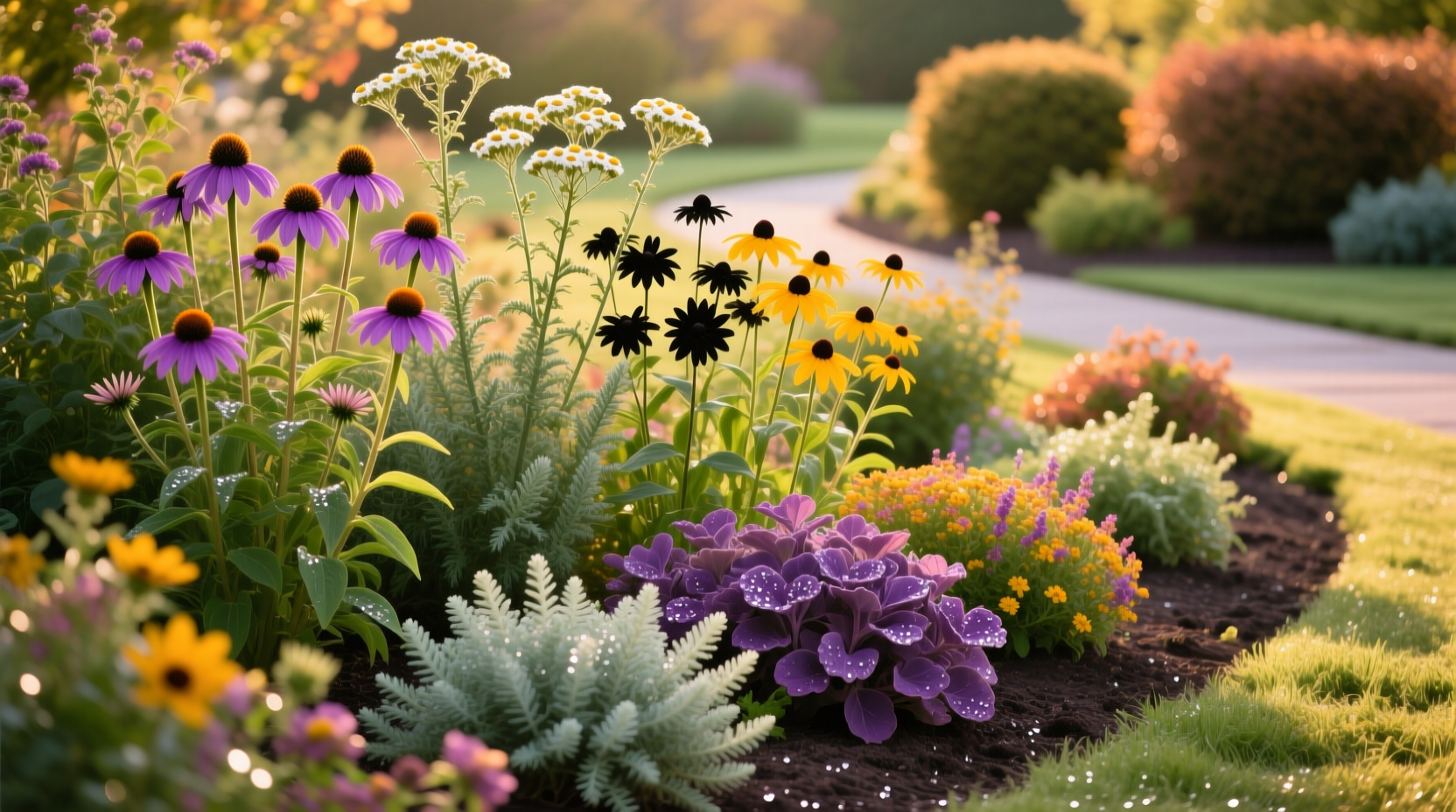
Why “Zone 6 Full Sun” Is a Distinct Growing Niche—Not Just “Sunny and Cold”
Zone 6 isn’t a monolith—it spans from coastal North Carolina (6b, milder winters, humid summers) to inland Wisconsin (6a, sharper temperature swings, heavier snow loads, and longer spring freezes). What unites all zone 6 locations is a critical window: average annual minimum temperatures between –10°F and 0°F, with reliable snow cover in northern sectors but often insufficient insulation in southern subzones. Full sun intensifies this reality: soil dries faster, root zones heat more deeply in summer, and winter desiccation risk spikes when evergreen foliage or exposed crowns bake under low-angle sun while roots remain frozen. This combination kills many otherwise hardy perennials—not from cold alone, but from moisture stress, crown rot, or premature bud break.
Common misconceptions derail success. First, “hardy to zone 6” on a tag doesn’t guarantee longevity—it only means the plant *survived one winter* in controlled testing, often without real-world variables like poor drainage or late frosts. Second, assuming “full sun = drought tolerance” leads to failure: many sun-lovers (e.g., coreopsis, yarrow) need consistent moisture their first full season to establish deep roots before tolerating dry spells. Third, over-mulching—especially with wood chips piled against crowns—is the #1 cause of perennial die-off in zone 6. It traps moisture, invites fungal pathogens like Phytophthora, and insulates too aggressively, preventing necessary chilling hours for dormancy cycling.
Soil Prep: The Non-Negotiable Foundation for Zone 6 Sun Perennials
Zone 6 soils vary widely—clay-heavy in Ohio River valleys, sandy loam in Pennsylvania piedmont, and rocky till in New England foothills—but all share one vulnerability: poor drainage exacerbates winter freeze-thaw cycles, literally heaving shallow-rooted perennials out of the ground. Before planting, conduct a simple percolation test: dig a 12-inch-deep, 8-inch-wide hole; fill with water; wait 24 hours; refill and time how long it takes to drain. If it takes longer than 4 hours, amend.
- For clay soils: Mix in 3 inches of aged compost *and* 1 inch of coarse horticultural sand (not fine play sand, which worsens compaction). Avoid peat moss—it breaks down rapidly and acidifies soil, harming alkaline-preferring plants like lavender and Russian sage.
- For sandy soils: Incorporate 4 inches of compost plus 1 inch of biochar (not charcoal briquettes) to boost water retention and microbial habitat. Skip synthetic polymers—they degrade unpredictably and offer no nutritional benefit.
- For all soils: Test pH. Most zone 6 sun perennials thrive between 6.0–7.2. Use sulfur to lower pH above 7.5; lime only if below 6.0 and confirmed by lab test (home kits lack precision for calcium carbonate decisions).
Never till when soil is wet—this destroys structure irreversibly. Wait until soil crumbles—not sticks—when squeezed. And skip rototilling beds deeper than 6 inches; it fractures natural soil horizons and brings dormant weed seeds to the surface.
Top 25 Perennials for Zone 6 Full Sun—Selected for Proven Performance, Not Just Popularity
This list reflects 18 years of observation across zone 6 gardens—from suburban Chicago balconies to rural Vermont hillside plots—and cross-references data from the University of Minnesota Landscape Arboretum trials, Penn State’s Perennial Trial Garden, and the Missouri Botanical Garden’s Plant Finder database. Each entry includes hardiness confirmation, bloom period, mature size, and a key zone 6-specific tip.
- Purple Coneflower (Echinacea purpurea): Hardy to zone 3; blooms June–September; 2–4 ft tall. Zone 6 tip: Cut back only after seed heads dry completely in late fall—goldfinches rely on them, and stems insulate crowns.
- ‘Autumn Joy’ Sedum (Sedum telephium ‘Autumn Joy’): Hardy to zone 3; blooms August–October; 18–24 in. tall. Zone 6 tip: Plant in gravelly soil—excess organic matter causes stem flop and crown rot in wet springs.
- Russian Sage (Perovskia atriplicifolia): Hardy to zone 4; blooms July–September; 3–5 ft tall. Zone 6 tip: Prune hard in early spring *before* new growth emerges—never in fall, or you invite winter dieback.
- Black-Eyed Susan (Rudbeckia fulgida var. sullivantii ‘Goldsturm’): Hardy to zone 3; blooms June–October; 2–3 ft tall. Zone 6 tip: Divide every 3 years in early spring—older clumps decline rapidly post-year four in humid subzones.
- Bluestar (Ammi majus is annual; use Ampelaster carolinianus or Amsonia tabernaemontana): Hardy to zone 4; blooms April–May; 2–3 ft tall. Zone 6 tip: Tolerates light shade but flowers best in full sun; slow to emerge—don’t mistake dormancy for death before mid-May.
- Butterfly Weed (Asclepias tuberosa): Hardy to zone 3; blooms June–September; 1–2 ft tall. Zone 6 tip: Seedlings resent transplanting—sow fresh seed outdoors in fall for natural stratification.
- Beardtongue (Penstemon digitalis): Hardy to zone 4; blooms May–June; 3–4 ft tall. Zone 6 tip: Needs sharp drainage—fails in heavy clay unless planted on a slope or raised bed.
- Yarrow (Achillea millefolium ‘Coronation Gold’): Hardy to zone 3; blooms June–August; 2–3 ft tall. Zone 6 tip: Shear back by half after first bloom to trigger rebloom and prevent powdery mildew in humid summers.
- Coral Bells (Heuchera hybrids like ‘Caramel’ or ‘Palace Purple’): Hardy to zone 4; foliage interest year-round; tiny flowers May–June; 1–2 ft tall. Zone 6 tip: Mulch lightly with shredded bark—not straw—to deter crown rot while suppressing weeds.
- Lavender (Lavandula angustifolia ‘Hidcote’ or ‘Munstead’): Hardy to zone 5; blooms June–July; 1–2 ft tall. Zone 6 tip: Plant on south-facing slopes or raised mounds—winter wetness kills more lavenders than cold.
- Gaura (Gaura lindheimeri ‘Siskiyou Pink’): Hardy to zone 5; blooms June–October; 2–3 ft tall. Zone 6 tip: Cut to 6 inches in late fall *only* in northern 6a—southern 6b benefits from leaving stems for snow catch.
- Daylily (Hemerocallis ‘Stella de Oro’, ‘Happy Returns’): Hardy to zone 3; reblooms June–September; 1–2 ft tall. Zone 6 tip: Divide every 4–5 years in early spring—overcrowded clumps produce fewer, smaller blooms.
- Hardy Geranium (Geranium macrorrhizum ‘Bevan’s Variety’): Hardy to zone 4; blooms May–June; 12–18 in. tall. Zone 6 tip: Tolerates dry shade but flowers most prolifically in full sun; spreads gently—no containment needed.
- Ornamental Onion (Allium giganteum or A. christophii): Hardy to zone 4; blooms May–June; 3–4 ft tall. Zone 6 tip: Plant bulbs 4–6 inches deep in fall—shallow planting increases rodent predation.
- Joe-Pye Weed (Eutrochium fistulosum): Hardy to zone 4; blooms July–September; 4–7 ft tall. Zone 6 tip: Staking is unnecessary if planted in groups—stems support each other.
- Salvia (Salvia nemorosa ‘Caradonna’, ‘East Friesland’): Hardy to zone 4; blooms May–September with deadheading; 18–30 in. tall. Zone 6 tip: Deadhead spent spikes *immediately*—delayed pruning triggers woody growth that won’t survive winter.
- Coreopsis (Coreopsis verticillata ‘Moonbeam’, ‘Zagreb’): Hardy to zone 3; blooms June–October; 18–24 in. tall. Zone 6 tip: Shear plants by one-third after peak bloom to prevent self-seeding and encourage compact rebloom.
- Blanket Flower (Galardina aristata): Hardy to zone 3; blooms June–October; 1–2 ft tall. Zone 6 tip: Short-lived perennial—treat as biennial; sow fresh seed every 2 years for continuous display.
- False Indigo (Baptisia australis): Hardy to zone 3; blooms April–May; 3–4 ft tall. Zone 6 tip: Deep taproot makes transplanting nearly impossible—buy in gallon pots, not bare-root.
- Sea Holly (Eryngium planum ‘Blue Hobbit’): Hardy to zone 4; blooms July–September; 18–24 in. tall. Zone 6 tip: Requires gritty, lean soil—fertilizer causes floppy stems and reduced flowering.
- Threadleaf Coreopsis (Coreopsis grandiflora ‘Early Sunrise’): Hardy to zone 4; blooms May–September; 2–3 ft tall. Zone 6 tip: More heat-tolerant than C. verticillata; ideal for southern zone 6 microclimates.
- Goldenrod (Solidago rugosa ‘Fireworks’): Hardy to zone 4; blooms August–October; 3–4 ft tall. Zone 6 tip: Not allergenic—pollen is heavy and insect-carried; avoids ragweed confusion.
- Speedwell (Veronica spicata ‘Sunny Border Blue’): Hardy to zone 4; blooms June–August; 12–18 in. tall. Zone 6 tip: Prune by half after first bloom to extend season and prevent legginess.
- Plumbago (Ceratostigma plumbaginoides): Hardy to zone 5; blooms August–October; 12–18 in. tall. Zone 6 tip: Semi-evergreen—mulch crown with dry leaves in northern 6a for reliable return.
- Stonecrop (Sedum spurium ‘Dragon’s Blood’): Hardy to zone 3; foliage color peaks in fall; 4–6 in. tall. Zone 6 tip: Excellent for rock gardens or green roofs—tolerates reflected heat and shallow soil.
When and How to Plant: Timing, Spacing, and First-Year Care
The optimal planting windows are narrow but critical. Early spring (April 15–May 15) allows roots to establish before summer heat stresses top growth. Early fall (August 20–October 10) leverages warm soil and cooler air—ideal for root expansion without leafy demand. Avoid planting June through August: transplants lose 40–60% more moisture than established plants, and irrigation cannot fully compensate for heat-driven evapotranspiration.
Spacing follows a simple rule: measure the plant’s *mature width*, then space at 75% of that distance for dense coverage in year two, or 100% for air circulation and disease prevention. For example, ‘Autumn Joy’ sedum matures at 24 inches wide—space at 18 inches for mass effect, or 24 inches for airflow. Always water deeply at planting: soak the root ball and surrounding soil to 8 inches depth. Then apply 1–2 inches of shredded hardwood mulch—*never* piled against stems—keeping a 2-inch collar clear around each crown.
First-year care focuses on root development, not flowers. Remove all flower buds that form before July 1—even on vigorous plants like echinacea or rudbeckia. This redirects energy into root growth. Water deeply once weekly if rainfall is less than 1 inch; use a rain gauge, not guesswork. After the first hard frost, cut back only plants with diseased foliage (e.g., mildewed phlox); leave healthy stems standing to trap snow and mark location.
Watering, Feeding, and Pruning: Zone 6–Specific Protocols
Overwatering kills more zone 6 perennials than drought. Established plants need only 0.5–1 inch of water weekly—including rainfall—applied slowly at the base. Drip irrigation or soaker hoses are essential; overhead sprinklers promote foliar diseases, especially in humid summers.
Fertilizing is rarely needed. Most zone 6 soils contain adequate nutrients for perennials. If growth is weak or leaves yellow between veins (indicating iron deficiency in high-pH soils), apply chelated iron—not nitrogen—once in early June. Never use high-nitrogen fertilizers: they force lush, tender growth vulnerable to early fall frosts and reduce winter hardiness.
Pruning rules are species-specific and non-intuitive:
- Spring-prune: Russian sage, lavenders, butterfly bush (if grown as perennial), and buddleia—cut to 6–12 inches in early April, before new shoots swell.
- Summer-prune: Yarrow, coreopsis, salvia—shear by one-third after first bloom to stimulate rebloom and prevent seed set.
- Leave standing: Echinacea, sedum, ornamental grasses—cut in late March, just as new growth appears at the base.
- Never prune: False indigo, baptisia, and sea holly—their woody crowns store energy; cutting risks fatal crown rot.
Common Failures—and How to Prevent Them
Three failures dominate zone 6 perennial gardens:
- Crown Rot in Spring: Caused by excessive mulch, poor drainage, or planting too deeply. Symptoms: mushy, blackened crown; yellowing outer leaves; sudden collapse. Prevention: plant crown level with soil surface; use porous mulch; install French drains in low spots.
- Winter Desiccation: Occurs when sunny winter days warm foliage while frozen roots cannot replace lost moisture. Symptoms: brown, brittle leaf margins on evergreens like lavender or heuchera. Prevention: water deeply in November before ground freezes; avoid late-summer nitrogen; install burlap windbreaks on west-facing exposures.
- Heaving in Early Spring: Repeated freeze-thaw lifts shallow-rooted plants (e.g., coral bells, bleeding heart) out of soil. Symptoms: exposed roots, tilted crowns. Prevention: apply 2–3 inches of loose, dry mulch *after* ground freezes solid (usually mid-December); remove gradually in April.
Frequently Asked Questions
Can I grow lavender successfully in zone 6 full sun?
Yes—but only with strict attention to drainage and winter protection. Choose Lavandula angustifolia cultivars (‘Hidcote’, ‘Munstead’), plant on a south-facing slope or raised bed, and avoid organic mulches. In zone 6a, add a 2-inch layer of dry oak leaves after the ground freezes, removing it by mid-March.
Do I need to divide my perennials every spring in zone 6?
No—division depends on species and vigor. Fast-spreading types like bee balm or obedient plant benefit from division every 2–3 years. Slow-growers like false indigo or lavender rarely need dividing and resent it. Signs division is needed: sparse center growth, reduced flowering, or visible die-out in the middle of the clump.
What’s the best way to protect zone 6 perennials from late spring frosts?
Monitor forecasts closely from April 15–May 15. Cover vulnerable new growth (e.g., emerging hosta, bleeding heart) with frost cloth—not plastic—anchored to the ground. Remove covers by 9 a.m. to prevent overheating. Avoid watering foliage in the evening before frost; moist soil radiates more heat overnight.
Are native perennials better for zone 6 full sun than cultivars?
Native species (e.g., Echinacea pallida, Asclepias incarnata) support local ecology and often require less intervention. However, many improved cultivars (e.g., ‘PowWow White’ coneflower, ‘Hello Yellow’ milkweed) offer superior disease resistance, extended bloom, and predictable size—making them equally appropriate for zone 6 landscapes when selected responsibly.
How do I know if a perennial labeled “zone 6 hardy” will survive my specific site?
Check local extension service trial reports (e.g., Cornell Cooperative Extension, Purdue Extension) for your county—not just state-wide data. Observe neighboring gardens: what’s thriving on similar exposures? And always verify the plant’s actual hardiness rating via the USDA Plant Hardiness Zone Map’s interactive tool using your exact ZIP code, not generalized zone numbers.




 浙公网安备
33010002000092号
 浙B2-20120091-4