
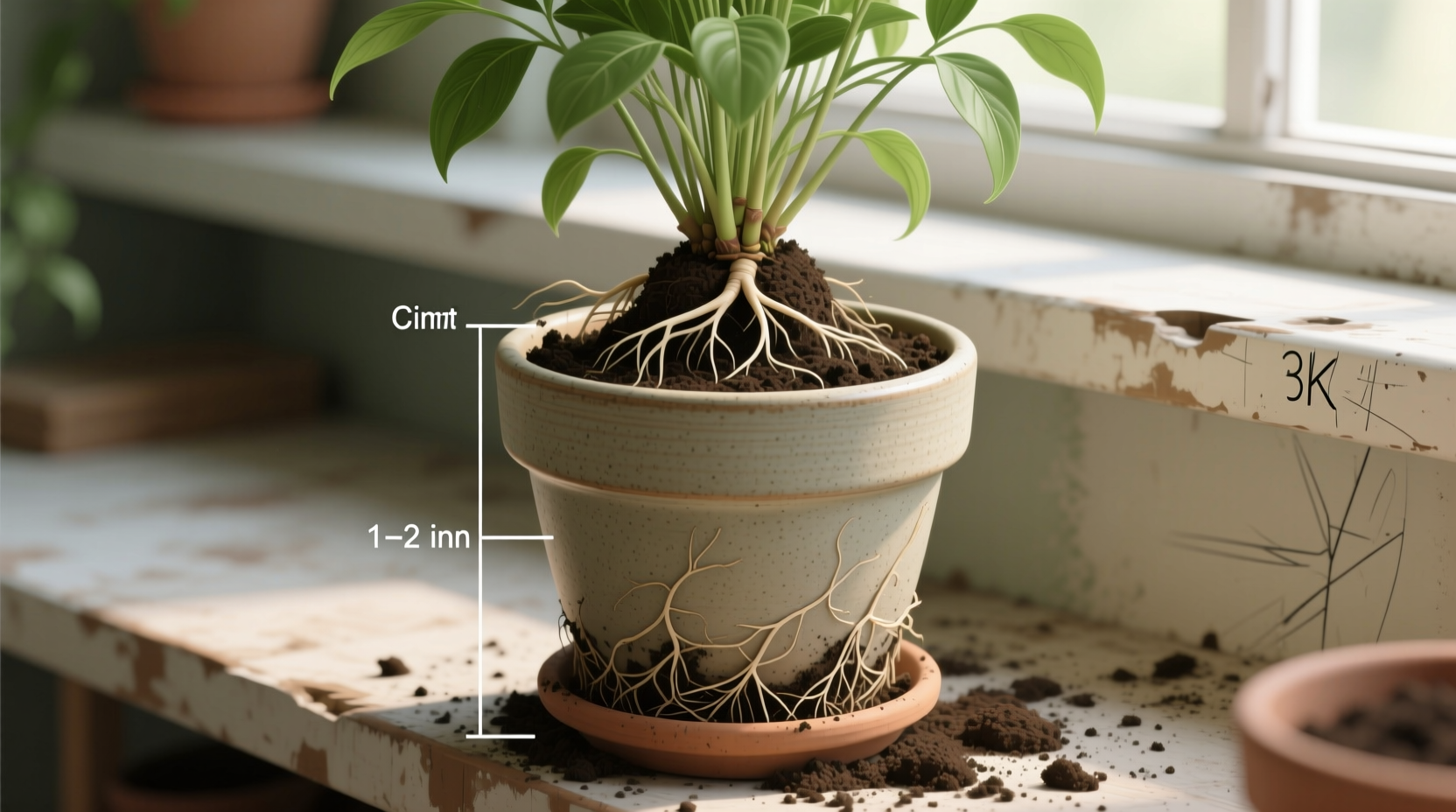
Why Pot Size Is a Structural Decision—Not Just a Growth One
A climbing philodendron—whether Philodendron micans, hederaceum, or scandens—is an architect of vertical space. Its energy flows upward through nodes and aerial roots, not into dense lateral root expansion. That means its pot isn’t primarily about root volume—it’s about anchoring mass, moisture equilibrium, and center-of-gravity control. When you place a vigorous vine in a pot too large, two things happen fast: water lingers in unused soil, inviting stem rot, and the lightweight foliage gains leverage over a narrow, unstable base—especially on open shelves where even slight nudges trigger cascading failure.
The Myth of “Room to Grow”
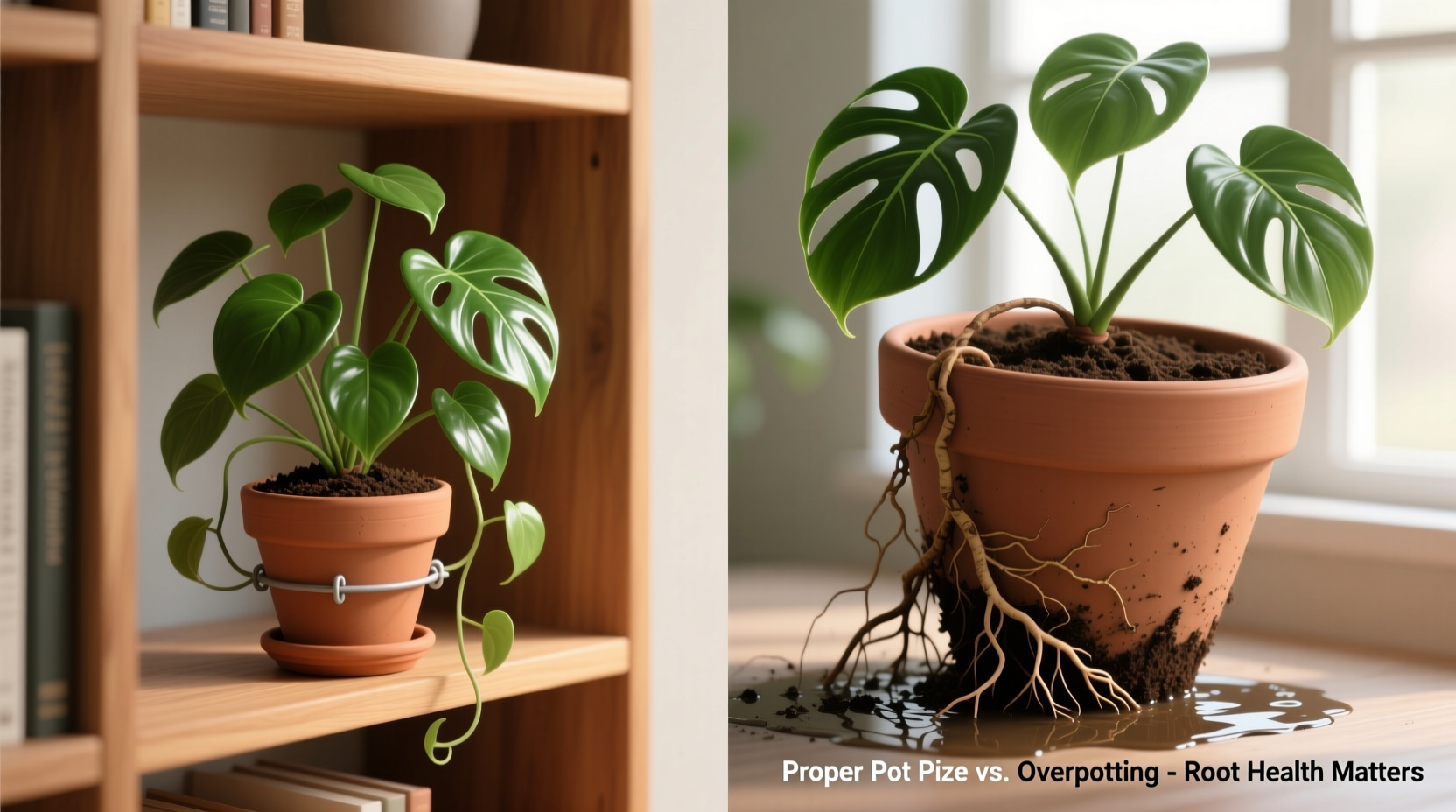
“Plants need extra space to thrive” is one of the most persistent—and dangerous—misconceptions in indoor horticulture. For vining aroids, evidence shows that moderate root restriction actually stimulates aerial root initiation and tighter node spacing, both critical for stable climbing behavior. Overpotting correlates strongly with delayed establishment, fungal incidence, and structural failure—not vigor.
Contrary to popular advice, “growing into” a large pot isn’t a sign of health—it’s often the first stage of decline. Root respiration slows in saturated, cool, undisturbed soil. Meanwhile, the vine keeps stretching, raising its center of gravity until one day, your favorite ceramic mug becomes collateral damage.
Pot Sizing by Growth Stage: A Practical Reference
| Plant Height | Recommended Pot Diameter | Max Shelf Depth Compatibility | Risk if Oversized |
|---|---|---|---|
| <2 ft | 4–5 inches | 10–12 inches | Mild top-heaviness; slow drying |
| 2–4 ft | 5–6 inches | 12–14 inches | Shelf edge stress; root saturation |
| 4–6 ft | 6–7 inches | 14–16 inches | Forward tilt risk; aerial root misdirection |
| >6 ft (trained) | 7 inches max, with wall/fence anchor | Requires rear support or floor placement | Bookshelf failure likely |
Actionable Life Tips for Shelf-Safe Philodendrons
- 💡 Always measure the root ball—not the foliage—before selecting a new pot. Gently loosen soil to assess true dimensions.
- ⚠️ Avoid decorative cache pots without drainage. Double-potting traps water at the base and accelerates decay.
- ✅ When repotting, position the vine so its lowest node sits ½ inch below the rim—this gives aerial roots immediate access to air and support while keeping the center low.
- 💡 Use a pot made of terracotta or frost-proof ceramic: heavier materials lower the center of gravity better than plastic or thin-glazed porcelain.
- ⚠️ Never place a climbing philodendron on a shelf deeper than 16 inches unless it’s secured to a wall-mounted trellis or bracket system.
Everything You Need to Know
How do I know if my philodendron is root-bound—or just ready to climb?
Root binding shows as tightly coiled roots at the bottom or sides, soil pulling away from the pot wall, or rapid topsoil drying despite frequent watering. True climbing readiness appears as new aerial roots emerging near nodes and steady upward extension—not stunted growth.
Can I use a heavy pot to compensate for a larger size?
No. Weight alone doesn’t solve instability—height-to-width ratio matters more. A tall, narrow 8-inch pot may tip easier than a squat 6-inch one. Prioritize proportion over mass.
What if my bookshelf is shallow—only 9 inches deep?
Stick to a 4- to 5-inch pot, train the vine horizontally across the front face first, and add a discreet hook or adhesive wall clip to guide early aerial roots upward—delaying vertical lift until the plant is better anchored.
Should I prune before repotting?
Yes—if the vine exceeds 4 feet and lacks rear support. Trim back to the second or third node above the soil line. This redirects energy into root consolidation and new aerial root formation—not unbalanced extension.




 浙公网安备
33010002000092号
 浙B2-20120091-4