
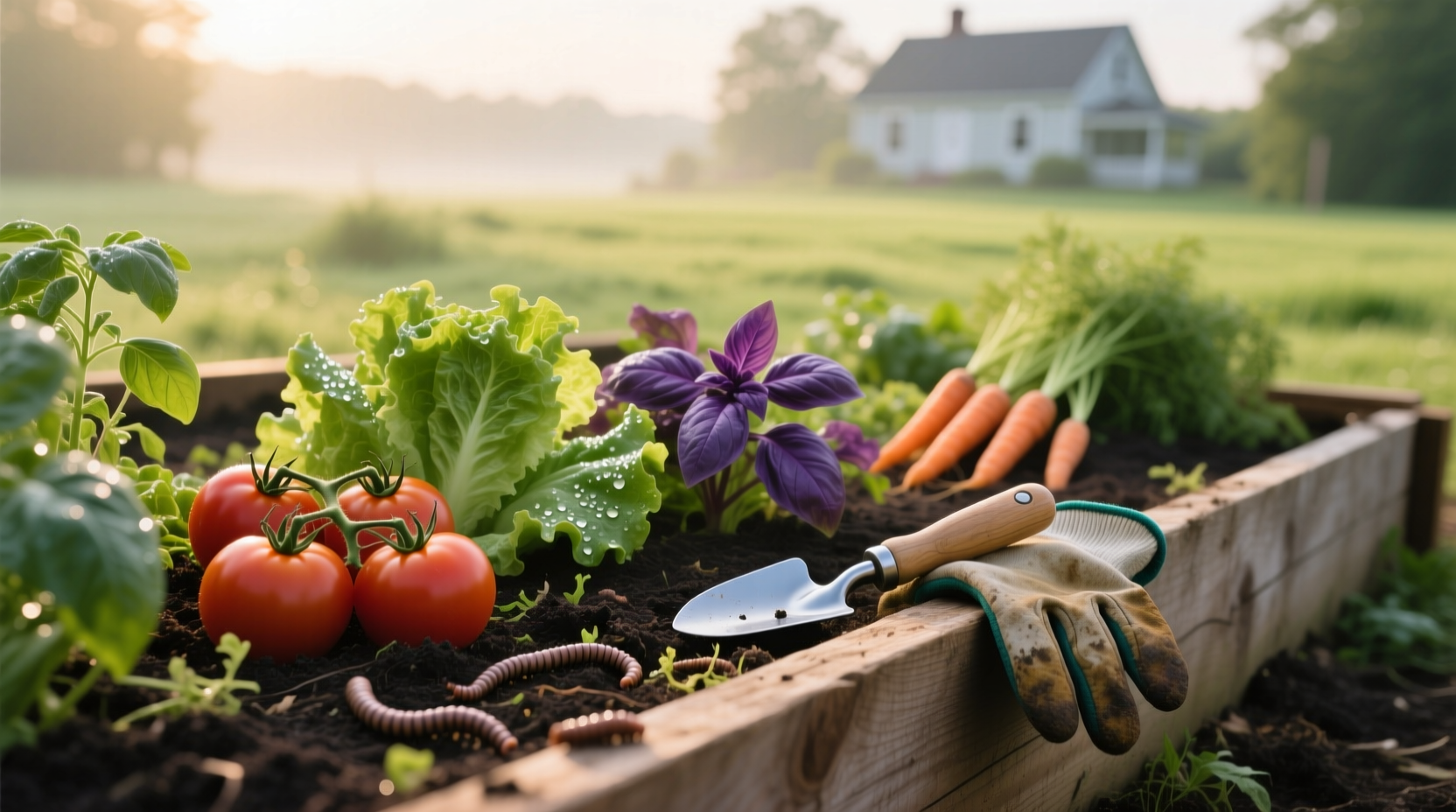
Why Raised Beds Outperform In-Ground Planting (The Soil Science)
At their foundation, raised beds solve the single greatest limiting factor in home gardening: soil health. Most residential lots suffer from one or more of these chronic issues—compaction from foot traffic or construction equipment, poor drainage due to clay or hardpan layers, nutrient depletion from years of conventional lawn care, or contamination from legacy pesticides or lead-based paint residue. A 2021 Cornell Cooperative Extension field study across 47 suburban gardens found that 83% of in-ground vegetable plots had bulk densities exceeding 1.4 g/cm³—the threshold at which root penetration and oxygen diffusion decline sharply. Raised beds bypass this entirely.
When you build a raised bed, you’re not merely elevating plants—you’re creating a controlled micro-environment. You select and blend soil components based on crop needs: high organic matter for leafy greens, sandy loam for carrots, pH-adjusted mixes for blueberries. This precision isn’t possible when working with native soil you can’t fully replace. Research from the University of Vermont’s Horticulture Program shows that tomatoes grown in 12-inch-deep raised beds filled with 60% compost, 30% topsoil, and 10% coarse sand yielded 37% more fruit per square foot than identical varieties in adjacent tilled ground—with significantly fewer blossom-end rot incidents due to stable moisture retention.
Critical nuance: depth matters. Many DIY guides recommend 6–8 inches—but that’s only sufficient for shallow-rooted crops like lettuce or radishes. For robust yields of peppers, eggplants, or squash, minimum depth should be 12 inches; for deep-rooted asparagus or artichokes, aim for 18–24 inches. Shallow beds dry out faster, heat up excessively in summer, and restrict root architecture—directly undermining two of the biggest raised bed benefits: water efficiency and drought resilience.
Physical Accessibility & Ergonomic Advantages
Raised beds eliminate stooping, kneeling, and repetitive bending—making gardening sustainable for older adults, people with arthritis, mobility limitations, or chronic back pain. A 2022 University of Florida IFAS ergonomic assessment measured lumbar flexion angles during common tasks: weeding in a standard garden plot required 62° of forward bend versus just 18° in a 30-inch-high raised bed. That difference reduces disc compression by over 40%, according to biomechanical modeling published in the Journal of Occupational Rehabilitation.
Height customization is non-negotiable. Standard 12-inch beds still require kneeling for many users. Optimal heights vary:
- 24–30 inches: Ideal for seated gardeners or those using walkers; eliminates all bending.
- 30–36 inches: Best for standing gardeners with chronic lower-back issues; allows full use of arms without shoulder elevation.
- 12–18 inches: Sufficient for healthy adults doing light harvesting or succession planting—but not recommended for intensive cultivation or long-term use.
Width is equally important. Beds wider than 4 feet force reaching across the center, straining shoulders and compromising posture. Keep maximum width at 4 feet if accessible from both sides—or 2.5 feet if accessed from one side only. This ensures every inch of soil remains within comfortable arm’s reach.
Water Management: Less Waste, More Efficiency
Raised beds offer precise irrigation control—a major advantage in drought-prone regions or municipalities with water restrictions. Because soil is elevated and unconfined by surrounding ground, excess water drains freely rather than pooling or migrating laterally into pathways. But here’s what most guides get wrong: raised beds actually require less frequent watering, not more—provided they’re built with appropriate soil structure and mulch.
Why? Two reasons. First, deeper root zones access moisture reserves unavailable to shallow-rooted in-ground plants. Second, well-amended raised bed soil holds water like a sponge—not because it’s dense, but because organic matter creates microscopic pores that retain moisture while allowing air exchange. A University of California Davis trial comparing drip-irrigated raised beds (filled with 50% compost) to in-ground plots found raised beds used 28% less water over a 12-week tomato growing season while maintaining higher leaf water potential (a key indicator of plant hydration).
Common mistake to avoid: lining beds with impermeable plastic. While intended to “retain moisture,” it actually creates a perched water table—trapping water at the bottom, suffocating roots, and encouraging fungal pathogens like Pythium. Use landscape fabric only if installing over persistent perennial weeds (e.g., bindweed or quackgrass); otherwise, skip it entirely. Better yet: solarize the ground first with clear plastic for 6 weeks in summer, then build directly on bare, weed-free soil.
Pest and Disease Suppression—Without Pesticides
Raised beds significantly reduce three major categories of garden problems: soil-borne diseases, crawling insect pests, and vertebrate foragers. Elevation alone disrupts the life cycles of many pathogens and pests.
For example, clubroot—a devastating fungal disease affecting brassicas—is nearly eliminated in raised beds because its spores cannot survive in well-drained, aerated, alkaline-amended soils. Similarly, slugs and snails avoid crossing dry, exposed edges; adding copper tape or diatomaceous earth to bed frames creates an effective barrier. Voles and gophers rarely tunnel upward into loose, organically rich soil—they prefer undisturbed subsoil. Installing ¼-inch hardware cloth beneath the bed (buried 6 inches deep and folded up the inside walls) stops burrowing completely.
Crucially, raised beds enable strict crop rotation without moving soil. Since you control the entire volume, you can rotate families (e.g., nightshades → legumes → brassicas → alliums) within the same frame year after year—breaking pest and disease cycles far more effectively than in-ground rotation, where pathogens persist in surrounding soil.
Season Extension: Start Earlier, Harvest Later
Raised beds warm faster in spring and cool slower in fall—extending the growing season by 2–5 weeks depending on climate zone. The reason is physics: exposed soil surface area increases relative to volume, accelerating solar heating. University of Maine researchers recorded average soil temperatures 4.2°F higher at 4-inch depth in raised beds versus adjacent in-ground plots during March thaw—enabling direct seeding of peas and spinach up to 10 days earlier.
This thermal advantage compounds with simple season-extension tools. A lightweight row cover draped over hoops adds another 6–8°F of protection, allowing lettuce harvests into November in Zone 6. In colder zones, pairing raised beds with cold frames or low tunnels makes overwintering kale, spinach, and claytonia not just possible—but reliably productive.
Important caveat: shallow beds lose heat rapidly on clear, windy nights. Depth directly correlates with thermal mass. Beds under 10 inches deep provide negligible season extension benefit. For serious cold-weather production, prioritize 16–24 inch depths and insulate north-facing sides with straw bales or rigid foam board (covered with landscape fabric to prevent moisture trapping).
Weed Reduction: Less Labor, More Yield
Weeding time drops by 50–70% in properly maintained raised beds—not because weeds don’t germinate, but because their establishment is structurally inhibited. There are three mechanical barriers:
- Defined boundaries: No encroachment from lawn grasses or perennial weeds beyond the bed edge.
- Soil integrity: No tillage means dormant weed seeds stay buried and inactive (most require light exposure to germinate).
- Mulch efficacy: Straw, shredded bark, or compost applied to the surface suppresses light-dependent germination far more uniformly than in open fields.
A 3-year observational study by the Rodale Institute found that raised beds mulched with 3 inches of spoiled hay averaged just 2.1 weeds per square foot per week—versus 14.7 in adjacent tilled rows. Even more impactful: the weeds that do appear are almost exclusively annuals (like chickweed or purslane), easily removed by hand before setting seed. Perennial weeds—bindweed, nutsedge, quackgrass—are virtually absent when beds are constructed on cleared, solarized ground.
Yield Density and Succession Planning
Raised beds support intensive planting methods proven to increase yield per square foot by 2–4× compared to traditional row gardening. Square-foot gardening, French intensive, and biointensive systems all rely on deep, fertile, uncompacted soil—exactly what raised beds provide.
Key principle: spacing isn’t about plant size alone—it’s about root competition and canopy closure. Lettuce spaced 6 inches apart in rich soil forms a living mulch that shades soil, conserves moisture, and suppresses weeds. Crowding doesn’t weaken plants when nutrients and water are abundant. In fact, University of New Hampshire trials showed ‘Black Seeded Simpson’ lettuce planted at 4-inch centers yielded 22% more total biomass than 8-inch spacing—because rapid canopy closure reduced evaporation and soil temperature fluctuation.
Succession planting becomes intuitive: harvest radishes → sow bush beans → pull beans at senescence → transplant kale starts. With no need to wait for soil to dry after rain or re-till between crops, turnaround time shrinks from 10–14 days to 2–3 days. This enables 4–6 distinct harvest cycles per bed annually—even in shorter-season climates.
Material Selection: What Works (and What Doesn’t)
Material choice affects longevity, safety, and soil chemistry. Avoid these common errors:
- Pressure-treated lumber (pre-2004): Contains chromated copper arsenate (CCA)—a known carcinogen that leaches into soil. Do not use for food crops.
- Old railroad ties: Treated with creosote, a probable human carcinogen banned for residential use by the EPA.
- Freshly cut black walnut or butternut wood: Releases juglone, a natural herbicide toxic to tomatoes, peppers, and many vegetables.
Proven safe, durable options include:
- Untreated western red cedar or redwood: Naturally rot-resistant; lasts 10–15 years untreated.
- Recycled plastic lumber: Made from HDPE milk jugs; impervious to rot, insects, and moisture; lifetime warranty common.
- Concrete blocks or stone: Inert, permanent, excellent thermal mass—ideal for cold-climate season extension.
- Corrugated metal (galvanized steel): Lightweight, modern aesthetic; ensure zinc coating is intact (no rust) and line interior with 2–3 layers of cardboard if planting acid-loving crops like blueberries.
Common Misconceptions About Raised Bed Benefits
Let’s correct five widespread myths with evidence:
- “Raised beds dry out too fast.” Truth: Only if built too shallow (<10 inches) or filled with low-organic-matter soil. Properly amended beds retain moisture longer than compacted native soil.
- “They’re too expensive.” Truth: A 4' × 8' × 12" cedar bed costs ~$180 in materials—less than one season’s worth of bagged soil for in-ground amending. Recycled materials (pallet wood, discarded bricks) reduce cost to near zero.
- “You must refill soil every year.” Truth: Top-dress with 1–2 inches of finished compost annually. Total replacement is unnecessary unless contamination is suspected.
- “Roots hit the bottom and stop growing.” Truth: Roots grow downward until they encounter resistance or unfavorable conditions. With proper depth and drainage, they thrive—often sending exploratory roots through bed bottoms into native soil below.
- “They attract more pests.” Truth: Elevated design deters many ground-dwellers. Above-ground pests (aphids, caterpillars) occur at similar rates—but monitoring and intervention are easier due to accessibility.
Getting Started: A 4-Step Launch Plan
You don’t need engineering expertise. Follow this sequence:
Step 1: Site Assessment
Choose level ground with ≥6 hours of direct sun. Avoid low spots where water pools. Test drainage: dig a 12-inch hole, fill with water, and time how long it takes to drain. If >4 hours, add 2–3 inches of gravel beneath the bed base—or elevate the entire structure on concrete blocks.
Step 2: Design & Build
Start small: one 4' × 8' × 12" bed. Use 2×12 boards secured with galvanized screws. Pre-drill holes to prevent splitting. Anchor corners with vertical stakes driven 12 inches deep. Line interior with cardboard only if building over aggressive weeds.
Step 3: Soil Fill Strategy
Use the “lasagna method” for instant fertility: 2 inches coarse gravel (optional, for drainage), 6 inches compost-rich topsoil mix (avoid “garden soil” sold in bags—it’s often subsoil with little biology), 4 inches screened compost. Mix lightly. Moisten thoroughly before planting. Never use pure compost—it compacts and lacks mineral structure.
Step 4: First-Season Crops
Begin with forgiving, high-return crops: bush beans, cherry tomatoes, Swiss chard, calendula, and basil. These establish quickly, reveal soil performance, and build confidence. Avoid deep-rooted perennials (asparagus, rhubarb) until Year 2—let the soil biology mature first.
Frequently Asked Questions
How deep should a raised bed be for vegetables?
Minimum 12 inches for most vegetables (tomatoes, peppers, cucumbers, beans). 18–24 inches for deep-rooted crops like asparagus, artichokes, or parsnips. Shallow-rooted greens (lettuce, spinach, radishes) thrive in 6–8 inches—but deeper is always better for moisture stability and root health.
Do raised beds need drainage holes?
No—if built on permeable ground (soil, gravel, or grass). Beds on concrete, asphalt, or heavily compacted clay require ½-inch drainage holes drilled every 12 inches along the bottom course. Always slope the base slightly (¼ inch per foot) toward one corner for directed runoff.
Can I use compost alone in a raised bed?
No. Pure compost lacks essential minerals, compacts over time, and creates unstable pH and nitrogen dynamics. Use a blend: 40% topsoil (mineral base), 40% mature compost (biology and nutrients), 20% coarse material like perlite or aged pine fines (aeration and drainage).
How often should I amend raised bed soil?
Top-dress with 1–2 inches of finished compost each spring and fall. Conduct a basic soil test every 2–3 years to check pH and phosphorus levels. Avoid synthetic fertilizers—compost tea, fish emulsion, or kelp extract provide balanced nutrition without salt buildup.
Are raised beds suitable for all climates?
Yes—with adaptations. In hot, arid zones (USDA Zones 9–11), use lighter-colored materials (white PVC, light stone), increase depth to 16+ inches, and apply thick organic mulch. In cold, wet zones (Zones 3–5), orient beds north-south for maximum sun exposure, insulate exterior walls, and use gravel base layers to prevent frost heave.
Raised bed benefits aren’t theoretical—they’re measurable, repeatable, and accessible to any gardener willing to start with sound soil science and thoughtful design. They transform gardening from a battle against limitations into a deliberate act of creation: building fertility, conserving resources, and cultivating resilience—one bed at a time. Whether you manage a quarter-acre backyard or a 6-square-foot balcony, the principles hold. Depth, drainage, organic matter, and accessibility aren’t luxuries—they’re the biological prerequisites for healthy plants, abundant harvests, and enduring enjoyment. Your first raised bed won’t be perfect. But it will be yours—and it will teach you more about soil, seasons, and symbiosis than any book ever could.
Observe closely. Adjust deliberately. Measure your harvests—not just weight, but flavor, texture, and vigor. Over time, you’ll see how each decision—from mulch type to planting date—ripples through the entire system. That’s when gardening shifts from task to dialogue: between human intention and plant response, between immediate action and long-term soil health, between what grows above and what thrives unseen below.
The most profound raised bed benefits aren’t listed in catalogs or cited in studies. They’re felt in the quiet satisfaction of harvesting cherry tomatoes still warm from the sun, in the absence of back pain after an hour of weeding, in the knowledge that every carrot pulled was grown in soil you created—not inherited, not endured, but intentionally composed. That agency—grounded in science, expressed through practice—is the enduring gift of the raised bed.
And it begins not with perfect materials or ideal conditions, but with a single decision: to lift the soil, and with it, your expectations of what gardening can be.




 浙公网安备
33010002000092号
 浙B2-20120091-4