
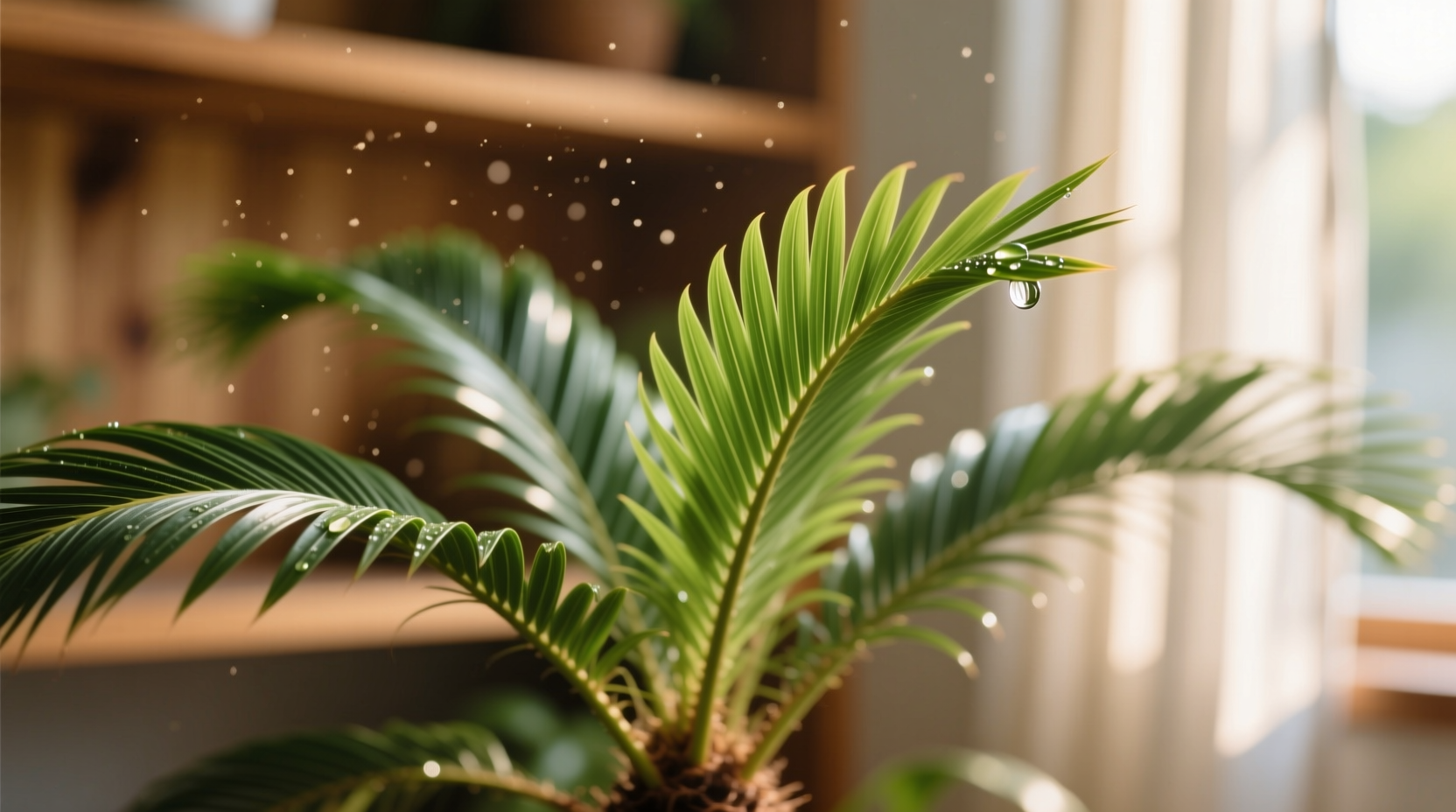
Understanding the Ravenea Palm: Species, Origins, and Realistic Expectations
The genus Ravenea comprises 20+ species native exclusively to Madagascar, a biodiversity hotspot where these palms evolved along riverbanks, forest edges, and seasonally flooded lowlands. Of these, only two are widely cultivated outside tropical zones: Ravenea rivularis (the majestic, fast-growing “majesty palm”) and Ravenea glauca (a rarer, slower-growing, silvery-leaved relative). Though often mislabeled as “majesty palms” in nurseries, R. rivularis is the sole species reliably available in North America and Europe—and it’s this one we’ll focus on throughout this guide.
Contrary to popular belief, R. rivularis is not a low-maintenance “beginner palm.” Its rapid growth (up to 2–3 feet per year under ideal conditions) demands proportional attention to structural support, nutrient replenishment, and environmental stability. In its native habitat, it grows in rich, loamy alluvial soils with near-constant moisture and 70–90% relative humidity. Indoors or on temperate balconies, those conditions must be deliberately recreated—not assumed.
Key reality checks:
- Size matters—and it matters quickly: A 3-foot potted specimen can reach 8–10 feet within 3 years. Plan for ceiling height, vertical clearance, and weight-bearing capacity (a mature 6-foot plant in a 14-inch pot may weigh 45–60 lbs).
- It does not tolerate cold: Temperatures below 55°F (13°C) trigger metabolic slowdown; below 45°F (7°C), irreversible cell damage begins. Frost kills instantly.
- It resents root disturbance: Repotting should occur only every 2–3 years—and never in winter or during active dormancy (late November through February in the Northern Hemisphere).
- It is not pet-safe: While not classified as highly toxic like sago palms (Cycas revoluta), Ravenea contains mild gastrointestinal irritants. Keep away from dogs and cats prone to chewing foliage.
Light Requirements: Bright Indirect Is Ideal—Direct Sun Is Conditional
Ravenea palms perform best under bright, filtered light—think eastern or western exposures with sheer curtains, or southern windows shaded by an overhang or adjacent building. This mimics their natural understory or riparian edge habitat, where dappled sunlight penetrates canopy gaps.
Direct sun exposure requires careful calibration:
- Morning sun (6–11 a.m.): Generally safe and beneficial—even for young plants—as UV intensity remains low and promotes chlorophyll synthesis without thermal stress.
- Afternoon sun (12–4 p.m.): Risky unless humidity exceeds 60% and ambient temperatures stay below 82°F (28°C). Unfiltered southern or western afternoon light frequently causes bleached patches, crispy leaf margins, and accelerated transpiration loss.
- Low-light environments: Lead to etiolation (weak, spindly new fronds), dramatically reduced growth rates, and increased susceptibility to fungal pathogens. Supplemental lighting using full-spectrum LED grow lights (300–500 µmol/m²/s at canopy level, 10–12 hours daily) is strongly advised for north-facing rooms or windowless interiors.
Use a handheld light meter—or even your smartphone’s camera app—to assess intensity. If your phone’s auto-exposure shows f/2.8 or faster at ISO 100 in daylight, light is likely sufficient. If images appear consistently dim or grainy without flash, supplemental light is needed.
Watering Strategy: The Moist-Not-Wet Principle
Watering is the single most consequential factor in ravenea palm care—and also the most misunderstood. These palms evolved in floodplain soils that drain rapidly yet retain moisture between inundations. Their roots need oxygen *and* hydration simultaneously—a delicate balance easily disrupted by rigid schedules or intuition-based routines.
Follow this evidence-based protocol:
- Check soil moisture at 2 inches deep—not the surface. Use a clean wooden dowel or digital moisture probe. When the dowel emerges dry or the probe reads ≤3 on a 1–10 scale, it’s time to water.
- Water thoroughly until liquid runs freely from drainage holes. Never allow water to pool in the saucer. Empty excess within 15 minutes.
- Adjust frequency by season and environment:
| Season | Typical Frequency (6–8" pot) | Key Environmental Triggers | Red Flags to Watch |
|---|---|---|---|
| Spring (Apr–Jun) | Every 4–6 days | Rising temps, longer days, active root expansion | Soil drying in <3 days → increase humidity or check for root-bound condition |
| Summer (Jul–Aug) | Every 2–4 days | Peak evapotranspiration, possible AC-induced dryness | Leaf tips browning despite frequent watering → likely low humidity or salt buildup |
| Fall (Sep–Oct) | Every 5–7 days | Cooler temps, shorter days, slowed metabolism | New fronds emerging pale green or narrow → reduce fertilizer, verify light levels |
| Winter (Nov–Mar) | Every 7–12 days | Low light, indoor heating, minimal growth | Yellowing lower fronds + mushy stem base → immediate root rot assessment required |
Avoid these fatal watering myths:
- “Let it dry out completely”: This desiccates fine root hairs, impairing nutrient uptake long before visible wilting occurs.
- “Ice cubes once a week”: Too little water, too cold, and uneven distribution—guarantees shallow root development and thermal shock.
- “Water only when leaves droop”: Drooping is a late-stage stress signal. By then, cellular turgor has already collapsed.
Humidity & Airflow: Non-Negotiable Partners
Ravenea palms require sustained humidity of 50–70% RH for optimal stomatal function, photosynthetic efficiency, and pest resistance. Below 40%, epidermal cells dehydrate, cuticle integrity weakens, and spider mites (Tetranychus urticae) colonize unchecked.
Passive humidification rarely suffices. Prioritize these proven methods:
- Grouping with other broadleaf plants: Creates localized microclimates via collective transpiration. Place within 2–3 feet of ferns, calatheas, or peace lilies.
- Gravel trays with water (not sitting in it): Fill a tray with 1–2 inches of pebbles, add water just below the stone surface, and set the pot on top. Replenish daily.
- Room humidifiers (ultrasonic or evaporative): Maintain 55–65% RH measured with a calibrated hygrometer placed at plant height. Clean tanks weekly to prevent bacterial aerosolization.
- Strategic misting (only in morning): Light, fine sprays on upper leaf surfaces *before* 10 a.m.*—never at dusk or night, which encourages foliar fungi like Colletotrichum.
Airflow is equally critical. Stagnant air invites fungal spores and impedes gas exchange. Use a small oscillating fan on low setting—positioned 4–6 feet away—to create gentle movement *around* (not directly at) the plant. This reduces boundary layer resistance without causing mechanical stress.
Soil & Potting: Drainage First, Fertility Second
Ravenea palms suffer more from poor aeration than nutrient deficiency. Standard “potting mix” often contains excessive peat moss, which compacts, repels water when dry, and restricts oxygen diffusion. Instead, use a custom blend:
Optimal Soil Recipe (by volume):
- 40% coarse perlite or pumice (¼–⅜ inch grade)
- 30% high-quality orchid bark (medium grade, ½ inch)
- 20% coconut coir (not peat—coir re-wets evenly and resists compaction)
- 10% worm castings (for slow-release micronutrients and beneficial microbes)
Pots must have multiple large drainage holes (minimum 3–4 per 10-inch diameter). Avoid glazed ceramic or glass containers unless drilled. Terracotta offers superior breathability but dries faster—ideal for humid climates or overwaterers. Fabric pots (e.g., Smart Pots) significantly reduce root circling and improve aeration but require more frequent monitoring.
Repotting steps (every 2–3 years in early spring):
- Water plant thoroughly 1 day prior.
- Gently remove from current container; inspect roots for dark, slimy, or foul-smelling sections—prune aggressively with sterilized shears.
- Loosen outer 1–2 inches of root ball without breaking structure.
- Place in new pot 1–2 inches larger in diameter; backfill with fresh mix, firming lightly.
- Water deeply, then withhold fertilizer for 4 weeks to allow root recovery.
Fertilizing: Balanced Nutrition Without Salt Buildup
Raveneas are moderate feeders—not heavy consumers like citrus or hibiscus—but respond dramatically to consistent, balanced nutrition. Use a complete, water-soluble fertilizer with an NPK ratio near 3-1-2 or 8-2-4 (e.g., Dyna-Gro Foliage Pro 9-3-6 or Espoma Organic Palm-Tone 4-1-5).
Apply only during active growth (April–September):
- Dilution: Half-strength (e.g., ½ tsp per gallon) with every 2nd or 3rd watering.
- Timing: Always fertilize to moist (not dry) soil to prevent root burn.
- Flush monthly: Run 3x the pot volume in plain water to leach accumulated salts. Watch for white crust on soil surface or pot rim—that’s sodium chloride and calcium carbonate buildup, toxic to fine roots.
Do not use slow-release spikes—they concentrate nutrients unevenly and worsen salt accumulation. Avoid high-phosphorus “bloom booster” formulas; palms prioritize vegetative growth, not flowering.
Pruning, Grooming, and Pest Management
Raveneas require minimal pruning. Remove only fully brown, dead fronds—never partially yellow or green ones, as they continue photosynthesizing. Cut cleanly at the base, leaving the smooth, tan “crownshaft” intact. Never shave or scrape the trunk; this invites pathogenic bacteria.
Common pests and organic controls:
- Spider mites: Fine webbing + stippled yellow leaves. Treat with 2 applications of insecticidal soap (e.g., Safer Brand) spaced 5 days apart, covering undersides thoroughly.
- Scale insects: Brown or white bumps on stems/frond bases. Scrape off manually, then dab with 70% isopropyl alcohol on cotton swab.
- Fungus gnats: Indicate overly wet soil. Let top 1.5 inches dry fully between waterings; apply Bacillus thuringiensis israelensis (BTI) dunks to irrigation water monthly.
Prevent disease by avoiding overhead watering, ensuring leaf surfaces dry before nightfall, and never crowding plants within 12 inches of walls or furniture.
Seasonal Care Calendar: Month-by-Month Actions
Align your routine with phenological cues—not the calendar alone:
- March: Begin gradual increase in watering; resume fertilizing at quarter strength.
- May: Check for root emergence at drainage holes—sign to consider repotting.
- July: Monitor humidity daily; increase misting or humidifier runtime if RH drops below 50%.
- September: Reduce fertilizer strength by half; begin acclimating to lower light if moving indoors.
- November: Suspend fertilizing; switch to deep-but-infrequent watering; inspect for pests pre-holiday indoor move.
- January: Wipe dust from fronds with damp microfiber cloth; prune only fully necrotic tissue.
Why Your Ravenea Palm May Be Struggling: Diagnosis Flowchart
When symptoms arise, ask in this order:
- Root health first: Gently lift plant. Are roots firm, white/tan, and fibrous? Or brown, mushy, and foul-smelling?
- Soil moisture history: Has it been consistently soggy, or allowed to bake dry?
- Light exposure: Has placement changed recently? Is light intensity measurable (lux meter)?
- Humidity reading: What’s the actual RH at plant height—not across the room?
- Recent inputs: New fertilizer? Tap water used without flushing? Recently moved or repotted?
Most “mystery declines” resolve after correcting root zone oxygenation and humidity—before any nutrient intervention.
Frequently Asked Questions
Can I grow a ravenea palm outdoors year-round?
Only in USDA Hardiness Zones 10b–11 (e.g., coastal Southern California, South Florida, Hawaii), where winter lows stay above 35°F (2°C) and frost is absent. Elsewhere, treat as a summer patio plant—move outdoors after last frost (soil temp >60°F/16°C), then bring inside before first fall chill.
Why are the tips of my ravenea palm turning brown?
Most commonly due to low humidity (<40% RH) or fluoride/chlorine in tap water. Switch to rainwater, distilled water, or filtered water (reverse osmosis). Increase humidity immediately. Trim brown tips with clean scissors—cut following natural leaf contour to preserve aesthetics.
How often should I rotate my ravenea palm?
Rotate ¼ turn weekly to ensure even light exposure and symmetrical growth. Palms naturally phototropically orient toward light sources; unrotated specimens develop lopsided canopies and lean permanently.
Does a ravenea palm flower indoors?
Virtually never. Flowering requires decades of uninterrupted growth in near-perfect outdoor conditions—including seasonal temperature differentials and pollinator access. Don’t expect blooms—focus instead on lush, dense, emerald-green fronds.
What’s the best way to clean ravenea palm leaves?
Wipe gently with a soft, damp microfiber cloth every 2–3 weeks. For dusty or greasy buildup, use a solution of 1 tsp mild castile soap per quart of lukewarm water. Rinse with clean water afterward. Never use leaf shine products—they clog stomata and attract dust.
Ravenea palm care is less about rigid rules and more about cultivating observational discipline: watching how soil responds to water, tracking humidity fluctuations, noticing subtle shifts in leaf texture and color, and adjusting inputs before symptoms escalate. With consistent attention to root health, atmospheric moisture, and light quality—not just feeding or watering on autopilot—you’ll transform your ravenea from a struggling specimen into a bold, architectural centerpiece that thrives for years. Its resilience isn’t passive; it’s earned through attentive stewardship. Start today by checking your hygrometer reading and probing 2 inches into the soil. That single action sets the foundation for everything else.
Remember: no palm dies overnight. Decline is almost always a cascade of small, repeated oversights—overwatering in winter, ignoring humidity in summer, skipping flushes, using unbalanced fertilizer. Reverse one variable at a time. Document changes. Measure outcomes. Within 4–6 weeks, you’ll see measurable improvement in new frond emergence, leaf gloss, and overall vigor. That’s not hope—that’s horticultural cause-and-effect, grounded in plant physiology and proven across thousands of balcony gardens and sun-drenched living rooms.
Healthy ravenea palms don’t just survive indoors—they elevate entire spaces with tropical presence, air-purifying capacity, and quiet, rhythmic growth. They reward patience with grace, and consistency with longevity. Your role isn’t to force growth, but to remove barriers to it. With this guide as your reference, you now hold the keys—not to perfection, but to reliable, repeatable success.




 浙公网安备
33010002000092号
 浙B2-20120091-4