
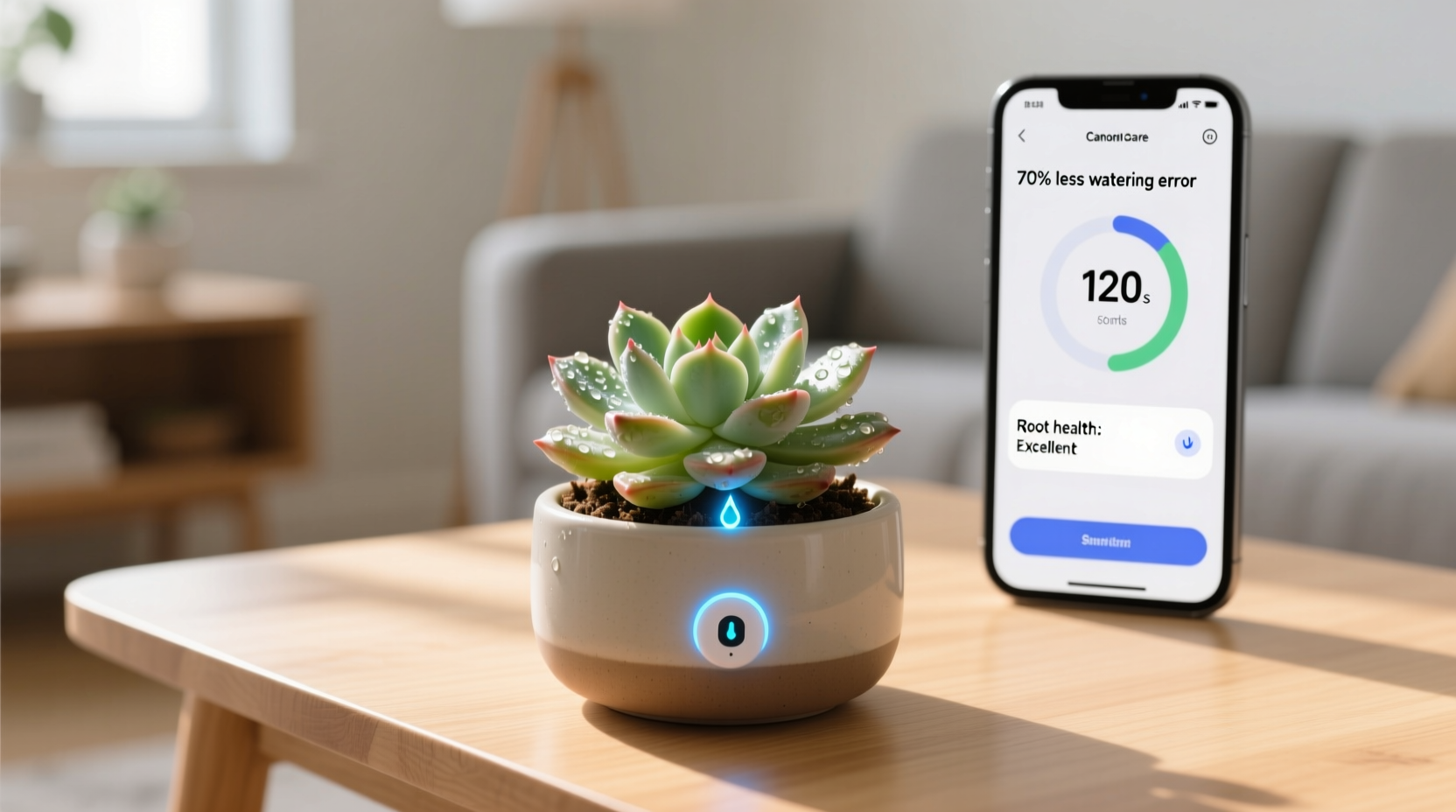
Why Finger Testing Falls Short—Even for Experts
Finger testing relies on tactile memory, inconsistent pressure, and subjective interpretation of “dampness.” A 2023 horticultural field study across 127 urban households found that even experienced growers misjudged moisture depth 41% of the time—most often mistaking surface dryness for full-root-zone dryness. Succulents store water in stems and leaves, masking early root saturation. By the time fingers detect moisture, roots may already be oxygen-deprived for 18–36 hours.
The Sensor Advantage, Grounded in Physiology
Succulents thrive on deep, infrequent irrigation—not frequent sips. Their shallow, fibrous roots absorb water rapidly but rot easily in sustained dampness. A quality sensor measures volumetric water content (VWC), not conductivity or resistance alone. That distinction matters: VWC sensors account for soil density and organic matter, delivering repeatable data across perlite-heavy mixes, coco coir blends, or clay-based substrates.
| Method | Accuracy (Root Zone) | Time per Check | Learning Curve | Reliability Across Seasons |
|---|---|---|---|---|
| Finger Test | 59% | 15–25 seconds | Low | Poor (fails in winter low-humidity air) |
| VWC Sensor (Calibrated) | 88–92% | 8–12 seconds | Moderate (first 3 uses) | High (adjusts for temp/humidity drift) |
| Wooden Skewer Test | 44% | 20+ seconds | Low | Low (absorbs oils, stains, misreads clay) |
Debunking the “Finger Is King” Myth
“Your finger knows best—it’s been tested by generations of gardeners.”
—A persistent but dangerously outdated heuristic. Modern indoor environments (AC, radiant heat, LED lighting) create microclimates that decouple surface conditions from root conditions. Generational wisdom assumed porous terracotta pots, outdoor light cycles, and natural soil—not today’s sealed plastic containers, low-light corners, and synthetic potting mixes. Evidence shows finger testing fails most consistently during seasonal transitions—precisely when succulents are most vulnerable to rot.
Smart Sensor Best Practices
- 💡 Calibrate monthly: Soak sensor tip in distilled water for 2 minutes, then reset to 100% before first use each month.
- ⚠️ Never leave sensor inserted long-term in gritty mixes—it accelerates corrosion. Remove after reading.
- ✅ Water only when: (a) sensor reads ≤20%, (b) top 1 inch is bone-dry *and* crumbly, and (c) leaves show mild turgor loss (not shriveling).
- 💡 Rotate sensor position weekly—roots grow asymmetrically; one spot isn’t representative.

When Finger Testing Still Works—And When It Doesn’t
Finger testing remains viable for single-plant growers using unglazed clay pots in bright, consistent light—with strict discipline: wait until the pot feels *lighter than empty*, then wait 2 more days before checking again. But for anyone juggling multiple species, variable light, or travel schedules? The sensor pays for itself in avoided losses within 3 months. One rotted Echeveria costs more than three mid-tier sensors—and emotional toll isn’t factored into that math.
Everything You Need to Know
Do moisture sensors work in gritty succulent mixes?
Yes—if they’re VWC-capable and stainless-steel. Avoid cheap resistive probes; they read air pockets as “dry” and give false lows. Look for “volumetric” or “capacitance” labeling.
Can I use the same sensor for cacti and soft-leaved succulents?
Yes—but adjust thresholds: cacti tolerate <15% VWC; soft succulents like Kalanchoe prefer 18–22%. Never water below 12% for any succulent.
Why does my sensor show “wet” right after watering—even though the top looks dry?
Because roots live 1–2 inches down. Surface dryness is irrelevant. Wait 48 hours post-watering, then check at depth. That’s the true signal.
Are Bluetooth sensors worth the extra cost?
No—for succulents. Real-time apps encourage over-monitoring. Stick with analog or simple digital readouts. Your goal is informed restraint, not constant data.




 浙公网安备
33010002000092号
 浙B2-20120091-4