
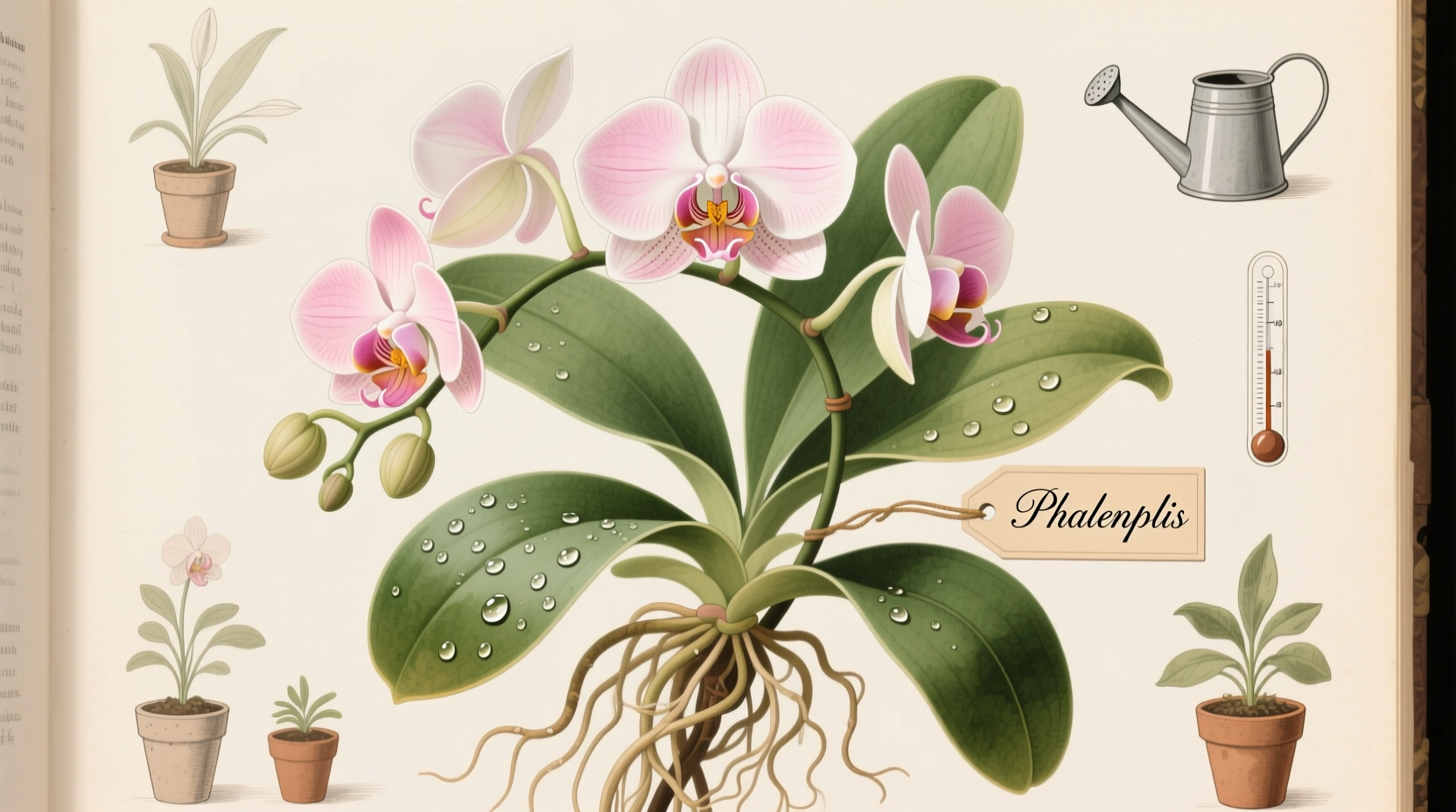
Why “Orchid Care Is Hard” Is a Myth—And What Really Matters
Orchids are among the most widely mischaracterized houseplants. Media portrayals and anecdotal advice often frame them as temperamental divas demanding perfection. In reality, over 30,000 orchid species exist—and the 10–15 commonly grown indoors (Phalaenopsis, Dendrobium nobile, Cattleya, Oncidium, Paphiopedilum) share consistent physiological needs rooted in their shared evolutionary strategy: they’re epiphytes (air plants) or lithophytes (rock dwellers), not terrestrial plants. Their roots are covered in velamen—a spongy, multi-layered tissue that absorbs water quickly and dries just as fast. This means their care hinges on two non-negotiable principles: air circulation around roots and intermittent, thorough hydration.
Misconceptions persist because many growers apply terrestrial plant logic: “Water weekly,” “Use regular potting soil,” or “Keep it in low light to ‘rest.’” None of these align with orchid physiology. For example, standard potting soil retains too much moisture, suffocating velamen and inviting Fusarium and Pythium pathogens. Likewise, low light starves the leaves of photons needed to fuel pseudobulb development—the energy reservoirs that support flowering. When we stop treating orchids like miniature trees and start honoring their aerial architecture, success becomes routine—not rare.
Light: The Non-Negotiable Foundation
Light drives photosynthesis, carbohydrate storage, and flower initiation. Insufficient light is the #1 reason orchids refuse to rebloom—even if all other conditions seem ideal.
- Phalaenopsis (Moth Orchid): Thrives in bright, indirect light. Ideal placement: 2–3 feet from an east-facing window, or behind a sheer curtain on a south-facing balcony. Avoid direct midday sun—it scorches leaves, causing yellow or brown crispy patches. A healthy leaf is olive green and slightly soft; dark green = too little light; reddish tinge = borderline too much.
- Cattleya & Dendrobium: Require higher light intensity. Place within 12 inches of an east or unshaded south window. Supplement with full-spectrum LED grow lights (3,000–6,500K color temperature) for 12–14 hours daily if natural light falls below 1,500 foot-candles (use a $25 lux meter app for accuracy).
- Paphiopedilum (Slipper Orchid): Prefers lower light—similar to a north-facing window or under shade cloth outdoors. Direct sun burns its thin, mottled leaves instantly.
Pro tip: Rotate your orchid 90° weekly to ensure even light exposure and symmetrical growth. Also, monitor seasonal shifts: in winter, light intensity drops up to 40%—move plants closer to windows or add supplemental lighting by late October.
Watering: Precision Over Habit
There is no universal watering schedule. Frequency depends on pot size, medium composition, ambient humidity, airflow, and season—not the clock. The gold standard is the “finger-and-weight test”:
- Insert your clean index finger 1 inch into the potting medium. If damp or cool, wait.
- Lift the pot. A recently watered 4-inch plastic pot with bark weighs ~14 oz; when dry, it’s ~9 oz. That 5-ounce difference signals readiness.
- For mounted orchids or those in net baskets, check root color: silvery-white = dry and ready; bright green = hydrated and actively absorbing.
When watering, drench thoroughly until water runs freely from drainage holes. Never let the plant sit in standing water. Use room-temperature, low-chlorine water: rainwater, distilled, or tap left uncovered for 24 hours to off-gas chlorine. Avoid ice cubes—a viral trend that shocks roots, inhibits nutrient uptake, and promotes crown rot. Water in the morning so foliage dries before nightfall, reducing fungal risk.
Seasonal adjustment is critical: reduce frequency by 30–50% in fall/winter when growth slows and evaporation drops. Increase slightly in summer—but only if humidity stays above 40%. Below 30%, even frequent watering won’t compensate for desiccation stress.
Humidity & Airflow: The Invisible Duo
Most orchids evolved in humid, breezy forest canopies (50–80% RH). Indoor homes average 20–30% RH—especially in heated winters. Low humidity triggers bud blast (premature flower drop), brittle leaf tips, and stunted root growth.
Effective, low-effort solutions include:
- Grouping plants on a pebble tray filled with water (ensure pots sit *above* waterline, never submerged).
- Using a small, cool-mist humidifier placed 3–4 feet away—never aimed directly at leaves.
- Installing a small oscillating fan on low setting near (not blowing on) the plants for 2–4 hours daily to refresh air and strengthen cell walls.
Avoid misting alone—it raises humidity for minutes but encourages bacterial leaf spot if water pools in leaf axils. Instead, focus on sustained, ambient humidity and gentle air movement. Monitor with a hygrometer: aim for 50–65% RH during the day, never below 40% at night.
Potting Medium & Repotting: When and How to Refresh Roots
Orchid potting media decompose over time—bark breaks down, sphagnum moss compacts, coconut chips lose porosity. This reduces oxygen flow and increases water retention, creating anaerobic conditions lethal to velamen. Repotting isn’t optional maintenance—it’s life support.
Repot every 18–24 months, ideally in spring as new roots emerge (look for silvery-green root tips). Signs you’re overdue: soggy medium that smells sour, roots turning brown/black/mushy, or aerial roots growing over the pot rim seeking air.
Choose media based on your climate and habits:
| Medium | Best For | Watering Frequency | Notes |
|---|---|---|---|
| Medium-grade fir bark | Most Phalaenopsis, Cattleya, Dendrobium | Every 7–10 days (dry climate); every 12–14 days (humid) | Add 20% perlite or charcoal for extra drainage |
| New Zealand sphagnum moss (long-fiber) | Dry homes, beginners, Paphiopedilum | Every 10–14 days (check weight first) | Must be rinsed and squeezed—never packed tightly |
| Coconut husk chips + lava rock | High-humidity zones, greenhouse growers | Every 5–7 days | Excellent aeration; resists compaction longer than bark |
To repot: gently remove plant, rinse roots under lukewarm water, trim dead or hollow roots with sterilized scissors, place in clean pot with fresh medium, and stake if needed. Do not water for 5–7 days—let cut surfaces callus. Resume normal care only after new root tips appear.
Fertilizing: Less Is More, But Timing Is Everything
Orchids are light feeders. Overfertilizing burns roots, stalls growth, and prevents flowering. The “weakly, weekly” rule—¼ strength of a balanced fertilizer (e.g., 20-20-20 or 11-35-15 for bloom boost)—applies only during active growth (spring to early fall).
Key refinements:
- Never fertilize a dry root system—always water first, then apply diluted fertilizer.
- Flush monthly with plain water to prevent salt buildup (visible as white crust on pot edges or roots).
- Switch to high-phosphorus (10-30-20) formula 8 weeks before expected bloom season—but only if the plant shows robust new growth.
- Stop all feeding in late fall and winter—dormant orchids use negligible nutrients.
Beware of “orchid-specific” fertilizers marketed with exaggerated claims. Most contain standard NPK ratios plus trace elements (iron, zinc, boron) already present in quality all-purpose formulas. What matters more is consistency, dilution, and timing—not proprietary blends.
Common Killers—and How to Reverse Course
Even experienced growers encounter setbacks. Here’s how to diagnose and intervene:
Yellow Leaves
Bottom leaf yellowing is natural senescence. But widespread yellowing? Check for overwatering (soft, brown roots), underwatering (wrinkled pseudobulbs), or excessive light (bleached, papery texture). Trim affected leaves at the base with sterilized shears—don’t pull.
No New Flowers
Most Phalaenopsis need a 4–6 week cool period (60–65°F nights) to initiate spikes. If your home stays above 68°F year-round, move the orchid to an unheated room (like a garage or enclosed porch) for 3 weeks in October. Ensure it still receives adequate light.
Root Rot
Early signs: roots turn brown, feel mushy, and slough off velamen when touched. Immediate action: remove plant, cut away all rotted tissue, dust cuts with cinnamon (natural antifungal), repot in fresh, airy medium, and withhold water for 10 days. Place in bright, warm, airy location—not low light, which slows recovery.
Bud Blast
Sudden bud drop results from rapid changes: drafty windows, heater vents, ethylene gas (from ripening fruit), or inconsistent watering. Prevent by stabilizing environment and avoiding moving plants during spike development.
Species-Specific Nuances You Can’t Ignore
While core principles apply broadly, subtle differences determine long-term success:
- Phalaenopsis: Grows year-round; prefers stable warmth (70–85°F days / 60–65°F nights); blooms on old spikes—cut above second node to encourage branching.
- Dendrobium nobile: Needs distinct wet/dry cycles and cooler winter temps (55°F nights) to bloom. Goes semi-dormant—reduce water to “just enough to prevent shriveling” for 6–8 weeks.
- Cattleya: Forms pseudobulbs that store water—wait until new growth matures and sheath cracks before increasing water. Needs higher light than Phals.
- Paphiopedilum: Terrestrial-like; hates drying out completely. Prefers even moisture and cooler temps (60–75°F). No pseudobulbs—relies on constant root activity.
Always identify your orchid’s genus before adjusting care. Labels fade; photos and leaf shape (strap-like vs. mottled vs. cylindrical) are reliable clues. Apps like PlantNet or iNaturalist help confirm ID—critical before applying species-specific protocols.
Tools That Earn Their Keep
You don’t need dozens of gadgets—but three tools dramatically improve outcomes:
- Sterilized pruning shears (soak in 70% isopropyl alcohol for 5 minutes between cuts)—non-negotiable for safe repotting and disease control.
- Digital scale or kitchen scale (0.1g precision)—essential for accurate fertilizer dilution. Guessing “a capful” leads to overdose.
- Soil moisture meter with probe (not the cheap colored-stick type)—insert to root zone depth to verify dryness objectively. Removes guesswork.
Optional but valuable: a humidity/temperature logger (e.g., ThermoHigro) to map microclimates on your balcony or windowsill—revealing why one orchid thrives while another struggles inches away.
When to Seek Help—and What to Ask
If your orchid fails to recover after 8 weeks of corrected care, consult a local orchid society (find chapters via the American Orchid Society website) or certified nursery professional—not generic gardening forums. Bring clear photos of leaves, roots, potting medium, and overall plant, plus notes on your routine (watering dates, fertilizer used, window direction, recent moves). Specificity enables precise diagnosis. Avoid vague questions like “Why is my orchid dying?” Replace with: “I repotted my Phalaenopsis in fresh bark 3 weeks ago; roots were firm and green, but now lower leaves yellow and roots feel soft—am I overwatering or did I damage roots during repotting?”
Frequently Asked Questions
How often should I water my orchid in winter?
In most indoor climates, water every 10–14 days—using the finger-and-weight test, not the calendar. Cooler temperatures slow evaporation and growth, so roots stay moist longer. Always check before watering.
Can I use regular potting soil for orchids?
No—never. Garden soil or standard potting mix compacts, excludes air, and holds water too long, suffocating orchid roots. Use only orchid-specific media: bark, sphagnum moss, coconut chips, or lava rock—alone or blended.
My orchid has aerial roots growing outside the pot. Should I cut them?
No. Aerial roots are normal and functional—they absorb moisture and CO₂ from the air. Mist them lightly in dry conditions, but never bury them in medium or prune unless blackened and rotten.
Why won’t my orchid rebloom after the first flowers fade?
Most commonly: insufficient light, lack of cool-night trigger (for Phals), or depleted potting medium. Also check for pests (scale insects hide in leaf axils) and ensure you’re fertilizing during active growth—not dormancy.
Is tap water safe for orchids?
It depends on your source. Hard water (high calcium/magnesium) leaves mineral deposits; chlorinated water stresses roots. Let tap water sit uncovered for 24 hours to dissipate chlorine, or use rainwater or distilled water. Test your water’s PPM with a TDS meter—if >150 ppm, consider filtration.
Orchid care isn’t about mystique—it’s about observing, measuring, and responding to biological signals. When you understand that a silvery root tip means “I’m ready to drink,” that a stiff, upright leaf signals optimal light, and that a lightweight pot whispers “it’s time”—you’re no longer following instructions. You’re conversing with the plant. And that conversation, repeated consistently across seasons, is what transforms occasional blooms into reliable, radiant flowering—year after year.
Remember: Every successful orchid grower started with a single plant, a few mistakes, and the willingness to learn from what the roots—and not just the flowers—were telling them. Start there. Observe closely. Adjust deliberately. Your next spike is already forming beneath the surface.




 浙公网安备
33010002000092号
 浙B2-20120091-4