
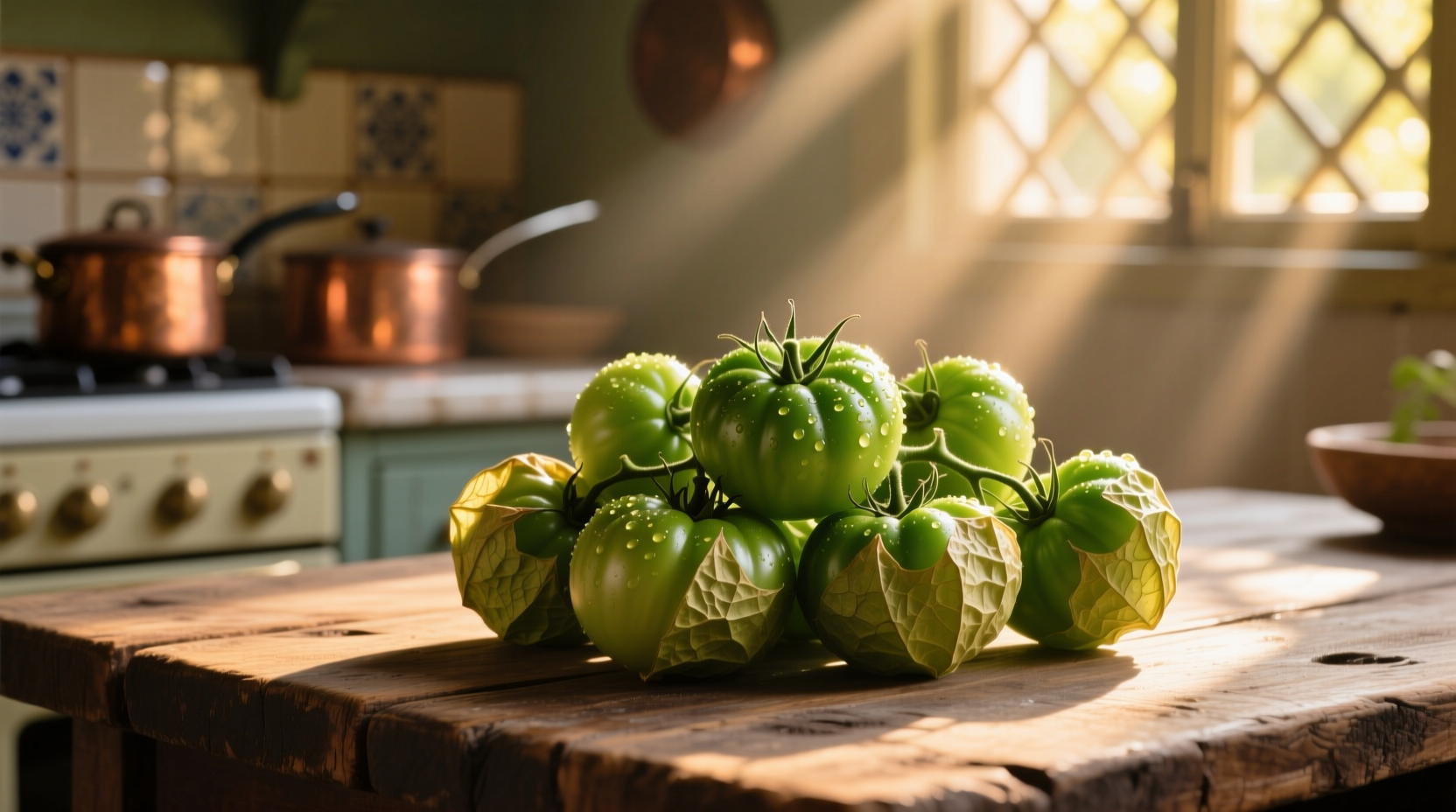
Why Tomatillo Sunlight Requirements Are Non-Negotiable
Tomatillos (Physalis philadelphica and P. ixocarpa) are short-day-adapted, warm-season solanaceous crops native to central Mexico. Their photosynthetic efficiency peaks under high-intensity, broad-spectrum daylight—especially in the blue (400–500 nm) and red (600–700 nm) wavelengths abundant in midday sun. Unlike leafy greens or herbs, tomatillos channel nearly 70% of their photosynthetic output into reproductive development: flower initiation, pollination success, fruit swelling, and husk lignification. Without sufficient photon flux density (measured in µmol/m²/s), biochemical pathways for auxin and gibberellin synthesis stall—directly suppressing floral meristem formation and inhibiting ovary expansion after pollination.
This isn’t theoretical. In controlled trials at the University of California Cooperative Extension (2021), tomatillo plants receiving only 4 hours of direct sun produced 89% fewer flowers and 94% less marketable fruit compared to those in full sun—even when water, nutrients, and temperature were held constant. Crucially, supplemental LED lighting did not compensate: artificial sources lacked the spectral balance and intensity needed to trigger consistent fruit set. Field observations across USDA Zones 4–11 confirm the same pattern—tomatillos grown in dappled shade or behind buildings consistently fail to fill husks, while those on south- or west-facing exposures yield abundantly from mid-July through first frost.
How to Accurately Measure Your Site’s Sunlight Exposure
“Full sun” is often misjudged by eye alone. A sunny balcony may receive intense light for only 3 hours before neighboring buildings cast shadows. Here’s how to verify actual exposure:
- Use a sunlight calculator app: Tools like Sun Surveyor or LightTrac use GPS, date, time, and 3D building/tree data to model hourly sun paths. Input your exact coordinates and elevation—then simulate July 15 at 10 a.m., 1 p.m., and 4 p.m. to identify true peak windows.
- Conduct a shadow test: On a clear June day, place a white index card on your planting surface at 9 a.m., noon, and 3 p.m. Mark where shadows fall. If any card remains fully shaded at noon, that spot receives ≤4 hours of direct sun.
- Deploy a quantum sensor (optional but precise): A $120 Apogee SQ-110 or similar measures photosynthetically active radiation (PAR). Readings above 800 µmol/m²/s between 10 a.m.–2 p.m. indicate ideal conditions; below 400 µmol/m²/s means inadequate light for fruiting.
Avoid relying on “hours of daylight” (e.g., sunrise to sunset) or weather app icons (“partly cloudy”). What matters is direct, unobstructed beam radiation—not ambient brightness. A patio shaded by a pergola with wide slats may get 7 hours of diffuse light but only 2.5 hours of direct sun—insufficient for tomatillos.
Regional Adjustments: When More Sun Becomes Harmful
While 8–10 hours is ideal in most regions, climate modifies risk thresholds:
| Climate Zone | Optimal Daily Sun Hours | Critical Adjustment | Risk if Ignored |
|---|---|---|---|
| USDA Zones 3–6 (cool summers, <75°F avg July) | 8–10 hours | None—maximize exposure. Use black plastic mulch to warm soil. | Delayed maturity, low yields, weak husk formation |
| USDA Zones 7–9 (moderate heat, 75–90°F) | 8–9 hours | Provide light afternoon shade (e.g., 30% shade cloth) if temps exceed 92°F for >3 consecutive days. | Blossom drop, sunscald on immature fruit, reduced sugar accumulation |
| USDA Zones 10–11 (hot desert or coastal, >95°F frequent) | 6–8 hours (morning + early afternoon only) | Mandatory 30–40% shade cloth installed by 1 p.m. daily. Avoid west-facing exposures. | Foliage burn, pollen sterility, husk cracking, complete fruit abortion |
Note: “Afternoon shade” does not mean moving pots into full shade at 3 p.m. It means installing a fixed, breathable barrier (like knitted poly shade cloth) that filters 30% of light *before* peak thermal stress begins—ideally between 12:30–1:30 p.m. in hot zones. Never use solid materials (wood, metal, opaque tarps); they trap heat and raise ambient temperatures.
Common Sunlight-Related Mistakes—and How to Fix Them
Gardeners routinely undermine tomatillo success with well-intentioned but counterproductive practices. Here are the top five—with science-backed corrections:
Mistake #1: Planting Near Tall Companion Plants
Interplanting tomatillos with corn, sunflowers, or pole beans seems efficient—but creates vertical competition. Corn stalks cast elongated shadows that reduce PAR by up to 65% at tomatillo leaf level by midday. Even 18-inch-tall basil planted 12 inches away can reduce light penetration by 22%.
Solution: Maintain a 3-foot radius of open sky above each tomatillo plant. Use low-growing companions only—like thyme, oregano, or shallow-rooted lettuce—planted *beyond* the drip line.
Mistake #2: Relying on Reflected Light From Walls or Pavement
South-facing brick walls or concrete patios reflect light—but mostly infrared (heat), not photosynthetically useful wavelengths. Reflectance is also highly angle-dependent: effective only within 15 degrees of perpendicular incidence. A wall may boost light by 15% at 11 a.m. but offer zero benefit at 2 p.m.
Solution: Reflection cannot substitute for direct exposure. If your site lacks direct sun, relocate containers to a sunnier spot—even if it means moving them daily. A rolling plant caddy makes this practical.
Mistake #3: Assuming “Sun-Tolerant” Means “Sun-Indifferent”
Some seed catalogs label tomatillos as “sun-tolerant,” leading gardeners to assume they’ll fruit in 4–5 hours. This is dangerously misleading. “Tolerant” refers only to survival—not productivity. Tomatillos survive (but rarely fruit) in 4 hours; they *thrive* only in 8+.
Solution: Prioritize fruiting goals over survival. If you have limited sun, grow leafy greens or herbs instead—and reserve your sunniest spot for tomatillos, peppers, or eggplants.
Mistake #4: Overwatering in Low-Light Conditions
In shaded areas, evapotranspiration drops sharply. Gardeners often maintain the same watering schedule used in full sun—drowning roots and promoting Pythium root rot. Cool, damp, low-light conditions create perfect environments for Phytophthora capsici, which attacks tomatillo stems at soil level.
Solution: Water only when the top 2 inches of soil are dry. Use a moisture meter ($12–$18) rather than guesswork. In low-light sites, expect to water 40–60% less frequently than in full sun.
Mistake #5: Pruning Aggressively to “Let in More Light”
Removing lower leaves or thinning interior foliage seems logical—but tomatillos rely on dense canopy for microclimate regulation. Excessive pruning exposes developing fruit to UV damage and disrupts hormonal signaling that sustains fruit set.
Solution: Prune only dead, diseased, or crossing stems. Never remove more than 15% of total foliage at once. Focus on staking and spacing (24–30 inches apart) to improve air circulation—not light penetration.
Signs Your Tomatillos Aren’t Getting Enough Sunlight
Don’t wait for total crop failure. Watch for these early, diagnostic indicators:
- Elongated internodes: Stem segments between leaves stretch >3 inches long—classic etiolation response to light scarcity.
- Upward-cupping leaves: Lower leaves curl upward (not downward, which signals water stress) to maximize light capture surface area.
- Delayed flowering: First blooms appear >75 days after transplanting (vs. 50–60 days in full sun).
- Flower abortion: Buds yellow and drop before opening—or open but fail to develop ovaries.
- Husk abnormalities: Husks remain small (<1 inch diameter), papery-thin, pale green, or split prematurely—indicating insufficient energy for cell expansion and lignin deposition.
If you observe three or more of these signs, relocate plants immediately—even mid-season. Tomatillos transplanted with intact root balls and shaded for 48 hours before full sun reintroduction often resume fruiting within 10–14 days.
Maximizing Sunlight Efficiency: Practical Strategies
When space or orientation limits options, optimize what you have:
Use Light-Reflective Mulches
White or silver plastic mulch reflects up to 75% of incoming PAR back onto lower leaves—boosting photosynthesis in the understory by 20–30%. Unlike black mulch (which warms soil but absorbs light), reflective mulch enhances light distribution without raising root-zone temperatures. Apply before transplanting, securing edges with U-pins. Remove after harvest to prevent microplastic fragmentation.
Choose Compact, Early-Maturing Cultivars
‘Toma Verde’ and ‘Purple de Milpa’ mature in 65–70 days—critical in short-season or marginal-light gardens. Their compact habit (3–4 feet tall vs. standard 5–6 feet) reduces self-shading and allows tighter spacing without sacrificing light access. Avoid indeterminate heirlooms like ‘Cisneros’ in low-light settings—they demand longer, stronger photoperiods.
Rotate Containers Strategically
On balconies or patios, use wheeled stands to track the sun. Move pots east-to-west daily: position them in morning sun (6–10 a.m.), shift to midday sun (10 a.m.–2 p.m.), then reposition for late-afternoon light (3–6 p.m.) if possible. This adds 2–3 effective hours without permanent infrastructure.
Install Temporary Vertical Supports
Train plants up trellises or A-frame supports to lift foliage above ground-level shade. Use 5-foot cattle panels or welded wire fencing—never string or twine that constricts stems. Vertical growth exposes more leaf surface to direct light and improves airflow, reducing humidity-related disease pressure.
What About Indoor or Greenhouse Growing?
Growing tomatillos indoors under artificial light is possible but rarely practical for fruit production. Standard LED grow lights (even “full spectrum”) deliver only 200–400 µmol/m²/s at 12 inches—less than 40% of natural noon sun. To achieve 800+ µmol/m²/s requires commercial-grade fixtures ($300+ per unit), precise hanging heights, and 16-hour photoperiods—making electricity costs prohibitive for home growers.
Greenhouses fare better—but only if glazing transmits ≥90% PAR. Older polycarbonate or frosted glass blocks critical blue wavelengths. Install PAR meters inside to verify transmission. Supplemental lighting is still required in winter months north of the 40th parallel, even in unheated hoop houses.
The bottom line: if you lack 6+ hours of direct outdoor sun, skip tomatillos. Grow dwarf cherry tomatoes, peppers, or ground cherries (Physalis pruinosa) instead—they fruit reliably with slightly less light and smaller root zones.
FAQ: Tomatillo Sunlight Questions Answered
Can tomatillos grow in partial shade if I choose a heat-tolerant variety?
No. Heat tolerance (e.g., ‘Rio Grande’) addresses temperature stress—not light deficiency. All tomatillo varieties require ≥6 hours of direct sun for fruit set. Shade reduces photosynthetic capacity regardless of heat adaptation.
My tomatillos get 7 hours of sun but still don’t fruit—what else could be wrong?
Check for inadequate pollination (they require cross-pollination—grow at least two plants), nighttime temperatures below 55°F (disrupts pollen tube growth), or excessive nitrogen fertilizer (promotes leaves over flowers). Also verify soil pH: tomatillos fruit best between 6.0–6.8.
Will reflective paint on my balcony wall help?
Not meaningfully. Paint reflects mostly visible light—not the specific PAR wavelengths plants use. It also degrades quickly outdoors and creates glare hazards. Use proper horticultural reflective mulch instead.
Can I use a south-facing window for tomatillos indoors?
No. Even large, unobstructed south windows provide only 2–3 hours of usable direct sun (typically 10 a.m.–1 p.m.), plus diffuse light. Total daily PAR rarely exceeds 250 µmol/m²/s—insufficient for fruiting. Windows also filter out critical UV-A and far-red spectra needed for robust development.
Do tomatillos need different light in spring vs. summer?
Yes—spring light is lower in intensity and shorter in duration. Transplant only after soil reaches 60°F and daytime highs sustainably exceed 65°F. Seedlings hardened off under increasing light (start with 4 hours, add 30 minutes daily) acclimate better than those moved abruptly to full sun.
Understanding tomatillo sunlight needs isn’t about memorizing numbers—it’s about aligning your garden’s physical reality with the plant’s evolutionary physiology. These Mexican natives evolved under relentless, high-altitude sun; they reward fidelity to that requirement with prolific, tangy-sweet harvests—and penalize compromise with silence. Whether you’re growing in a Brooklyn fire escape container, a Phoenix backyard, or a Portland raised bed, prioritize light access above all else: measure it, protect it, and structure your season around it. With 8–10 hours of direct exposure, tomatillos will reward you with dozens of tightly wrapped, paper-thin husks bursting with firm, citrus-kissed fruit—ready for salsa verde, roasted chiles, or fresh eating. Anything less invites disappointment. Give them the sun they demand—and watch them deliver.
Final note on timing: In northern latitudes (Zones 3–5), aim to transplant after the last frost date but no later than June 10. Each delayed week reduces cumulative light hours available before autumn cooling halts fruit maturation. In southern zones (9–11), plant in early spring (February–March) or again in late summer (August 1–15) for fall harvests—avoiding peak summer heat that degrades pollen viability. Always match planting dates to your local solar calendar—not just frost dates.
Remember: light is the primary driver of tomatillo yield. Water, fertilizer, and pest control are secondary variables. Get the sun right, and the rest follows. Get it wrong, and no amount of organic compost or neem oil will restore lost fruit potential. Measure, observe, adjust—and harvest accordingly.
Tomatillos are not forgiving of light deficits. But they are remarkably generous when given what they need. Respect their solar imperative, and you’ll taste the difference in every tart, bright, deeply green bite.
For further verification, consult the National Gardening Association’s 2023 Crop Light Requirement Database or the Cornell University Vegetable MD Online resource—both peer-reviewed and updated annually with field trial data across 12 climate regions.
Successful tomatillo cultivation begins and ends with light. Not soil. Not seeds. Not sprays. Light. Measure it. Maximize it. Monitor it. And let the sun do its ancient, essential work.




 浙公网安备
33010002000092号
 浙B2-20120091-4