
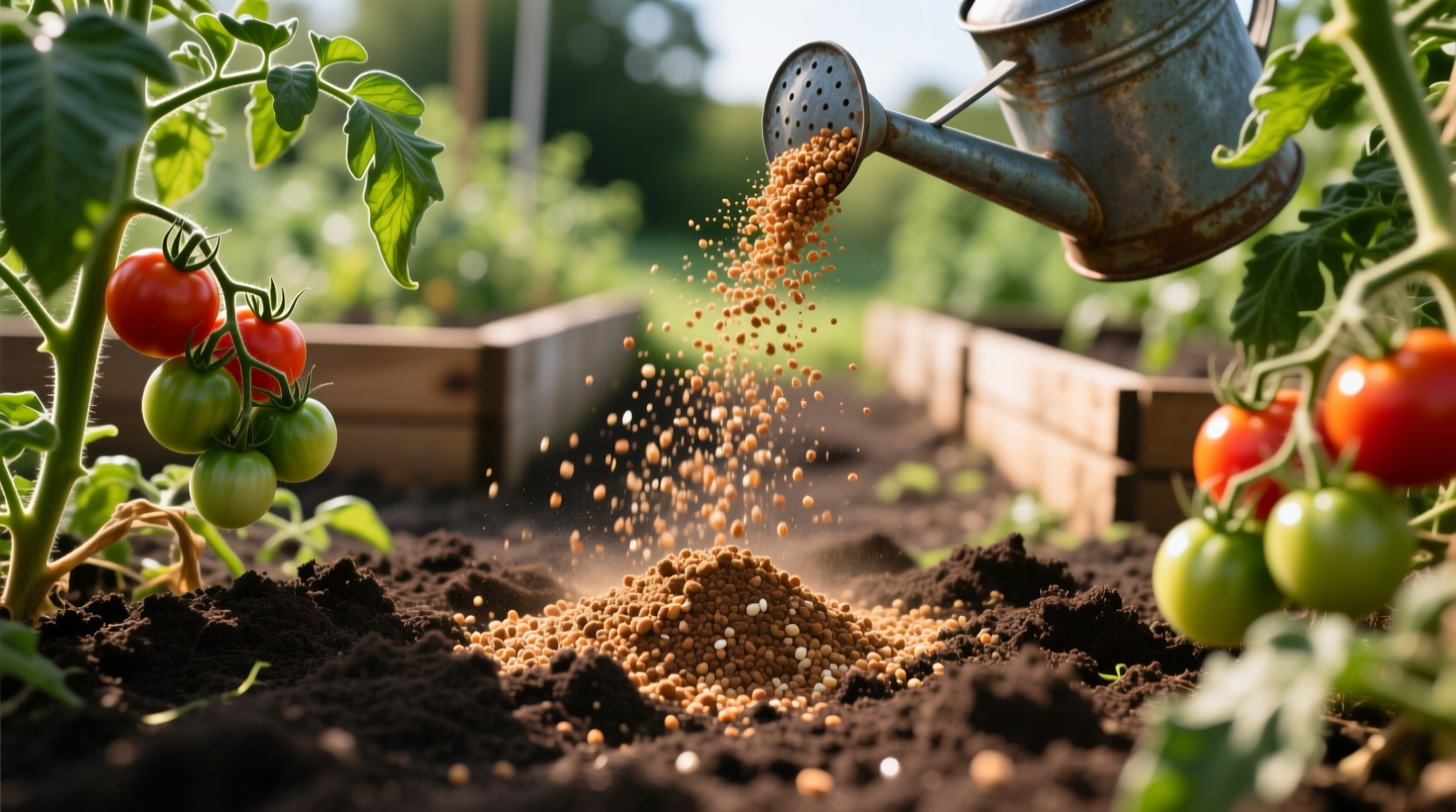
Why “Tomato Fertilizer” Is a Misleading Label
The term “tomato fertilizer” implies a universal formula. In reality, no single blend suits all stages—or all soils. Commercial bags labeled “Tomato Food” often carry ratios like 3-4-6, 5-10-10, or 8-32-16. These numbers reflect nitrogen (N), phosphorus (P₂O₅), and potassium (K₂O) percentages by weight—but they say nothing about your soil’s existing nutrient levels, pH, microbial activity, or the tomato variety you’re growing.
For example, a heavy clay soil in the Pacific Northwest may already hold abundant potassium but lack available calcium and magnesium—making a high-K fertilizer counterproductive and potentially worsening blossom end rot. Meanwhile, sandy loam in Florida leaches nutrients rapidly, demanding frequent low-dose applications—not one heavy spring feeding.
What matters most isn’t the bag’s marketing claim, but your soil test results and the plant’s visual cues. A true tomato fertilizer program begins with diagnostics—not assumptions.
Step One: Test Your Soil—Before You Buy a Single Bag
Skipping a soil test is the single most common reason home growers misapply tomato fertilizer. Visual symptoms like yellowing leaves or stunted growth are rarely diagnostic on their own: nitrogen deficiency looks nearly identical to overwatering; purple undersides can signal phosphorus lock-up *or* cold stress—not necessarily low P.
Here’s what to do:
- Use a lab-based test, not just a $15 home kit. Submit samples to your county extension office or a certified lab (e.g., Logan Labs, Spectrum Analytic). Request pH, organic matter %, extractable N-P-K, calcium, magnesium, and micronutrients (especially boron and zinc).
- Sample correctly: Take 10–12 cores from 6 inches deep across your bed or container, mix thoroughly in a clean bucket, air-dry for 24 hours, and submit 1 cup.
- Interpret results objectively: If your report shows “Phosphorus: High (75 ppm Mehlich-3)” and “Potassium: Medium (220 ppm),” avoid adding more P—and prioritize K-rich inputs like sulfate of potash or kelp meal.
Soil pH directly affects nutrient availability. Tomatoes thrive between pH 6.2–6.8. Below 6.0, phosphorus binds to iron and aluminum; above 7.0, iron and manganese become insoluble. Adjust pH *before* fertilizing: use elemental sulfur to lower it (applied 2–3 months pre-planting), or gypsum (not lime) to improve structure without raising pH.
Stage-by-Stage Tomato Fertilizer Strategy
Fertilizing tomatoes isn’t about frequency—it’s about physiological alignment. Each growth phase demands distinct nutrient priorities.
Pre-Planting & Transplanting (Weeks 0–2)
Goal: Establish root architecture and early vegetative vigor—without triggering excessive leafy growth that delays flowering.
- Avoid high-N synthetics (e.g., 21-0-0 urea or 10-10-10). Excess nitrogen at this stage promotes soft, succulent tissue vulnerable to early blight and aphids.
- Use a starter solution: 1 tsp calcium nitrate (15.5-0-0) + 1 tsp monopotassium phosphate (0-52-34) per gallon of water. Apply 1 cup per plant at transplanting—delivers soluble Ca and P without N overload.
- Incorporate slow-release organics: Mix ½ cup composted poultry manure (3-2-2) or ¼ cup alfalfa meal (2.8-0.5-2.0) into each planting hole. These feed microbes and release nutrients gradually over 4–6 weeks.
Early Vegetative Growth (Weeks 3–6)
Goal: Support stem strength, leaf expansion, and root branching—while preventing nitrogen excess.
Monitor closely: if new leaves are dark green and >6 inches long, N is sufficient. If internodes stretch (>3 inches between leaves), reduce N immediately.
- Apply a balanced, low-N organic fertilizer: Fish emulsion (5-1-1) diluted to half-strength (1 tbsp/gal) every 10–14 days. Or use compost tea brewed 36–48 hours with finished compost and unsulfured molasses.
- Avoid granular 10-10-10 or “all-purpose” blends. Their high salt index stresses young roots and suppresses mycorrhizal fungi essential for phosphorus uptake.
- Side-dress with calcium: Sprinkle 1 tbsp gypsum (calcium sulfate) per plant at 4 weeks—critical for cell wall integrity and preventing early blossom end rot.
Flowering & Fruit Set (Weeks 7–10)
Goal: Shift metabolism from growth to reproduction—boost phosphorus and potassium while holding nitrogen steady.
This is where most gardeners fail. Adding nitrogen now triggers “fruit abortion”: the plant drops tiny tomatoes to fuel new leaves instead of ripening existing fruit.
- Stop nitrogen additions entirely once first flowers open. No fish emulsion, blood meal, or ammonium sulfate.
- Apply bloom-boosting potassium: Use sulfate of potash (0-0-50) at 1 tsp per plant, scratched lightly into top 1 inch of soil and watered in deeply. Potassium activates enzymes for sugar transport into fruit and strengthens cuticle wax—reducing cracking.
- Supplement with soluble phosphorus only if soil test confirms deficiency: ½ tsp monoammonium phosphate (11-48-0) per gallon, applied once at peak flowering.
Fruit Development & Ripening (Weeks 11–harvest)
Goal: Maximize sugar accumulation, uniform color, and shelf life—while sustaining vine health.
Potassium remains critical. Calcium continues to prevent end rot in maturing fruit. Nitrogen? Still off-limits—except as foliar calcium or micronutrients.
- Maintain potassium supply: Repeat sulfate of potash application every 2–3 weeks at ½ tsp per plant until first harvest.
- Foliar calcium sprays: Mix 1 tbsp calcium chloride (77% Ca) per gallon of water. Spray late afternoon every 7 days during fruit enlargement—especially after rain or heavy irrigation. Calcium doesn’t move in phloem; foliar delivery bypasses xylem transport limits.
- Avoid magnesium deficiency: Yellowing between veins on older leaves? Spray Epsom salt solution (1 tbsp/gal) once—then stop. Overuse antagonizes calcium uptake.
Organic vs. Synthetic Tomato Fertilizer: What Actually Matters
The organic/synthetic debate distracts from core principles: solubility, timing, and salt index. A fast-acting fish hydrolysate (organic) delivers nitrogen faster than slow-release sulfur-coated urea (synthetic)—so “organic” ≠ gentle.
What to choose—and why:
- Fish emulsion (5-1-1): Ideal for early season; contains amino acids that stimulate root exudates. But high ammonia can burn roots if undiluted—always use at label rate.
- Blood meal (12-0-0): Too concentrated for tomatoes. Causes rapid, weak growth and attracts pests. Reserve for brassicas or heavy feeders like corn.
- Sulfate of potash (0-0-50): Low-salt, chloride-free potassium source. Superior to muriate of potash (0-0-60) which contains chlorine that damages tomato roots.
- Compost tea (variable): Not a fertilizer—it’s a microbial inoculant. Use *with* nutrients, not instead of them. Brew aerobically for 24–36 hours to maximize beneficial bacteria.
- Worm castings (1-0.5-0.5): Excellent for seedlings and transplants—low N, rich in humic substances that chelate micronutrients. But insufficient alone for fruiting; pair with potassium sources.
Top 5 Tomato Fertilizer Mistakes—and How to Fix Them
These errors appear consistently in extension hotline logs and soil clinic reports:
- Mistake: Feeding weekly with high-N liquid fertilizer through fruiting.
Result: Leggy plants, delayed ripening, increased late blight susceptibility.
Solution: Switch to potassium-only applications after first flower opens. Track calendar dates—don’t rely on memory. - Mistake: Using bone meal (3-15-0) at planting.
Result: Phosphorus stays locked in cool, moist spring soils—unavailable until summer, when plants need less P.
Solution: Use monopotassium phosphate for immediate P, or skip P entirely if soil test shows >30 ppm. - Mistake: Assuming container tomatoes need less fertilizer.
Result: Severe potassium depletion by week 6—small, pale fruit with poor flavor.
Solution: Containers require 2–3× more frequent low-dose feeding. Use liquid sulfate of potash weekly starting at fruit set. - Mistake: Applying fertilizer to dry soil.
Result: Root burn, especially with synthetics or fish emulsion.
Solution: Always water soil thoroughly 1–2 hours before fertilizing—even in containers. - Mistake: Ignoring micronutrients.
Result: Mottled leaves (zinc), upward cupping (boron), or necrotic spots (copper).
Solution: Add kelp meal (0.1-0-1) at planting—provides 60+ trace elements in bioavailable form. Reapply every 4 weeks.
Container-Grown Tomatoes: Special Fertilizer Considerations
Containers lack buffering capacity. Nutrients leach with every watering—especially potassium and calcium. A 5-gallon grow bag can lose 80% of its potassium in 14 days without replenishment.
Best practices:
- Use a soilless mix: 60% coco coir or peat, 30% perlite, 10% compost. Avoid garden soil—it compacts and harbors pathogens.
- Pre-charge the mix: Stir in 1 cup worm castings + ¼ cup kelp meal + 2 tbsp gypsum per 5 gallons before planting.
- Fertilize on a strict schedule: Week 1–3: fish emulsion (5-1-1) at half-strength, twice weekly. Week 4 onward: switch to sulfate of potash (0-0-50) at ½ tsp/gal, weekly. Never skip.
- Flush monthly: Pour 3× the pot volume in plain water to remove salt buildup—critical for determinate varieties.
Heirloom vs. Hybrid: Do They Need Different Fertilizer?
No—nutrient requirements are species-driven (Solanum lycopersicum), not cultivar-driven. However, growth habit changes delivery needs:
- Determinate tomatoes (e.g., ‘Roma’, ‘Bush Early Girl’): Compact, fruit all at once. Require less total nitrogen but higher potassium concentration per fruit. Feed potassium weekly starting at first cluster set.
- Indeterminate tomatoes (e.g., ‘Brandywine’, ‘Sungold’): Vining, fruit continuously. Need sustained potassium and calcium over 4+ months. Side-dress with gypsum every 4 weeks; apply kelp tea monthly for boron and zinc.
Cherry tomatoes (like ‘Sun Sugar’) set fruit prolifically and deplete potassium faster than beefsteaks—monitor leaf edges for subtle curling, an early sign of K deficiency.
Reading the Leaves: Real-Time Fertilizer Diagnostics
Forget charts—observe these three reliable indicators:
- Older leaf yellowing with green veins = Magnesium deficiency. Confirm with Epsom salt foliar spray—if improvement in 48 hours, reapply once.
- New leaves small, cupped upward, with brown margins = Boron deficiency. Common in alkaline soils or drought-stressed plants. Apply 1 tsp borax per 100 sq ft *once*—excess boron is toxic.
- Lower leaves turning yellow, then brown and crispy from tips inward = Potassium deficiency. Not drought—potassium moves readily in xylem. Immediate sulfate of potash application required.
FAQ: Tomato Fertilizer Questions Answered
Can I use coffee grounds as tomato fertilizer?
No—coffee grounds are acidic (pH ~6.2), low in nitrogen (2%), and contain compounds that inhibit seed germination and beneficial fungi. They’re excellent for mulch around acid-lovers like blueberries—not tomatoes. Compost them first, then use sparingly in finished compost.
How often should I fertilize tomatoes in raised beds?
Once at planting (balanced organic), once at first flower (potassium-focused), and once more at first fruit set (potassium + calcium). Raised beds drain well but don’t retain nutrients like native soil—avoid more than three targeted applications unless soil tests indicate otherwise.
Is Epsom salt good for tomatoes?
Only if magnesium deficiency is confirmed via soil test or leaf symptoms (interveinal chlorosis on older leaves). Routine use disrupts calcium uptake and worsens blossom end rot. Never apply with calcium sprays—time them 10 days apart.
What’s the best natural tomato fertilizer for organic gardens?
A three-part system: (1) Worm castings at planting for microbial support, (2) Kelp meal for micronutrients and stress resilience, and (3) Sulfate of potash for fruit quality. Avoid uncomposted manures—they carry pathogens and excess salts.
Why do my tomatoes flower but not set fruit?
Fertilizer is rarely the sole cause—but excess nitrogen is a top contributor. Other factors: nighttime temps below 55°F or above 75°F, low humidity, inadequate pollination, or severe potassium deficiency. Check leaf potassium levels via tissue test before assuming it’s a pollination issue.
Successful tomato fertilization hinges on humility: observing the plant, respecting the soil, and adjusting—not assuming. It’s not about pouring more nutrients, but delivering the right element, at the right time, in the right form. When you align your inputs with tomato physiology—not marketing labels—you transform fertilizer from a guessing game into a predictable, repeatable lever for flavor, yield, and resilience. Start with a soil test. Pause before you pour. Watch the leaves. And remember: the healthiest tomato plants aren’t the greenest—they’re the ones heavy with ripe, sweet fruit.




 浙公网安备
33010002000092号
 浙B2-20120091-4