
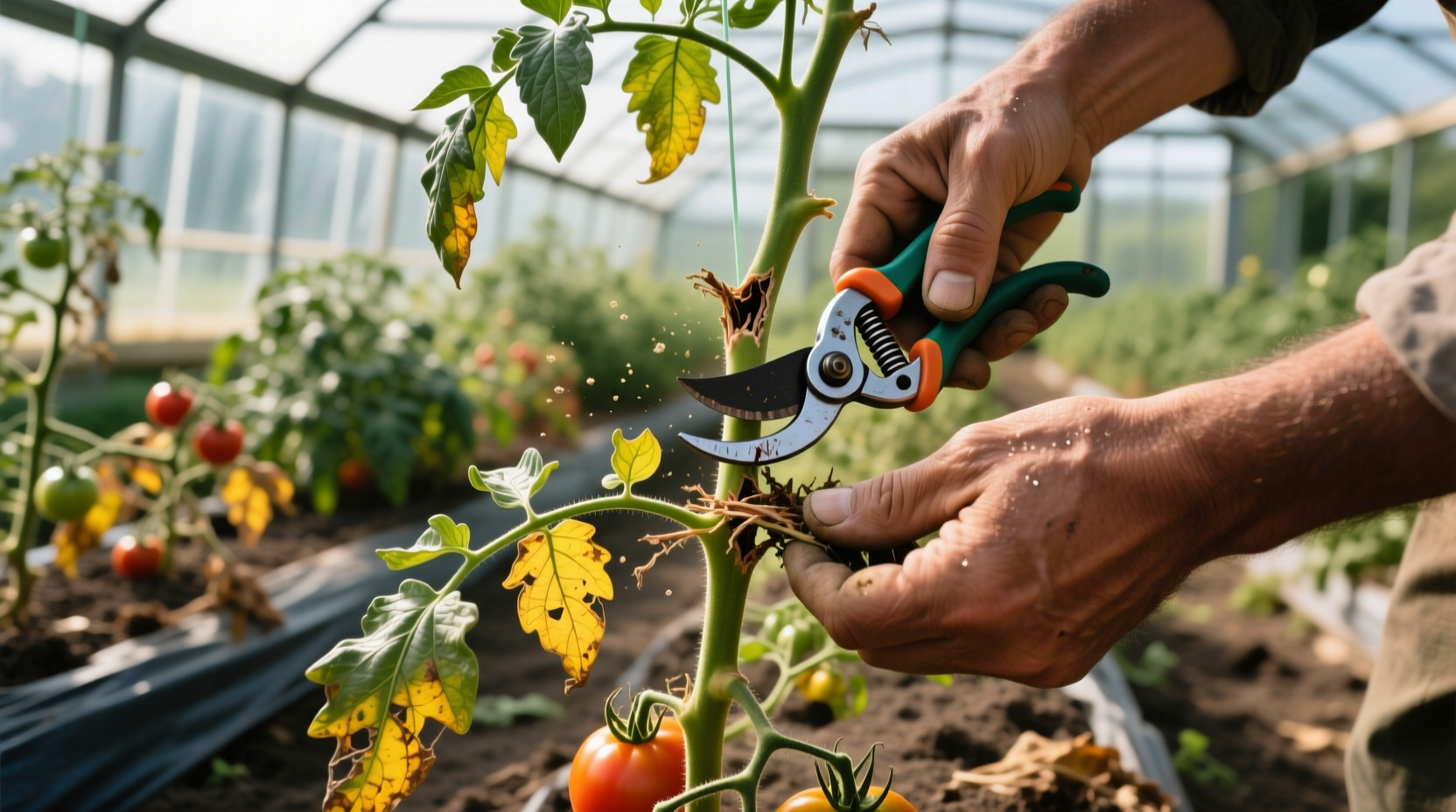
Why Tomato Pruning Matters—And Why It’s Often Misunderstood
Tomato pruning is not optional “garden grooming.” It’s a horticultural intervention rooted in plant physiology, microclimate management, and disease epidemiology. Unlike ornamental shrubs, tomatoes grow as indeterminate or determinate vines—not woody perennials—and their growth habit directly dictates whether pruning helps or harms. Indeterminate tomatoes (e.g., ‘Brandywine’, ‘Sungold’, ‘Mountain Magic’) produce flowers and fruit continuously along lateral stems called suckers, which emerge from leaf axils—the junction where a leaf meets the main stem. Left unmanaged, these suckers become competing leaders, diverting energy from fruit development into excessive vegetative growth. But determinate types (e.g., ‘Roma’, ‘Bush Early Girl’, ‘Celebrity’) set all their fruit in a concentrated cluster near the top and stop growing once they reach 3–4 feet. Pruning them removes potential fruit-bearing nodes—permanently reducing yield.
A common misconception is that “more leaves = more food = more tomatoes.” While leaves do photosynthesize, overcrowded foliage creates stagnant, humid air pockets—ideal breeding grounds for Septoria lycopersici (Septoria leaf spot) and Cladosporium fulvum (tomato leaf mold). Research from the University of Florida IFAS Extension shows that properly pruned indeterminate tomatoes have 40% lower incidence of foliar disease compared to unpruned controls under high-humidity conditions. Equally important: unpruned plants shade lower trusses, delaying ripening and increasing green shoulder disorder—a physiological condition where fruit shoulders remain hard and green even when the rest ripens.
The 7 Most Damaging Tomato Pruning Mistakes—And How to Fix Them
Mistake #1: Pruning Determinate Tomatoes Like Indeterminates
This is the single most yield-destructive error. Determinate varieties are genetically programmed to flower and fruit once—typically over a 3–4 week window. Their primary stem terminates in a flower cluster, and subsequent fruit develops on side branches *below* that terminal inflorescence. Removing suckers below that point eliminates future fruiting sites. Worse, topping or heavy pruning stresses the plant, triggering premature senescence and aborted blossoms.
Fix: Do not prune determinate tomatoes beyond removing yellowed or diseased leaves and the lowest 6 inches of foliage (to prevent soil splash contamination). Never pinch suckers above the first flower cluster. If space is tight, choose compact determinates like ‘Patio Princess’ or ‘Tiny Tim’ instead of forcing pruning.
Mistake #2: Pruning Too Early—Before First Flowers Open
Many gardeners begin pruning as soon as suckers appear—often when plants are only 8–12 inches tall and still in the vegetative stage. This starves developing root systems of carbohydrate reserves needed for rapid establishment. Studies at Cornell Cooperative Extension found that early-pruned tomatoes (before first open flower) showed 18% slower root mass development and delayed first harvest by 11–13 days versus plants pruned after the first truss had set small green fruit.
Fix: Wait until the first flower cluster has fully opened *and* the first fruits are visibly pea-sized (about 1/4 inch diameter). At that point, the plant has shifted into reproductive mode and can safely allocate resources to selective sucker removal.
Mistake #3: Using Dirty or Dull Tools—Spreading Disease
Cutting stems with unsterilized secateurs, scissors, or fingers introduces pathogens directly into vascular tissue. Bacterial speck (Pseudomonas syringae) and bacterial canker (Clavibacter michiganensis) spread rapidly through pruning wounds—especially in warm, humid weather. A 2021 field trial across 12 community gardens in Georgia confirmed that 68% of bacterial canker outbreaks correlated directly with shared, uncleaned pruning tools.
Fix: Disinfect tools between every plant using 70% isopropyl alcohol or a 10% bleach solution (1 part bleach to 9 parts water). Rinse and dry thoroughly afterward to prevent corrosion. For small suckers under ¼ inch thick, use your thumbnail and forefinger—pinch firmly at the base to avoid tearing. Always wash hands before moving between plants.
Mistake #4: Removing All Suckers—Creating “Bare-Stem Syndrome”
Some guides advocate removing *every* sucker—leaving only the main stem and fruit trusses. This leads to severe sunscald (especially on red slicers like ‘Beefsteak’), increased blossom end rot (due to reduced calcium transport under heat stress), and brittle stems unable to support heavy fruit loads. Without lateral foliage, fruit receives direct midday UV exposure exceeding 85°F surface temperature—causing irreversible cell death in epidermal layers.
Fix: Adopt the “one-sucker-per-leaf-axil” rule for indeterminates: keep *only* the strongest sucker below the first flower cluster (creating a second leader), then allow 1–2 additional well-spaced suckers every 6–8 inches upward. Maintain at least 4–6 mature leaves per fruit truss for shading and photosynthesis. Use soft twine or fabric ties—not wire—to support secondary stems.
Mistake #5: Pruning During High Heat or Humidity
Pruning triggers immediate water loss through exposed vascular tissue and increases transpirational demand. Doing so when ambient temperatures exceed 85°F or relative humidity stays above 75% causes acute water stress. Stomatal closure follows, reducing CO₂ uptake and halting fruit cell expansion. In container-grown tomatoes—which hold less moisture than in-ground plants—this stress compounds rapidly, often leading to blossom drop within 48 hours.
Fix: Prune only in early morning (before 10 a.m.) on cool, dry days—ideally when forecasted highs stay below 80°F and dew has fully evaporated. Avoid pruning entirely during heatwaves, monsoon periods, or after rain. If you must prune in summer, follow immediately with deep root-zone watering—not overhead irrigation—to minimize evaporative loss.
Mistake #6: Cutting Fruit Trusses or Flower Clusters
Novice pruners sometimes mistake young fruit clusters for suckers, especially on heirlooms with dense, fuzzy foliage. Others trim “excess” trusses to “concentrate energy”—a myth with no scientific basis. Tomato fruit set is limited by pollination success and nutrient availability—not by number of trusses. Removing trusses reduces total potential yield linearly; there is no compensatory enlargement of remaining fruit.
Fix: Learn to distinguish suckers from trusses: suckers emerge *from the leaf axil*, growing *between* the leaf stem and main stem. Flower clusters emerge *at the tip* of lateral branches or directly from the main stem, with tiny buds arranged in a candelabra-like pattern. When in doubt, wait 2–3 days—suckers will show rapid vertical growth; trusses will swell with visible buds.
Mistake #7: Ignoring Variety-Specific Architecture and Climate Needs
Pruning ‘Cherokee Purple’ (a sprawling, late-maturing heirloom) the same way as ‘Juliet’ (a compact, crack-resistant grape tomato) guarantees suboptimal results. Likewise, balcony growers in Seattle need different strategies than patio gardeners in Phoenix. In cool coastal zones (USDA Zones 8–9), aggressive pruning delays ripening past first frost. In hot inland areas (Zones 9b–11), light, frequent pruning improves airflow and reduces heat load.
Fix: Match technique to type and location:
- Heirlooms & large slicers: Use Missouri pruning—pinch off only the growing tip of suckers, leaving 2–3 leaves to shade developing fruit and supply photosynthates.
- Grape/cherry tomatoes: Minimal pruning—remove only basal suckers and yellow leaves. Their compact growth naturally limits disease pressure.
- Balcony/container growers: Limit to one main stem + one strong sucker. Support vertically with a 6-ft trellis; avoid cages that trap humidity.
- Hot climates (>90°F avg. summer highs): Retain 30–40% more foliage than recommended for temperate zones—prioritize shade over airflow.
When and How to Prune: A Step-by-Step Protocol
Follow this sequence for consistent, low-stress results:
- Timing: Begin at first fruit set (pea-sized green fruit on first truss); repeat weekly during active growth.
- Preparation: Water plants deeply the evening before pruning. Sterilize tools. Choose a dry, overcast morning.
- Assessment: Walk around each plant. Identify: (a) yellow or brown lower leaves (remove), (b) suckers thicker than a pencil (prune), (c) weak, spindly suckers (remove), (d) crowded interior branches blocking light (thin selectively).
- Execution: Pinch or cut suckers at their base—do not leave stubs. Never remove >25% of total foliage in one session. Preserve leaves directly above and below each fruit truss.
- Aftercare: Apply compost tea or dilute fish emulsion (1:4) to soil within 2 hours to support recovery. Monitor for aphids on new growth—pruning stimulates tender shoots attractive to pests.
Tools You Actually Need (And What to Skip)
You don’t need specialty gear—but you do need precision and hygiene:
- Sharp bypass pruners: For suckers >¼ inch thick. Must cut cleanly—not crush. Wipe blade with alcohol after each cut.
- Fingernail + thumb: Ideal for young suckers (<1/8 inch). Pinch firmly at base to sever vascular connection without tearing.
- Soft cotton or jute twine: For tying stems to supports. Avoid nylon or wire, which girdles expanding tissue.
- Avoid: Hedge shears (too coarse), kitchen scissors (dull, unsterilizable), electric trimmers (overkill, unsafe), and “pruning paint” (blocks natural wound sealing; increases rot risk).
Signs Your Pruning Is Working—Or Failing
Monitor these objective indicators weekly:
| Indicator | Healthy Response | Warning Sign |
|---|---|---|
| Fruit size progression | Fruit expands steadily; uniform color development from stem end | Stalled growth; green shoulders persisting >7 days |
| Leaf health | New leaves dark green, turgid; older leaves yellow gradually from tip inward | Sudden yellowing of middle leaves; interveinal chlorosis |
| Disease presence | No new leaf spots within 10 days of pruning | Clusters of brown/black lesions appearing on stems or petioles within 3–5 days |
| Harvest timing | First ripe fruit appears 60–75 days after transplant (varies by cultivar) | Delay >10 days beyond expected maturity date |
FAQ: Tomato Pruning Questions Answered
Can I prune tomato plants in containers the same way as in-ground ones?
Yes—but more conservatively. Container tomatoes have smaller root zones and dry faster. Remove only the bottom 4–6 inches of foliage and limit to one strong sucker. Never prune more than 15% of foliage at once. Prioritize airflow *around* the pot (elevate on feet, space pots 18+ inches apart) over internal canopy thinning.
What if I accidentally pruned my determinate tomato? Can it recover?
Limited recovery is possible if done early and lightly—e.g., removing only 1–2 basal suckers before flowering. But if you topped the main stem or removed the terminal cluster, fruit set is permanently reduced. Focus on optimal watering, consistent calcium (use gypsum, not lime), and mulching to maximize output from remaining trusses.
Do cherry tomatoes need pruning at all?
Minimal pruning suffices: remove only yellowed leaves and basal suckers within 6 inches of soil. Their compact growth, rapid fruiting, and natural resistance to cracking make aggressive pruning unnecessary—and often counterproductive. Over-pruning increases pest pressure (especially spider mites) on exposed stems.
Should I prune after transplanting to reduce shock?
No. Transplant shock is caused by root disturbance—not foliage load. Pruning post-transplant increases stress by limiting photosynthesis when roots are least efficient. Instead, provide shade cloth for 2–3 days, water deeply at transplant, and avoid fertilizing for 7 days.
How does pruning affect tomato flavor and sugar content?
Proper pruning indirectly enhances flavor by improving light exposure and air circulation—leading to higher brix (sugar) levels and more uniform ripening. However, over-pruning reduces photosynthetic area, lowering total soluble solids. Field trials at UC Davis showed optimally pruned ‘Sun Gold’ averaged 9.2° brix vs. 7.8° in over-pruned plots—confirming that balance, not austerity, delivers peak taste.
Tomato pruning is neither ritual nor recklessness—it’s responsive horticulture. Every cut should answer a specific question: “Does this improve light to fruit? Does it reduce disease risk? Does it support structural integrity?” When guided by variety biology, local climate, and real-time plant signals—not trends or oversimplified rules—you transform pruning from a gamble into a precision tool. Start small: choose one indeterminate plant this season, prune only its first two suckers using sterile technique, and track fruit size, ripening speed, and disease incidence. Compare it to an unpruned neighbor. You’ll see the difference—not in theory, but in weight, flavor, and resilience. That’s how expertise grows: one informed cut at a time.
Remember: the goal isn’t bare stems or sculpted symmetry. It’s abundant, healthy fruit—grown with intention, not instinct. Whether you’re managing six cherry tomatoes on a fire escape or fifty heirlooms in a backyard plot, avoiding these seven mistakes puts you on the path to harvests that satisfy both palate and pride. And when August sun warms your first ripe ‘Black Krim’, you’ll taste the difference that thoughtful pruning makes—not just in sweetness, but in stewardship.
Now go check your plants. Look closely at those leaf axils. Feel the thickness of each sucker. Notice the color of the lowest leaves. Then decide—not what looks tidy, but what serves the plant. That shift in perspective is where great tomato growing begins.




 浙公网安备
33010002000092号
 浙B2-20120091-4